


Request Quote
(Ships tomorrow)
NCP4355BDR2G Equivalent & Substitute Parts
Part Overview
The NCP4355BDR2G is a secondary-side power supply controller manufactured by onsemi, designed for power factor correction (PFC) and switched-mode power supply (SMPS) applications. This component operates as a secondary-side controller in isolated power conversion topologies. The product is currently classified as obsolete, making identification of functionally equivalent alternatives essential for ongoing design support, maintenance, and production continuity.
Substiute Parts
Key Parameters
| Parameter | Value |
|---|---|
| Manufacturer Part Number | NCP4355BDR2G |
| Manufacturer | onsemi |
| Category | Power Management (PMIC) |
| Description | IC PFC CTRLR SEC SIDE 8SOIC |
| Package / Case | 8-SOIC (0.154", 3.90mm Width) |
| Voltage - Supply | 4.6V ~ 36V |
| Current - Supply | 107 µA |
| Operating Temperature | 0°C ~ 125°C |
| Mounting Type | Surface Mount |
| Product Status | Obsolete |
| Moisture Sensitivity Level (MSL) | 1 (Unlimited) |
Substitute Part Grouping Explanation
Substitution of the NCP4355BDR2G is determined by the following critical parameters:
Functional Compatibility Criteria:
- Secondary-side controller application for SMPS topologies
- Supply voltage range overlap (minimum 4.6V operation required)
- Operating temperature range compatibility (0°C ~ 125°C)
- Surface mount technology requirement
- Low quiescent current operation (sub-200 µA range)
Package Compatibility Considerations:
- The NCP4355BDR2G uses 8-SOIC packaging
- Substitute parts may use alternative surface-mount packages (6-TSOP, SOT-23-6) provided pin-to-function mapping is verified during design integration
- Package footprint differences require PCB layout re-evaluation
The identified substitute NCP4353BSNT1G meets functional requirements within the secondary-side controller category and shares the same manufacturer ecosystem, enabling design continuity despite package differences.
Parameter Comparison
| Parameter | NCP4355BDR2G (Main) | NCP4353BSNT1G (Substitute) | Compatibility Notes |
|---|---|---|---|
| Manufacturer | onsemi | onsemi | Same manufacturer |
| Category | Power Management (PMIC) | Power Management (PMIC) | Identical functional category |
| Application | Secondary-Side Controller | Secondary-Side Controller | Identical application |
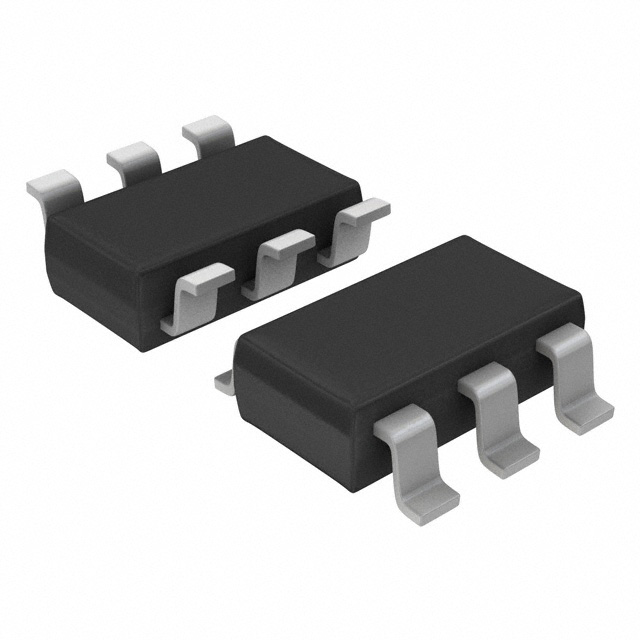
| Package / Case | 8-SOIC (0.154", 3.90mm Width) | SOT-23-6 Thin, TSOT-23-6 (6-TSOP) | Different packages; requires PCB redesign |
| Voltage - Supply | 4.6V ~ 36V | 2.5V ~ 36V | Substitute has lower minimum voltage; compatible |
| Current - Supply | 107 µA | 82 µA | Substitute has lower quiescent current |
| Operating Temperature | 0°C ~ 125°C | 0°C ~ 125°C | Identical operating range |
| Mounting Type | Surface Mount | Surface Mount | Identical mounting technology |
| Product Status | Obsolete | Obsolete | Both components are obsolete |
| Moisture Sensitivity Level (MSL) | 1 (Unlimited) | 1 (Unlimited) | Identical MSL rating |
| REACH Status | REACH Unaffected | REACH Unaffected | Identical compliance status |
| ECCN | EAR99 | EAR99 | Identical export classification |
Engineering Selection Recommendations
Primary Consideration: Product Obsolescence
Both the NCP4355BDR2G and NCP4353BSNT1G are classified as obsolete. Selection between these components should prioritize:
-
Inventory Availability: The NCP4353BSNT1G has significantly higher inventory (35,050 pcs) compared to the NCP4355BDR2G (1,010 pcs), providing better long-term supply security for production requirements.
-
Compliance Status: Both components maintain identical REACH and ECCN classifications (REACH Unaffected, EAR99), ensuring equivalent regulatory compliance for international distribution.
-
Electrical Performance: The NCP4353BSNT1G operates within a lower minimum supply voltage (2.5V vs. 4.6V) and exhibits reduced quiescent current (82 µA vs. 107 µA), providing marginal performance advantages in low-power applications.
-
Package Integration: The package transition from 8-SOIC to 6-TSOP requires PCB layout modification and functional pin mapping verification. This substitution is viable only when design flexibility permits package redesign.
Frequently Asked Questions (FAQ)
Q: Can the NCP4353BSNT1G directly replace the NCP4355BDR2G without PCB modification?
A: No. The NCP4355BDR2G uses 8-SOIC packaging while the NCP4353BSNT1G uses 6-TSOP (SOT-23-6) packaging. These packages have different pin counts, footprints, and pinout configurations. PCB layout redesign and functional pin mapping verification are required.
Q: Are the supply voltage ranges compatible between these parts?
A: The voltage ranges overlap sufficiently for substitution. The NCP4355BDR2G operates at 4.6V ~ 36V, while the NCP4353BSNT1G operates at 2.5V ~ 36V. If your application requires operation below 4.6V, the NCP4353BSNT1G provides extended capability. Both parts support the full 36V upper limit.
Q: What is the significance of the lower quiescent current in the NCP4353BSNT1G?
A: The NCP4353BSNT1G draws 82 µA compared to 107 µA for the NCP4355BDR2G. This 25 µA reduction is beneficial in battery-powered or ultra-low-power applications where standby current consumption is critical. For standard AC-powered supplies, this difference is negligible.
Q: Why are both components listed as obsolete?
A: Obsolete status indicates these components are no longer in active production by onsemi. However, inventory remains available through authorized distributors. For new designs, evaluation of current-generation secondary-side controller alternatives from onsemi is recommended for long-term product lifecycle support.
Q: Are there any compliance or certification differences between these parts?
A: No. Both components share identical REACH status (REACH Unaffected), ECCN classification (EAR99), HTSUS codes (8542.39.0001), and Moisture Sensitivity Level (MSL 1 - Unlimited). Regulatory and environmental compliance is equivalent.
Q: What is the primary reason to select the NCP4353BSNT1G over the NCP4355BDR2G?
A: Inventory availability is the primary driver. The NCP4353BSNT1G has 35x higher stock levels, ensuring production continuity. Secondary advantages include lower minimum supply voltage and reduced quiescent current. The trade-off is package redesign requirement.
Alternative Parts

SJ6012L2TP
Littelfuse Inc.
6 Alternative Parts

JMK107BBJ476MA-RE
Taiyo Yuden
10 Alternative Parts

GMK107BBJ475MA-T
Taiyo Yuden
5 Alternative Parts
SJ6020N2ARP
Littelfuse Inc.
3 Alternative Parts
SJ6025R2ATP
Littelfuse Inc.
4 Alternative Parts

2474-05L
API Delevan Inc.
1 Alternative Parts

4590R-684K
API Delevan Inc.
1 Alternative Parts

CM6560R-334
API Delevan Inc.
1 Alternative Parts

CM6460-104
API Delevan Inc.
1 Alternative Parts

5526-12
API Delevan Inc.
1 Alternative Parts