



Request Quote
(Ships tomorrow)
MSP432P411VIPZR Equivalent & Substitute Parts
Part Overview
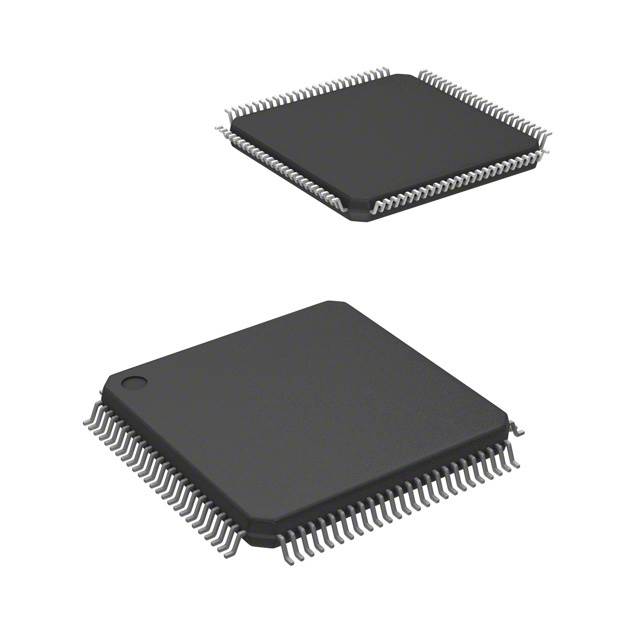
The MSP432P411VIPZR is an ARM Cortex-M4F 32-bit microcontroller from Texas Instruments' MSP432 SimpleLink series, featuring 512KB FLASH memory and 128KB RAM in a 100-LQFP package. This device is classified as obsolete, making equivalent substitute parts necessary for new designs and production continuity. The MSP430F6xx series provides compatible alternatives with comparable memory configurations and peripheral support.
Substiute Parts
Key Parameters
| Parameter | Value |
|---|---|
| Manufacturer Part Number | MSP432P411VIPZR |
| Manufacturer | Texas Instruments |
| Core Processor | ARM Cortex-M4F |
| Core Size | 32-Bit Single-Core |
| Speed | 48MHz |
| Program Memory Size | 512KB FLASH |
| RAM Size | 128K x 8 |
| Voltage Supply (Vcc/Vdd) | 1.62V ~ 3.7V |
| Package / Case | 100-LQFP (14x14) |
| Operating Temperature | -40°C ~ 85°C |
| Product Status | Obsolete |
| RoHS Status | ROHS3 Compliant |
Substitute Part Grouping Explanation
Substitution for the MSP432P411VIPZR is determined by the following critical parameters:
Memory Configuration: Both substitute parts maintain 512KB FLASH memory, ensuring software compatibility for applications designed around this capacity.
Package Compatibility: The MSP430F6779IPZ provides identical 100-LQFP (14x14) packaging, enabling direct board-level replacement without PCB redesign. The MSP430F6779IPEU uses 128-LQFP (20x14) packaging and requires layout modifications.
Connectivity & Peripherals: All parts support I2C, SPI, UART/USART, and include DMA, LCD, PWM, and WDT peripherals, maintaining functional equivalence for embedded applications.
Compliance & Certification: All parts are ROHS3 compliant with identical MSL ratings (3, 168 Hours) and REACH unaffected status, meeting regulatory requirements.
Operating Conditions: All parts operate within -40°C to 85°C temperature range with compatible supply voltage windows, ensuring thermal and electrical compatibility.
Parameter Comparison
| Parameter | MSP432P411VIPZR (Main) | MSP430F6779IPZ (Substitute) | MSP430F6779IPEU (Substitute) |
|---|---|---|---|
| Manufacturer | Texas Instruments | Texas Instruments | Texas Instruments |
| Core Processor | ARM Cortex-M4F | MSP430 CPUXV2 | MSP430 CPUXV2 |
| Core Size | 32-Bit Single-Core | 16-Bit | 16-Bit |
| Speed | 48MHz | 25MHz | 25MHz |
| Program Memory | 512KB FLASH | 512KB FLASH | 512KB FLASH |
| RAM Size | 128K x 8 | 32K x 8 | 32K x 8 |
| Voltage Supply | 1.62V ~ 3.7V | 1.8V ~ 3.6V | 1.8V ~ 3.6V |
| Number of I/O | 84 | 62 | 90 |
| Package / Case | 100-LQFP (14x14) | 100-LQFP (14x14) | 128-LQFP (20x14) |
| Operating Temperature | -40°C ~ 85°C | -40°C ~ 85°C | -40°C ~ 85°C |
| Product Status | Obsolete | Active | Active |
| RoHS Status | ROHS3 Compliant | ROHS3 Compliant | ROHS3 Compliant |
| Connectivity | I2C, IrDA, SPI, UART/USART | I2C, IrDA, LINbus, SPI, UART/USART | I2C, IrDA, LINbus, SPI, UART/USART |
| Peripherals | DMA, LCD, POR, PWM, WDT | Brown-out Detect/Reset, DMA, LCD, POR, PWM, WDT, 7x24b Sigma Delta Converter | Brown-out Detect/Reset, DMA, LCD, POR, PWM, WDT, 7x24b Sigma Delta Converter |
Engineering Selection Recommendations
MSP430F6779IPZ is the preferred substitute for direct replacement applications. This part maintains identical 100-LQFP (14x14) packaging, eliminating PCB redesign requirements. Both parts are active products with ROHS3 compliance and equivalent regulatory certifications. The MSP430F6779IPZ is suitable for applications where the 16-bit architecture and reduced clock speed (25MHz vs. 48MHz) are acceptable trade-offs for product availability and long-term supply continuity.
MSP430F6779IPEU serves applications requiring higher I/O count (90 vs. 62 pins). The 128-LQFP (20x14) package requires PCB layout modifications and is appropriate only when additional I/O pins provide functional advantage. This part is also an active product with equivalent compliance status.
Both substitutes are active products from Texas Instruments, ensuring long-term availability compared to the obsolete MSP432P411VIPZR. Selection between the two substitutes depends on PCB layout constraints and I/O requirements.
Frequently Asked Questions (FAQ)
Q: Can MSP430F6779IPZ replace MSP432P411VIPZR without PCB modifications?
A: Yes. Both parts use 100-LQFP (14x14) packaging with identical footprints. However, software recompilation is required due to architectural differences (32-bit ARM Cortex-M4F vs. 16-bit MSP430 CPUXV2). Pin-to-pin compatibility does not guarantee functional equivalence without firmware adaptation.
Q: What are the key differences between MSP430F6779IPZ and MSP430F6779IPEU?
A: The primary difference is packaging and I/O count. MSP430F6779IPZ uses 100-LQFP (14x14) with 62 I/O pins, while MSP430F6779IPEU uses 128-LQFP (20x14) with 90 I/O pins. Both share identical core specifications, memory configuration, and peripheral set. Package selection depends on board space and I/O requirements.
Q: Are voltage supply ranges compatible between the main part and substitutes?
A: The MSP432P411VIPZR operates at 1.62V ~ 3.7V, while both MSP430F6779 variants operate at 1.8V ~ 3.6V. The substitutes have a narrower lower voltage limit (1.8V vs. 1.62V). Applications operating below 1.8V require design review before substitution.
Q: How do RAM differences affect substitution?
A: The MSP432P411VIPZR provides 128KB RAM, while both MSP430F6779 variants provide 32KB RAM. Applications requiring more than 32KB RAM cannot use these substitutes without significant firmware restructuring. This is a critical constraint for memory-intensive applications.
Q: Are all parts RoHS and REACH compliant?
A: Yes. All three parts are ROHS3 compliant with MSL rating 3 (168 Hours) and REACH unaffected status, meeting equivalent regulatory requirements for industrial and commercial applications.
Q: What is the impact of reduced clock speed (25MHz vs. 48MHz)?
A: The MSP430F6779 variants operate at 25MHz compared to the MSP432P411VIPZR's 48MHz. Applications with strict timing requirements or high-speed signal processing may require performance analysis and potential firmware optimization to maintain functionality.
Alternative Parts

SJ6012L2TP
Littelfuse Inc.
6 Alternative Parts

JMK107BBJ476MA-RE
Taiyo Yuden
10 Alternative Parts

GMK107BBJ475MA-T
Taiyo Yuden
5 Alternative Parts
SJ6020N2ARP
Littelfuse Inc.
3 Alternative Parts
SJ6025R2ATP
Littelfuse Inc.
4 Alternative Parts

2474-05L
API Delevan Inc.
1 Alternative Parts

4590R-684K
API Delevan Inc.
1 Alternative Parts

CM6560R-334
API Delevan Inc.
1 Alternative Parts

CM6460-104
API Delevan Inc.
1 Alternative Parts

5526-12
API Delevan Inc.
1 Alternative Parts