



Request Quote
(Ships tomorrow)
MSP432P4111IPZR Equivalent & Substitute Parts
Part Overview
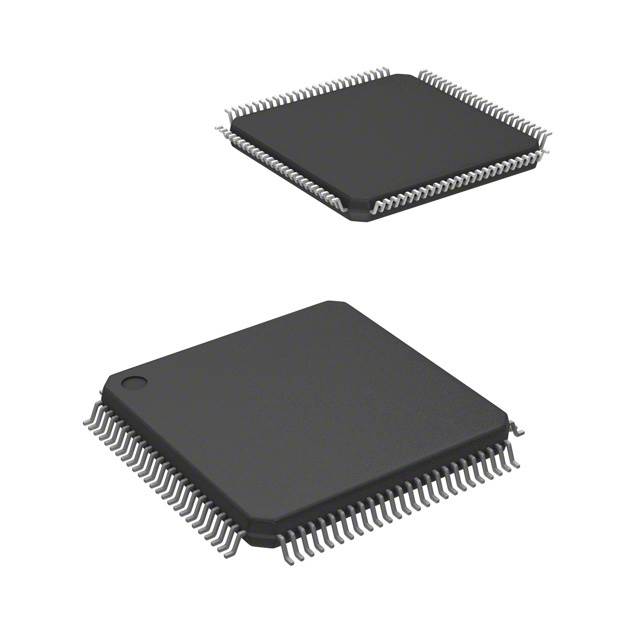
The MSP432P4111IPZR is a 32-bit ARM Cortex-M4F microcontroller from Texas Instruments' MSP432 SimpleLink series, featuring 2MB of FLASH memory and operating at 48MHz. The device is classified as Obsolete, making identification of functionally compatible alternatives necessary for ongoing design support and production continuity. This reference provides engineering-grade substitution guidance based on electrical and mechanical compatibility parameters.
Substiute Parts
Key Parameters
| Parameter | Value |
|---|---|
| Manufacturer Part Number | MSP432P4111IPZR |
| Manufacturer | Texas Instruments |
| Core Processor | ARM Cortex-M4F |
| Core Size | 32-Bit Single-Core |
| Speed | 48MHz |
| Program Memory Size | 2MB (2M x 8) FLASH |
| RAM Size | 256K x 8 |
| Voltage Supply Range | 1.62V ~ 3.7V |
| Number of I/O | 84 |
| Package Type | 100-LQFP (14x14) |
| Operating Temperature | -40°C ~ 85°C |
| Product Status | Obsolete |
| RoHS Status | ROHS3 Compliant |
Substitute Part Grouping Explanation
Substitution of the MSP432P4111IPZR is determined by the following critical parameters:
Core Architecture Compatibility: Both the main part and substitute must use ARM Cortex-M4F processors to ensure instruction set compatibility and software portability.
Memory Configuration: Program memory (FLASH) and RAM capacity must meet or exceed the original specification. The MSP432P4111IPZR requires minimum 2MB FLASH and 256K RAM.
Electrical Specifications: Supply voltage range, operating temperature range, and data converter specifications must be compatible with the original design envelope.
Package and Pin Count: Physical package type and I/O pin count determine PCB layout compatibility. The 100-LQFP package with 84 I/O pins establishes the baseline for mechanical substitution.
Connectivity and Peripherals: Available interfaces (I2C, SPI, UART/USART, IrDA) and peripheral functions (DMA, PWM, WDT, POR) must support the original application requirements.
Compliance and Status: RoHS3 compliance and active product status ensure long-term availability and regulatory alignment.
Parameter Comparison
| Parameter | MSP432P4111IPZR (Main) | TM4C129ENCPDTI3 (Substitute) |
|---|---|---|
| Manufacturer | Texas Instruments | Texas Instruments |
| Core Processor | ARM Cortex-M4F | ARM Cortex-M4F |
| Core Size | 32-Bit Single-Core | 32-Bit Single-Core |
| Speed | 48MHz | 120MHz |
| Program Memory Size | 2MB FLASH | 1MB FLASH |
| RAM Size | 256K x 8 | 256K x 8 |
| Voltage Supply Range | 1.62V ~ 3.7V | 2.97V ~ 3.63V |
| Number of I/O | 84 | 90 |
| Package Type | 100-LQFP (14x14) | 128-TQFP (14x14) |
| Operating Temperature | -40°C ~ 85°C | -40°C ~ 85°C |
| Product Status | Obsolete | Active |
| RoHS Status | ROHS3 Compliant | ROHS3 Compliant |
| Connectivity | I2C, IrDA, SPI, UART/USART | CANbus, EBI/EMI, Ethernet, I2C, IrDA, QSSI, UART/USART, USB OTG |
| Peripherals | DMA, LCD, POR, PWM, WDT | Brown-out Detect/Reset, DMA, Motion Control PWM, POR, PWM, WDT |
| Data Converters | A/D 26x16b | A/D 20x12b |
Engineering Selection Recommendations
The TM4C129ENCPDTI3 is an active-status substitute for the obsolete MSP432P4111IPZR. Both devices share the ARM Cortex-M4F architecture, identical RAM capacity (256K x 8), and matching operating temperature range (-40°C ~ 85°C). Both are ROHS3 compliant.
Considerations for substitution:
The TM4C129ENCPDTI3 operates at 120MHz versus 48MHz on the MSP432P4111IPZR, providing increased processing capability. The substitute features 1MB FLASH compared to 2MB on the original; applications requiring the full 2MB program memory capacity must be evaluated for compatibility.
The supply voltage range differs: the MSP432P4111IPZR accepts 1.62V ~ 3.7V while the TM4C129ENCPDTI3 operates within 2.97V ~ 3.63V. Designs operating below 2.97V require alternative solutions.
Package differences exist: the MSP432P4111IPZR uses 100-LQFP with 84 I/O pins; the TM4C129ENCPDTI3 uses 128-TQFP with 90 I/O pins. PCB layout redesign is required for package migration.
The TM4C129ENCPDTI3 provides extended connectivity (CANbus, Ethernet, USB OTG) and additional peripherals not present in the MSP432P4111IPZR. Data converter specifications differ: 26x16-bit A/D on the original versus 20x12-bit on the substitute.
Frequently Asked Questions (FAQ)
Q: Can the TM4C129ENCPDTI3 directly replace the MSP432P4111IPZR without PCB modifications?
A: No. The devices use different package types (100-LQFP versus 128-TQFP) and pin counts (84 versus 90 I/O). PCB layout redesign is required.
Q: Is the reduced FLASH memory (1MB versus 2MB) a limitation?
A: Applications using less than 1MB of program memory can migrate without modification. Designs requiring the full 2MB capacity must evaluate code optimization or select alternative parts with higher memory capacity.
Q: What is the impact of the higher operating frequency (120MHz versus 48MHz)?
A: The increased speed provides performance headroom. Existing firmware compiled for 48MHz operation will execute faster on the 120MHz device. Power consumption may increase; thermal analysis is recommended for power-sensitive applications.
Q: Does the lower minimum supply voltage (2.97V versus 1.62V) affect compatibility?
A: Yes. Designs operating below 2.97V cannot use the TM4C129ENCPDTI3. The original MSP432P4111IPZR supports lower voltage operation. Alternative substitutes must be identified for ultra-low-voltage applications.
Q: Are the additional connectivity features (Ethernet, USB OTG, CANbus) backward compatible?
A: These features are additional capabilities on the TM4C129ENCPDTI3. Existing firmware that does not utilize these interfaces will function without modification. New designs can leverage these expanded connectivity options.
Q: What is the difference in data converter specifications?
A: The MSP432P4111IPZR provides 26 channels of 16-bit analog-to-digital conversion. The TM4C129ENCPDTI3 provides 20 channels of 12-bit conversion. Applications requiring 16-bit resolution or more than 20 ADC channels must evaluate alternative solutions.
Alternative Parts

SJ6012L2TP
Littelfuse Inc.
6 Alternative Parts

JMK107BBJ476MA-RE
Taiyo Yuden
10 Alternative Parts

GMK107BBJ475MA-T
Taiyo Yuden
5 Alternative Parts
SJ6020N2ARP
Littelfuse Inc.
3 Alternative Parts
SJ6025R2ATP
Littelfuse Inc.
4 Alternative Parts

2474-05L
API Delevan Inc.
1 Alternative Parts

4590R-684K
API Delevan Inc.
1 Alternative Parts

CM6560R-334
API Delevan Inc.
1 Alternative Parts

CM6460-104
API Delevan Inc.
1 Alternative Parts

5526-12
API Delevan Inc.
1 Alternative Parts