


Request Quote
(Ships tomorrow)
MSL3168GU LED Driver IC Equivalent & Substitute Parts
Part Overview
The MSL3168GU is a 16-output linear PWM LED driver IC manufactured by Microchip Technology, designed for backlight applications in automotive-grade systems. This device features 30mA per-channel output capability with PWM dimming control, operating across a 4.75V to 5.5V supply range in a 32-SOP package. The MSL3168GU is classified as obsolete, making identification of functionally equivalent alternatives essential for ongoing design support and production continuity.
Substiute Parts
Key Parameters
| Parameter | MSL3168GU |
|---|---|
| Manufacturer | Microchip Technology |
| Category | Power Management (PMIC) |
| Number of Outputs | 16 |
| Type | Linear |
| Current - Output / Channel | 30mA |
| Voltage - Supply (Min) | 4.75V |
| Voltage - Supply (Max) | 5.5V |
| Dimming | PWM |
| Package / Case | 32-SOIC (0.295", 7.50mm Width) |
| Operating Temperature | -40°C ~ 85°C (TA) |
| Grade | Automotive |
| Product Status | Obsolete |
| RoHS Status | ROHS3 Compliant |
Substitute Part Grouping Explanation
Substitution eligibility for the MSL3168GU is determined by the following core parameters: 16 output channels, linear driver topology, 30mA per-channel current capability, PWM or equivalent dimming control, automotive-grade qualification, and ROHS3 compliance. Substitute parts are grouped into two categories:
Parametric Equivalent (Same Manufacturer): MSL3167GU maintains identical electrical specifications and automotive grading from Microchip Technology, differing only in packaging format (Tube vs. standard).
Manufacturer-Recommended Alternatives: PCA9635PW,118 (NXP), TLC5920DLR (Texas Instruments), and TLC5928PWPR (Texas Instruments) provide 16-output LED driver functionality with active product status. These alternatives operate within compatible supply voltage ranges and deliver equivalent or superior per-channel current ratings. Dimming control methods and package configurations vary, requiring design-level evaluation for integration compatibility.
Parameter Comparison
| Parameter | MSL3168GU | MSL3167GU | PCA9635PW,118 | TLC5920DLR | TLC5928PWPR |
|---|---|---|---|---|---|
| Manufacturer | Microchip Technology | Microchip Technology | NXP USA Inc. | Texas Instruments | Texas Instruments |
| Number of Outputs | 16 | 16 | 16 | 16 | 16 |
| Type | Linear | Linear | Linear | Linear | Linear |
| Current - Output / Channel | 30mA | 30mA | 25mA | 30mA | 35mA |
| Voltage - Supply (Min) | 4.75V | 4.75V | 2.3V | 4.5V | 3V |
| Voltage - Supply (Max) | 5.5V | 5.5V | 5.5V | 5.5V | 5.5V |
| Dimming Control | PWM | PWM | I2C | Shift Register | Shift Register |
| Package / Case | 32-SOIC | 32-SOIC | 28-TSSOP | 48-BSSOP | 24-PowerTSSOP |
| Operating Temperature | -40°C ~ 85°C | -40°C ~ 85°C | -40°C ~ 85°C | -20°C ~ 85°C | -40°C ~ 85°C |
| Grade | Automotive | Automotive | Not specified | Not specified | Not specified |
| Product Status | Obsolete | Obsolete | Active | Active | Active |
| RoHS Status | ROHS3 Compliant | ROHS3 Compliant | ROHS3 Compliant | ROHS3 Compliant | ROHS3 Compliant |
Engineering Selection Recommendations
MSL3167GU is the direct parametric equivalent and preferred first choice for MSL3168GU replacement. Both devices share identical electrical specifications, automotive qualification, and ROHS3 compliance. The only distinction is packaging format; MSL3167GU is supplied in Tube packaging versus standard format for MSL3168GU. This substitute requires no design modification and maintains full compatibility with existing PCB layouts and firmware.
PCA9635PW,118 (NXP) is an active-status alternative offering 16-output linear LED driver functionality with I2C dimming control instead of PWM. This device operates across a wider supply voltage range (2.3V to 5.5V) and delivers 25mA per channel. The shift to I2C control requires firmware modification and I2C bus integration. Package change from 32-SOIC to 28-TSSOP necessitates PCB redesign. This option is suitable for new designs prioritizing active product support and I2C-based dimming architecture.
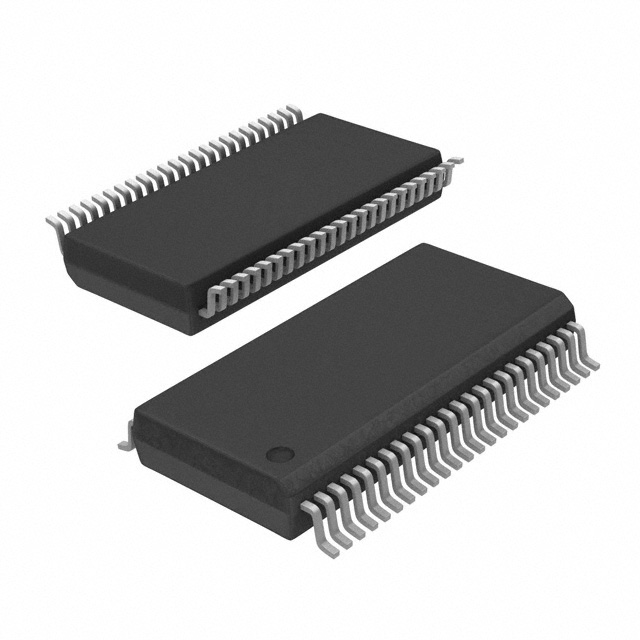
TLC5920DLR (Texas Instruments) provides 16-output linear driver capability with shift-register control topology and 30mA per-channel output matching the MSL3168GU current specification. Operating temperature range is -20°C to 85°C (narrower than MSL3168GU). The 48-BSSOP package is significantly larger than the original 32-SOIC, requiring substantial PCB layout changes. This option is applicable where shift-register control integration is feasible and board space permits the larger package footprint.
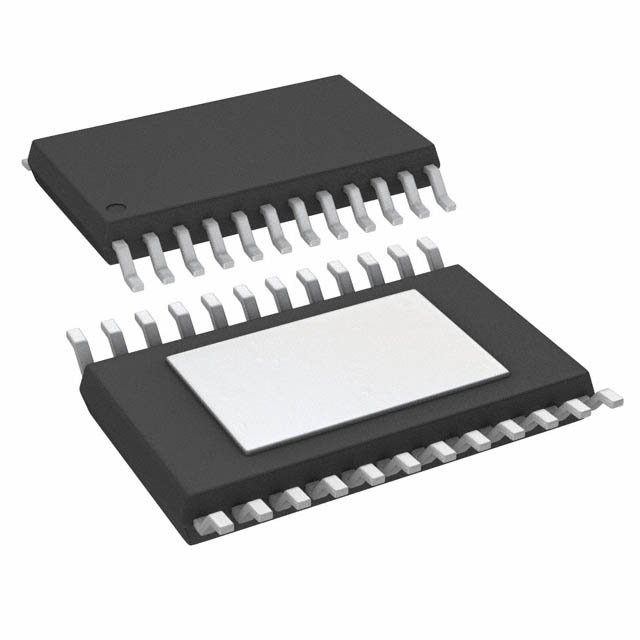
TLC5928PWPR (Texas Instruments) delivers 16-output linear driver performance with the highest per-channel current rating (35mA) and shift-register control. Supply voltage minimum is 3V, providing broader input range compatibility. The 24-PowerTSSOP package is the smallest among alternatives. This device is suitable for designs requiring higher per-channel current capacity and compact packaging, with shift-register control architecture integration.
All substitute parts maintain ROHS3 compliance and EAR99 export classification consistent with the original MSL3168GU.
Frequently Asked Questions (FAQ)
Q: Can MSL3167GU be used as a direct drop-in replacement for MSL3168GU?
A: Yes. MSL3167GU is a parametric equivalent with identical electrical specifications, automotive grading, and ROHS3 compliance. The only difference is packaging format (Tube). No design changes are required.
Q: What is the primary difference between PWM and I2C dimming control in the PCA9635PW,118?
A: PWM dimming (MSL3168GU) uses pulse-width modulation on a dedicated pin for brightness control. I2C dimming (PCA9635PW,118) requires communication over an I2C bus for dimming commands. I2C integration demands firmware modification and I2C bus availability on the host controller.
Q: Why does TLC5920DLR have a larger package (48-BSSOP) than the original MSL3168GU (32-SOIC)?
A: The TLC5920DLR uses shift-register control topology, which requires additional pins for serial data input, clock, and latch signals. This increased pin count necessitates the larger 48-pin package. PCB layout redesign is required for this substitution.
Q: Is the TLC5928PWPR suitable for automotive applications?
A: TLC5928PWPR is not explicitly specified as automotive-grade in the provided data. If automotive qualification is a design requirement, MSL3167GU or MSL3168GU remain the only qualified options. Verify automotive compliance requirements with your design specifications before selecting TLC5928PWPR.
Q: What is the impact of the PCA9635PW,118 lower per-channel current rating (25mA vs. 30mA)?
A: The 5mA reduction per channel may limit LED brightness or require higher-efficiency LED selection. Verify that 25mA per channel meets your application's brightness and power budget requirements before substitution.
Q: Can I use TLC5928PWPR in a design originally specified for PWM dimming?
A: No. TLC5928PWPR uses shift-register control, not PWM. Integration requires firmware rewrite to generate shift-register serial data sequences instead of PWM signals. This is a significant design change, not a simple component swap.
Q: Are all substitute parts RoHS3 compliant?
A: Yes. All listed alternatives—MSL3167GU, PCA9635PW,118, TLC5920DLR, and TLC5928PWPR—are ROHS3 compliant and meet the same environmental standards as the original MSL3168GU.
Alternative Parts

SJ6012L2TP
Littelfuse Inc.
6 Alternative Parts

JMK107BBJ476MA-RE
Taiyo Yuden
10 Alternative Parts

GMK107BBJ475MA-T
Taiyo Yuden
5 Alternative Parts
SJ6020N2ARP
Littelfuse Inc.
3 Alternative Parts
SJ6025R2ATP
Littelfuse Inc.
4 Alternative Parts

2474-05L
API Delevan Inc.
1 Alternative Parts

4590R-684K
API Delevan Inc.
1 Alternative Parts

CM6560R-334
API Delevan Inc.
1 Alternative Parts

CM6460-104
API Delevan Inc.
1 Alternative Parts

5526-12
API Delevan Inc.
1 Alternative Parts