



Request Quote
(Ships tomorrow)
MR2535L Equivalent & Substitute Parts
Part Overview
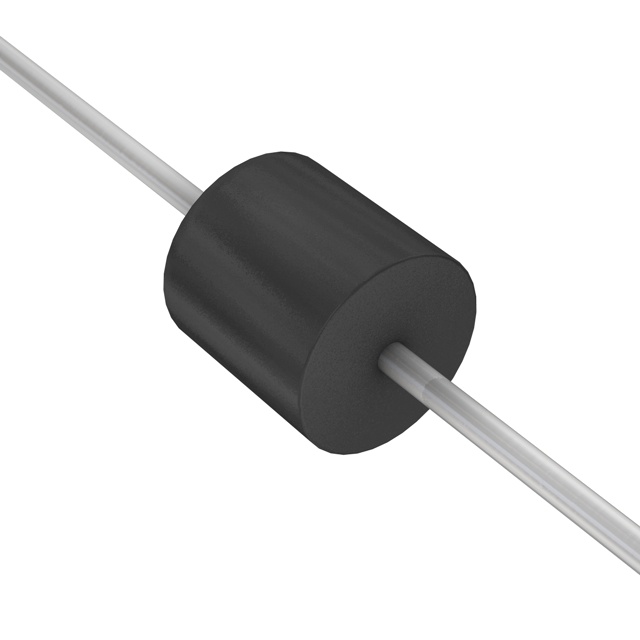
The MR2535L is a Transient Voltage Suppressor (TVS) diode manufactured by onsemi, designed for general-purpose overvoltage protection in through-hole applications. This component features a 20V reverse standoff voltage rating and is packaged in a Microde Button configuration. The MR2535L is classified as obsolete, making identification of suitable substitute components essential for ongoing design support and procurement continuity.
Substiute Parts
Key Parameters
| Parameter | Value |
|---|---|
| Manufacturer Part Number | MR2535L |
| Manufacturer | onsemi |
| Category | Transient Voltage Suppressors (TVS) |
| Type | Zener |
| Unidirectional Channels | 1 |
| Voltage - Reverse Standoff (Typ) | 20V |
| Voltage - Breakdown (Min) | 24V |
| Mounting Type | Through Hole |
| Package / Case | Button, Axial |
| Operating Temperature | -65°C ~ 175°C (TJ) |
| Product Status | Obsolete |
| RoHS Status | RoHS non-compliant |
Substitute Part Grouping Explanation
Substitute components for the MR2535L are selected based on the following critical parameters that define functional equivalence:
- Voltage - Reverse Standoff (Typ): 20V nominal rating
- Voltage - Breakdown (Min): Minimum 22.2V to 24.4V range
- Type: Zener diode topology
- Unidirectional Configuration: Single-channel protection
- Mounting Type: Through-hole axial package
- Applications: General-purpose overvoltage suppression
All substitute parts maintain the 20V standoff voltage specification and are rated for through-hole mounting. Variations in clamping voltage, peak pulse current, and power dissipation reflect different package geometries and thermal capabilities, but do not affect the core protective function at the specified voltage threshold.
Parameter Comparison
| Parameter | MR2535L | 5KP20CA | BZW50-22 | SA20A-TP |
|---|---|---|---|---|
| Manufacturer | onsemi | Littelfuse | STMicroelectronics | Micro Commercial Co |
| Type | Zener | Zener | Zener | Zener |
| Unidirectional Channels | 1 | 1 (Bidirectional) | 1 | 1 |
| Voltage - Reverse Standoff (Typ) | 20V | 20V | 22V | 20V |
| Voltage - Breakdown (Min) | 24V | 22.2V | 24.4V | 22.2V |
| Voltage - Clamping (Max) @ Ipp | — | 32.4V | 51V | 32.4V |
| Current - Peak Pulse (10/1000µs) | — | 157.4A | 1177A (8/20µs) | 15.7A |
| Power - Peak Pulse | — | 5000W | 5000W | 500W |
| Mounting Type | Through Hole | Through Hole | Through Hole | Through Hole |
| Package / Case | Button, Axial | P600, Axial | R-6, Axial | DO-15, Axial |
| Operating Temperature | -65°C ~ 175°C (TJ) | -55°C ~ 175°C (TJ) | — | -55°C ~ 175°C (TA) |
| Product Status | Obsolete | Active | Active | Active |
| RoHS Status | RoHS non-compliant | ROHS3 Compliant | ROHS3 Compliant | ROHS3 Compliant |
Engineering Selection Recommendations
5KP20CA (Littelfuse): This part maintains exact voltage equivalence (20V standoff) and is actively manufactured with ROHS3 compliance. The P600 package provides higher power dissipation (5000W) compared to the original MR2535L, making it suitable for applications requiring enhanced thermal performance. Bidirectional configuration provides protection in both polarities.
SA20A-TP (Micro Commercial Co): This component matches the 20V standoff specification and is actively produced with ROHS3 compliance. The DO-15 package is a standard through-hole axial form factor. Power dissipation is rated at 500W, which may be limiting in high-energy transient environments but is appropriate for lower-power signal-line protection applications.
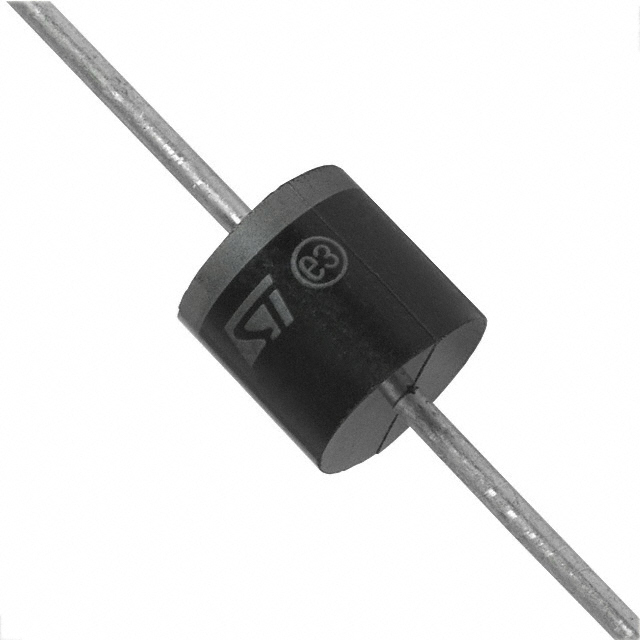
BZW50-22 (STMicroelectronics): This part operates at a slightly elevated standoff voltage (22V nominal) and is actively manufactured with ROHS3 compliance. The R-6 package and 5000W power rating support high-current transient suppression. The 22V rating represents a minor deviation from the 20V specification and should be evaluated against circuit protection requirements.
All three substitutes are actively produced and RoHS compliant, addressing the obsolescence and compliance limitations of the original MR2535L.
Frequently Asked Questions (FAQ)
Q: Can the 5KP20CA replace the MR2535L directly? A: Yes. Both components share the 20V reverse standoff voltage specification and through-hole axial mounting. The 5KP20CA provides equivalent voltage protection with higher power dissipation capability and active product status.
Q: What is the difference between unidirectional and bidirectional TVS diodes? A: Unidirectional diodes protect against overvoltage in one polarity direction only. Bidirectional diodes (such as the 5KP20CA) protect against transients in both polarities. Selection depends on circuit topology and whether the protected line can experience voltage excursions in both directions.
Q: Why does the BZW50-22 have a 22V standoff rating instead of 20V? A: The BZW50-22 is rated at 22V nominal standoff voltage, representing a 2V deviation from the MR2535L specification. This part remains functionally equivalent for general-purpose protection but should be verified against specific circuit voltage thresholds and transient energy levels.
Q: Are package differences between Button, P600, R-6, and DO-15 significant? A: Package differences affect thermal dissipation, board layout compatibility, and mechanical fit. All four packages are through-hole axial configurations suitable for PCB mounting. The P600 and R-6 packages support higher power dissipation (5000W) compared to the Button and DO-15 packages. Verify PCB footprint compatibility before selection.
Q: What does ROHS3 compliance mean for this application? A: ROHS3 compliance indicates the component meets Restriction of Hazardous Substances Directive requirements, restricting lead, cadmium, mercury, and other hazardous materials. The original MR2535L is RoHS non-compliant. All active substitutes are ROHS3 compliant, supporting modern procurement and environmental standards.
Q: Can I use the SA20A-TP in high-energy transient applications? A: The SA20A-TP is rated for 500W peak pulse power, which is lower than the 5000W rating of the 5KP20CA and BZW50-22. For applications with high-energy transients, the higher-power-rated alternatives are more appropriate. Verify transient energy levels against component power ratings.
Alternative Parts

SJ6012L2TP
Littelfuse Inc.
6 Alternative Parts

JMK107BBJ476MA-RE
Taiyo Yuden
10 Alternative Parts

GMK107BBJ475MA-T
Taiyo Yuden
5 Alternative Parts
SJ6020N2ARP
Littelfuse Inc.
3 Alternative Parts
SJ6025R2ATP
Littelfuse Inc.
4 Alternative Parts

2474-05L
API Delevan Inc.
1 Alternative Parts

4590R-684K
API Delevan Inc.
1 Alternative Parts

CM6560R-334
API Delevan Inc.
1 Alternative Parts

CM6460-104
API Delevan Inc.
1 Alternative Parts

5526-12
API Delevan Inc.
1 Alternative Parts