


Request Quote
(Ships tomorrow)
MPX53D Equivalent & Substitute Parts
Part Overview
The MPX53D is a differential pressure sensor manufactured by NXP USA Inc., designed for board mount applications with a 7.25 PSI (50 kPa) differential pressure range and 0 mV to 60 mV output at 3V supply. The device features a Wheatstone Bridge output configuration and operates across -40°C to 125°C. As an obsolete product, identifying suitable substitute components is essential for system redesign, legacy system maintenance, and production continuity.
Substiute Parts
Key Parameters
| Parameter | Value |
|---|---|
| Manufacturer Part Number | MPX53D |
| Manufacturer | NXP USA Inc. |
| Product Status | Obsolete |
| Pressure Type | Differential |
| Operating Pressure | 7.25 PSI (50 kPa) |
| Output Type | Wheatstone Bridge |
| Output Range | 0 mV ~ 60 mV (3V) |
| Accuracy | -0.6% ~ 0.4% |
| Supply Voltage | 3V ~ 6V |
| Operating Temperature | -40°C ~ 125°C |
| Mounting Type | Through Hole |
| Package Type | 4-SIP Module |
| Termination Style | PC Pin |
| Maximum Pressure | 25.38 PSI (175 kPa) |
| RoHS Status | ROHS3 Compliant |
Substitute Part Grouping Explanation
Substitution of the MPX53D requires matching the following critical electrical and mechanical parameters:
Pressure Specification: Operating pressure of 7.25 PSI (50 kPa) is the primary functional requirement. Substitute parts must maintain this pressure rating.
Output Characteristics: The Wheatstone Bridge output configuration and accuracy range (-0.6% ~ 0.4%) define the signal conditioning capability. Substitute parts must preserve this output type and accuracy specification.
Temperature Range: Operating temperature from -40°C to 125°C establishes the environmental operating envelope. Substitute parts must support this full range.
Supply Voltage Compatibility: While the MPX53D operates at 3V ~ 6V, substitute parts may operate at different voltage ranges provided the system design accommodates the change.
Packaging and Mounting: The through-hole 4-SIP Module with PC Pin termination represents a specific form factor. Substitutes with different mounting technologies (surface mount) or package styles require circuit board redesign.
Compliance: RoHS3 compliance and REACH unaffected status are mandatory for modern production environments.
Parameter Comparison
| Parameter | MPX53D | MPXM2053GS |
|---|---|---|
| Manufacturer | NXP USA Inc. | NXP USA Inc. |
| Product Status | Obsolete | Active |
| Pressure Type | Differential | Vented Gauge |
| Operating Pressure | 7.25 PSI (50 kPa) | 7.25 PSI (50 kPa) |
| Output Type | Wheatstone Bridge | Wheatstone Bridge |
| Output Range | 0 mV ~ 60 mV (3V) | 0 mV ~ 40 mV (10V) |
| Accuracy | -0.6% ~ 0.4% | -0.6% ~ 0.4% |
| Supply Voltage | 3V ~ 6V | 10V ~ 16V |
| Operating Temperature | -40°C ~ 125°C | -40°C ~ 125°C |
| Mounting Type | Through Hole | Surface Mount |
| Package Type | 4-SIP Module | 5-SMD Module, Top Port |
| Termination Style | PC Pin | Gull Wing |
| Maximum Pressure | 25.38 PSI (175 kPa) | 29.01 PSI (200 kPa) |
| RoHS Status | ROHS3 Compliant | ROHS3 Compliant |
Engineering Selection Recommendations
The MPXM2053GS is an active product from NXP USA Inc. that shares the same 7.25 PSI operating pressure, Wheatstone Bridge output type, and accuracy specification as the obsolete MPX53D. Both devices maintain full compliance with RoHS3 and REACH requirements.
Selection of the MPXM2053GS as a substitute requires evaluation of the following differences:
Pressure Type Change: The MPX53D is a differential pressure sensor, while the MPXM2053GS is a vented gauge sensor. This functional difference affects the measurement application and must be validated against system requirements.
Supply Voltage: The MPXM2053GS requires 10V ~ 16V supply versus the MPX53D's 3V ~ 6V. System power architecture must be modified to accommodate this higher voltage requirement.
Output Voltage: The MPXM2053GS produces 0 mV ~ 40 mV at 10V supply, differing from the MPX53D's 0 mV ~ 60 mV at 3V. Signal conditioning and analog-to-digital conversion circuits require recalibration.
Mounting Technology: The MPXM2053GS uses surface mount (5-SMD Module, Gull Wing termination) versus the MPX53D's through-hole (4-SIP Module, PC Pin). Circuit board redesign is necessary.
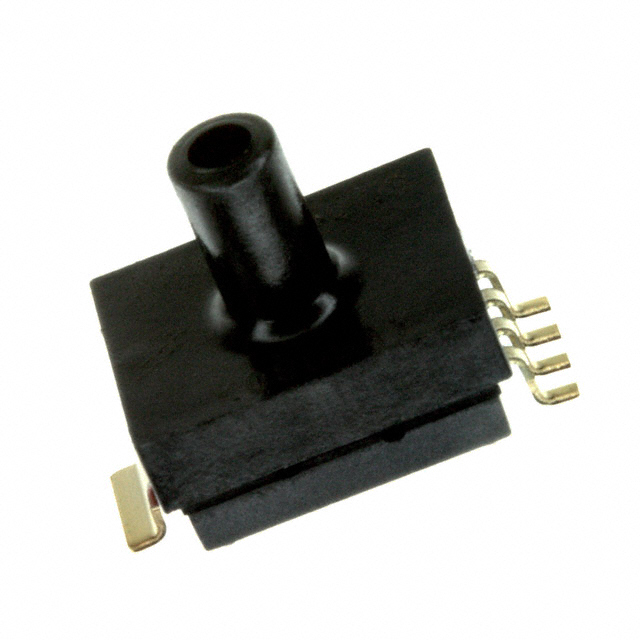
Port Configuration: The MPXM2053GS includes a male 0.12" (2.97mm) tube port with barbless connection and temperature compensation features not present in the MPX53D.
Frequently Asked Questions (FAQ)
Q: Can the MPXM2053GS directly replace the MPX53D without circuit modifications?
A: No. The MPXM2053GS differs in pressure type (vented gauge vs. differential), supply voltage (10V ~ 16V vs. 3V ~ 6V), output voltage range (0 mV ~ 40 mV vs. 0 mV ~ 60 mV), mounting technology (surface mount vs. through hole), and package style (5-SMD vs. 4-SIP). Circuit board redesign and system recalibration are required.
Q: What is the primary functional difference between differential and vented gauge pressure sensors?
A: A differential pressure sensor measures the pressure difference between two independent ports. A vented gauge sensor measures pressure relative to atmospheric pressure through a vent port. Application requirements determine which type is appropriate.
Q: Are both devices suitable for the same temperature range?
A: Yes. Both the MPX53D and MPXM2053GS operate across -40°C to 125°C, providing equivalent thermal performance.
Q: What compliance certifications apply to both devices?
A: Both devices are RoHS3 compliant and REACH unaffected, meeting current regulatory requirements for electronic components in most markets.
Q: Does the MPXM2053GS include additional features compared to the MPX53D?
A: Yes. The MPXM2053GS includes temperature compensation and a mechanical port interface (male 0.12" tube, barbless connection), features not specified for the MPX53D.
Q: What inventory status should influence component selection?
A: The MPX53D is obsolete with 7,086 pieces available. The MPXM2053GS is an active product with 18,413 pieces in stock, providing superior long-term availability and supply chain reliability.
Alternative Parts

SJ6012L2TP
Littelfuse Inc.
6 Alternative Parts

JMK107BBJ476MA-RE
Taiyo Yuden
10 Alternative Parts

GMK107BBJ475MA-T
Taiyo Yuden
5 Alternative Parts
SJ6020N2ARP
Littelfuse Inc.
3 Alternative Parts
SJ6025R2ATP
Littelfuse Inc.
4 Alternative Parts

2474-05L
API Delevan Inc.
1 Alternative Parts

4590R-684K
API Delevan Inc.
1 Alternative Parts

CM6560R-334
API Delevan Inc.
1 Alternative Parts

CM6460-104
API Delevan Inc.
1 Alternative Parts

5526-12
API Delevan Inc.
1 Alternative Parts