


Request Quote
(Ships tomorrow)
MPC9229AC Equivalent & Substitute Parts
Part Overview
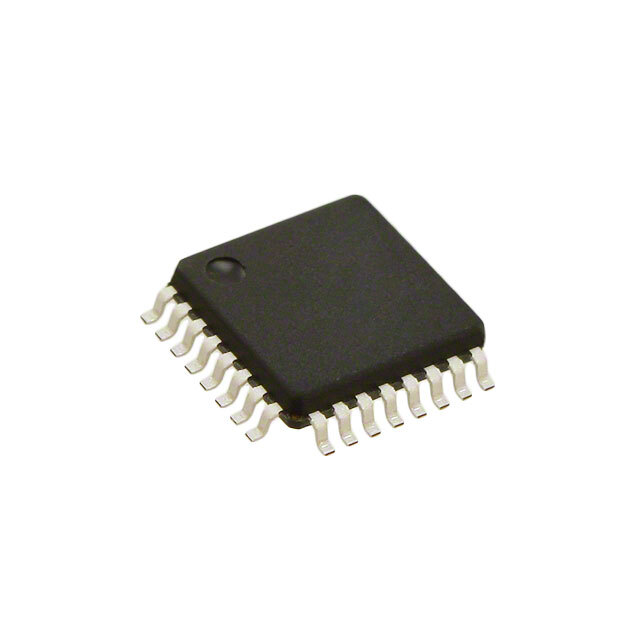
The MPC9229AC is a Clock/Frequency Synthesizer and Clock Generator IC manufactured by NXP USA Inc., designed for 400MHz operation in a 32-LQFP surface mount package. This device features a Phase-Locked Loop (PLL) with bypass capability, crystal input, and LVPECL output configuration. The MPC9229AC is classified as obsolete, necessitating identification of functionally equivalent alternatives for new designs and production continuity.
Substiute Parts
Key Parameters
| Parameter | MPC9229AC Specification |
|---|---|
| Manufacturer | NXP USA Inc. |
| Category | Clock/Timing |
| Type | Clock/Frequency Synthesizer, Clock Generator |
| Package / Case | 32-LQFP (7x7) |
| Mounting Type | Surface Mount |
| Frequency - Max | 400 MHz |
| Voltage - Supply | 3.135V ~ 3.465V |
| Operating Temperature | 0°C ~ 70°C |
| Output Type | LVPECL |
| PLL with Bypass | Yes |
| RoHS Status | ROHS3 Compliant |
| Moisture Sensitivity Level (MSL) | 3 (168 Hours) |
| Product Status | Obsolete |
Substitute Part Grouping Explanation
The CDCLVP110VF from Texas Instruments qualifies as a substitute based on the following critical parameters:
Matching Parameters:
- Package / Case: 32-LQFP (7x7) — identical physical footprint and pin count
- Mounting Type: Surface Mount — compatible with existing PCB assembly processes
- Output Type: LVPECL — maintains signal compatibility with downstream circuitry
- RoHS Status: ROHS3 Compliant — meets regulatory requirements
- Differential Output: Yes — supports LVPECL signaling standard
Functional Differences: The CDCLVP110VF operates as a Fanout Buffer (Distribution) and Multiplexer with a 2:10 input-to-output ratio and maximum frequency of 3.5 GHz, compared to the MPC9229AC's 1:1 ratio and 400 MHz maximum frequency. The substitute device supports higher frequency operation and provides expanded output distribution capability. Supply voltage range (2.375V ~ 3.8V) encompasses the MPC9229AC requirement (3.135V ~ 3.465V). Operating temperature range (-40°C ~ 85°C) exceeds the MPC9229AC specification (0°C ~ 70°C).
Parameter Comparison
| Parameter | MPC9229AC (NXP) | CDCLVP110VF (Texas Instruments) |
|---|---|---|
| Category | Clock/Timing | Clock/Timing |
| Type | Clock/Frequency Synthesizer, Clock Generator | Fanout Buffer (Distribution), Multiplexer |
| Package / Case | 32-LQFP (7x7) | 32-LQFP (7x7) |
| Mounting Type | Surface Mount | Surface Mount |
| Frequency - Max | 400 MHz | 3.5 GHz |
| Voltage - Supply | 3.135V ~ 3.465V | 2.375V ~ 3.8V |
| Operating Temperature | 0°C ~ 70°C | -40°C ~ 85°C |
| Output Type | LVPECL | LVPECL |
| Differential Output | Yes | Yes |
| RoHS Status | ROHS3 Compliant | ROHS3 Compliant |
| Moisture Sensitivity Level (MSL) | 3 (168 Hours) | 1 (Unlimited) |
| Product Status | Obsolete | Active |
Engineering Selection Recommendations
The CDCLVP110VF is suitable for applications requiring clock distribution and frequency synthesis where the MPC9229AC is no longer available. Both devices maintain ROHS3 compliance and REACH unaffected status, satisfying regulatory requirements. The CDCLVP110VF's active product status ensures long-term availability and supply chain continuity.
The substitute device's superior frequency capability (3.5 GHz versus 400 MHz) and extended operating temperature range (-40°C ~ 85°C versus 0°C ~ 70°C) provide enhanced performance margins for demanding applications. The CDCLVP110VF's lower moisture sensitivity level (MSL 1 versus MSL 3) reduces handling and storage constraints during manufacturing.
Pin-compatible package geometry (32-LQFP, 7x7mm) enables direct PCB layout reuse without redesign. Voltage supply range compatibility ensures existing power distribution networks require no modification.
Frequently Asked Questions (FAQ)
Q: Is the CDCLVP110VF a direct pin-for-pin replacement for the MPC9229AC?
A: Both devices use the 32-LQFP (7x7mm) package with identical pin count and footprint. Pin-level compatibility requires verification against specific application schematics and signal routing, as functional differences exist between clock synthesis and fanout buffer architectures.
Q: What are the key functional differences between these devices?
A: The MPC9229AC operates as a clock/frequency synthesizer with 1:1 input-to-output ratio and 400 MHz maximum frequency. The CDCLVP110VF functions as a fanout buffer and multiplexer with 2:10 input-to-output ratio and 3.5 GHz maximum frequency. Both devices output LVPECL signals and support differential signaling.
Q: Are there voltage supply compatibility concerns?
A: The CDCLVP110VF supply voltage range (2.375V ~ 3.8V) fully encompasses the MPC9229AC requirement (3.135V ~ 3.465V). Existing 3.3V supply rails are compatible with both devices without modification.
Q: How do operating temperature ranges compare?
A: The MPC9229AC operates from 0°C to 70°C. The CDCLVP110VF extends this range to -40°C to 85°C, providing broader environmental compatibility for industrial and extended-temperature applications.
Q: What is the significance of the MSL (Moisture Sensitivity Level) difference?
A: The MPC9229AC carries MSL 3 (168-hour limit), requiring controlled humidity storage and handling. The CDCLVP110VF carries MSL 1 (unlimited), eliminating moisture-related handling constraints and reducing manufacturing process complexity.
Q: Are both devices RoHS compliant?
A: Yes. Both the MPC9229AC and CDCLVP110VF are ROHS3 compliant and REACH unaffected, meeting current regulatory requirements for electronic components.
Alternative Parts

SJ6012L2TP
Littelfuse Inc.
6 Alternative Parts

JMK107BBJ476MA-RE
Taiyo Yuden
10 Alternative Parts

GMK107BBJ475MA-T
Taiyo Yuden
5 Alternative Parts
SJ6020N2ARP
Littelfuse Inc.
3 Alternative Parts
SJ6025R2ATP
Littelfuse Inc.
4 Alternative Parts

2474-05L
API Delevan Inc.
1 Alternative Parts

4590R-684K
API Delevan Inc.
1 Alternative Parts

CM6560R-334
API Delevan Inc.
1 Alternative Parts

CM6460-104
API Delevan Inc.
1 Alternative Parts

5526-12
API Delevan Inc.
1 Alternative Parts