




Request Quote
(Ships tomorrow)
MMBTA14 NPN Darlington Transistor Equivalent & Substitute Parts
Part Overview
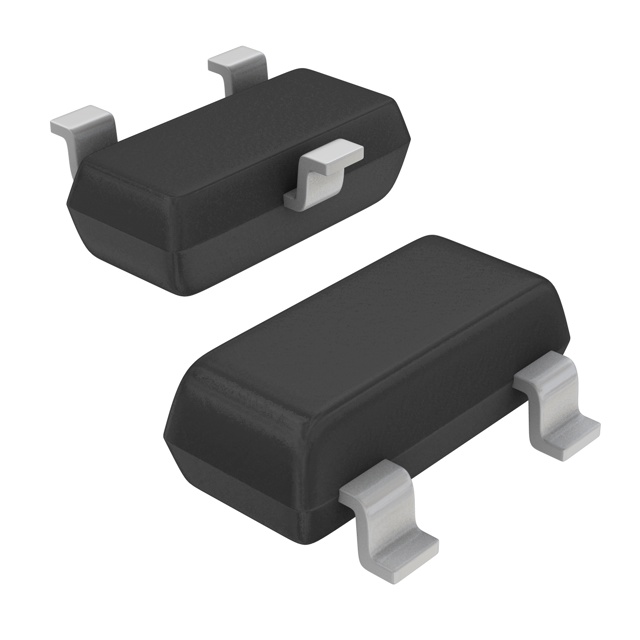
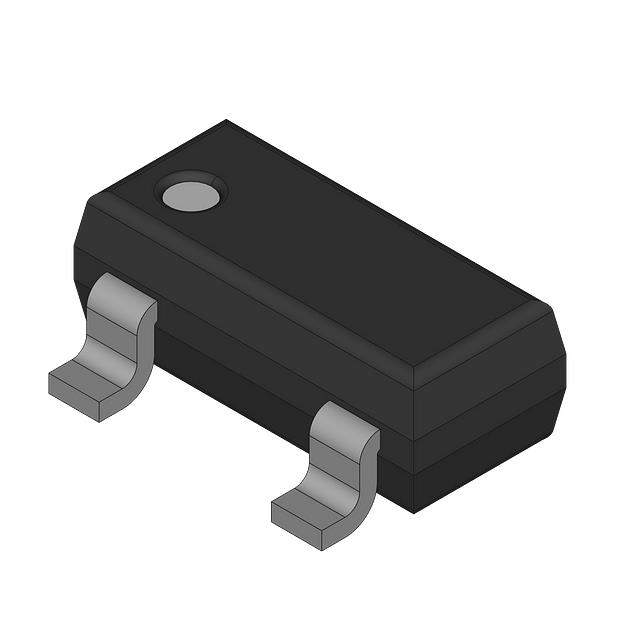
The MMBTA14 is an NPN Darlington bipolar junction transistor manufactured by onsemi, rated for 30 V collector-emitter breakdown voltage and 1.2 A maximum collector current. The device is packaged in SOT-23-3 (TO-236-3) surface mount configuration and is designed for general-purpose switching and amplification applications requiring high current gain.
The MMBTA14 is classified as obsolete product status. Identifying equivalent and substitute parts is necessary to maintain design continuity, ensure supply chain availability, and support ongoing production requirements for applications currently utilizing this component.
Substiute Parts
Key Parameters
| Parameter | Value | Unit |
|---|---|---|
| Transistor Type | NPN - Darlington | — |
| Current - Collector (Ic) (Max) | 1.2 | A |
| Voltage - Collector Emitter Breakdown (Max) | 30 | V |
| Vce Saturation (Max) @ Ib, Ic | 1.5V @ 100µA, 100mA | — |
| Current - Collector Cutoff (Max) | 100 | nA |
| DC Current Gain (hFE) (Min) @ Ic, Vce | 20000 @ 100mA, 5V | — |
| Power - Max | 350 | mW |
| Frequency - Transition | 125 | MHz |
| Operating Temperature | -55 to 150 | °C |
| Mounting Type | Surface Mount | — |
| Package / Case | SOT-23-3 (TO-236-3, SC-59) | — |
| Moisture Sensitivity Level (MSL) | 1 (Unlimited) | — |
Substitute Part Grouping Explanation
Substitution of the MMBTA14 is determined by the following critical parameters:
Electrical Compatibility Requirements:
- Transistor Type: NPN - Darlington configuration
- Voltage - Collector Emitter Breakdown (Max): 30 V minimum
- Current - Collector (Ic) (Max): 1.2 A minimum
- DC Current Gain (hFE) (Min): 20000 or greater at specified test conditions
- Vce Saturation: 1.5 V or lower at rated conditions
Mechanical Compatibility Requirements:
- Mounting Type: Surface Mount
- Package / Case: SOT-23-3 (TO-236-3, SC-59) or equivalent footprint
- Moisture Sensitivity Level: 1 (Unlimited) or equivalent
Compliance Requirements:
- RoHS Status: ROHS3 Compliant preferred for new designs
- REACH Status: REACH Unaffected
- Operating Temperature Range: -55°C to 150°C minimum
Substitute parts are classified into two categories:
Direct Substitutes (Electrical and Mechanical Equivalence): Parts that meet or exceed all critical electrical parameters while maintaining identical or compatible package footprints. These parts can replace the MMBTA14 without circuit modification.
Similar Substitutes (Reduced Current Rating): Parts that maintain voltage, gain, and package compatibility but feature reduced maximum collector current (300 mA instead of 1.2 A). These parts are suitable for applications where the full 1.2 A rating is not required.
Parameter Comparison
| Part Number | Manufacturer | Ic (Max) | Vce(br)max | hFE (Min) | Vce Sat (Max) | Frequency | Power (Max) | Package | Product Status | RoHS |
|---|---|---|---|---|---|---|---|---|---|---|
| MMBTA14 | onsemi | 1.2 A | 30 V | 20000 | 1.5V | 125 MHz | 350 mW | SOT-23-3 | Obsolete | — |
| BCV27 | onsemi | 1.2 A | 30 V | 20000 | 1.0V | 220 MHz | 350 mW | SOT-23-3 | Active | ROHS3 |
| BCV27,215 | Nexperia USA Inc. | 0.5 A | 30 V | 20000 | 1.0V | 220 MHz | 250 mW | TO-236AB | Active | ROHS3 |
| MMBTA14LT1G | onsemi | 0.3 A | 30 V | 20000 | 1.5V | 125 MHz | 225 mW | SOT-23-3 | Active | ROHS3 |
| MMBTA14-7-F | Diodes Incorporated | 0.3 A | 30 V | 20000 | 1.5V | 125 MHz | 300 mW | SOT-23-3 | Active | ROHS3 |
| 2SD2142KT146 | Rohm Semiconductor | 0.3 A | 30 V | 10000 | 1.5V | 200 MHz | 200 mW | SMT3 | Active | ROHS3 |
| 2SD1383KT146B | Rohm Semiconductor | 0.3 A | 32 V | 5000 | 1.5V | 250 MHz | 200 mW | SMT3 | Active | ROHS3 |
| MMBTA13LT1G | onsemi | 0.3 A | 30 V | 10000 | 1.5V | 125 MHz | 225 mW | SOT-23-3 | Active | ROHS3 |
| SMMBTA14LT1G | onsemi | 0.3 A | 30 V | 20000 | 1.5V | 125 MHz | 225 mW | SOT-23-3 | Active | ROHS3 |
Engineering Selection Recommendations
Primary Direct Substitute:
BCV27 (onsemi) is the recommended direct substitute for the MMBTA14. This part maintains full electrical equivalence with 1.2 A maximum collector current, 30 V breakdown voltage, and 20000 minimum DC current gain. The BCV27 features improved transition frequency (220 MHz versus 125 MHz) and lower saturation voltage (1.0 V versus 1.5 V), providing enhanced performance characteristics. The part is in active product status with ROHS3 compliance and unlimited moisture sensitivity rating. Inventory availability is substantial at 107,836 pieces.
Secondary Direct Substitute:
BCV27,215 (Nexperia USA Inc.) provides electrical compatibility with reduced current rating (500 mA versus 1.2 A). This part is qualified to AEC-Q101 automotive standard and carries active product status with ROHS3 compliance. Selection of this part is appropriate for applications where the full 1.2 A rating is not required and automotive-grade qualification is beneficial.
Reduced Current Substitutes (300 mA Rating):
For applications requiring less than 300 mA collector current, the following parts provide compatible substitution:
- MMBTA14LT1G (onsemi): Maintains 20000 hFE gain and SOT-23-3 package with active status and ROHS3 compliance
- MMBTA14-7-F (Diodes Incorporated): Provides AEC-Q101 automotive qualification with active status and ROHS3 compliance
- SMMBTA14LT1G (onsemi): Offers 20000 hFE gain with active status and ROHS3 compliance
Alternative Substitutes with Reduced Gain:
- 2SD2142KT146 (Rohm Semiconductor): 300 mA rating with 10000 hFE gain, 30 V rating, and 200 MHz transition frequency
- 2SD1383KT146B (Rohm Semiconductor): 300 mA rating with 32 V breakdown voltage and 250 MHz transition frequency; note reduced hFE of 5000
Compliance Considerations:
All recommended substitute parts carry ROHS3 compliance and REACH Unaffected status, meeting current environmental and regulatory requirements. Parts with AEC-Q101 qualification (BCV27,215 and MMBTA14-7-F) are suitable for automotive applications.
Frequently Asked Questions (FAQ)
Q: Can BCV27 directly replace MMBTA14 without circuit modification?
A: Yes. BCV27 maintains identical electrical specifications for voltage (30 V), current (1.2 A), and DC current gain (20000 hFE). Both parts use SOT-23-3 package with identical pinout. The improved performance characteristics (lower saturation voltage and higher transition frequency) are beneficial in most applications.
Q: What is the difference between MMBTA14 and MMBTA14LT1G?
A: MMBTA14LT1G features reduced maximum collector current (300 mA versus 1.2 A) and reduced power dissipation (225 mW versus 350 mW). Both maintain 30 V breakdown voltage, 20000 hFE gain, and SOT-23-3 package. MMBTA14LT1G is suitable for lower-current applications and is in active product status with ROHS3 compliance.
Q: Are the Rohm Semiconductor parts (2SD2142KT146 and 2SD1383KT146B) compatible substitutes?
A: These parts provide functional substitution for reduced current applications (300 mA maximum). Both maintain 30 V or higher breakdown voltage and SOT-23-3 compatible packaging. However, 2SD2142KT146 features reduced hFE (10000 versus 20000), and 2SD1383KT146B features significantly reduced hFE (5000). Circuit verification is required if DC current gain is critical to application performance.
Q: What is the significance of the packaging designation differences (SOT-23-3 versus SMT3)?
A: SOT-23-3 and SMT3 are equivalent package designations for the same physical form factor (TO-236-3, SC-59). Parts specified with either designation are mechanically and electrically compatible for PCB assembly. Verify with component supplier documentation for specific land pattern requirements.
Q: Why is MMBTA14 classified as obsolete?
A: The MMBTA14 is no longer in active production by onsemi. Direct substitutes such as BCV27 are available in active product status with improved electrical characteristics and full compliance with current environmental standards. Migration to active parts ensures long-term supply chain availability and regulatory compliance.
Q: Can MMBTA13LT1G be used as a substitute for MMBTA14?
A: MMBTA13LT1G provides partial compatibility with reduced current rating (300 mA versus 1.2 A) and reduced DC current gain (10000 versus 20000 hFE). This part is suitable only for applications where both the lower current and lower gain specifications are acceptable. Circuit verification is required.
Q: What are the automotive qualification implications of MMBTA14-7-F?
A: MMBTA14-7-F carries AEC-Q101 automotive qualification, indicating compliance with automotive industry reliability and performance standards. This part is suitable for automotive applications requiring qualified components. Non-automotive applications may use this part without restriction.
Q: How does transition frequency affect part selection?
A: Transition frequency (fT) indicates the frequency at which transistor current gain drops to unity. Higher transition frequency (220 MHz for BCV27 versus 125 MHz for MMBTA14) provides improved high-frequency performance. For DC and low-frequency switching applications, transition frequency difference is not significant. For RF or high-frequency applications, higher transition frequency is beneficial.
Q: What is the practical difference between 1.0 V and 1.5 V saturation voltage?
A: Lower saturation voltage (1.0 V for BCV27 versus 1.5 V for MMBTA14) results in reduced power dissipation and improved switching efficiency. For applications operating at or near maximum current ratings, the 0.5 V difference may be significant. For typical switching applications at moderate current levels, the difference is generally negligible.
Alternative Parts

SJ6012L2TP
Littelfuse Inc.
6 Alternative Parts

JMK107BBJ476MA-RE
Taiyo Yuden
10 Alternative Parts

GMK107BBJ475MA-T
Taiyo Yuden
5 Alternative Parts
SJ6020N2ARP
Littelfuse Inc.
3 Alternative Parts
SJ6025R2ATP
Littelfuse Inc.
4 Alternative Parts

2474-05L
API Delevan Inc.
1 Alternative Parts

4590R-684K
API Delevan Inc.
1 Alternative Parts

CM6560R-334
API Delevan Inc.
1 Alternative Parts

CM6460-104
API Delevan Inc.
1 Alternative Parts

5526-12
API Delevan Inc.
1 Alternative Parts