






Request Quote
(Ships tomorrow)
MMBT2222AT-7 Equivalent & Substitute Parts
Part Overview
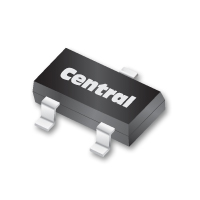
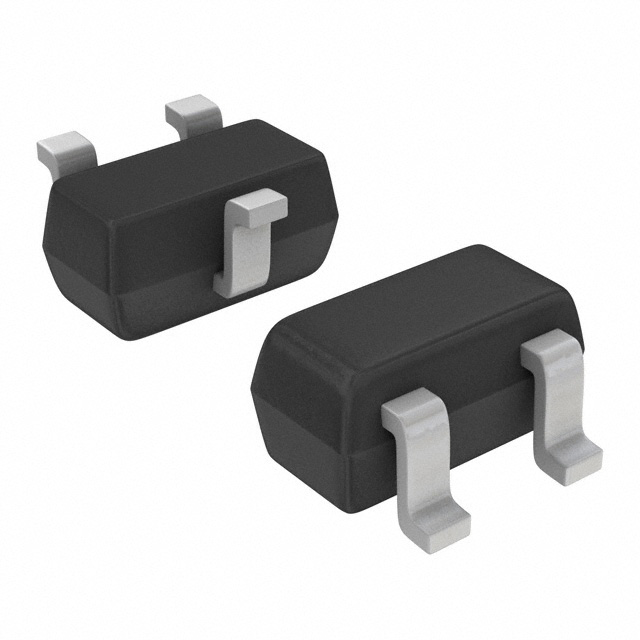
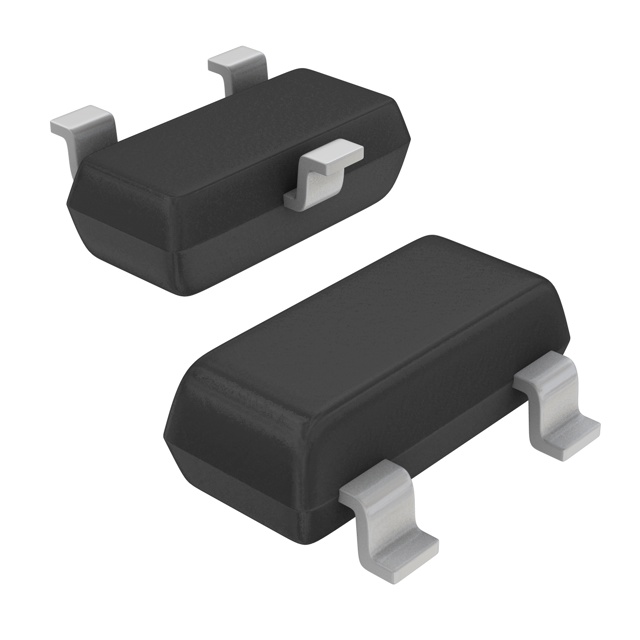
The MMBT2222AT-7 is an NPN bipolar junction transistor manufactured by Diodes Incorporated, designed for general-purpose switching and amplification applications. This device operates at 40 V collector-emitter breakdown voltage with a maximum collector current of 600 mA and transition frequency of 300 MHz. The part is classified as obsolete, which necessitates identification of active equivalent and substitute components for ongoing design requirements and production continuity. Substitute parts must maintain electrical compatibility within the specified parameter ranges while accommodating packaging and manufacturing variations.
Substiute Parts
Key Parameters
| Parameter | Value | Unit |
|---|---|---|
| Transistor Type | NPN | — |
| Collector-Emitter Breakdown Voltage (Max) | 40 | V |
| Collector Current (Max) | 600 | mA |
| Power Dissipation (Max) | 150 | mW |
| Transition Frequency | 300 | MHz |
| DC Current Gain (hFE Min) | 100 | @ 150mA, 10V |
| Operating Temperature Range | -55 to 150 | °C |
| Package | SOT-523 | — |
| Mounting Type | Surface Mount | — |
Substitute Part Grouping Explanation
Substitute parts for the MMBT2222AT-7 are classified into two categories based on electrical and mechanical compatibility:
Direct Electrical Equivalents (Same Package - SOT-523): Parts that maintain identical or superior electrical specifications within the same SOT-523 package footprint. These substitutes preserve PCB layout compatibility and require no design modification.
Functional Equivalents (Alternative Packages): Parts that meet or exceed the core electrical requirements (40 V breakdown, 600 mA collector current, 300 MHz transition frequency, 150 mW minimum power rating) but utilize different surface-mount packages. These require PCB layout adjustment but provide equivalent circuit performance.
Key Substitution Criteria:
- Collector-Emitter Breakdown Voltage: minimum 40 V
- Collector Current (Max): minimum 600 mA
- Transition Frequency: minimum 300 MHz
- DC Current Gain (hFE): minimum 100 at specified test conditions
- Operating Temperature Range: -55°C to 150°C minimum
- RoHS3 Compliance and AEC-Q101 qualification preferred for automotive applications
Parameter Comparison
| Part Number | Manufacturer | Package | Ic (Max) mA | Vce(br) V | Power mW | fT MHz | hFE (Min) | Temp Range °C | Status | RoHS |
|---|---|---|---|---|---|---|---|---|---|---|
| MMBT2222AT-7 | Diodes Inc. | SOT-523 | 600 | 40 | 150 | 300 | 100 | -55 to 150 | Obsolete | Non-compliant |
| MMBT2222AT-7-F | Diodes Inc. | SOT-523 | 600 | 40 | 150 | 300 | 100 | -55 to 150 | Active | ROHS3 |
| MMBT2222AT-TP | Micro Commercial Co | SOT-523 | 600 | 40 | 150 | 300 | 75 | -55 to 150 | Active | ROHS3 |
| CMUT2222A TR PBFREE | Central Semiconductor | SOT-523 | 600 | 40 | 250 | 300 | 100 | -65 to 150 | Active | ROHS3 |
| MMBT2222ATT1G | onsemi | SC-75, SOT-416 | 600 | 40 | 150 | 300 | 100 | -55 to 150 | Active | ROHS3 |
| MMBT2222ATT3G | onsemi | SC-75, SOT-416 | 600 | 40 | 150 | 300 | 100 | -55 to 150 | Active | ROHS3 |
| MMBT2222AWT1G | onsemi | SC-70, SOT-323 | 600 | 40 | 150 | 300 | 100 | -55 to 150 | Active | ROHS3 |
| MMST4401-7-F | Diodes Inc. | SC-70, SOT-323 | 600 | 40 | 200 | 250 | 100 | -55 to 150 | Active | ROHS3 |
| BSR14 | onsemi | SOT-23-3 | 800 | 40 | 350 | 300 | 100 | -55 to 150 | Active | ROHS3 |
| CMPT2222A TR PBFREE | Central Semiconductor | SOT-23 | 600 | 40 | 350 | 300 | 100 | -65 to 150 | Active | ROHS3 |
| 2SD1781KT146R | Rohm Semiconductor | SMT3, SOT-23-3 | 800 | 32 | 200 | 150 | 180 | -55 to 150 | Active | ROHS3 |
Engineering Selection Recommendations
Primary Recommendation - Direct Footprint Replacement: MMBT2222AT-7-F (Diodes Incorporated) is the direct active equivalent of the obsolete MMBT2222AT-7. This part maintains identical electrical specifications, package geometry (SOT-523), and mounting characteristics. It is RoHS3 compliant and carries active product status, ensuring long-term availability and supply chain continuity.
Secondary Recommendation - Same Manufacturer, Enhanced Compliance: CMUT2222A TR PBFREE (Central Semiconductor Corp) provides identical electrical performance in the SOT-523 package with extended operating temperature range (-65°C to 150°C) and higher power dissipation rating (250 mW vs. 150 mW). This part is suitable for applications requiring enhanced thermal margin or wider temperature operation.
Alternative Package Options - Functional Equivalents: For designs permitting PCB layout modification, the following active parts provide equivalent or superior electrical performance:
- MMBT2222ATT1G and MMBT2222ATT3G (onsemi, SC-75/SOT-416 package): Identical electrical specifications with alternative package footprint
- MMBT2222AWT1G (onsemi, SC-70/SOT-323 package): Identical electrical specifications with smaller footprint
- CMPT2222A TR PBFREE (Central Semiconductor, SOT-23 package): Identical electrical specifications with higher power rating (350 mW)
- BSR14 (onsemi, SOT-23-3 package): Enhanced current capability (800 mA) and power rating (350 mW) with identical voltage and frequency specifications
Not Recommended for Direct Substitution: 2SD1781KT146R (Rohm Semiconductor) and MMST4401-7-F (Diodes Incorporated) exhibit reduced transition frequency (150 MHz and 250 MHz respectively) compared to the 300 MHz specification of the MMBT2222AT-7. These parts are suitable only for applications where lower frequency operation is acceptable.
MMBT2222AT-TP (Micro Commercial Co) exhibits reduced DC current gain (75 @ 10mA, 10V) compared to the specified minimum of 100 @ 150mA, 10V, introducing potential circuit performance variation.
Frequently Asked Questions (FAQ)
Q: Can MMBT2222AT-7-F be used as a direct replacement for MMBT2222AT-7 without PCB modification?
A: Yes. MMBT2222AT-7-F is electrically and mechanically identical to MMBT2222AT-7, utilizing the same SOT-523 package footprint. No PCB layout changes are required. The primary difference is product status (active vs. obsolete) and RoHS3 compliance.
Q: What is the difference between SOT-523 and SOT-323 packages?
A: SOT-523 and SOT-323 (SC-70) are both three-terminal surface-mount packages but differ in physical dimensions and pin spacing. SOT-523 is smaller than SOT-323. Parts in different packages require PCB footprint redesign and cannot be used interchangeably without layout modification.
Q: Why is transition frequency (fT) important for substitution?
A: Transition frequency determines the maximum frequency at which the transistor maintains useful gain. The MMBT2222AT-7 specifies 300 MHz. Substitutes with lower transition frequency (such as 250 MHz or 150 MHz) may exhibit reduced gain at higher frequencies, potentially affecting circuit performance in RF or high-speed switching applications.
Q: Is CMUT2222A TR PBFREE suitable for automotive applications?
A: CMUT2222A TR PBFREE is RoHS3 compliant and lead-free. However, the original MMBT2222AT-7 carries AEC-Q101 automotive qualification. CMUT2222A TR PBFREE does not list AEC-Q101 qualification in the provided specifications. Automotive applications requiring AEC-Q101 certification should prioritize MMBT2222AT-7-F or equivalent parts with explicit automotive qualification.
Q: Can BSR14 replace MMBT2222AT-7 in all applications?
A: BSR14 provides superior electrical specifications (800 mA collector current, 350 mW power rating, 300 MHz transition frequency) but uses a different package (SOT-23-3 vs. SOT-523). BSR14 is functionally suitable for applications where the circuit can tolerate higher current and power ratings, but PCB redesign is required. The reduced power dissipation of MMBT2222AT-7 (150 mW) may be a design constraint in thermally limited applications, making BSR14's higher rating advantageous.
Q: What does RoHS3 compliance mean for component selection?
A: RoHS3 (Restriction of Hazardous Substances Directive 3) compliance indicates the component is manufactured without lead, cadmium, mercury, and other restricted substances. ROHS3 compliant parts are required for most commercial and industrial applications in regions enforcing RoHS regulations. The original MMBT2222AT-7 is RoHS non-compliant; all active substitutes listed are ROHS3 compliant.
Q: Are there any electrical performance differences between onsemi MMBT2222ATT1G, MMBT2222ATT3G, and MMBT2222AWT1G?
A: All three onsemi parts (MMBT2222ATT1G, MMBT2222ATT3G, MMBT2222AWT1G) exhibit identical electrical specifications. The differences are package type (SC-75/SOT-416 vs. SC-70/SOT-323) and packaging format (Tape & Reel vs. Cut Tape). Selection depends on PCB footprint requirements and supply chain preferences.
Q: What is the significance of DC Current Gain (hFE) variation among substitutes?
A: DC Current Gain determines the amplification factor of the transistor. The MMBT2222AT-7 specifies hFE minimum of 100 @ 150mA, 10V. MMBT2222AT-TP specifies hFE minimum of 75 @ 10mA, 10V, which is measured at different conditions and represents lower gain. 2SD1781KT146R specifies hFE minimum of 180 @ 100mA, 3V, indicating higher gain. Substitutes with significantly different hFE values may alter circuit biasing and performance characteristics.
Q: Can MMBT2222AT-TP be used despite lower hFE specification?
A: MMBT2222AT-TP exhibits hFE minimum of 75 compared to the specified 100. This represents a 25% reduction in minimum gain. For applications with tight gain requirements or dependent on specific biasing conditions, this variation may cause circuit malfunction or performance degradation. Use only if circuit design accommodates the lower gain specification.
Alternative Parts

SJ6012L2TP
Littelfuse Inc.
6 Alternative Parts

JMK107BBJ476MA-RE
Taiyo Yuden
10 Alternative Parts

GMK107BBJ475MA-T
Taiyo Yuden
5 Alternative Parts
SJ6020N2ARP
Littelfuse Inc.
3 Alternative Parts
SJ6025R2ATP
Littelfuse Inc.
4 Alternative Parts

2474-05L
API Delevan Inc.
1 Alternative Parts

4590R-684K
API Delevan Inc.
1 Alternative Parts

CM6560R-334
API Delevan Inc.
1 Alternative Parts

CM6460-104
API Delevan Inc.
1 Alternative Parts

5526-12
API Delevan Inc.
1 Alternative Parts