



Request Quote
(Ships tomorrow)
MIC38HC44YN Equivalent & Substitute Parts
Part Overview
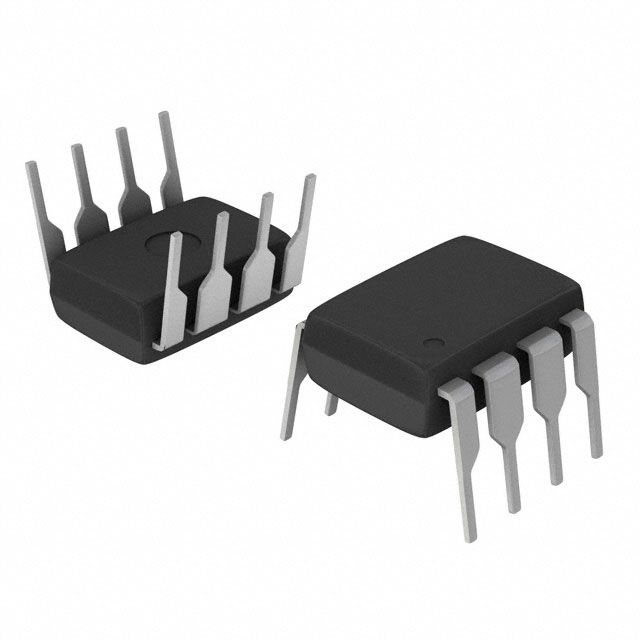
The MIC38HC44YN is an offline switch IC manufactured by Microchip Technology, designed for power management applications requiring multiple converter topologies. This device functions as a controller for Boost, Buck, Flyback, and Forward converter configurations with integrated switching capability and operates at 500kHz switching frequency. The part is currently in active production status with full RoHS3 compliance. Substitute parts become necessary when addressing supply chain constraints, obsolescence of primary components, or when design requirements permit operation within alternative electrical and thermal specifications.
Substiute Parts
Key Parameters
| Parameter | Value |
|---|---|
| Manufacturer | Microchip Technology |
| Part Number | MIC38HC44YN |
| Category | Power Management (PMIC) |
| Package Type | 8-DIP (0.300", 7.62mm) |
| Mounting Type | Through Hole |
| Topology Support | Boost, Buck, Flyback, Forward |
| Switching Frequency | 500kHz |
| Supply Voltage Range | 9V ~ 20V |
| Duty Cycle | 50% |
| Operating Temperature | -40°C ~ 150°C (TJ) |
| Output Isolation | Isolated |
| Internal Switch | Yes |
| Control Features | Frequency Control |
| Product Status | Active |
| RoHS Status | RoHS3 Compliant |
| MSL Rating | 1 (Unlimited) |
Substitute Part Grouping Explanation
Substitution eligibility for the MIC38HC44YN is determined by the following critical parameters:
Primary Substitution Criteria:
- Package compatibility: 8-DIP through-hole mounting
- Topology support: Minimum requirement of Boost and Flyback capability
- Switching frequency: Operation at or near 500kHz
- Supply voltage range: Overlap with 9V ~ 20V specification
- Output isolation capability: Isolated output configuration
- Control methodology: Frequency control feature
The UC3844AN qualifies as a substitute based on shared 8-DIP package format, support for Boost and Flyback topologies, 500kHz maximum switching frequency capability, and frequency control features. However, critical differences exist in supply voltage range, operating temperature span, and regulatory compliance status that must be evaluated for specific application requirements.
Parameter Comparison
| Parameter | MIC38HC44YN | UC3844AN |
|---|---|---|
| Manufacturer | Microchip Technology | STMicroelectronics |
| Package Type | 8-DIP (0.300", 7.62mm) | 8-DIP (0.300", 7.62mm) |
| Mounting Type | Through Hole | Through Hole |
| Topology Support | Boost, Buck, Flyback, Forward | Boost, Flyback |
| Switching Frequency | 500kHz | Up to 500kHz |
| Supply Voltage Range | 9V ~ 20V | 10V ~ 30V |
| Duty Cycle | 50% | 48% (Max) |
| Operating Temperature | -40°C ~ 150°C (TJ) | 0°C ~ 70°C (TA) |
| Output Isolation | Isolated | Isolation Capable |
| Internal Switch | Yes | Transistor Driver |
| Control Features | Frequency Control | Frequency Control |
| Product Status | Active | Obsolete |
| RoHS Status | RoHS3 Compliant | RoHS Non-Compliant |
| MSL Rating | 1 (Unlimited) | 1 (Unlimited) |
Engineering Selection Recommendations
MIC38HC44YN (Primary Component): Select this part for new designs and applications requiring active product status, full RoHS3 compliance, extended operating temperature range (-40°C to 150°C), and support for Buck topology in addition to Boost and Flyback configurations. This component is suitable for industrial and automotive applications with stringent regulatory requirements.
UC3844AN (Substitute Component): This part is suitable only for legacy system maintenance, repair of existing equipment, or applications where RoHS compliance is not mandated. The obsolete product status and RoHS non-compliance status restrict its use to non-regulated markets. The narrower operating temperature range (0°C to 70°C) and absence of Buck topology support limit applicability. The extended supply voltage range (10V ~ 30V) provides broader input voltage flexibility compared to the primary part.
Selection between these components must account for regulatory environment, supply chain availability, thermal operating requirements, and topology requirements specific to the converter application.
Frequently Asked Questions (FAQ)
Q: Can UC3844AN directly replace MIC38HC44YN in all applications?
A: No. While both components share 8-DIP packaging and support Boost and Flyback topologies, critical differences exist. The UC3844AN lacks Buck topology support, operates only to 70°C ambient temperature versus 150°C junction temperature for the MIC38HC44YN, and does not meet RoHS3 compliance. Substitution is valid only when the application does not require Buck topology, operates within 0°C to 70°C ambient conditions, and regulatory compliance is not required.
Q: What is the impact of the supply voltage range difference?
A: The MIC38HC44YN operates from 9V to 20V, while the UC3844AN operates from 10V to 30V. The UC3844AN cannot operate below 10V input, which may be problematic for applications requiring 9V startup. Conversely, the UC3844AN tolerates higher input voltages up to 30V. Circuit design must verify that the actual operating voltage range of the application falls within the substitute part's specification.
Q: Why is product status relevant to substitution?
A: The MIC38HC44YN is in active production, ensuring continued availability and manufacturing consistency. The UC3844AN is obsolete, meaning production has ceased and future availability is limited to existing inventory. Obsolete parts present supply chain risk and may exhibit variable quality from remaining stock. New designs should not incorporate obsolete components.
Q: Are the package dimensions identical?
A: Both components use 8-DIP (0.300", 7.62mm) through-hole packaging with identical physical dimensions. PCB layout and footprints are directly compatible. No mechanical redesign is required for package substitution.
Q: What does "Isolation Capable" mean for the UC3844AN versus "Isolated" for the MIC38HC44YN?
A: The MIC38HC44YN provides integrated isolation capability as a standard feature. The UC3844AN is described as "Isolation Capable," indicating that isolation can be achieved through external circuit design but is not inherently integrated. This distinction affects circuit complexity and component count in isolated converter designs.
Alternative Parts

SJ6012L2TP
Littelfuse Inc.
6 Alternative Parts

JMK107BBJ476MA-RE
Taiyo Yuden
10 Alternative Parts

GMK107BBJ475MA-T
Taiyo Yuden
5 Alternative Parts
SJ6020N2ARP
Littelfuse Inc.
3 Alternative Parts
SJ6025R2ATP
Littelfuse Inc.
4 Alternative Parts

2474-05L
API Delevan Inc.
1 Alternative Parts

4590R-684K
API Delevan Inc.
1 Alternative Parts

CM6560R-334
API Delevan Inc.
1 Alternative Parts

CM6460-104
API Delevan Inc.
1 Alternative Parts

5526-12
API Delevan Inc.
1 Alternative Parts