



Request Quote
(Ships tomorrow)
MIC37101-3.3YM-TR Equivalent & Substitute Parts
Part Overview
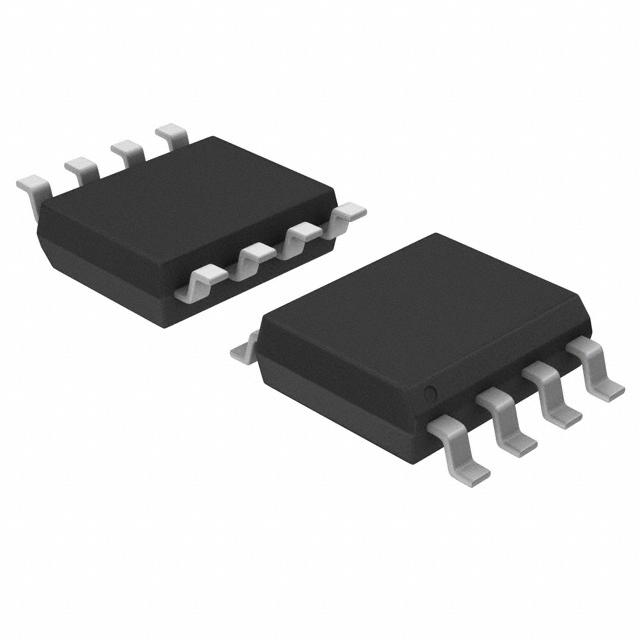
The MIC37101-3.3YM-TR is a linear voltage regulator IC manufactured by Microchip Technology, designed to deliver a fixed 3.3V output at 1A maximum current. This positive fixed output regulator operates across an input voltage range up to 6V with a maximum dropout voltage of 0.5V at full load. The device is housed in an 8-SOIC surface mount package and includes integrated over-current and over-temperature protection features. With active product status and ROHS3 compliance, this component is suitable for applications requiring stable 3.3V power delivery in space-constrained designs. Substitute parts may be required due to inventory constraints, design optimization, or specific application requirements for adjustable output configurations or enhanced protection features.
Substiute Parts
Key Parameters
| Parameter | Value |
|---|---|
| Manufacturer | Microchip Technology |
| Part Number | MIC37101-3.3YM-TR |
| Category | Power Management (PMIC) |
| Output Configuration | Positive |
| Output Type | Fixed 3.3V |
| Current - Output | 1A |
| Voltage - Input (Max) | 6V |
| Voltage Dropout (Max) | 0.5V @ 1A |
| Package / Case | 8-SOIC (0.154", 3.90mm Width) |
| Operating Temperature | -40°C ~ 125°C |
| Protection Features | Over Current, Over Temperature |
| Product Status | Active |
| RoHS Status | ROHS3 Compliant |
Substitute Part Grouping Explanation
The LD39100PUR from STMicroelectronics qualifies as a functional substitute based on the following critical parameters:
Substitution Criteria:
- Output current rating: Both devices support 1A maximum output current
- Operating temperature range: Both operate across -40°C to 125°C
- Input voltage compatibility: LD39100PUR accepts up to 5.5V input, which accommodates the MIC37101-3.3YM-TR's 6V maximum input specification
- Voltage dropout performance: LD39100PUR exhibits 0.4V dropout at 1A, meeting or exceeding the MIC37101-3.3YM-TR's 0.5V specification
- Protection features: Both include over-current and over-temperature protection
- Compliance: Both are ROHS3 compliant and REACH unaffected
- Mounting type: Both are surface mount devices
Key Difference: The LD39100PUR features an adjustable output voltage (0.8V to 4.6V range) compared to the MIC37101-3.3YM-TR's fixed 3.3V output. This adjustability allows the LD39100PUR to be configured for 3.3V operation while providing flexibility for alternative voltage requirements. The LD39100PUR also includes additional control features (Power Good output) and enhanced protection (Short Circuit protection).
Parameter Comparison
| Parameter | MIC37101-3.3YM-TR | LD39100PUR |
|---|---|---|
| Manufacturer | Microchip Technology | STMicroelectronics |
| Output Configuration | Positive | Positive |
| Output Type | Fixed 3.3V | Adjustable (0.8V - 4.6V) |
| Current - Output | 1A | 1A |
| Voltage - Input (Max) | 6V | 5.5V |
| Voltage Dropout (Max) | 0.5V @ 1A | 0.4V @ 1A |
| Operating Temperature | -40°C ~ 125°C | -40°C ~ 125°C |
| Protection Features | Over Current, Over Temperature | Over Current, Over Temperature, Short Circuit |
| Package / Case | 8-SOIC (0.154", 3.90mm Width) | 6-VDFN Exposed Pad (3x3) |
| Moisture Sensitivity Level (MSL) | 3 (168 Hours) | 1 (Unlimited) |
| RoHS Status | ROHS3 Compliant | ROHS3 Compliant |
Engineering Selection Recommendations
Both the MIC37101-3.3YM-TR and LD39100PUR maintain active product status and full ROHS3 compliance, ensuring long-term availability and regulatory alignment. The MIC37101-3.3YM-TR is appropriate for applications requiring a dedicated fixed 3.3V output with minimal external component requirements. The LD39100PUR is suitable for designs where output voltage adjustability provides system flexibility or where the reduced dropout voltage (0.4V vs. 0.5V) and enhanced short-circuit protection offer performance advantages. Package selection depends on PCB layout constraints: the 8-SOIC package of the MIC37101-3.3YM-TR provides a wider footprint, while the 6-VDFN package of the LD39100PUR offers a more compact form factor. The LD39100PUR's lower moisture sensitivity level (MSL 1 vs. MSL 3) may be advantageous for applications with extended storage or high-humidity environments.
Frequently Asked Questions (FAQ)
Q: Can the LD39100PUR directly replace the MIC37101-3.3YM-TR without circuit modifications?
A: The LD39100PUR can functionally replace the MIC37101-3.3YM-TR for 3.3V applications, but circuit modifications are required. The LD39100PUR's adjustable output requires external resistors to set the output voltage to 3.3V, whereas the MIC37101-3.3YM-TR provides fixed 3.3V output without external configuration. PCB layout changes are also necessary due to different package geometries (8-SOIC vs. 6-VDFN).
Q: What are the key electrical parameters that determine substitution compatibility?
A: Substitution compatibility is determined by: maximum output current (both 1A), operating temperature range (-40°C to 125°C for both), input voltage tolerance (LD39100PUR at 5.5V max accommodates MIC37101-3.3YM-TR's 6V specification), dropout voltage performance (LD39100PUR's 0.4V meets or exceeds the 0.5V requirement), and protection feature coverage (both include over-current and over-temperature protection).
Q: How do the package differences affect substitution?
A: The MIC37101-3.3YM-TR uses an 8-SOIC package (0.154" width, 3.90mm), while the LD39100PUR uses a 6-VDFN package (3x3mm). The VDFN package is more compact but requires different PCB footprint design and assembly considerations. Component placement, thermal management, and routing strategies may differ between packages.
Q: What is the significance of the moisture sensitivity level (MSL) difference?
A: The MIC37101-3.3YM-TR has MSL 3 (168-hour floor life), while the LD39100PUR has MSL 1 (unlimited floor life). MSL 1 indicates superior moisture resistance and longer shelf life without baking requirements, making the LD39100PUR more suitable for applications with extended storage periods or high-humidity manufacturing environments.
Q: Are both parts suitable for the same temperature range applications?
A: Yes, both devices operate across the identical temperature range of -40°C to 125°C, making them suitable for equivalent thermal environment applications.
Alternative Parts

SJ6012L2TP
Littelfuse Inc.
6 Alternative Parts

JMK107BBJ476MA-RE
Taiyo Yuden
10 Alternative Parts

GMK107BBJ475MA-T
Taiyo Yuden
5 Alternative Parts
SJ6020N2ARP
Littelfuse Inc.
3 Alternative Parts
SJ6025R2ATP
Littelfuse Inc.
4 Alternative Parts

2474-05L
API Delevan Inc.
1 Alternative Parts

4590R-684K
API Delevan Inc.
1 Alternative Parts

CM6560R-334
API Delevan Inc.
1 Alternative Parts

CM6460-104
API Delevan Inc.
1 Alternative Parts

5526-12
API Delevan Inc.
1 Alternative Parts