


Request Quote
(Ships tomorrow)
MET-45 Audio Transformer Equivalent & Substitute Parts
Part Overview
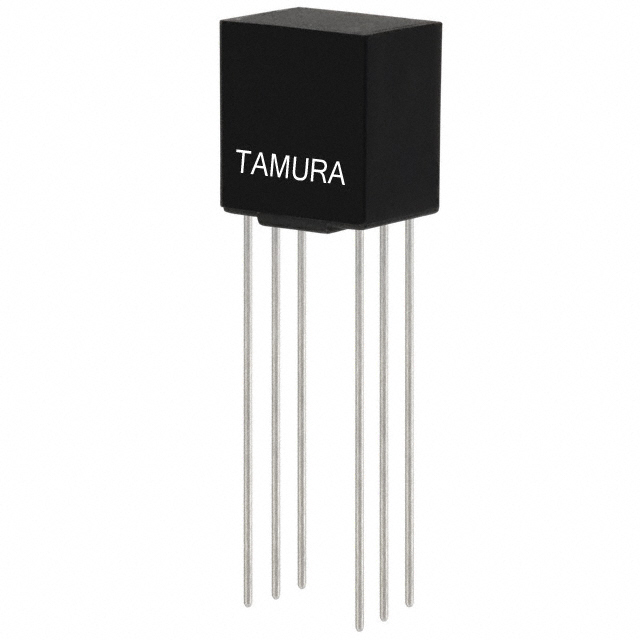
The MET-45 is an active-status audio transformer manufactured by Tamura, designed for data/voice coupling applications. It features a 10k primary impedance with a split secondary configuration (10k, 2.5k/2.5k) and operates across the 300Hz to 20kHz frequency range. The component is housed in a through-hole package with PC pin termination and maintains RoHS compliance. Substitute parts are identified when equivalent electrical and mechanical parameters align with application requirements, enabling component sourcing flexibility while maintaining circuit performance specifications.
Substiute Parts
Key Parameters
| Parameter | MET-45 Specification |
|---|---|
| Impedance - Primary (Ohms) | 10k |
| Impedance - Secondary (Ohms) | 10k, 2.5k/2.5k |
| Turns Ratio - Primary:Secondary | 1:0.5:0.5 |
| Frequency Range | 300Hz ~ 20kHz |
| Frequency Response | ±3dB |
| DC Resistance (DCR) - Primary | 1.3kOhm |
| DC Resistance (DCR) - Secondary | 735 ~ 390Ohm, 850 ~ 455Ohm |
| Power Level | 75mW |
| Voltage - Isolation | 500VRMS @ 30 Seconds |
| Operating Temperature | -20°C ~ 85°C |
| Mounting Type | Through Hole |
| Size / Dimension | 0.409" L x 0.310" W (10.40mm x 7.87mm) |
| Height - Seated (Max) | 0.465" (11.80mm) |
| Termination Style | PC Pin |
| RoHS Status | RoHS Compliant |
| Moisture Sensitivity Level (MSL) | 1 (Unlimited) |
Substitute Part Grouping Explanation
Substitution of the MET-45 is evaluated based on the following critical parameters that determine functional equivalence:
Primary Impedance Match: Both the main part and substitute must maintain 10k ohms primary impedance to ensure source matching and signal integrity.
Secondary Impedance Configuration: The secondary impedance must support the 10k, 2.5k/2.5k split configuration to preserve load matching across all secondary windings.
Frequency Range Coverage: The substitute must cover or exceed the 300Hz to 20kHz operating band. Extended frequency response does not disqualify a substitute.
Mechanical Compatibility: Through-hole mounting type and PC pin termination are required for PCB integration. Physical dimensions must accommodate existing board layouts.
Electrical Performance: DC resistance values, isolation voltage, and power handling must be within acceptable ranges for the application circuit.
Compliance Status: Active product status and RoHS compliance ensure availability and regulatory adherence.
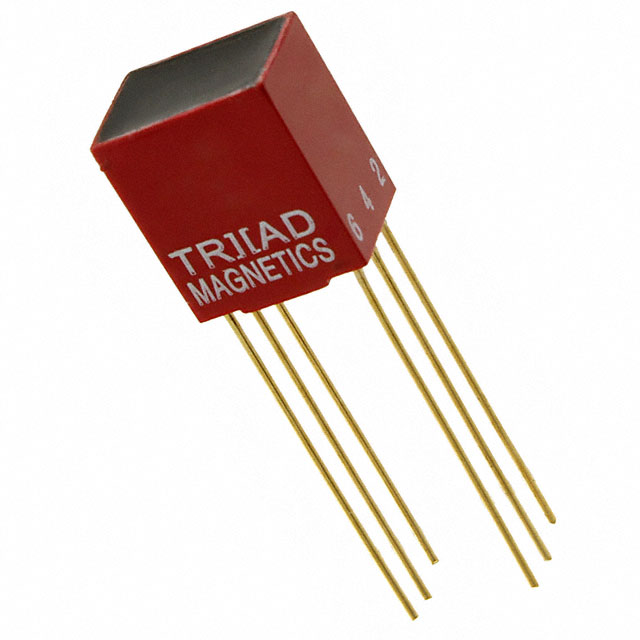
The SP-68 from Triad Magnetics meets these substitution criteria with matching primary and secondary impedance values, compatible through-hole mounting, and enhanced frequency response characteristics.
Parameter Comparison
| Parameter | MET-45 (Tamura) | SP-68 (Triad Magnetics) | Compatibility Notes |
|---|---|---|---|
| Impedance - Primary (Ohms) | 10k | 10k | Matched |
| Impedance - Secondary (Ohms) | 10k, 2.5k/2.5k | 10k, 2.5k/2.5k | Matched |
| Turns Ratio - Primary:Secondary | 1:0.5:0.5 | 2.1:1 | Different ratio; verify application requirements |
| Frequency Range | 300Hz ~ 20kHz | 300Hz ~ 100kHz | SP-68 provides extended upper frequency coverage |
| Frequency Response | ±3dB | ±2dB | SP-68 offers tighter tolerance |
| DC Resistance (DCR) - Primary | 1.3kOhm | 1kOhm | SP-68 lower by 0.3kOhm |
| DC Resistance (DCR) - Secondary | 735 ~ 390Ohm, 850 ~ 455Ohm | 565/650Ohm | SP-68 values within lower range |
| Power Level | 75mW | 50mW | MET-45 rated higher; SP-68 suitable for lower power applications |
| Voltage - Isolation | 500VRMS @ 30 Seconds | 1000VRMS @ 1 Second | SP-68 provides enhanced isolation |
| Operating Temperature | -20°C ~ 85°C | -40°C ~ 85°C | SP-68 extends lower temperature range |
| Mounting Type | Through Hole | Through Hole | Matched |
| Size / Dimension | 0.409" L x 0.310" W (10.40mm x 7.87mm) | 0.410" L x 0.310" W (10.41mm x 7.87mm) | Dimensions essentially identical |
| Height - Seated (Max) | 0.465" (11.80mm) | 0.465" (11.80mm) | Matched |
| Termination Style | PC Pin | PC Pin | Matched |
| RoHS Status | RoHS Compliant | ROHS3 Compliant | Both compliant; SP-68 meets current standard |
Engineering Selection Recommendations
MET-45 Selection Criteria: Select the MET-45 when the application requires the specified 75mW power level, operates within the -20°C to 85°C temperature range, and the 1:0.5:0.5 turns ratio is a circuit requirement. The MET-45 maintains active product status with standard RoHS compliance and is available in volume (856 pcs in stock).
SP-68 Selection Criteria: The SP-68 substitute is suitable when the application operates at or below 50mW power levels, requires extended frequency response to 100kHz, operates in temperature ranges down to -40°C, or benefits from enhanced isolation voltage (1000VRMS). The SP-68 meets ROHS3 compliance and is REACH unaffected. Note that the SP-68 turns ratio (2.1:1) differs from the MET-45 (1:0.5:0.5); circuit validation is required to confirm functional equivalence in the specific application.
Substitution Feasibility: Both components share identical primary and secondary impedance values, matching mechanical dimensions, through-hole mounting, and PC pin termination. The SP-68 provides performance enhancements in frequency response, isolation voltage, and temperature range. Selection between these parts depends on application-specific power requirements and turns ratio compatibility.
Frequently Asked Questions (FAQ)
Q: Can the SP-68 directly replace the MET-45 in all applications?
A: The SP-68 matches the MET-45 in primary impedance (10k), secondary impedance (10k, 2.5k/2.5k), mounting type (through-hole), and physical dimensions. However, the turns ratio differs (SP-68 is 2.1:1 versus MET-45 at 1:0.5:0.5). Circuit validation is required to confirm the turns ratio change does not affect signal levels or circuit performance. Additionally, the SP-68 is rated at 50mW versus the MET-45 at 75mW; applications requiring the higher power level must use the MET-45.
Q: What are the key impedance parameters for substitution?
A: The critical impedance parameters are primary impedance (10k ohms) and secondary impedance configuration (10k, 2.5k/2.5k split). Both the MET-45 and SP-68 match these specifications, ensuring load and source matching compatibility.
Q: How do the frequency ranges compare?
A: The MET-45 operates from 300Hz to 20kHz with ±3dB frequency response. The SP-68 extends the upper frequency limit to 100kHz with a tighter ±2dB response. For audio applications limited to 20kHz, both are suitable. Applications requiring extended high-frequency response benefit from the SP-68.
Q: Are there packaging differences between these parts?
A: The MET-45 is supplied in tube packaging, while the SP-68 is supplied in bulk packaging. Both use through-hole mounting with PC pin termination and have identical seated heights (0.465" / 11.80mm) and nearly identical footprints (0.409" x 0.310" versus 0.410" x 0.310").
Q: What compliance differences exist?
A: The MET-45 is RoHS compliant. The SP-68 meets the current ROHS3 standard and is REACH unaffected, providing enhanced regulatory alignment for new designs.
Q: Which part should be selected for low-temperature applications?
A: The SP-68 operates from -40°C to 85°C, extending the lower temperature limit by 20°C compared to the MET-45 (-20°C to 85°C). For applications below -20°C, the SP-68 is the appropriate selection.
Q: How do isolation voltage ratings affect substitution?
A: The MET-45 provides 500VRMS isolation at 30 seconds, while the SP-68 provides 1000VRMS at 1 second. The SP-68 offers enhanced isolation capability. Applications requiring higher isolation voltage benefit from the SP-68; applications within the 500VRMS specification can use either part.
Alternative Parts

SJ6012L2TP
Littelfuse Inc.
6 Alternative Parts

JMK107BBJ476MA-RE
Taiyo Yuden
10 Alternative Parts

GMK107BBJ475MA-T
Taiyo Yuden
5 Alternative Parts
SJ6020N2ARP
Littelfuse Inc.
3 Alternative Parts
SJ6025R2ATP
Littelfuse Inc.
4 Alternative Parts

2474-05L
API Delevan Inc.
1 Alternative Parts

4590R-684K
API Delevan Inc.
1 Alternative Parts

CM6560R-334
API Delevan Inc.
1 Alternative Parts

CM6460-104
API Delevan Inc.
1 Alternative Parts

5526-12
API Delevan Inc.
1 Alternative Parts