



Request Quote
(Ships tomorrow)
MAX480ESA Equivalent & Substitute Parts Reference
Part Overview
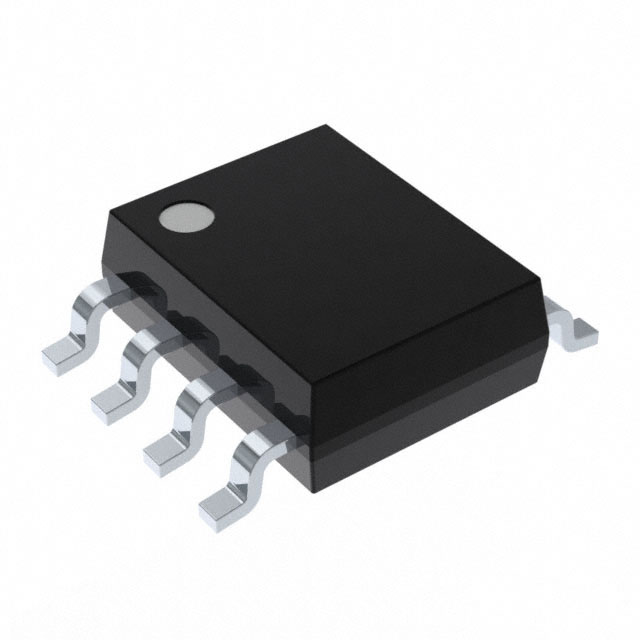
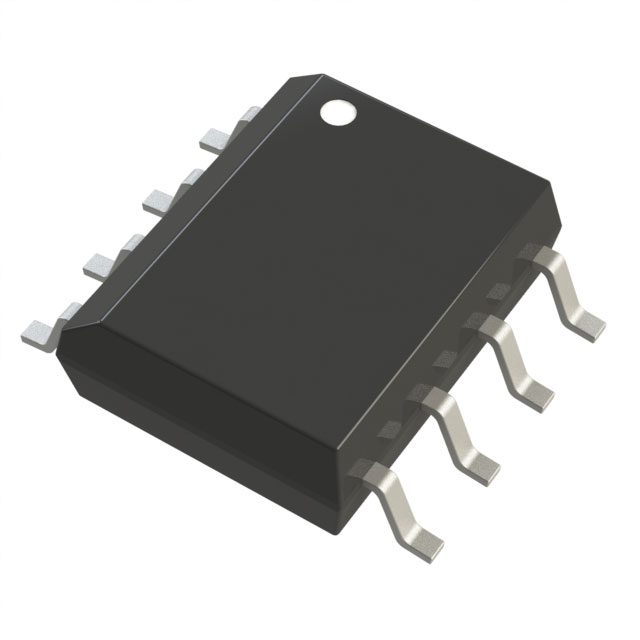
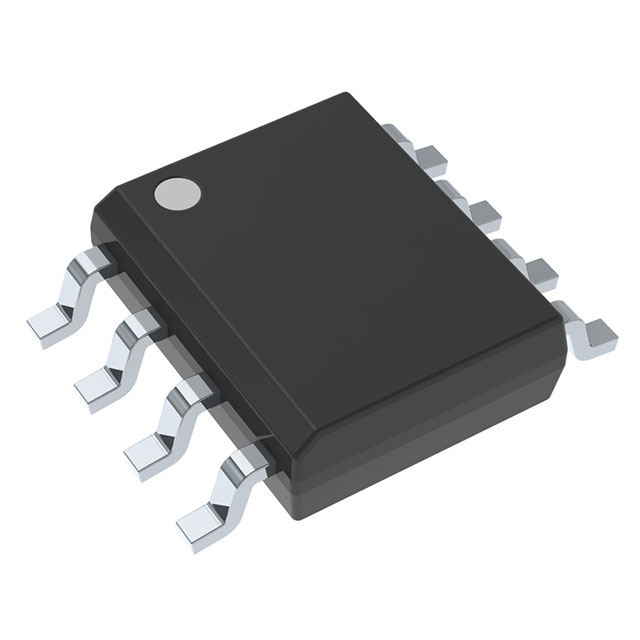
The MAX480ESA is a general-purpose operational amplifier manufactured by Analog Devices Inc./Maxim Integrated, housed in an 8-SOIC surface mount package. This device is classified as obsolete, indicating it is no longer in active production. The MAX480ESA features a single amplifier circuit with low input bias current (1 nA) and low input offset voltage (25 µV), designed for general-purpose amplification applications requiring low power consumption and wide supply voltage range.
Due to its obsolete status, equivalent and substitute parts are necessary for new designs, production continuity, and long-term system support. Active alternatives with comparable or superior electrical characteristics are available from Analog Devices Inc. and Texas Instruments.
Substiute Parts
Key Parameters
| Parameter | Value | Unit |
|---|---|---|
| Amplifier Type | General Purpose | — |
| Number of Circuits | 1 | — |
| Package / Case | 8-SOIC (0.154", 3.90mm Width) | — |
| Mounting Type | Surface Mount | — |
| Slew Rate | 0.012 | V/µs |
| Current - Input Bias | 1 | nA |
| Voltage - Input Offset | 25 | µV |
| Current - Supply | 14 | µA |
| Current - Output / Channel | 5 | mA |
| Voltage - Supply Span (Min) | 1.6 | V |
| Voltage - Supply Span (Max) | 36 | V |
| Operating Temperature | -40 to 85 | °C |
| RoHS Status | RoHS non-compliant | — |
| Moisture Sensitivity Level (MSL) | 1 (Unlimited) | — |
Substitute Part Grouping Explanation
Substitution of the MAX480ESA is determined by strict alignment of electrical and mechanical parameters within the general-purpose operational amplifier category. The following criteria establish valid substitution relationships:
Primary Substitution Criteria:
- Package compatibility: 8-SOIC (0.154", 3.90mm Width) surface mount package
- Amplifier type: General Purpose, single circuit configuration
- Supply voltage range: Minimum 1.6 V to maximum 36 V (or compatible subset)
- Operating temperature range: -40°C to 85°C or extended range
- Input bias current: ≤ 1 nA (lower values acceptable)
- Input offset voltage: ≤ 25 µV (lower values acceptable)
- Supply current: ≤ 14 µA (lower values acceptable)
- Output current per channel: ≥ 5 mA (higher values acceptable)
- Slew rate: ≥ 0.012 V/µs (higher values acceptable)
Substitute Parts Identified:
Group 1: Direct Electrical Equivalents (OP90 Series)
- OP90GSZ
- OP90GSZ-REEL
- OP90GSZ-REEL7
These parts maintain identical electrical specifications to the MAX480ESA with improved input bias current (4 nA vs. 1 nA) and higher input offset voltage (125 µV vs. 25 µV). All are active products with RoHS3 compliance.
Group 2: Rail-to-Rail Output Variants (OP193 Series)
- OP193FSZ
- OP193FSZ-REEL
- OP193FSZ-REEL7
These parts offer rail-to-rail output capability with comparable slew rate (0.015 V/µs) and extended operating temperature range (-40°C to 125°C). Higher input offset voltage (150 µV) and increased supply current (30 µA) are trade-offs for enhanced output swing capability.
Group 3: Texas Instruments Alternatives
- OPA241UA: Last Time Buy status, rail-to-rail output, lower slew rate (0.01 V/µs), higher minimum supply voltage (2.7 V)
- OPA251UA: Obsolete status, rail-to-rail output, lower slew rate (0.01 V/µs), superior input offset voltage (50 µV)
Group 4: Manufacturer Recommended Alternative
- LT1012AIS8#TRPBF: Active product, significantly higher slew rate (0.2 V/µs), lower input bias current (25 pA), higher supply current (380 µA), higher minimum supply voltage (2.4 V)
Parameter Comparison
| Part Number | Manufacturer | Product Status | Slew Rate (V/µs) | Input Bias (nA) | Input Offset (µV) | Supply Current (µA) | Output Current (mA) | Supply Min (V) | Supply Max (V) | Temp Range (°C) | RoHS Status |
|---|---|---|---|---|---|---|---|---|---|---|---|
| MAX480ESA | Analog Devices | Obsolete | 0.012 | 1 | 25 | 14 | 5 | 1.6 | 36 | -40 to 85 | Non-compliant |
| OP90GSZ | Analog Devices | Active | 0.012 | 4 | 125 | 14 | 5 | 1.6 | 36 | -40 to 85 | ROHS3 |
| OP90GSZ-REEL | Analog Devices | Active | 0.012 | 4 | 125 | 14 | 5 | 1.6 | 36 | -40 to 85 | ROHS3 |
| OP90GSZ-REEL7 | Analog Devices | Active | 0.012 | 4 | 125 | 14 | 5 | 1.6 | 36 | -40 to 85 | ROHS3 |
| OP193FSZ | Analog Devices | Active | 0.015 | 20 | 150 | 30 | 25 | 1.7 | 36 | -40 to 125 | ROHS3 |
| OP193FSZ-REEL | Analog Devices | Active | 0.015 | 20 | 150 | 30 | 25 | 1.7 | 36 | -40 to 125 | ROHS3 |
| OP193FSZ-REEL7 | Analog Devices | Active | 0.015 | 20 | 150 | 30 | 25 | 1.7 | 36 | -40 to 125 | ROHS3 |
| OPA241UA | Texas Instruments | Last Time Buy | 0.01 | 4 | 100 | 27 | 21 | 2.7 | 36 | -40 to 85 | ROHS3 |
| OPA251UA | Texas Instruments | Obsolete | 0.01 | 4 | 50 | 27 | 21 | 2.7 | 36 | -40 to 85 | ROHS3 |
| LT1012AIS8#TRPBF | Analog Devices | Active | 0.2 | 0.025 | 8 | 380 | — | 2.4 | 40 | -40 to 85 | ROHS3 |
Engineering Selection Recommendations
For Direct Replacement (Electrical Equivalence):
The OP90 series (OP90GSZ, OP90GSZ-REEL, OP90GSZ-REEL7) provides the closest functional equivalence to the MAX480ESA. These parts maintain identical slew rate, supply current, and output current specifications. The difference in packaging format (Tube, Tape & Reel, or Cut Tape & Digi-Reel) accommodates different procurement and assembly workflows. All OP90 variants are active products with RoHS3 compliance, addressing regulatory requirements that the obsolete MAX480ESA cannot meet.
For Enhanced Performance (Rail-to-Rail Output):
The OP193 series (OP193FSZ, OP193FSZ-REEL, OP193FSZ-REEL7) offers rail-to-rail output capability with extended operating temperature range to 125°C. These parts accept the trade-off of higher input offset voltage (150 µV) and increased supply current (30 µA) in exchange for improved output swing and thermal performance. Selection among the three variants depends on packaging requirements: Tube for manual assembly, Tape & Reel for standard automated pick-and-place, or Cut Tape & Digi-Reel for mixed-volume production.
For Low-Power, High-Speed Applications:
The LT1012AIS8#TRPBF is the manufacturer-recommended alternative, offering superior slew rate (0.2 V/µs) and exceptional input bias current (25 pA). This part is suitable for applications requiring faster transient response and minimal input current loading. The higher supply current (380 µA) and minimum supply voltage (2.4 V) must be evaluated against system power budgets and supply constraints.
For Texas Instruments Ecosystem:
OPA241UA (Last Time Buy) and OPA251UA (Obsolete) are available from Texas Instruments. OPA251UA provides superior input offset voltage (50 µV) but carries obsolete status. OPA241UA remains available through Last Time Buy channels with RoHS3 compliance. Both require minimum supply voltage of 2.7 V, which may limit use in ultra-low-voltage applications.
Compliance Considerations:
All recommended active substitutes (OP90 series, OP193 series, LT1012AIS8#TRPBF) carry RoHS3 compliance certification. The MAX480ESA is RoHS non-compliant. For new designs or systems subject to RoHS regulations, selection of an active, compliant substitute is mandatory.
Frequently Asked Questions (FAQ)
Q1: Can the OP90GSZ directly replace the MAX480ESA in existing designs?
A: Yes, the OP90GSZ provides direct electrical and mechanical compatibility. Both devices share identical 8-SOIC package geometry, slew rate (0.012 V/µs), supply current (14 µA), and output current (5 mA) specifications. The OP90GSZ operates within the same supply voltage range (1.6 V to 36 V) and temperature range (-40°C to 85°C). The primary difference is input bias current (4 nA vs. 1 nA) and input offset voltage (125 µV vs. 25 µV), which are acceptable trade-offs for most general-purpose applications. PCB layout and component placement require no modification.
Q2: What is the difference between OP90GSZ, OP90GSZ-REEL, and OP90GSZ-REEL7?
A: These three part numbers represent the same device in different packaging formats for supply chain and manufacturing purposes. OP90GSZ is supplied in Tube packaging, suitable for manual assembly or small-batch operations. OP90GSZ-REEL is supplied on Tape & Reel (TR), the standard format for automated pick-and-place assembly. OP90GSZ-REEL7 is supplied on Cut Tape (CT) & Digi-Reel, offering flexibility for mixed-volume production runs. Electrical specifications and performance are identical across all three variants. Selection depends on assembly process requirements and procurement volume.
Q3: Should I use OP193FSZ instead of OP90GSZ for new designs?
A: The choice depends on application requirements. The OP193FSZ offers rail-to-rail output capability and extended operating temperature range (-40°C to 125°C), beneficial for applications requiring maximum output swing or operation in elevated temperature environments. However, OP193FSZ has higher input offset voltage (150 µV vs. 125 µV for OP90GSZ) and higher supply current (30 µA vs. 14 µA). For applications with strict offset voltage or power consumption budgets, the OP90GSZ remains the better choice. For applications prioritizing output swing and thermal performance, OP193FSZ is preferred.
Q4: Is the LT1012AIS8#TRPBF suitable as a general replacement for MAX480ESA?
A: The LT1012AIS8#TRPBF is not a direct replacement due to significant differences in slew rate (0.2 V/µs vs. 0.012 V/µs) and supply current (380 µA vs. 14 µA). This part is optimized for high-speed applications requiring fast transient response and ultra-low input bias current (25 pA). It is suitable only for designs where these enhanced specifications provide functional benefit and where the higher power consumption is acceptable. For general-purpose, low-power applications, the OP90 series remains the appropriate choice.
Q5: Can I use OPA241UA or OPA251UA as substitutes?
A: Both parts are available but carry limitations. OPA251UA is classified as obsolete, making it unsuitable for new designs or long-term production. OPA241UA is in Last Time Buy status, indicating limited future availability. Both require minimum supply voltage of 2.7 V, restricting use in ultra-low-voltage systems. Both offer rail-to-rail output and RoHS3 compliance. If Texas Instruments ecosystem integration is required and supply voltage permits, OPA241UA may be considered, but Analog Devices OP90 or OP193 series are preferred for reliability and availability.
Q6: What are the package compatibility requirements for substitution?
A: All recommended substitutes use the 8-SOIC (0.154", 3.90mm Width) surface mount package, identical to the MAX480ESA. This ensures mechanical compatibility with existing PCB layouts, footprints, and automated assembly equipment. No PCB redesign or rework is required for package-level substitution. Verify that the specific part number variant (Tube, Tape & Reel, or Cut Tape & Digi-Reel) matches your assembly process requirements.
Q7: Are there any thermal or reliability differences between substitute parts?
A: The OP193 series supports extended operating temperature range to 125°C, compared to 85°C for OP90 and MAX480ESA. This provides thermal margin for applications in elevated ambient conditions. All active substitutes (OP90, OP193, LT1012) carry RoHS3 compliance and Moisture Sensitivity Level 1 (unlimited), indicating robust reliability characteristics. The MAX480ESA, being obsolete and RoHS non-compliant, does not meet current reliability and regulatory standards. For long-term system support, active substitutes are mandatory.
Alternative Parts

SJ6012L2TP
Littelfuse Inc.
6 Alternative Parts

JMK107BBJ476MA-RE
Taiyo Yuden
10 Alternative Parts

GMK107BBJ475MA-T
Taiyo Yuden
5 Alternative Parts
SJ6020N2ARP
Littelfuse Inc.
3 Alternative Parts
SJ6025R2ATP
Littelfuse Inc.
4 Alternative Parts

2474-05L
API Delevan Inc.
1 Alternative Parts

4590R-684K
API Delevan Inc.
1 Alternative Parts

CM6560R-334
API Delevan Inc.
1 Alternative Parts

CM6460-104
API Delevan Inc.
1 Alternative Parts

5526-12
API Delevan Inc.
1 Alternative Parts