


Request Quote
(Ships tomorrow)
MAX478CSA Equivalent & Substitute Parts
Part Overview
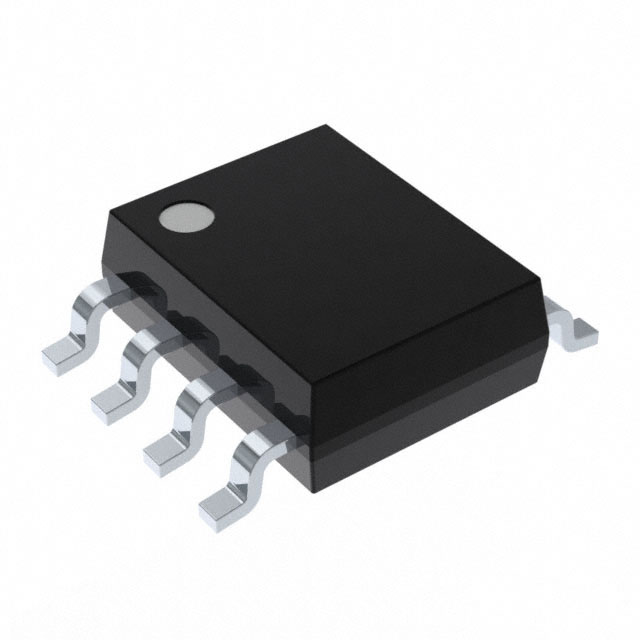
The MAX478CSA is a general-purpose operational amplifier manufactured by Analog Devices Inc./Maxim Integrated, configured as a dual-circuit (2-circuit) differential output amplifier in an 8-SOIC surface mount package. This device is classified as obsolete, indicating discontinued production and limited availability for new designs. The identification of equivalent and substitute parts is necessary to ensure design continuity, maintain supply chain reliability, and support ongoing production requirements for applications currently utilizing the MAX478CSA.
Substiute Parts
Key Parameters
| Parameter | Value |
|---|---|
| Manufacturer Part Number | MAX478CSA |
| Manufacturer | Analog Devices Inc./Maxim Integrated |
| Category | Linear, Amplifiers |
| Amplifier Type | General Purpose |
| Number of Circuits | 2 |
| Output Type | Differential |
| Slew Rate | 0.04 V/µs |
| Gain Bandwidth Product | 85 kHz |
| Current - Input Bias | 3 nA |
| Voltage - Input Offset | 50 µV |
| Current - Supply | 13 µA (x2 Channels) |
| Voltage - Supply Span (Min) | 3 V |
| Voltage - Supply Span (Max) | 30 V |
| Operating Temperature | 0°C ~ 70°C |
| Mounting Type | Surface Mount |
| Package / Case | 8-SOIC (0.154", 3.90mm Width) |
| Product Status | Obsolete |
| RoHS Status | RoHS non-compliant |
| Moisture Sensitivity Level (MSL) | 1 (Unlimited) |
Substitute Part Grouping Explanation
Substitute parts for the MAX478CSA are identified based on strict electrical and mechanical parameter compatibility. The substitution criteria are defined by the following key parameters:
Electrical Compatibility Requirements:
- Amplifier Type: General Purpose
- Number of Circuits: 2
- Slew Rate: 0.04 V/µs (matching specification)
- Gain Bandwidth Product: 85 kHz (matching specification)
- Current - Input Bias: 3 nA (matching specification)
- Voltage - Supply Span (Min): 3 V minimum or lower
- Voltage - Supply Span (Max): 30 V maximum or higher
- Operating Temperature: 0°C ~ 70°C (matching or extended range)
Mechanical Compatibility Requirements:
- Mounting Type: Surface Mount
- Package / Case: 8-SOIC (0.154", 3.90mm Width)
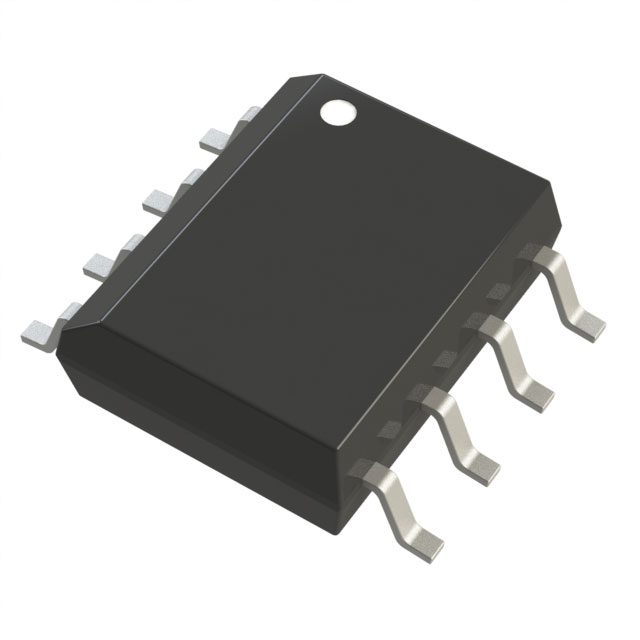
The substitute parts identified are LT1178S8#PBF and LT1178S8#TRPBF, both manufactured by Analog Devices Inc. These parts satisfy the core electrical parameters (slew rate, gain bandwidth product, input bias current, and supply voltage range) and share identical mechanical packaging specifications. Both substitute parts are available in active product status with RoHS3 compliance, addressing the obsolescence of the original MAX478CSA.
Parameter Comparison
| Parameter | MAX478CSA | LT1178S8#PBF | LT1178S8#TRPBF |
|---|---|---|---|
| Manufacturer | Analog Devices Inc./Maxim Integrated | Analog Devices Inc. | Analog Devices Inc. |
| Amplifier Type | General Purpose | General Purpose | General Purpose |
| Number of Circuits | 2 | 2 | 2 |
| Slew Rate | 0.04 V/µs | 0.04 V/µs | 0.04 V/µs |
| Gain Bandwidth Product | 85 kHz | 85 kHz | 85 kHz |
| Current - Input Bias | 3 nA | 3 nA | 3 nA |
| Voltage - Input Offset | 50 µV | 120 µV | 120 µV |
| Current - Supply | 13 µA (x2 Channels) | 17 µA (x2 Channels) | 17 µA (x2 Channels) |
| Voltage - Supply Span (Min) | 3 V | 5 V | 5 V |
| Voltage - Supply Span (Max) | 30 V | 30 V | 30 V |
| Operating Temperature | 0°C ~ 70°C | 0°C ~ 70°C | 0°C ~ 70°C |
| Mounting Type | Surface Mount | Surface Mount | Surface Mount |
| Package / Case | 8-SOIC (0.154", 3.90mm Width) | 8-SOIC (0.154", 3.90mm Width) | 8-SOIC (0.154", 3.90mm Width) |
| Product Status | Obsolete | Active | Active |
| RoHS Status | RoHS non-compliant | ROHS3 Compliant | ROHS3 Compliant |
| Packaging Type | Not specified | Tube | Tape & Reel (TR) |
Engineering Selection Recommendations
Product Status Consideration: The MAX478CSA is classified as obsolete, indicating end-of-life status and unavailability for new production orders. Both substitute parts, LT1178S8#PBF and LT1178S8#TRPBF, are active products with ongoing manufacturing support and availability.
Compliance and Certification: The MAX478CSA is RoHS non-compliant. Both substitute parts are ROHS3 compliant, meeting current regulatory requirements for electronic components in regulated markets and applications requiring RoHS certification.
Electrical Parameter Differences: The substitute parts exhibit higher voltage input offset (120 µV versus 50 µV) and increased supply current (17 µA versus 13 µA per channel). These differences remain within acceptable tolerances for general-purpose amplifier applications and do not preclude functional substitution in circuits designed for the MAX478CSA electrical specifications.
Supply Voltage Consideration: The substitute parts require a minimum supply voltage of 5 V, compared to 3 V for the MAX478CSA. Applications operating at supply voltages below 5 V are not compatible with the LT1178 substitutes.
Packaging and Delivery Format: LT1178S8#PBF is supplied in tube packaging, suitable for manual assembly and lower-volume applications. LT1178S8#TRPBF is supplied in tape and reel format, optimized for automated assembly and higher-volume production environments.
Frequently Asked Questions (FAQ)
Q: Can LT1178S8#PBF and LT1178S8#TRPBF be used interchangeably with MAX478CSA?
A: Both LT1178 variants satisfy the core electrical parameters (slew rate, gain bandwidth product, input bias current) and share identical 8-SOIC packaging. Substitution is valid for applications where the minimum supply voltage requirement of 5 V is met and the higher input offset voltage (120 µV) is acceptable for the circuit design.
Q: What is the difference between LT1178S8#PBF and LT1178S8#TRPBF?
A: Both parts are electrically identical. The difference is in packaging format: LT1178S8#PBF is supplied in tube packaging for manual handling and lower-volume assembly, while LT1178S8#TRPBF is supplied in tape and reel format for automated pick-and-place assembly and higher-volume production.
Q: Are there supply voltage compatibility issues when substituting?
A: Yes. The MAX478CSA operates at a minimum supply voltage of 3 V, while both LT1178 substitutes require a minimum of 5 V. Circuits designed to operate at 3 V to 4.9 V supply voltage are not compatible with the LT1178 substitutes.
Q: How do the input offset voltage differences affect circuit performance?
A: The MAX478CSA specifies 50 µV input offset voltage, while the LT1178 substitutes specify 120 µV. This 70 µV difference may require circuit-level offset compensation adjustments in precision applications. General-purpose applications with offset trimming capability are unaffected.
Q: What is the impact of increased supply current on power consumption?
A: The LT1178 substitutes consume 17 µA per channel compared to 13 µA for the MAX478CSA, representing a 4 µA increase per channel. For dual-channel operation, total supply current increases by 8 µA. This difference is negligible in most applications but should be evaluated in battery-powered or ultra-low-power designs.
Q: Does RoHS compliance affect the substitution decision?
A: The MAX478CSA is RoHS non-compliant, while both LT1178 substitutes are ROHS3 compliant. For applications subject to RoHS regulations or customer requirements, the LT1178 substitutes provide compliance benefits. For legacy systems without RoHS requirements, compliance status does not affect functional substitution.
Q: Are the pinouts identical between MAX478CSA and LT1178 substitutes?
A: Both devices are configured as dual operational amplifiers in 8-SOIC packaging. Pinout compatibility must be verified against the specific device datasheets to ensure correct circuit integration.
Alternative Parts

SJ6012L2TP
Littelfuse Inc.
6 Alternative Parts

JMK107BBJ476MA-RE
Taiyo Yuden
10 Alternative Parts

GMK107BBJ475MA-T
Taiyo Yuden
5 Alternative Parts
SJ6020N2ARP
Littelfuse Inc.
3 Alternative Parts
SJ6025R2ATP
Littelfuse Inc.
4 Alternative Parts

2474-05L
API Delevan Inc.
1 Alternative Parts

4590R-684K
API Delevan Inc.
1 Alternative Parts

CM6560R-334
API Delevan Inc.
1 Alternative Parts

CM6460-104
API Delevan Inc.
1 Alternative Parts

5526-12
API Delevan Inc.
1 Alternative Parts