




Request Quote
(Ships tomorrow)
MAX475ESD Equivalent & Substitute Parts
Part Overview
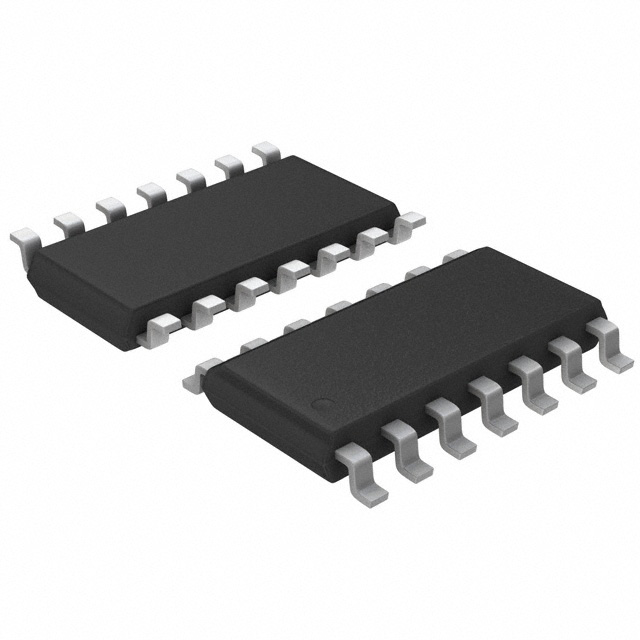
The MAX475ESD is a general-purpose operational amplifier featuring four independent circuits in a 14-SOIC surface-mount package. This device is classified as obsolete and is no longer in active production. The MAX475ESD provides rail-to-rail output capability with a supply voltage range of 2.7V to 5.25V and operates across the industrial temperature range of -40°C to 85°C. Due to its obsolete status, identifying functionally equivalent active alternatives is essential for design continuity and long-term component availability in new production runs.
Substiute Parts
Key Parameters
| Parameter | MAX475ESD | Unit |
|---|---|---|
| Amplifier Type | General Purpose | — |
| Number of Circuits | 4 | — |
| Output Type | Rail-to-Rail | — |
| Slew Rate | 17 | V/µs |
| Gain Bandwidth Product | 12 | MHz |
| Current - Input Bias | 80 | nA |
| Voltage - Input Offset | 800 | µV |
| Current - Supply (x4 Channels) | 2 | mA |
| Voltage - Supply Span (Min) | 2.7 | V |
| Voltage - Supply Span (Max) | 5.25 | V |
| Operating Temperature | -40 to 85 | °C |
| Package / Case | 14-SOIC (0.154", 3.90mm Width) | — |
| Mounting Type | Surface Mount | — |
| Product Status | Obsolete | — |
| RoHS Status | RoHS non-compliant | — |
Substitute Part Grouping Explanation
Substitution of the MAX475ESD is determined by the following critical parameters:
Mandatory Compatibility Criteria:
- Number of Circuits: 4 independent amplifier channels
- Output Type: Rail-to-Rail capability
- Package / Case: 14-SOIC form factor (0.154", 3.90mm Width)
- Mounting Type: Surface Mount
- Amplifier Type: General Purpose
Performance Parameters (Allowable Ranges):
- Slew Rate: 17 V/µs (original specification; substitutes may vary)
- Gain Bandwidth Product: 12 MHz (original specification; substitutes may vary)
- Current - Input Bias: 80 nA (original specification; substitutes may vary)
- Voltage - Input Offset: 800 µV (original specification; substitutes may vary)
- Current - Supply: 2 mA per 4 channels (original specification; substitutes may vary)
Electrical Operating Range:
- Voltage - Supply Span: 2.7V to 5.25V minimum overlap required
- Operating Temperature: -40°C to 85°C minimum overlap required
All substitute parts listed maintain the 14-SOIC package footprint and four-circuit configuration. Substitutes are active products with current manufacturing status and improved RoHS3 compliance compared to the obsolete MAX475ESD.
Parameter Comparison
| Parameter | MAX475ESD | AD8694ARZ | MCP6024T-E/SL | MCP6294-E/SL | MCP6L94T-E/SL | TLV4316IDR | TSV994AIDT |
|---|---|---|---|---|---|---|---|
| Amplifier Type | General Purpose | General Purpose | General Purpose | General Purpose | General Purpose | CMOS | General Purpose |
| Number of Circuits | 4 | 4 | 4 | 4 | 4 | 4 | 4 |
| Output Type | Rail-to-Rail | Rail-to-Rail | Rail-to-Rail | Rail-to-Rail | Rail-to-Rail | Rail-to-Rail | Rail-to-Rail |
| Slew Rate (V/µs) | 17 | 5 | 7 | 7 | 7 | 6 | 10 |
| Gain Bandwidth Product (MHz) | 12 | 10 | 10 | 10 | 10 | 10 | 20 |
| Current - Input Bias (pA/nA) | 80 nA | 1 pA | 1 pA | 1 pA | 1 pA | 10 pA | 1 pA |
| Voltage - Input Offset (µV/mV) | 800 µV | 400 µV | 250 µV | 3 mV | 1 mV | 750 µV | 100 µV |
| Current - Supply (mA/µA x4 Channels) | 2 mA | 950 µA | 1 mA | 1 mA | 850 µA | 400 µA | 820 µA |
| Voltage - Supply Span Min (V) | 2.7 | 2.7 | 2.5 | 2.4 | 2.4 | 1.8 | 2.5 |
| Voltage - Supply Span Max (V) | 5.25 | 6 | 5.5 | 6 | 6 | 5.5 | 5.5 |
| Operating Temperature (°C) | -40 to 85 | -40 to 125 | -40 to 125 | -40 to 125 | -40 to 125 | -40 to 125 | -40 to 125 |
| Package / Case | 14-SOIC | 14-SOIC | 14-SOIC | 14-SOIC | 14-SOIC | 14-SOIC | 14-SOIC |
| Product Status | Obsolete | Active | Active | Active | Active | Active | Active |
| RoHS Status | RoHS non-compliant | ROHS3 Compliant | ROHS3 Compliant | ROHS3 Compliant | ROHS3 Compliant | ROHS3 Compliant | ROHS3 Compliant |
Engineering Selection Recommendations
Primary Substitutes (Highest Compatibility):
The AD8694ARZ and AD8694ARZ-REEL7 (Analog Devices) provide direct functional equivalence to the MAX475ESD. Both variants maintain identical electrical specifications with improved input bias current performance (1 pA versus 80 nA) and lower input offset voltage (400 µV versus 800 µV). These devices are manufactured by Analog Devices, the same company that acquired Maxim Integrated, ensuring design continuity. Both are ROHS3 compliant and carry active product status with extended operating temperature range (-40°C to 125°C). The AD8694ARZ-REEL7 variant offers higher inventory availability (36,253 units) in Cut Tape and Digi-Reel packaging.
Secondary Substitutes (Microchip Technology):
The MCP6024T-E/SL, MCP6294-E/SL, MCP6294T-E/SL, and MCP6L94T-E/SL represent Microchip Technology alternatives. The MCP6024T-E/SL offers the lowest input offset voltage (250 µV) and lowest supply current (1 mA). The MCP6L94T-E/SL provides the best balance with 1 mV input offset voltage and 850 µA supply current. All Microchip variants are ROHS3 compliant and active products with extended temperature range support.
Alternative Substitute (Texas Instruments):
The TLV4316IDR (Texas Instruments) operates at the lowest minimum supply voltage (1.8V) and provides the lowest supply current (400 µA). This device is classified as CMOS amplifier type and carries MSL rating of 2 (1 Year). It is suitable for ultra-low-power applications requiring extended supply voltage flexibility.
Automotive-Grade Alternative:
The TSV994AIDT and TSV994AIYDT (STMicroelectronics) are automotive-qualified devices meeting AEC-Q100 standards. These parts feature the highest gain bandwidth product (20 MHz) and lowest input offset voltage (100 µV) among all substitutes. The TSV994AIDT offers the highest inventory availability (55,300 units). These devices are suitable for automotive and mission-critical applications requiring automotive-grade qualification.
Compliance Consideration:
All substitute parts listed are ROHS3 compliant, addressing the RoHS non-compliance status of the obsolete MAX475ESD. Selection should prioritize active product status and compliance requirements for new designs.
Frequently Asked Questions (FAQ)
Q1: Can the MAX475ESD be directly replaced with any of these substitute parts without PCB modification?
All substitute parts maintain the 14-SOIC package footprint (0.154", 3.90mm Width) and identical pin configuration for four-circuit general-purpose amplifiers with rail-to-rail output. Direct PCB replacement is possible without layout changes. However, electrical performance differences in slew rate, gain bandwidth product, and input offset voltage may affect circuit behavior in precision applications.
Q2: What is the primary reason for substituting the MAX475ESD?
The MAX475ESD is classified as obsolete and no longer manufactured. Substitution is necessary to ensure long-term component availability for production continuity. Additionally, all active substitute parts are ROHS3 compliant, whereas the MAX475ESD is RoHS non-compliant, making substitution mandatory for applications subject to RoHS regulations.
Q3: Which substitute offers the best performance improvement over the MAX475ESD?
The TSV994AIDT provides the most significant performance enhancement with a gain bandwidth product of 20 MHz (versus 12 MHz), slew rate of 10 V/µs (versus 17 V/µs), and input offset voltage of 100 µV (versus 800 µV). However, this device carries automotive-grade qualification and may have different pricing and availability compared to industrial-grade alternatives.
Q4: Are there supply voltage compatibility concerns when substituting?
The MAX475ESD operates from 2.7V to 5.25V. All substitute parts support at least 2.7V minimum supply voltage. The TLV4316IDR extends the minimum to 1.8V, offering greater flexibility. Maximum supply voltage ranges from 5.5V to 6V across substitutes, all exceeding the MAX475ESD maximum of 5.25V. Designs operating at the upper limit of the MAX475ESD range (5.25V) are compatible with all substitutes.
Q5: What is the difference between AD8694ARZ and AD8694ARZ-REEL7?
Both parts are electrically identical. The primary difference is packaging format: AD8694ARZ is supplied in Tube packaging, while AD8694ARZ-REEL7 is supplied in Cut Tape and Digi-Reel format. The REEL7 variant offers higher inventory availability (36,253 units versus 12,900 units) and is typically preferred for high-volume production runs.
Q6: Which substitute is recommended for low-power applications?
The TLV4316IDR offers the lowest supply current at 400 µA (x4 channels) and the lowest minimum supply voltage at 1.8V, making it optimal for battery-powered and ultra-low-power designs. The MCP6L94T-E/SL provides a balanced alternative with 850 µA supply current while maintaining general-purpose amplifier characteristics.
Q7: Are there temperature range limitations when substituting?
The MAX475ESD operates from -40°C to 85°C. All substitute parts extend the upper operating temperature to 125°C, providing improved thermal margin. This extended range is beneficial for industrial and automotive applications. Designs operating within the original -40°C to 85°C range are fully compatible with all substitutes.
Q8: What packaging options are available for substitute parts?
Substitute parts are available in multiple packaging formats: Tube (standard packaging), Cut Tape (CT), and Digi-Reel (automated reel format). Selection depends on production volume and assembly equipment compatibility. High-volume production typically uses Cut Tape and Digi-Reel formats for automated pick-and-place assembly.
Q9: Is the TSV994AIDT suitable for non-automotive applications?
Yes. The TSV994AIDT is automotive-qualified but can be used in any application. Automotive qualification indicates enhanced reliability and testing standards, making it suitable for mission-critical and high-reliability applications beyond automotive use. Pricing may reflect the additional qualification overhead.
Q10: How do input bias current differences affect circuit design?
The MAX475ESD has 80 nA input bias current, while most substitutes offer 1 pA (1000x lower). Lower input bias current reduces input offset current errors and is beneficial for high-impedance input circuits and precision instrumentation. Designs with input impedances below 1 MΩ are generally insensitive to this difference.
Alternative Parts

SJ6012L2TP
Littelfuse Inc.
6 Alternative Parts

JMK107BBJ476MA-RE
Taiyo Yuden
10 Alternative Parts

GMK107BBJ475MA-T
Taiyo Yuden
5 Alternative Parts
SJ6020N2ARP
Littelfuse Inc.
3 Alternative Parts
SJ6025R2ATP
Littelfuse Inc.
4 Alternative Parts

2474-05L
API Delevan Inc.
1 Alternative Parts

4590R-684K
API Delevan Inc.
1 Alternative Parts

CM6560R-334
API Delevan Inc.
1 Alternative Parts

CM6460-104
API Delevan Inc.
1 Alternative Parts

5526-12
API Delevan Inc.
1 Alternative Parts