


Request Quote
(Ships tomorrow)
MAX4618CEE Equivalent & Substitute Parts
Part Overview
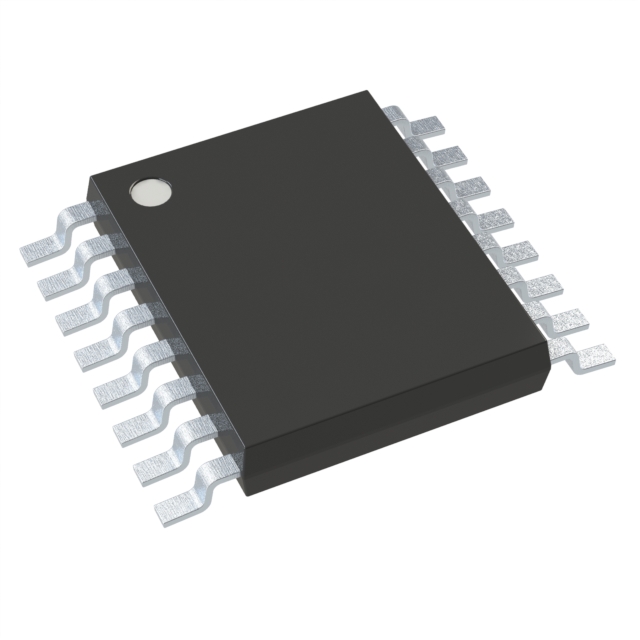
The MAX4618CEE is a 2-circuit SP4T analog switch IC manufactured by Analog Devices Inc./Maxim Integrated, designed for signal routing and multiplexing applications. This device features a 4:1 multiplexer/demultiplexer configuration with 10Ohm on-state resistance and operates across a 2V to 5.5V single supply range. The MAX4618CEE is classified as obsolete, making equivalent and substitute parts necessary for new designs and ongoing production support.
Substiute Parts
Key Parameters
| Parameter | Value |
|---|---|
| Switch Circuit Configuration | SP4T (Single Pole, 4-Throw) |
| Number of Circuits | 2 |
| Multiplexer/Demultiplexer Circuit | 4:1 |
| On-State Resistance (Max) | 10Ohm |
| Channel-to-Channel Matching (ΔRon) | 200mOhm |
| Voltage - Supply, Single (V+) | 2V ~ 5.5V |
| Switch Time (Ton, Toff) (Max) | 15ns, 10ns |
| Charge Injection | 3pC |
| Channel Capacitance (CS(off), CD(off)) | 5pF, 15pF |
| Current - Leakage (IS(off)) (Max) | 1nA |
| Crosstalk | -96dB @ 100kHz |
| Operating Temperature | 0°C ~ 70°C |
| Package / Case | 16-SSOP (0.154", 3.90mm Width) |
| RoHS Status | RoHS non-compliant |
| Moisture Sensitivity Level (MSL) | 1 (Unlimited) |
Substitute Part Grouping Explanation
Substitution of the MAX4618CEE is determined by strict compatibility across the following critical parameters:
- Switch Circuit & Multiplexer Configuration: All substitutes must maintain SP4T topology with 4:1 multiplexer/demultiplexer function and 2 circuits
- On-State Resistance: The MAX4618CEE specifies 10Ohm maximum. Substitute parts with higher on-state resistance (195Ohm or 210Ohm) represent functional alternatives for applications where higher resistance is acceptable
- Supply Voltage Range: The MAX4618CEE operates at 2V ~ 5.5V. Substitutes operating at narrower ranges (4.5V ~ 5.5V or 2V ~ 6V) must be evaluated for application compatibility
- Package Compatibility: The 16-SSOP package of the MAX4618CEE differs from the 16-TSSOP packages of substitute parts, requiring PCB layout modification
- Product Status & Compliance: Active substitutes with RoHS3 compliance and automotive qualification (AEC-Q100) provide long-term availability and regulatory alignment
Parameter Comparison
| Parameter | MAX4618CEE | 74HC4852PW-Q100 | 74HCT4852PW,118 | 74HCT4852PW-Q100,1 |
|---|---|---|---|---|
| Manufacturer | Analog Devices Inc./Maxim Integrated | Nexperia USA Inc. | Nexperia USA Inc. | Nexperia USA Inc. |
| Switch Circuit | SP4T | SP4T | SP4T | SP4T |
| Number of Circuits | 2 | 2 | 2 | 2 |
| Multiplexer/Demultiplexer | 4:1 | 4:1 | 4:1 | 4:1 |
| On-State Resistance (Max) | 10Ohm | 195Ohm | 210Ohm | 210Ohm |
| Channel-to-Channel Matching (ΔRon) | 200mOhm | 3Ohm | 2Ohm | 2Ohm |
| Voltage - Supply, Single (V+) | 2V ~ 5.5V | 2V ~ 6V | 4.5V ~ 5.5V | 4.5V ~ 5.5V |
| Switch Time Ton (Max) | 15ns | 39ns | 25ns | 25ns |
| Switch Time Toff (Max) | 10ns | 78ns | 80ns | 80ns |
| Charge Injection | 3pC | Not specified | Not specified | Not specified |
| Channel Capacitance (CS(off), CD(off)) | 5pF, 15pF | 10pF | 10pF | 10pF |
| Current - Leakage (IS(off)) (Max) | 1nA | 100nA | 100nA | 100nA |
| Operating Temperature | 0°C ~ 70°C | -40°C ~ 125°C | -40°C ~ 125°C | -40°C ~ 125°C |
| Package / Case | 16-SSOP (0.154", 3.90mm Width) | 16-TSSOP (0.173", 4.40mm Width) | 16-TSSOP (0.173", 4.40mm Width) | 16-TSSOP (0.173", 4.40mm Width) |
| Product Status | Obsolete | Active | Active | Active |
| RoHS Status | RoHS non-compliant | ROHS3 Compliant | ROHS3 Compliant | ROHS3 Compliant |
| Automotive Grade / AEC-Q100 | Not specified | Yes / Yes | Not specified | Yes / Yes |
Engineering Selection Recommendations
74HC4852PW-Q100 (Nexperia): This substitute provides the widest supply voltage range (2V ~ 6V), maintaining compatibility with the MAX4618CEE's lower voltage operation. It carries automotive AEC-Q100 qualification and RoHS3 compliance. The 195Ohm on-state resistance represents a significant increase from the original 10Ohm specification and must be evaluated for signal integrity in the target application. This part is suitable for designs requiring extended temperature range (-40°C ~ 125°C) and long-term availability.
74HCT4852PW,118 (Nexperia): This variant operates within a narrower supply range (4.5V ~ 5.5V), limiting its use to applications with fixed 5V supplies. The 210Ohm on-state resistance and 80ns maximum switch-off time represent trade-offs from the original specification. RoHS3 compliance is confirmed. This part is appropriate for legacy 5V systems where supply voltage stability is guaranteed.
74HCT4852PW-Q100,1 (Nexperia): This automotive-qualified variant combines the 4.5V ~ 5.5V supply range with AEC-Q100 certification and RoHS3 compliance. It is the preferred substitute for automotive and mission-critical applications requiring long-term component availability and regulatory compliance. The 210Ohm on-state resistance and extended operating temperature range (-40°C ~ 125°C) support demanding environments.
All three substitutes maintain the core SP4T 4:1 multiplexer topology and 2-circuit configuration. Package migration from 16-SSOP to 16-TSSOP requires PCB redesign. The obsolete status of the MAX4618CEE makes transition to an active substitute necessary for new production and long-term supply chain stability.
Frequently Asked Questions (FAQ)
Q: Can the 74HC4852PW-Q100 directly replace the MAX4618CEE without circuit modification?
A: The 74HC4852PW-Q100 maintains functional equivalence in switch topology and circuit count. However, the on-state resistance increases from 10Ohm to 195Ohm, which affects signal attenuation and impedance matching. Applications with low-impedance signal paths or precision analog routing may require circuit redesign. Additionally, the package changes from 16-SSOP to 16-TSSOP, necessitating PCB layout modification.
Q: What is the impact of higher on-state resistance on signal integrity?
A: The MAX4618CEE specifies 10Ohm on-state resistance, while substitutes range from 195Ohm to 210Ohm. This increase introduces greater signal attenuation and voltage drop across the switch. In high-frequency or low-level signal applications, this may degrade signal-to-noise ratio and bandwidth performance. Circuit simulation and bench testing are necessary to confirm suitability for specific applications.
Q: Which substitute is best for automotive applications?
A: The 74HCT4852PW-Q100,1 is the recommended choice for automotive use. It carries AEC-Q100 qualification, operates across -40°C ~ 125°C, and meets RoHS3 compliance. The 74HC4852PW-Q100 also provides automotive qualification with a wider supply voltage range (2V ~ 6V), offering flexibility for non-standard supply voltages.
Q: Are there supply voltage compatibility issues between substitutes?
A: Yes. The MAX4618CEE operates at 2V ~ 5.5V. The 74HC4852PW-Q100 maintains this range (2V ~ 6V), while both 74HCT variants operate only at 4.5V ~ 5.5V. Applications using supply voltages below 4.5V must use the 74HC4852PW-Q100 to maintain compatibility.
Q: What is the significance of the package change from 16-SSOP to 16-TSSOP?
A: The 16-SSOP package (0.154" width) differs from the 16-TSSOP package (0.173" width). This dimensional change requires PCB footprint redesign and may affect board layout density. Pin pitch and lead geometry also differ, making direct socket substitution impossible. New PCB artwork and assembly procedures are necessary.
Q: Why is the MAX4618CEE classified as obsolete?
A: The obsolete status indicates that Analog Devices Inc./Maxim Integrated has discontinued production and support. This creates supply chain risk for ongoing production. Migration to an active substitute ensures long-term availability, manufacturer support, and access to updated documentation and technical resources.
Q: How do leakage current differences affect circuit performance?
A: The MAX4618CEE specifies 1nA maximum leakage, while all substitutes specify 100nA. This 100x increase in leakage current may impact precision analog circuits, particularly in high-impedance signal paths or low-power applications. Circuit analysis is necessary to confirm acceptable performance margins.
Alternative Parts

SJ6012L2TP
Littelfuse Inc.
6 Alternative Parts

JMK107BBJ476MA-RE
Taiyo Yuden
10 Alternative Parts

GMK107BBJ475MA-T
Taiyo Yuden
5 Alternative Parts
SJ6020N2ARP
Littelfuse Inc.
3 Alternative Parts
SJ6025R2ATP
Littelfuse Inc.
4 Alternative Parts

2474-05L
API Delevan Inc.
1 Alternative Parts

4590R-684K
API Delevan Inc.
1 Alternative Parts

CM6560R-334
API Delevan Inc.
1 Alternative Parts

CM6460-104
API Delevan Inc.
1 Alternative Parts

5526-12
API Delevan Inc.
1 Alternative Parts