


Request Quote
(Ships tomorrow)
MAX4530CPP+ Equivalent & Substitute Parts
Part Overview
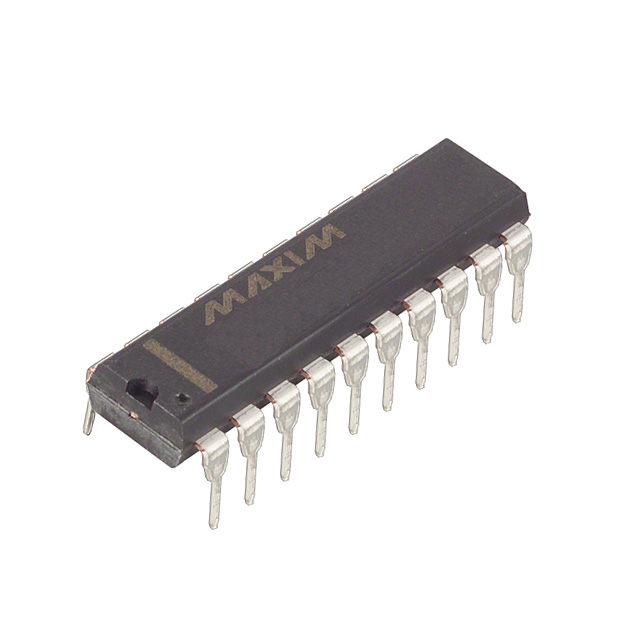
The MAX4530CPP+ is an 8:1 analog multiplexer/demultiplexer IC manufactured by Analog Devices Inc./Maxim Integrated, housed in a 20-pin DIP package. This component features a 75Ohm on-state resistance and operates across single supply (2V to 12V) or dual supply (±2V to 6V) configurations. The product is currently obsolete, necessitating identification of functionally equivalent alternatives for ongoing system support and new designs requiring similar switching capabilities.
Substiute Parts
Key Parameters
| Parameter | Value |
|---|---|
| Multiplexer/Demultiplexer Circuit | 8:1 |
| Number of Circuits | 1 |
| On-State Resistance (Max) | 75Ohm |
| Channel-to-Channel Matching (ΔRon) | 1Ohm |
| Voltage - Supply, Single (V+) | 2V ~ 12V |
| Voltage - Supply, Dual (V±) | ±2V ~ 6V |
| Switch Time (Ton, Toff) (Max) | 150ns, 100ns |
| Charge Injection | 1.5pC |
| Channel Capacitance (CS(off), CD(off)) | 3pF, 15pF |
| Current - Leakage (IS(off)) (Max) | 1nA |
| Crosstalk | -92dB @ 1MHz |
| Operating Temperature | 0°C ~ 70°C |
| Package / Case | 20-DIP (0.300", 7.62mm) |
| RoHS Status | ROHS3 Compliant |
Substitute Part Grouping Explanation
Substitution for the MAX4530CPP+ is determined by the following critical parameters:
- Multiplexer Configuration: 8:1 topology (mandatory match)
- Package Type: 20-DIP form factor (mandatory match for direct replacement)
- On-State Resistance: Maximum 75Ohm specification
- Supply Voltage Compatibility: Single supply 2V–12V or dual supply ±2V–6V operation
- Switching Performance: Switch time and charge injection characteristics
- Leakage Current: Maximum 1nA specification
- Environmental Compliance: RoHS3 compliance preferred for new designs
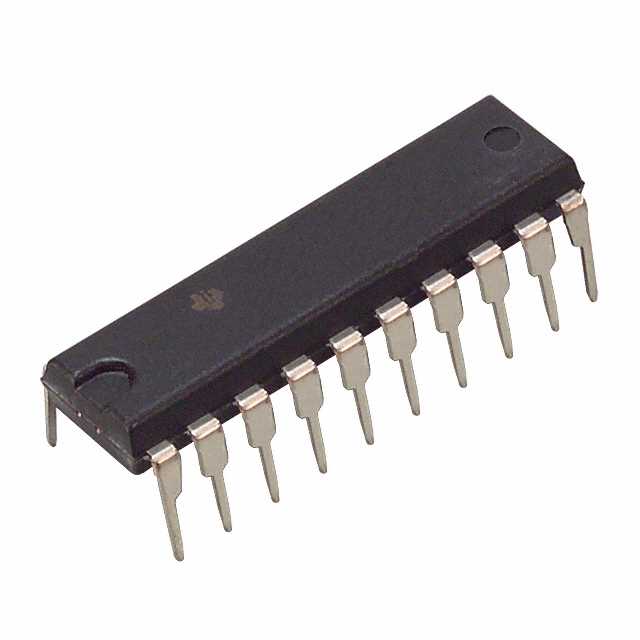
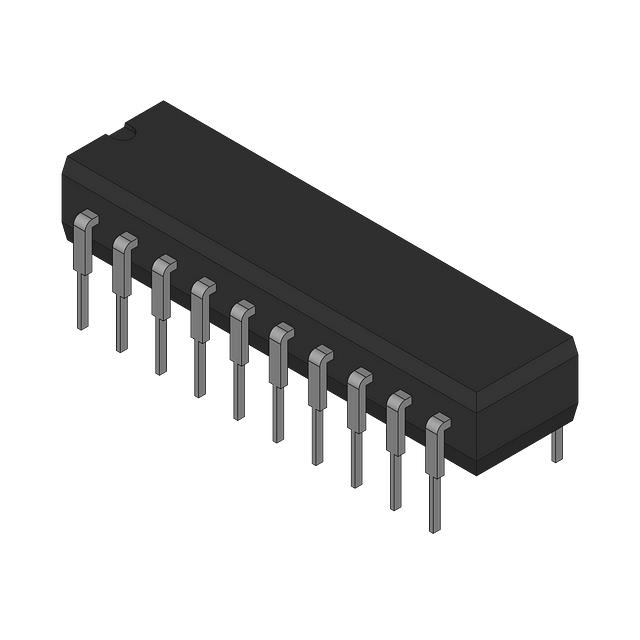
The identified substitute parts CD74HC4351E and CD74HCT4351E maintain the 8:1 multiplexer configuration and 20-DIP package. However, both substitutes feature higher on-state resistance (130Ohm maximum) and different supply voltage ranges, requiring circuit-level evaluation for compatibility.
Parameter Comparison
| Parameter | MAX4530CPP+ | CD74HC4351E | CD74HCT4351E |
|---|---|---|---|
| Manufacturer | Analog Devices Inc./Maxim Integrated | Texas Instruments | Harris Corporation |
| Multiplexer/Demultiplexer Circuit | 8:1 | 8:1 | 8:1 |
| On-State Resistance (Max) | 75Ohm | 130Ohm | 130Ohm |
| Channel-to-Channel Matching (ΔRon) | 1Ohm | 5Ohm | 5Ohm |
| Voltage - Supply, Single (V+) | 2V ~ 12V | 2V ~ 6V | 4.5V ~ 5.5V |
| Voltage - Supply, Dual (V±) | ±2V ~ 6V | ±1V ~ 5V | ±1V ~ 5V |
| Switch Time (Ton, Toff) (Max) | 150ns, 100ns | 55ns, 50ns | 60ns, 55ns |
| Charge Injection | 1.5pC | Not specified | Not specified |
| Channel Capacitance (CS(off), CD(off)) | 3pF, 15pF | 5pF, 25pF | 5pF, 25pF |
| Current - Leakage (IS(off)) (Max) | 1nA | 200nA | 400nA |
| Operating Temperature | 0°C ~ 70°C | -55°C ~ 125°C | -55°C ~ 125°C |
| Package / Case | 20-DIP (0.300", 7.62mm) | 20-DIP (0.300", 7.62mm) | 20-DIP (0.300", 7.62mm) |
| Product Status | Obsolete | Last Time Buy | Obsolete |
| RoHS Status | ROHS3 Compliant | ROHS3 Compliant | RoHS non-compliant |
Engineering Selection Recommendations
CD74HC4351E (Texas Instruments)
This part maintains ROHS3 compliance and offers an extended operating temperature range (-55°C to 125°C) compared to the MAX4530CPP+. The CD74HC4351E is suitable for applications where the higher on-state resistance (130Ohm vs. 75Ohm) and increased leakage current (200nA vs. 1nA) are acceptable. The single supply voltage range is limited to 2V–6V, which may restrict use in systems requiring operation above 6V. This part is in Last Time Buy status, indicating limited future availability.
CD74HCT4351E (Harris Corporation)
This substitute provides the widest operating temperature range (-55°C to 125°C) but is restricted to a narrow single supply voltage window (4.5V–5.5V), making it suitable only for standard 5V logic systems. The part is RoHS non-compliant and obsolete, presenting compliance and availability concerns for new designs. Leakage current is the highest among the three options (400nA), and the part should be selected only when 5V-only operation is required and RoHS compliance is not mandated.
Frequently Asked Questions (FAQ)
Q: Can CD74HC4351E or CD74HCT4351E directly replace MAX4530CPP+ in existing designs?
A: Direct replacement requires circuit-level evaluation. Both substitutes maintain the 8:1 multiplexer configuration and 20-DIP package, but differ significantly in on-state resistance (130Ohm vs. 75Ohm), leakage current, and supply voltage ranges. Applications sensitive to signal attenuation or operating outside the 2V–6V range may require design modifications.
Q: What are the key differences in supply voltage compatibility?
A: The MAX4530CPP+ operates from 2V–12V (single supply) or ±2V–6V (dual supply). The CD74HC4351E supports 2V–6V (single) or ±1V–5V (dual). The CD74HCT4351E is restricted to 4.5V–5.5V (single) or ±1V–5V (dual). Systems requiring operation above 6V single supply cannot use either substitute without redesign.
Q: How does the increased on-state resistance affect circuit performance?
A: The substitutes feature 130Ohm on-state resistance compared to the MAX4530CPP+'s 75Ohm specification. This 73% increase in resistance will increase signal attenuation and voltage drop across the switch. Applications with low-impedance signal sources or tight signal integrity requirements must verify compatibility through simulation or testing.
Q: Are there compliance or availability concerns with these substitutes?
A: The CD74HC4351E is ROHS3 compliant but in Last Time Buy status. The CD74HCT4351E is RoHS non-compliant and obsolete. For new designs requiring long-term component availability and regulatory compliance, the CD74HC4351E is the preferred option, though neither part offers the same availability profile as current-generation multiplexer ICs.
Q: What is the significance of the higher leakage current in the substitutes?
A: The MAX4530CPP+ specifies 1nA maximum leakage, while CD74HC4351E and CD74HCT4351E specify 200nA and 400nA respectively. This 200–400× increase in leakage current may impact applications requiring extremely low off-channel current, such as precision analog signal routing or high-impedance measurement circuits.
Alternative Parts

SJ6012L2TP
Littelfuse Inc.
6 Alternative Parts

JMK107BBJ476MA-RE
Taiyo Yuden
10 Alternative Parts

GMK107BBJ475MA-T
Taiyo Yuden
5 Alternative Parts
SJ6020N2ARP
Littelfuse Inc.
3 Alternative Parts
SJ6025R2ATP
Littelfuse Inc.
4 Alternative Parts

2474-05L
API Delevan Inc.
1 Alternative Parts

4590R-684K
API Delevan Inc.
1 Alternative Parts

CM6560R-334
API Delevan Inc.
1 Alternative Parts

CM6460-104
API Delevan Inc.
1 Alternative Parts

5526-12
API Delevan Inc.
1 Alternative Parts