



Request Quote
(Ships tomorrow)
MAX4430ESA Equivalent & Substitute Parts
Part Overview
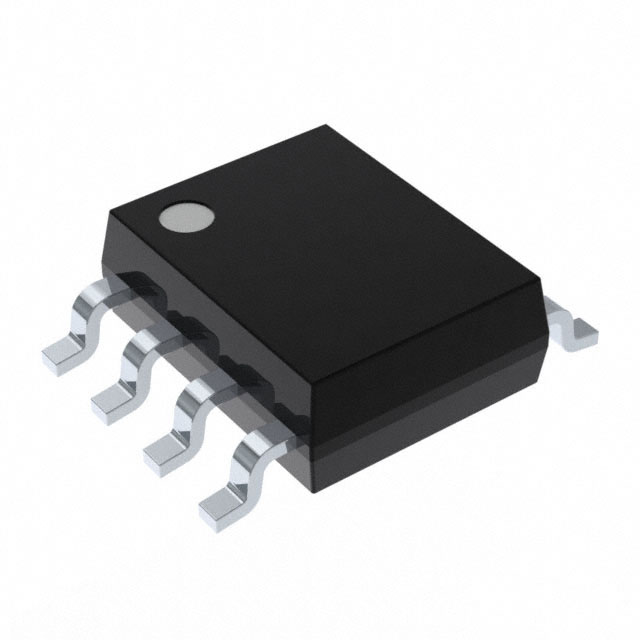
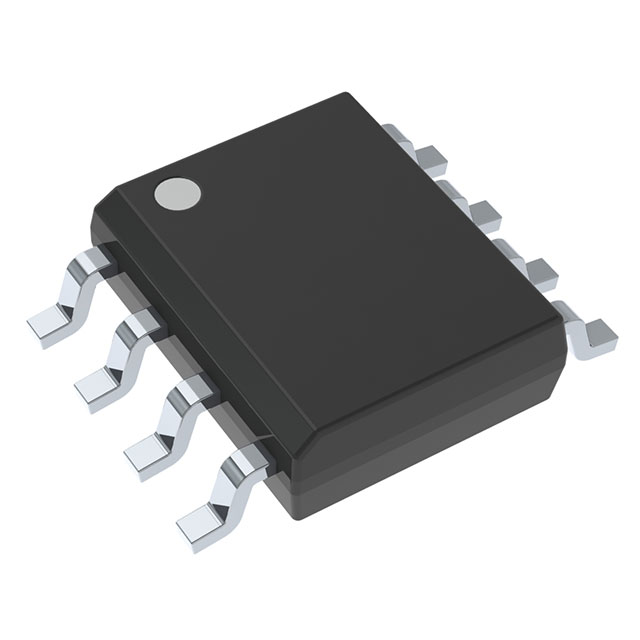
The MAX4430ESA is a voltage feedback amplifier integrated circuit manufactured by Analog Devices Inc./Maxim Integrated, housed in an 8-SOIC surface mount package. This device is classified as obsolete, indicating discontinued production and limited availability in the market. The MAX4430ESA delivers a slew rate of 100V/µs with a -3dB bandwidth of 180 MHz, designed for applications requiring moderate-speed signal amplification with single-circuit configuration.
Due to its obsolete status, sourcing original MAX4430ESA units presents supply chain challenges. Equivalent and substitute parts with active product status provide viable alternatives for new designs or production continuity. Substitutes must maintain compatibility across electrical parameters including slew rate, bandwidth, input bias current, supply voltage range, and package form factor.
Substiute Parts
Key Parameters
| Parameter | MAX4430ESA | Unit |
|---|---|---|
| Amplifier Type | Voltage Feedback | — |
| Number of Circuits | 1 | — |
| Slew Rate | 100 | V/µs |
| -3dB Bandwidth | 180 | MHz |
| Current - Input Bias | 11 | µA |
| Voltage - Input Offset | 1.25 | mV |
| Current - Supply | 11 | mA |
| Current - Output / Channel | 60 | mA |
| Voltage - Supply Span (Min) | 9 | V |
| Voltage - Supply Span (Max) | 11 | V |
| Operating Temperature Range | -40 to 85 | °C |
| Package / Case | 8-SOIC (0.154", 3.90mm Width) | — |
| Product Status | Obsolete | — |
| RoHS Status | ROHS3 Compliant | — |
Substitute Part Grouping Explanation
Substitution logic for the MAX4430ESA is based on the following critical parameters:
Mandatory Compatibility Criteria:
- Package form factor: 8-SOIC (0.154", 3.90mm Width) surface mount
- Amplifier type: Voltage Feedback configuration
- Number of circuits: Single circuit (1)
- Operating temperature range: Minimum -40°C to 85°C
- Supply voltage compatibility: Overlap with 9V to 11V range
Performance Parameter Considerations:
- Slew rate: 100V/µs baseline (substitutes may exceed this specification)
- -3dB bandwidth: 180 MHz baseline (substitutes may exceed this specification)
- Input bias current: 11 µA baseline
- Input offset voltage: 1.25 mV baseline
- Output current capability: 60 mA per channel baseline
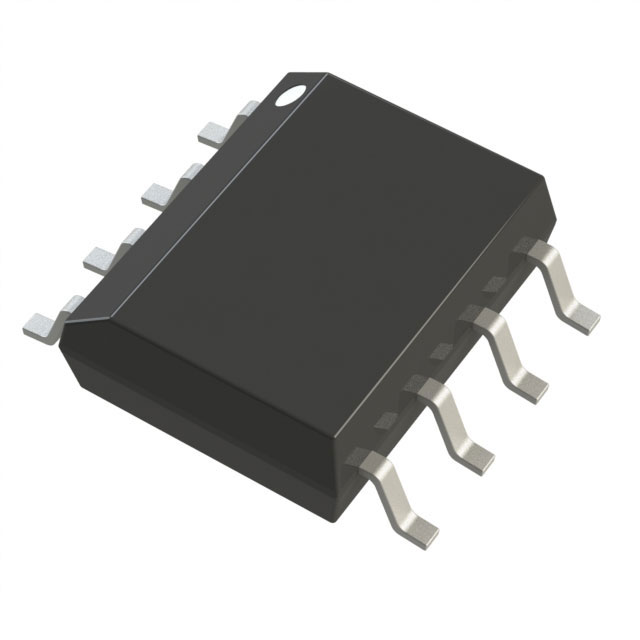
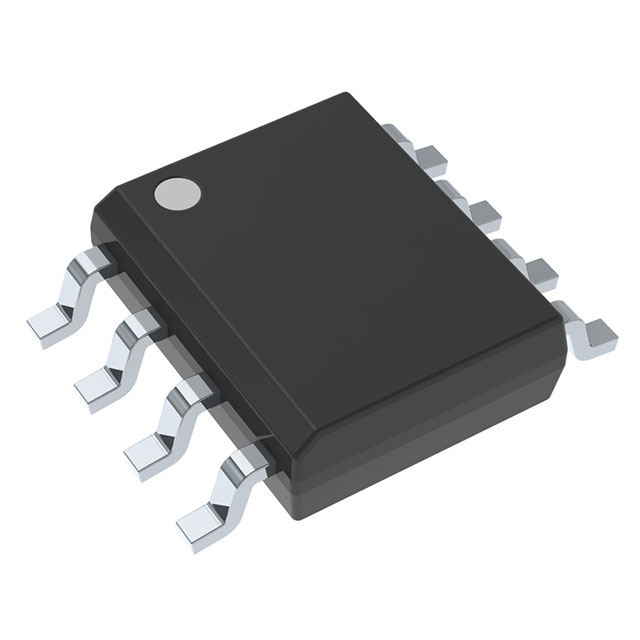
Substitutes are grouped into two categories: direct replacements (MAX4430ESA+) and enhanced-performance alternatives (AD8048ARZ, LMH6551MAX/NOPB, OPA656U/2K5, THS4221D, THS4271D, THS4275D, THS4502ID, THS4503ID). Direct replacements maintain identical electrical specifications with different packaging or product status. Enhanced alternatives provide superior performance metrics while maintaining package compatibility and supply voltage overlap.
Parameter Comparison
| Part Number | Manufacturer | Slew Rate (V/µs) | -3dB Bandwidth (MHz) | Input Bias (µA) | Input Offset (mV) | Supply Current (mA) | Output Current (mA) | Supply Min (V) | Supply Max (V) | Temp Range (°C) | Product Status |
|---|---|---|---|---|---|---|---|---|---|---|---|
| MAX4430ESA | Analog Devices/Maxim | 100 | 180 | 11 | 1.25 | 11 | 60 | 9 | 11 | -40 to 85 | Obsolete |
| MAX4430ESA+ | Analog Devices/Maxim | 100 | 180 | 11 | 1.25 | 11 | 60 | 9 | 11 | -40 to 85 | Active |
| AD8048ARZ | Analog Devices | 1000 | 260 | 1 | 1 | 5.9 | 50 | 6 | 12 | -40 to 85 | Active |
| LMH6551MAX/NOPB | Texas Instruments | 2400 | 370 | 4 | 0.5 | 12.5 | 65 | 3 | 12 | -40 to 125 | Active |
| OPA656U/2K5 | Burr Brown | 295 | 500 | 0.002 | 0.25 | 14 | 70 | 8 | 12 | -40 to 85 | Active |
| THS4221D | Texas Instruments | 990 | 230 | 0.9 | 3 | 14 | 100 | 2.7 | 15 | -40 to 85 | Active |
| THS4271D | Texas Instruments | 1000 | 1400 | 6 | 5 | 22 | 160 | 5 | 15 | -40 to 85 | Active |
| THS4275D | Texas Instruments | 1000 | 1400 | 6 | 5 | 22 | 160 | 5 | 15 | -40 to 85 | Active |
| THS4502ID | Texas Instruments | 2800 | 370 | 4 | 1 | 23 | 120 | 4.5 | 15 | -40 to 85 | Active |
| THS4503ID | Texas Instruments | 2800 | 370 | 4 | 1 | 23 | 120 | 4.5 | 15 | -40 to 85 | Active |
Engineering Selection Recommendations
Direct Replacement (Identical Specifications):
MAX4430ESA+ is the direct equivalent with identical electrical and thermal specifications. This part maintains 100% compatibility with existing designs while offering active product status and improved supply availability. Selection of MAX4430ESA+ is appropriate for applications where the original MAX4430ESA performance envelope is sufficient and no design modifications are required.
Enhanced Performance Alternatives:
AD8048ARZ provides 10× higher slew rate (1000V/µs vs. 100V/µs) and 44% greater bandwidth (260 MHz vs. 180 MHz) while reducing input bias current to 1 µA. Supply voltage range expands to 6V–12V, accommodating broader system architectures. This device is suitable for applications requiring improved transient response and lower input current characteristics.
LMH6551MAX/NOPB delivers the highest slew rate (2400V/µs) and bandwidth (370 MHz) among substitutes, with extended operating temperature to 125°C. Differential output configuration and 3V minimum supply voltage enable specialized signal conditioning applications. This part accommodates the widest supply voltage range (3V–12V).
OPA656U/2K5 features exceptional input bias current (2 pA) and 500 MHz bandwidth, optimized for transimpedance and photodiode amplifier applications. Higher supply current (14 mA) and output current (70 mA) support demanding load conditions.
THS4221D provides rail-to-rail output capability with 990V/µs slew rate and 230 MHz bandwidth. Extended supply voltage range (2.7V–15V) and 100 mA output current support single-supply and low-voltage system designs.
THS4271D and THS4275D offer identical specifications with 1000V/µs slew rate and 1.4 GHz bandwidth, representing the highest bandwidth option. These devices support high-frequency signal processing with 160 mA output current capability.
THS4502ID and THS4503ID feature differential amplifier topology with 2800V/µs slew rate and 370 MHz bandwidth. Differential output configuration suits balanced signal transmission and instrumentation applications.
Compliance and Certification:
All substitute parts maintain ROHS3 compliance and REACH unaffected status, consistent with MAX4430ESA environmental regulations. All devices carry EAR99 export classification and identical HTSUS commodity codes, ensuring regulatory continuity.
Frequently Asked Questions (FAQ)
Q: Can MAX4430ESA+ be used as a direct drop-in replacement for MAX4430ESA?
A: Yes. MAX4430ESA+ maintains identical electrical specifications, thermal characteristics, and 8-SOIC package form factor. The primary difference is product status (Active vs. Obsolete) and packaging format (Tube vs. standard). Pin-for-pin compatibility is complete.
Q: What is the primary reason to select an enhanced-performance substitute over MAX4430ESA+?
A: Enhanced substitutes address specific application requirements beyond the original specification envelope. Higher slew rates (1000V/µs to 2800V/µs) reduce settling time in transient-sensitive circuits. Increased bandwidth (260 MHz to 1.4 GHz) supports higher-frequency signal processing. Lower input bias current (1 µA to 2 pA) minimizes input impedance effects. Extended supply voltage ranges enable broader system compatibility.
Q: Are all substitute parts compatible with the 9V–11V supply voltage range of MAX4430ESA?
A: All listed substitutes support operation within the 9V–11V range. However, several substitutes offer extended minimum supply voltages (as low as 2.7V) and maximum voltages (up to 15V), enabling operation beyond the original specification. Verify specific application supply voltage requirements before selection.
Q: What is the difference between THS4502ID and THS4503ID?
A: THS4502ID and THS4503ID are functionally identical differential amplifiers with identical electrical specifications. Both feature 2800V/µs slew rate, 370 MHz bandwidth, and 8-SOIC packaging. Selection between these parts depends on inventory availability and supplier preference.
Q: How do differential output devices (LMH6551MAX/NOPB, THS4502ID, THS4503ID) differ from voltage feedback devices?
A: Differential output amplifiers provide balanced signal transmission with reduced common-mode noise, suitable for long-distance signal transmission and instrumentation applications. Voltage feedback devices provide single-ended output. Differential topology requires different circuit design and termination considerations. Substitution of differential devices for single-ended applications requires circuit redesign.
Q: Is OPA656U/2K5 suitable for general-purpose amplification applications?
A: OPA656U/2K5 is optimized for transimpedance and photodiode amplifier applications due to exceptionally low input bias current (2 pA). While suitable for general-purpose amplification, the 2 pA input bias current specification indicates specialized design optimization. For standard voltage amplification, AD8048ARZ or THS4221D provide more conventional performance characteristics.
Q: What packaging format differences exist among substitute parts?
A: All substitute parts utilize 8-SOIC (0.154", 3.90mm Width) surface mount package, maintaining mechanical compatibility. Packaging format variations (Tube, Cut Tape, Digi-Reel) affect handling and assembly processes but do not impact electrical performance or PCB layout requirements.
Q: Can THS4271D or THS4275D be used in applications requiring the original 180 MHz bandwidth specification?
A: Yes. THS4271D and THS4275D provide 1.4 GHz bandwidth, exceeding the 180 MHz requirement by 7.8×. These devices operate within the original specification envelope while providing significant performance margin. Higher bandwidth may introduce increased noise in bandwidth-limited applications; circuit design should incorporate appropriate filtering.
Q: What is the significance of the extended operating temperature range in LMH6551MAX/NOPB (-40°C to 125°C)?
A: Extended temperature range to 125°C enables operation in high-temperature environments (automotive, industrial, aerospace applications) where standard -40°C to 85°C range is insufficient. This specification does not affect compatibility with standard -40°C to 85°C applications.
Alternative Parts

SJ6012L2TP
Littelfuse Inc.
6 Alternative Parts

JMK107BBJ476MA-RE
Taiyo Yuden
10 Alternative Parts

GMK107BBJ475MA-T
Taiyo Yuden
5 Alternative Parts
SJ6020N2ARP
Littelfuse Inc.
3 Alternative Parts
SJ6025R2ATP
Littelfuse Inc.
4 Alternative Parts

2474-05L
API Delevan Inc.
1 Alternative Parts

4590R-684K
API Delevan Inc.
1 Alternative Parts

CM6560R-334
API Delevan Inc.
1 Alternative Parts

CM6460-104
API Delevan Inc.
1 Alternative Parts

5526-12
API Delevan Inc.
1 Alternative Parts