


Request Quote
(Ships tomorrow)
MAX4415EUA+ Equivalent & Substitute Parts
Part Overview
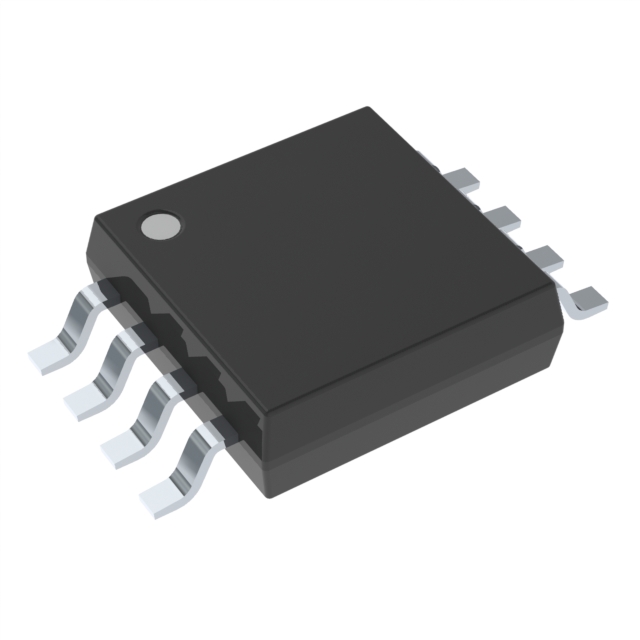
The MAX4415EUA+ is a voltage feedback amplifier manufactured by Analog Devices Inc./Maxim Integrated, designed for rail-to-rail operation in compact 8-uMAX/uSOP surface mount packaging. This device is classified as obsolete, necessitating identification of functionally equivalent alternatives for new designs and production continuity. The part delivers 470V/µs slew rate and 150 MHz bandwidth in applications requiring single-channel amplification with low input bias current and minimal input offset voltage.
Substiute Parts
Key Parameters
| Parameter | Value | Unit |
|---|---|---|
| Amplifier Type | Voltage Feedback | — |
| Number of Circuits | 1 | — |
| Output Type | Rail-to-Rail | — |
| Slew Rate | 470 | V/µs |
| -3dB Bandwidth | 150 | MHz |
| Current - Input Bias | 1.3 | µA |
| Voltage - Input Offset | 500 | µV |
| Current - Supply | 1.6 | mA |
| Current - Output / Channel | 75 | mA |
| Voltage - Supply Span (Min) | 2.7 | V |
| Voltage - Supply Span (Max) | 5.5 | V |
| Operating Temperature | -40 to 85 | °C |
| Mounting Type | Surface Mount | — |
| Package / Case | 8-TSSOP, 8-MSOP (0.118", 3.00mm Width) | — |
Substitute Part Grouping Explanation
Substitution of the MAX4415EUA+ is determined by strict equivalence in the following electrical and mechanical parameters:
Primary Substitution Criteria:
- Amplifier topology: Voltage feedback architecture
- Circuit count: Single amplifier per package
- Output configuration: Rail-to-rail capability
- Supply voltage range: Minimum 2.7V, maximum 5.5V (or higher)
- Operating temperature range: -40°C to 85°C minimum
- Mounting technology: Surface mount package
Secondary Compatibility Parameters:
- Slew rate: 470V/µs or greater
- Bandwidth (-3dB): 150 MHz or greater
- Input bias current: 1.3 µA or lower
- Input offset voltage: 500 µV or lower
- Output current capability: 75 mA or greater
- Supply current: 1.6 mA or lower
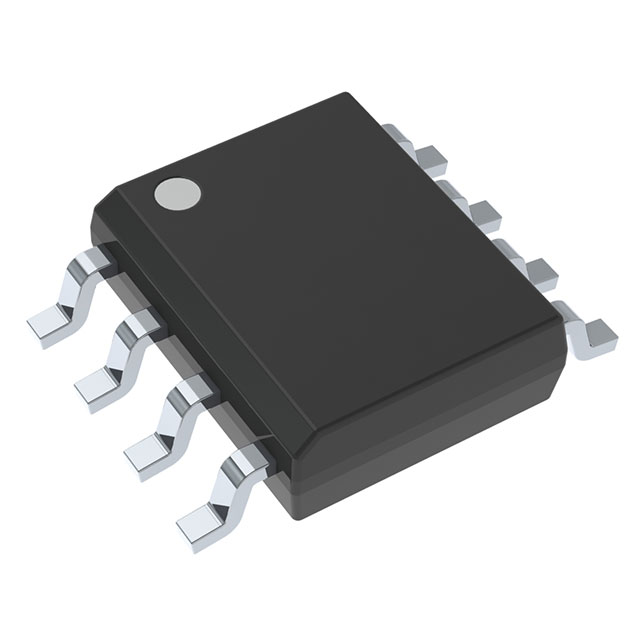
The THS4221D from Texas Instruments meets all primary criteria and exceeds secondary performance specifications, qualifying as a direct functional substitute.
Parameter Comparison
| Parameter | MAX4415EUA+ | THS4221D | Unit |
|---|---|---|---|
| Manufacturer | Analog Devices Inc./Maxim Integrated | Texas Instruments | — |
| Product Status | Obsolete | Active | — |
| Amplifier Type | Voltage Feedback | Voltage Feedback | — |
| Number of Circuits | 1 | 1 | — |
| Output Type | Rail-to-Rail | Rail-to-Rail | — |
| Slew Rate | 470 | 990 | V/µs |
| -3dB Bandwidth | 150 | 230 | MHz |
| Current - Input Bias | 1.3 | 0.9 | µA |
| Voltage - Input Offset | 500 | 3000 | µV |
| Current - Supply | 1.6 | 14 | mA |
| Current - Output / Channel | 75 | 100 | mA |
| Voltage - Supply Span (Min) | 2.7 | 2.7 | V |
| Voltage - Supply Span (Max) | 5.5 | 15 | V |
| Operating Temperature | -40 to 85 | -40 to 85 | °C |
| Mounting Type | Surface Mount | Surface Mount | — |
| Package / Case | 8-TSSOP, 8-MSOP (0.118", 3.00mm Width) | 8-SOIC (0.154", 3.90mm Width) | — |
| RoHS Status | ROHS3 Compliant | ROHS3 Compliant | — |
| Moisture Sensitivity Level | 1 (Unlimited) | 1 (Unlimited) | — |
| REACH Status | REACH Unaffected | REACH Unaffected | — |
Engineering Selection Recommendations
Functional Equivalence: The THS4221D qualifies as a direct substitute for the MAX4415EUA+ based on matching voltage feedback topology, single-circuit configuration, rail-to-rail output capability, and identical operating temperature range. Both devices are ROHS3 compliant with MSL 1 rating and REACH unaffected status, ensuring regulatory compatibility.
Performance Advantages of THS4221D: The substitute part exceeds the original specification in slew rate (990V/µs vs. 470V/µs), bandwidth (230 MHz vs. 150 MHz), input bias current (0.9 µA vs. 1.3 µA), and output current capability (100 mA vs. 75 mA). The THS4221D supports extended supply voltage operation to 15V, compared to the MAX4415EUA+ maximum of 5.5V.
Package Consideration: The THS4221D uses 8-SOIC packaging (0.154", 3.90mm width) versus the MAX4415EUA+ 8-TSSOP/8-MSOP (0.118", 3.00mm width). PCB layout modification is required for package transition. The SOIC package is industry-standard and widely supported by manufacturing processes.
Supply Current Trade-off: The THS4221D draws 14 mA supply current compared to 1.6 mA for the MAX4415EUA+. This increased current consumption must be evaluated in power-sensitive applications.
Active Product Status: The THS4221D maintains active product status with established supply chain availability, eliminating obsolescence risk associated with the MAX4415EUA+.
Frequently Asked Questions (FAQ)
Q: Can the THS4221D directly replace the MAX4415EUA+ without circuit modification?
A: Functional substitution is supported. Pin-to-pin compatibility requires verification against specific application schematics. Package geometry differs (SOIC vs. TSSOP), necessitating PCB layout redesign. Electrical performance is compatible within the specified operating parameters.
Q: What is the primary reason for substitution?
A: The MAX4415EUA+ is classified as obsolete. The THS4221D provides equivalent functionality with active product status and improved performance specifications.
Q: How does the increased supply current of THS4221D affect system design?
A: The THS4221D requires 14 mA versus 1.6 mA for the MAX4415EUA+. Power supply capacity and thermal management must be re-evaluated for applications with strict power budgets or multiple amplifier channels.
Q: Are there compliance differences between the two parts?
A: Both devices are ROHS3 compliant, MSL 1 rated, and REACH unaffected. Regulatory compliance is equivalent.
Q: What packaging considerations apply to substitution?
A: The THS4221D uses 8-SOIC (0.154", 3.90mm width) versus MAX4415EUA+ 8-TSSOP/8-MSOP (0.118", 3.00mm width). PCB footprint redesign is required. SOIC is a standard package with broad manufacturing support.
Q: Does the THS4221D support the same supply voltage range?
A: The THS4221D minimum supply voltage matches the MAX4415EUA+ at 2.7V. The THS4221D maximum supply voltage is 15V, exceeding the MAX4415EUA+ 5.5V limit. Applications operating at 5.5V or below are fully compatible.
Q: What performance improvements does the THS4221D provide?
A: The THS4221D offers higher slew rate (990V/µs vs. 470V/µs), greater bandwidth (230 MHz vs. 150 MHz), lower input bias current (0.9 µA vs. 1.3 µA), and higher output current capability (100 mA vs. 75 mA).
Alternative Parts

SJ6012L2TP
Littelfuse Inc.
6 Alternative Parts

JMK107BBJ476MA-RE
Taiyo Yuden
10 Alternative Parts

GMK107BBJ475MA-T
Taiyo Yuden
5 Alternative Parts
SJ6020N2ARP
Littelfuse Inc.
3 Alternative Parts
SJ6025R2ATP
Littelfuse Inc.
4 Alternative Parts

2474-05L
API Delevan Inc.
1 Alternative Parts

4590R-684K
API Delevan Inc.
1 Alternative Parts

CM6560R-334
API Delevan Inc.
1 Alternative Parts

CM6460-104
API Delevan Inc.
1 Alternative Parts

5526-12
API Delevan Inc.
1 Alternative Parts