




Request Quote
(Ships tomorrow)
MAX4337EUA Equivalent & Substitute Parts Reference
Part Overview
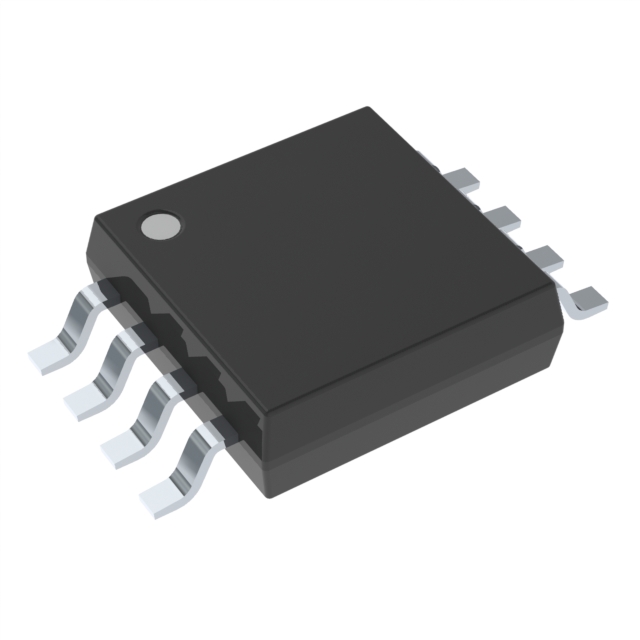
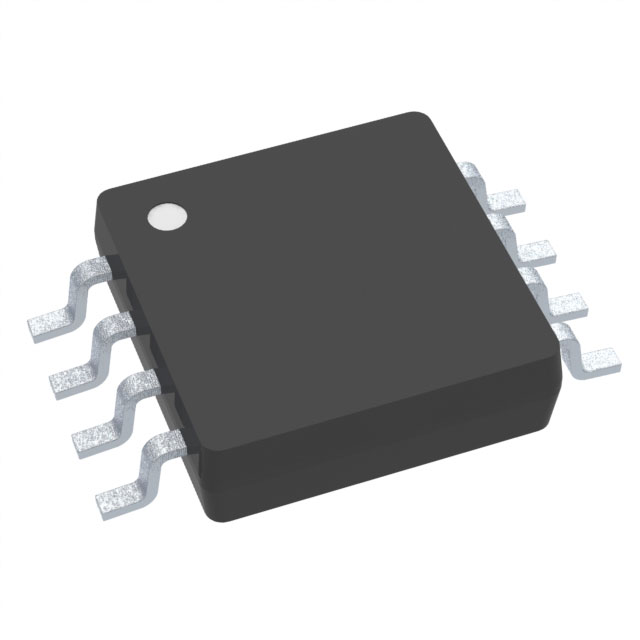
The MAX4337EUA is a general-purpose operational amplifier manufactured by Analog Devices Inc./Maxim Integrated, featuring dual circuits in an 8-uMAX/uSOP surface-mount package. This device delivers rail-to-rail output capability with a 5 MHz gain-bandwidth product and operates across a 2.7V to 5.5V supply range. The MAX4337EUA is classified as obsolete, making equivalent and substitute parts necessary for new designs and ongoing production requirements. Substitute components must maintain functional compatibility while meeting the same electrical specifications and package constraints.
Substiute Parts
Key Parameters
| Parameter | Value | Unit |
|---|---|---|
| Amplifier Type | General Purpose | — |
| Number of Circuits | 2 | — |
| Output Type | Rail-to-Rail | — |
| Slew Rate | 1.8 | V/µs |
| Gain Bandwidth Product | 5 | MHz |
| Current - Input Bias | 100 | nA |
| Voltage - Input Offset | 600 | µV |
| Current - Supply (x2 Channels) | 1.3 | mA |
| Current - Output / Channel | 110 | mA |
| Voltage - Supply Span (Min) | 2.7 | V |
| Voltage - Supply Span (Max) | 5.5 | V |
| Operating Temperature | -40 to 85 | °C |
| Package / Case | 8-TSSOP, 8-MSOP (0.118", 3.00mm Width) | — |
| Mounting Type | Surface Mount | — |
| RoHS Status | ROHS3 Compliant | — |
| Moisture Sensitivity Level (MSL) | 1 (Unlimited) | — |
Substitute Part Grouping Explanation
Substitution of the MAX4337EUA is determined by strict adherence to the following electrical and mechanical parameters:
Primary Substitution Criteria:
- Dual-circuit (2 circuits) general-purpose operational amplifier configuration
- Rail-to-rail output capability
- Surface-mount package compatible with 8-TSSOP or 8-MSOP footprints (0.118", 3.00mm width)
- Supply voltage range: minimum 2.7V, maximum 5.5V
- Operating temperature range: -40°C to 85°C (minimum requirement)
- ROHS3 compliance and MSL Level 1 rating
Secondary Compatibility Parameters:
- Slew rate: 1.8V/µs or greater
- Gain-bandwidth product: 5 MHz or greater
- Input bias current: 100 nA or lower
- Input offset voltage: 600 µV or lower
- Output current per channel: 110 mA or greater
- Supply current: 1.3 mA (x2 channels) or lower
Substitutes are grouped into two categories: direct replacements maintaining identical specifications, and functional equivalents with enhanced or alternative performance characteristics within the allowed parameter ranges.
Parameter Comparison
| Part Number | Manufacturer | Amplifier Type | Slew Rate (V/µs) | GBW (MHz) | Input Bias (nA) | Input Offset (µV) | Supply Current (mA) | Output Current (mA) | Temp Range (°C) | Package | Status |
|---|---|---|---|---|---|---|---|---|---|---|---|
| MAX4337EUA | Analog Devices | General Purpose | 1.8 | 5 | 0.1 | 600 | 1.3 | 110 | -40 to 85 | 8-uMAX/uSOP | Obsolete |
| MAX4337EUA+ | Analog Devices | General Purpose | 1.8 | 5 | 0.1 | 600 | 1.3 | 110 | -40 to 85 | 8-uMAX/uSOP | Active |
| LMV822AIST | STMicroelectronics | General Purpose | 1.9 | 5.5 | 0.06 | 800 | 0.3 | 70 | -40 to 125 | 8-MiniSO | Active |
| LMV822IST | STMicroelectronics | General Purpose | 1.9 | 5.5 | 0.06 | 3500 | 0.3 | 70 | -40 to 125 | 8-MiniSO | Active |
| LPV542DGKR | Texas Instruments | CMOS | 0.0037 | 0.008 | 0.0001 | 1000 | 0.48 | 36 | -40 to 125 | 8-VSSOP | Active |
| LPV542DGKT | Texas Instruments | CMOS | 0.0037 | 0.008 | 0.0001 | 1000 | 0.48 | 36 | -40 to 125 | 8-VSSOP | Active |
| NCS20032DMR2G | onsemi | General Purpose | 8 | 7 | 0.001 | 500 | 0.275 | 96 | -40 to 125 | 8-MSOP | Active |
| NCV20032DMR2G | onsemi | General Purpose | 8 | 7 | 0.001 | 500 | 0.275 | 14 | -40 to 125 | 8-MSOP | Active |
| TLV2462AQPWRG4Q1 | Texas Instruments | General Purpose | 1.6 | 6.4 | 0.0013 | 150 | 0.55 | 80 | -40 to 125 | 8-TSSOP | Active |
| TLV2462AQPWRQ1 | Texas Instruments | General Purpose | 1.6 | 6.4 | 0.0013 | 150 | 0.55 | 80 | -40 to 125 | 8-TSSOP | Active |
| TLV2772AQPWRG4Q1 | Texas Instruments | CMOS | 10.5 | 5.1 | 0.002 | 500 | 1 | 50 | -40 to 125 | 8-TSSOP | Active |
Engineering Selection Recommendations
Direct Replacement (Identical Specifications):
The MAX4337EUA+ is the direct active replacement for the obsolete MAX4337EUA. Both parts share identical electrical specifications, package configuration, and performance characteristics. The MAX4337EUA+ is ROHS3 compliant with MSL Level 1 rating and is currently in active production status with 1253 units in stock.
Primary Functional Equivalents (General Purpose Amplifiers):
The TLV2462AQPWRG4Q1 and TLV2462AQPWRQ1 (Texas Instruments) are automotive-grade general-purpose amplifiers qualified to AEC-Q100 standards. These parts meet all primary substitution criteria with enhanced input offset voltage performance (150 µV versus 600 µV) and higher gain-bandwidth product (6.4 MHz versus 5 MHz). Operating temperature extends to 125°C. Package compatibility is maintained with 8-TSSOP footprint.
The NCS20032DMR2G (onsemi) provides superior slew rate (8V/µs versus 1.8V/µs) and higher gain-bandwidth product (7 MHz), with significantly lower input bias current (1 pA). Output current per channel (96 mA) remains within acceptable range. This part is suitable for applications requiring faster transient response.
The LMV822AIST (STMicroelectronics) offers automotive qualification with AEC-Q100 certification, extended temperature range (-40°C to 125°C), and lower supply current (300 µA versus 1.3 mA). Input bias current is reduced to 60 nA. Package is 8-MiniSO, requiring PCB layout verification for footprint compatibility.
Alternative Technology (CMOS Amplifiers):
The TLV2772AQPWRG4Q1 (Texas Instruments) is a CMOS amplifier with automotive AEC-Q100 qualification. This part features significantly higher slew rate (10.5V/µs) and ultra-low input bias current (2 pA). Supply current is comparable at 1 mA. Output current per channel (50 mA) is lower than the MAX4337EUA, requiring verification for load-driving applications. Package is 8-TSSOP.
The LPV542DGKR and LPV542DGKT (Texas Instruments) are ultra-low-power CMOS amplifiers with exceptionally low input bias current (0.1 pA) and minimal supply current (480 nA). These parts are suitable for battery-powered and ultra-low-power applications. However, slew rate (0.0037V/µs) and gain-bandwidth product (8 kHz) are significantly reduced, limiting use to low-frequency signal conditioning applications.
Selection Criteria by Application:
- Direct replacement in existing designs: MAX4337EUA+
- Automotive applications with extended temperature: TLV2462AQPWRG4Q1, LMV822AIST
- High-speed signal processing: NCS20032DMR2G, TLV2772AQPWRG4Q1
- Ultra-low-power battery applications: LPV542DGKR, LPV542DGKT
- Low-frequency precision applications: LPV542 series
All recommended substitutes maintain ROHS3 compliance and MSL Level 1 rating. Verify PCB layout compatibility with package footprint changes before implementation.
Frequently Asked Questions (FAQ)
Q1: Can MAX4337EUA+ be used as a direct replacement for MAX4337EUA?
A: Yes. The MAX4337EUA+ is the active production equivalent with identical electrical specifications, package configuration, and performance characteristics. The only difference is product status (active versus obsolete) and packaging format (tube versus bulk). No circuit modifications are required.
Q2: What are the key differences between general-purpose and CMOS amplifier substitutes?
A: General-purpose amplifiers (LMV822, TLV2462, NCS20032) use bipolar or BiCMOS technology, offering higher slew rates (1.6–8V/µs) and greater output current capability. CMOS amplifiers (TLV2772, LPV542) feature ultra-low input bias current and minimal supply current, suitable for precision and low-power applications. CMOS devices typically have lower slew rates and reduced output current.
Q3: Are package footprints interchangeable between substitutes?
A: No. The MAX4337EUA uses 8-uMAX/uSOP package. Substitutes use 8-TSSOP, 8-MSOP, or 8-MiniSO packages. While all are 8-pin surface-mount devices with similar pin counts, PCB layout and footprint dimensions differ. Verify footprint compatibility with your PCB design before selecting a substitute. Pin-to-pin functional compatibility must also be confirmed.
Q4: Which substitutes are suitable for automotive applications?
A: TLV2462AQPWRG4Q1, TLV2462AQPWRQ1, LMV822AIST, LMV822IST, and TLV2772AQPWRG4Q1 carry automotive-grade designation with AEC-Q100 qualification. These parts are tested and certified for automotive temperature and reliability requirements. Extended operating temperature range (-40°C to 125°C) is standard for automotive-qualified devices.
Q5: What is the impact of lower output current on circuit performance?
A: Output current per channel determines maximum load-driving capability. The MAX4337EUA provides 110 mA per channel. Substitutes range from 14 mA (NCV20032DMR2G) to 110 mA (NCS20032DMR2G). Lower output current limits the ability to drive capacitive loads or low-impedance circuits. Verify that your application load impedance and frequency requirements are compatible with the substitute's output current specification.
Q6: Why do some substitutes have significantly lower supply current?
A: Supply current reduction reflects different amplifier architectures and design optimization. LMV822 (300 µA) and LPV542 (480 nA) use power-efficient designs suitable for battery-powered applications. Lower supply current reduces power dissipation and heat generation, beneficial for portable and energy-constrained systems. However, this may correlate with reduced slew rate or output current capability.
Q7: How does input offset voltage affect circuit accuracy?
A: Input offset voltage is the DC error present at the amplifier output when inputs are at the same potential. The MAX4337EUA specifies 600 µV. Lower values (TLV2462 at 150 µV, NCS20032 at 500 µV) provide better DC accuracy for precision applications. Higher values (LMV822IST at 3.5 mV, LPV542 at 1 mV) may require offset nulling in precision circuits. Select based on your application's DC accuracy requirements.
Q8: What does AEC-Q100 qualification mean?
A: AEC-Q100 is the Automotive Electronics Council qualification standard for integrated circuits used in automotive applications. It certifies that components meet stringent requirements for temperature cycling, humidity, electrical stress, and reliability. Parts with AEC-Q100 qualification are approved for use in automotive systems and meet automotive industry reliability standards.
Q9: Is the extended temperature range (-40°C to 125°C) always necessary?
A: No. The MAX4337EUA operates -40°C to 85°C, suitable for industrial and commercial applications. Extended range (-40°C to 125°C) is required only for automotive and high-temperature environments. If your application operates within -40°C to 85°C, standard-temperature substitutes are acceptable and may offer cost advantages.
Q10: How do I verify pin compatibility before substituting a part?
A: Obtain the datasheet for both the original part (MAX4337EUA) and the proposed substitute. Compare pin assignments, functional descriptions, and electrical ratings for each pin. Verify that supply pins, ground pins, input pins, and output pins align functionally. Note that package footprints may differ even if pin functions are compatible. Consult the PCB layout requirements and perform a detailed pin-by-pin comparison before implementation.
Alternative Parts

SJ6012L2TP
Littelfuse Inc.
6 Alternative Parts

JMK107BBJ476MA-RE
Taiyo Yuden
10 Alternative Parts

GMK107BBJ475MA-T
Taiyo Yuden
5 Alternative Parts
SJ6020N2ARP
Littelfuse Inc.
3 Alternative Parts
SJ6025R2ATP
Littelfuse Inc.
4 Alternative Parts

2474-05L
API Delevan Inc.
1 Alternative Parts

4590R-684K
API Delevan Inc.
1 Alternative Parts

CM6560R-334
API Delevan Inc.
1 Alternative Parts

CM6460-104
API Delevan Inc.
1 Alternative Parts

5526-12
API Delevan Inc.
1 Alternative Parts