




Request Quote
(Ships tomorrow)
MAX414BCSD Equivalent & Substitute Parts
Part Overview
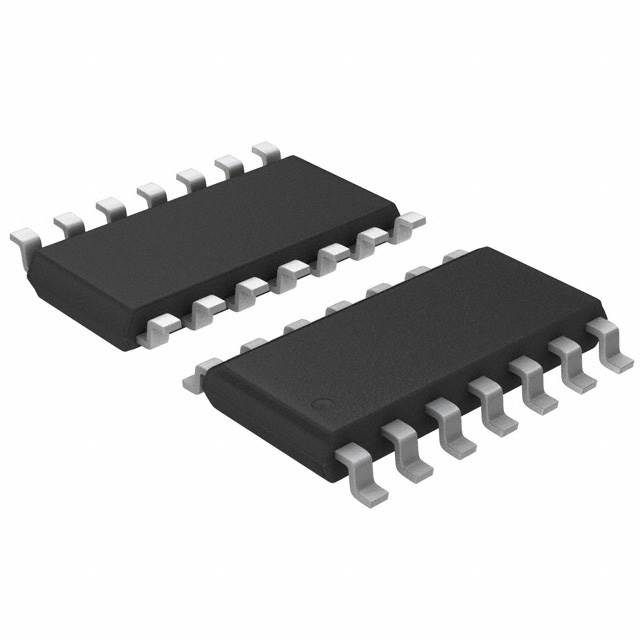
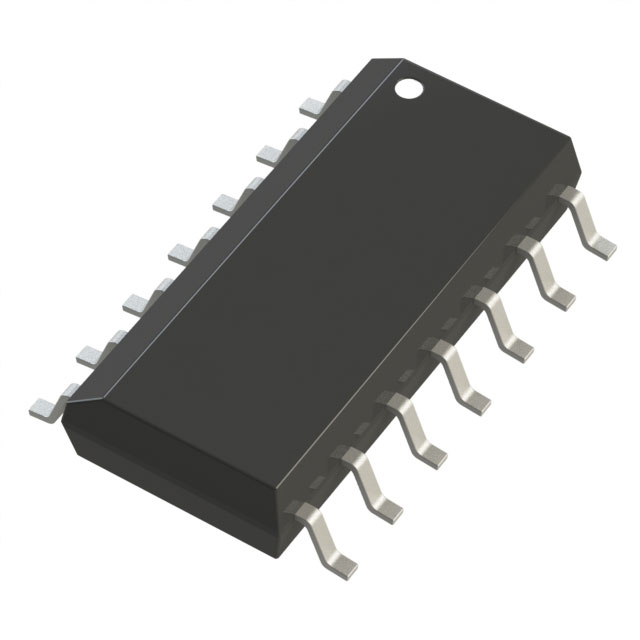
The MAX414BCSD is a general-purpose operational amplifier integrated circuit manufactured by Analog Devices Inc./Maxim Integrated. This 4-circuit amplifier is housed in a 14-SOIC surface-mount package and has been classified as obsolete. The device operates across a supply voltage range of 4.8V to 10.5V with a slew rate of 4.5V/µs and gain bandwidth product of 28 MHz, making it suitable for general-purpose signal conditioning and amplification applications.
Due to its obsolete product status, sourcing the MAX414BCSD presents supply chain challenges. Equivalent and substitute parts are necessary to maintain design continuity, ensure long-term availability, and support production requirements. Substitute devices must maintain functional compatibility through matching package type, circuit count, and electrical performance within acceptable operating parameters.
Substiute Parts
Key Parameters
| Parameter | MAX414BCSD | Unit |
|---|---|---|
| Amplifier Type | General Purpose | — |
| Number of Circuits | 4 | — |
| Package / Case | 14-SOIC (0.154", 3.90mm Width) | — |
| Slew Rate | 4.5 | V/µs |
| Gain Bandwidth Product | 28 | MHz |
| Current - Input Bias | 80 | nA |
| Voltage - Input Offset | 150 | µV |
| Current - Supply | 2.5 (x4 Channels) | mA |
| Current - Output / Channel | 35 | mA |
| Voltage - Supply Span (Min) | 4.8 | V |
| Voltage - Supply Span (Max) | 10.5 | V |
| Operating Temperature | 0 to 70 | °C |
| Mounting Type | Surface Mount | — |
| Product Status | Obsolete | — |
| RoHS Status | RoHS non-compliant | — |
Substitute Part Grouping Explanation
Substitution of the MAX414BCSD is determined by the following critical parameters:
Package Compatibility: All substitute parts must use the 14-SOIC surface-mount package to ensure direct PCB layout compatibility without redesign.
Circuit Count: The device contains 4 independent amplifier circuits. Substitute parts must maintain this 4-circuit configuration.
Electrical Performance Window: Substitute parts must operate within the supply voltage range of 4.8V to 10.5V minimum. Slew rate, gain bandwidth product, input bias current, and output current per channel define the performance envelope for signal conditioning applications.
Amplifier Architecture: The MAX414BCSD is a general-purpose amplifier. Substitutes may include general-purpose or current-feedback architectures, provided they meet the electrical performance requirements and package constraints.
Substitute parts are grouped into two categories:
Category 1 - General Purpose Rail-to-Rail: MAX4472ESD+ offers active product status and RoHS3 compliance. This device features lower supply current and extended operating temperature range, suitable for low-power applications requiring modern compliance standards.
Category 2 - Current Feedback High-Performance: AD8004ARZ-14, AD8004ARZ-14-REEL7, LT1397CS#PBF, and LT1397CS#TRPBF provide significantly higher slew rates and bandwidth performance. These devices support the full supply voltage range and deliver active product status with RoHS3 compliance. Packaging variants accommodate different procurement and assembly workflows.
Parameter Comparison
| Parameter | MAX414BCSD | MAX4472ESD+ | AD8004ARZ-14 | AD8004ARZ-14-REEL7 | LT1397CS#PBF | LT1397CS#TRPBF | Unit |
|---|---|---|---|---|---|---|---|
| Number of Circuits | 4 | 4 | 4 | 4 | 4 | 4 | — |
| Package / Case | 14-SOIC | 14-SOIC | 14-SOIC | 14-SOIC | 14-SOIC | 14-SOIC | — |
| Mounting Type | Surface Mount | Surface Mount | Surface Mount | Surface Mount | Surface Mount | Surface Mount | — |
| Slew Rate | 4.5 | 0.002 | 3000 | 3000 | 800 | 800 | V/µs |
| Gain Bandwidth Product | 28 | 9 | 30 | 30 | — | — | MHz |
| -3dB Bandwidth | — | — | 250 | 250 | 400 | 400 | MHz |
| Current - Input Bias | 80 | 200 | 40 | 40 | 10 | 10 | pA / µA |
| Voltage - Input Offset | 150 | 500 | 1000 | 1000 | 1000 | 1000 | µV |
| Current - Supply | 2.5 (x4) | 0.75 (x4) | 14 | 14 | 4.6 (x4) | 4.6 (x4) | mA / nA |
| Current - Output / Channel | 35 | 36 | 50 | 50 | 80 | 80 | mA |
| Voltage - Supply Span (Min) | 4.8 | 1.8 | 4 | 4 | 4 | 4 | V |
| Voltage - Supply Span (Max) | 10.5 | 5.5 | 12 | 12 | 12 | 12 | V |
| Operating Temperature | 0 to 70 | -40 to 85 | -40 to 85 | -40 to 85 | 0 to 70 | 0 to 70 | °C |
| Product Status | Obsolete | Active | Active | Active | Active | Active | — |
| RoHS Status | Non-compliant | ROHS3 Compliant | ROHS3 Compliant | ROHS3 Compliant | ROHS3 Compliant | ROHS3 Compliant | — |
Engineering Selection Recommendations
For Low-Power Applications with Modern Compliance Requirements:
MAX4472ESD+ is the appropriate selection when designs require RoHS3 compliance and minimal supply current consumption. This device operates at 750 nA total supply current across four channels, substantially lower than the MAX414BCSD. The rail-to-rail output architecture extends usable signal range in single-supply configurations. However, the reduced gain bandwidth product of 9 kHz and slew rate of 0.002 V/µs limit this device to low-frequency signal conditioning. The maximum supply voltage of 5.5 V restricts use in higher-voltage systems. Active product status ensures long-term availability and manufacturing support.
For High-Speed Applications Requiring Extended Supply Range:
AD8004ARZ-14 and AD8004ARZ-14-REEL7 provide current-feedback amplifier architecture with 3000 V/µs slew rate and 250 MHz bandwidth. These devices support the full 4 V to 12 V supply range, accommodating higher-voltage system designs. The 40 µA input bias current and 50 mA output current per channel deliver robust performance for transimpedance and transadmittance configurations. Both variants are RoHS3 compliant with active product status. AD8004ARZ-14 is packaged in tube format; AD8004ARZ-14-REEL7 is supplied on cut tape and Digi-Reel for automated assembly workflows.
For Balanced Performance with Extended Temperature Range:
LT1397CS#PBF and LT1397CS#TRPBF offer current-feedback architecture with 800 V/µs slew rate and 400 MHz bandwidth. Input bias current of 10 µA and 80 mA output current per channel provide excellent performance for precision signal conditioning. Supply voltage range of 4 V to 12 V accommodates diverse system architectures. Extended operating temperature range of -40°C to 85°C supports industrial and automotive environments. RoHS3 compliance and active product status ensure regulatory alignment and supply continuity. LT1397CS#PBF is supplied in tube packaging; LT1397CS#TRPBF is supplied on tape and reel for high-volume production.
Compliance and Availability Considerations:
All substitute parts carry RoHS3 compliance certification, addressing regulatory requirements that the obsolete MAX414BCSD does not meet. All substitute devices maintain active product status, ensuring continued manufacturing support and long-term availability. Selection between substitute options depends on specific application requirements for bandwidth, slew rate, supply voltage range, and packaging format.
Frequently Asked Questions (FAQ)
Q: Can MAX4472ESD+ directly replace MAX414BCSD in existing designs?
A: MAX4472ESD+ shares the 14-SOIC package and 4-circuit configuration, enabling direct PCB substitution without layout modification. However, electrical performance differs significantly. The MAX4472ESD+ operates at lower frequencies (9 kHz gain bandwidth product versus 28 MHz) and requires supply voltages between 1.8 V and 5.5 V, whereas the MAX414BCSD operates between 4.8 V and 10.5 V. Designs must verify that application frequency requirements and supply voltage specifications are compatible with MAX4472ESD+ performance characteristics.
Q: What is the primary difference between general-purpose and current-feedback amplifier architectures?
A: General-purpose amplifiers, such as MAX414BCSD and MAX4472ESD+, use voltage-feedback topology with gain set by external resistor networks. Current-feedback amplifiers, including AD8004ARZ-14 and LT1397CS#PBF, use transimpedance input stages and deliver higher slew rates and bandwidth for a given gain-bandwidth product. Current-feedback devices are preferred for high-speed transimpedance and transadmittance applications. General-purpose devices are suitable for lower-frequency signal conditioning where cost and simplicity are priorities.
Q: Are packaging variants AD8004ARZ-14 and AD8004ARZ-14-REEL7 electrically identical?
A: AD8004ARZ-14 and AD8004ARZ-14-REEL7 are electrically identical devices with identical electrical specifications. The difference is packaging format: AD8004ARZ-14 is supplied in tube format for manual handling and small-quantity assembly; AD8004ARZ-14-REEL7 is supplied on cut tape and Digi-Reel for automated pick-and-place assembly. Selection depends on production volume and assembly equipment capabilities.
Q: Which substitute part offers the highest slew rate?
A: AD8004ARZ-14 and AD8004ARZ-14-REEL7 deliver the highest slew rate at 3000 V/µs, approximately 667 times faster than the MAX414BCSD at 4.5 V/µs. This performance is suitable for high-speed signal acquisition and precision current-to-voltage conversion. LT1397CS#PBF and LT1397CS#TRPBF provide 800 V/µs slew rate, intermediate between general-purpose and maximum-performance options.
Q: What is the operating temperature range difference between substitute parts?
A: MAX414BCSD, LT1397CS#PBF, and LT1397CS#TRPBF operate across 0°C to 70°C. MAX4472ESD+, AD8004ARZ-14, and AD8004ARZ-14-REEL7 operate across -40°C to 85°C, providing extended temperature range suitable for industrial, automotive, and military applications. Selection depends on end-use environment temperature specifications.
Q: Are all substitute parts RoHS3 compliant?
A: All substitute parts listed carry RoHS3 compliance certification. The original MAX414BCSD is RoHS non-compliant. RoHS3 compliance is mandatory for products sold into European Union markets and increasingly required by global OEMs. Substitution to RoHS3-compliant devices ensures regulatory alignment and supply chain acceptance.
Q: What supply voltage range is required for each substitute?
A: MAX414BCSD operates at 4.8 V to 10.5 V. MAX4472ESD+ operates at 1.8 V to 5.5 V, the most restrictive range. AD8004ARZ-14, AD8004ARZ-14-REEL7, LT1397CS#PBF, and LT1397CS#TRPBF all operate at 4 V to 12 V, the widest range. System supply voltage specifications must be verified against each substitute device's operating range before selection.
Q: Which substitute part has the lowest input bias current?
A: LT1397CS#PBF and LT1397CS#TRPBF have the lowest input bias current at 10 µA. AD8004ARZ-14 and AD8004ARZ-14-REEL7 have 40 µA input bias current. MAX4472ESD+ has 200 pA input bias current, the lowest absolute value, but this device operates at much lower frequencies. For high-speed applications, LT1397 devices provide the best input bias current performance.
Q: Can substitute parts be mixed in the same design?
A: Mixing substitute parts within a single design is not recommended. Each substitute device has distinct electrical characteristics including slew rate, bandwidth, supply current, and output current. Using different devices in parallel signal paths introduces performance asymmetry and complicates circuit analysis and troubleshooting. Designs should standardize on a single substitute part across all amplifier functions.
Alternative Parts

SJ6012L2TP
Littelfuse Inc.
6 Alternative Parts

JMK107BBJ476MA-RE
Taiyo Yuden
10 Alternative Parts

GMK107BBJ475MA-T
Taiyo Yuden
5 Alternative Parts
SJ6020N2ARP
Littelfuse Inc.
3 Alternative Parts
SJ6025R2ATP
Littelfuse Inc.
4 Alternative Parts

2474-05L
API Delevan Inc.
1 Alternative Parts

4590R-684K
API Delevan Inc.
1 Alternative Parts

CM6560R-334
API Delevan Inc.
1 Alternative Parts

CM6460-104
API Delevan Inc.
1 Alternative Parts

5526-12
API Delevan Inc.
1 Alternative Parts