



Request Quote
(Ships tomorrow)
MAX4075AOESA Equivalent & Substitute Parts
Part Overview
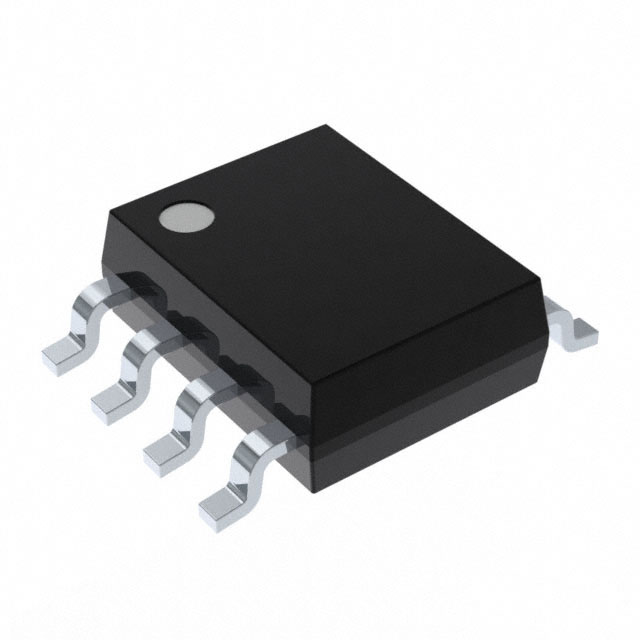
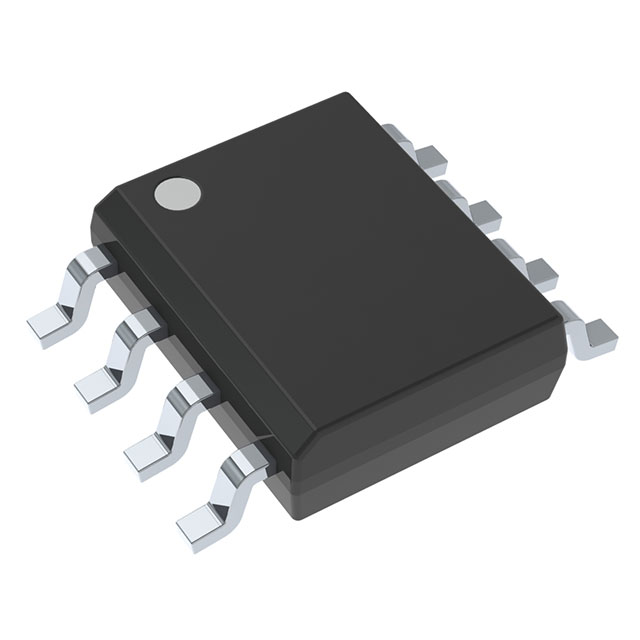
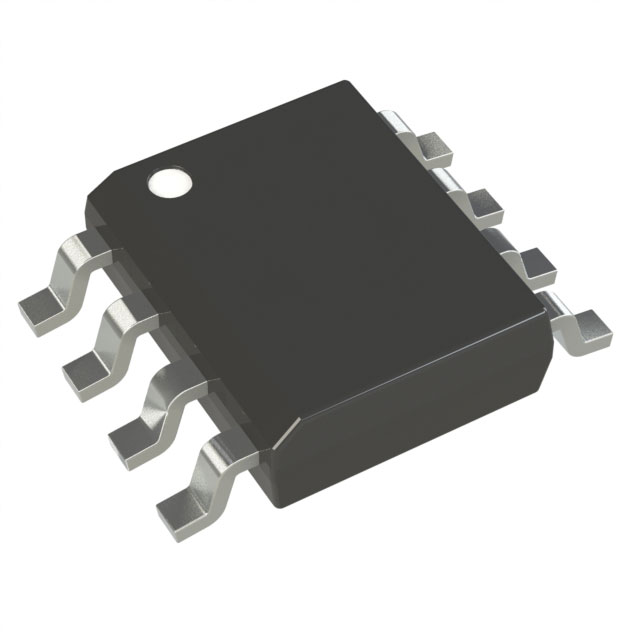
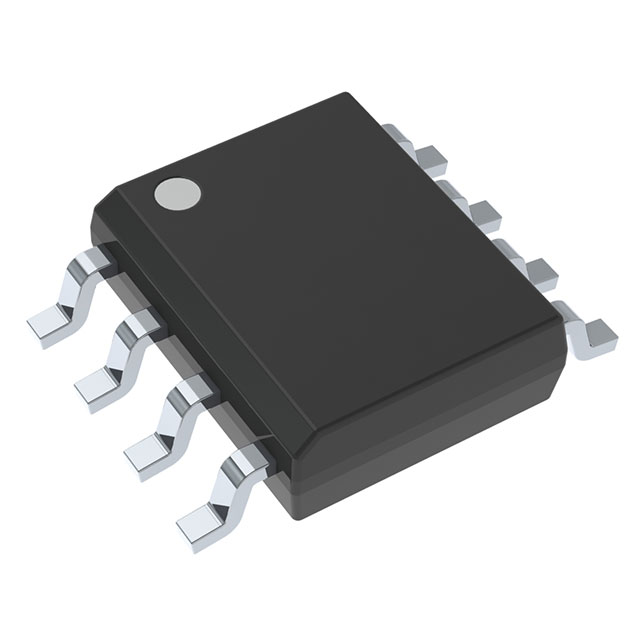
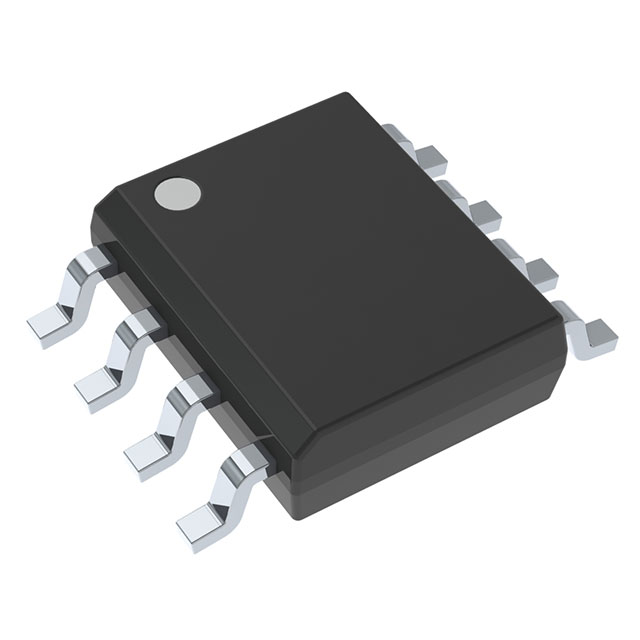
The MAX4075AOESA is a general-purpose operational amplifier manufactured by Analog Devices Inc./Maxim Integrated, configured as a dual-channel (2 circuit) rail-to-rail output device in an 8-SOIC surface mount package. This part is classified as obsolete, which necessitates identification of active equivalent and substitute components for new designs and ongoing production requirements.
The MAX4075AOESA operates across a 2.5V to 5.5V supply range with a gain bandwidth product of 4 MHz and a slew rate of 0.1V/µs. Its primary application domain includes general-purpose signal conditioning and amplification in low-power analog circuits. The obsolete status of this component requires engineers to evaluate functionally compatible alternatives that maintain electrical and mechanical compatibility within the specified parameter envelope.
Substiute Parts
Key Parameters
| Parameter | Value | Unit |
|---|---|---|
| Amplifier Type | General Purpose | — |
| Number of Circuits | 2 | — |
| Output Type | Rail-to-Rail | — |
| Slew Rate | 0.1 | V/µs |
| Gain Bandwidth Product | 4 | MHz |
| -3dB Bandwidth | 90 | kHz |
| Current - Input Bias | 0.8 | pA |
| Voltage - Input Offset | 200 | µV |
| Current - Supply (x2 Channels) | 37 | µA |
| Current - Output / Channel | 22 | mA |
| Voltage - Supply Span (Min) | 2.5 | V |
| Voltage - Supply Span (Max) | 5.5 | V |
| Operating Temperature | -40 to 70 | °C |
| Package / Case | 8-SOIC (0.154", 3.90mm Width) | — |
| Mounting Type | Surface Mount | — |
| RoHS Status | RoHS non-compliant | — |
| Moisture Sensitivity Level (MSL) | 1 (Unlimited) | — |
Substitute Part Grouping Explanation
Substitution of the MAX4075AOESA is determined by strict adherence to the following electrical and mechanical parameters:
Primary Substitution Criteria:
- Package type: 8-SOIC (0.154", 3.90mm Width) surface mount
- Number of circuits: 2 (dual-channel configuration)
- Output type: Rail-to-Rail
- Supply voltage range: Minimum 2.5V, Maximum 5.5V
- Amplifier classification: General Purpose
Secondary Compatibility Parameters:
- Slew rate: Equal to or greater than 0.1V/µs
- Gain bandwidth product: Equal to or greater than 4 MHz
- Input bias current: Equal to or less than 0.8 pA
- Input offset voltage: Equal to or less than 200 µV
- Output current per channel: Equal to or greater than 22 mA
- Supply current: Equal to or less than 37 µA per channel
- Operating temperature range: Must encompass -40°C to 70°C minimum
The substitute parts are grouped into two categories based on amplifier type classification:
Category 1: General Purpose Amplifiers (Direct Functional Equivalents)
- ISL28213FBZ-T13 (Renesas Electronics)
- LMV358LIDT (STMicroelectronics)
- LMV358Q1MA/NOPB (Texas Instruments)
- LMV358Q1MAX/NOPB (Texas Instruments)
- LMV358Q3MA/NOPB (Texas Instruments)
- LMV358Q3MAX/NOPB (Texas Instruments)
- LMV722ID (Texas Instruments)
- LMV722IDR (Texas Instruments)
Category 2: Zero-Drift Amplifiers (Enhanced Performance Alternatives)
- LMP2022MA/NOPB (Texas Instruments)
- LMP2022MAX/NOPB (Texas Instruments)
These parts meet or exceed the electrical performance requirements of the MAX4075AOESA while maintaining identical package geometry and pin configuration compatibility.
Parameter Comparison
| Parameter | MAX4075AOESA | ISL28213FBZ-T13 | LMP2022MA/NOPB | LMP2022MAX/NOPB | LMV358LIDT | LMV358Q1MA/NOPB | LMV358Q1MAX/NOPB | LMV358Q3MA/NOPB | LMV358Q3MAX/NOPB | LMV722ID | LMV722IDR |
|---|---|---|---|---|---|---|---|---|---|---|---|
| Amplifier Type | General Purpose | General Purpose | Zero-Drift | Zero-Drift | General Purpose | General Purpose | General Purpose | General Purpose | General Purpose | General Purpose | General Purpose |
| Number of Circuits | 2 | 2 | 2 | 2 | 2 | 2 | 2 | 2 | 2 | 2 | 2 |
| Output Type | Rail-to-Rail | Rail-to-Rail | — | — | Rail-to-Rail | Rail-to-Rail | Rail-to-Rail | Rail-to-Rail | Rail-to-Rail | Rail-to-Rail | Rail-to-Rail |
| Slew Rate (V/µs) | 0.1 | 1 | 2.6 | 2.6 | 0.7 | 1 | 1 | 1 | 1 | 5.25 | 5.25 |
| Gain Bandwidth Product (MHz) | 4 | 2 | 5 | 5 | 1.3 | 1 | 1 | 1 | 1 | 10 | 10 |
| Current - Input Bias (pA) | 0.8 | 3 | 25 | 25 | 27 nA | 15 nA | 15 nA | 15 nA | 15 nA | 260 nA | 260 nA |
| Voltage - Input Offset (µV) | 200 | 500 | 0.4 | 0.4 | 1000 | 1700 | 1700 | 1700 | 1700 | 80 | 80 |
| Current - Supply (µA, x2 Channels) | 37 | 90 | 1100 | 1100 | 130 | 210 | 210 | 210 | 210 | 1810 | 1810 |
| Current - Output / Channel (mA) | 22 | 22 | 50 | 50 | 70 | 160 | 160 | 160 | 160 | 52.6 | 52.6 |
| Voltage - Supply Span Min (V) | 2.5 | 1.8 | 2.2 | 2.2 | 2.7 | 2.7 | 2.7 | 2.7 | 2.7 | 2.2 | 2.2 |
| Voltage - Supply Span Max (V) | 5.5 | 5.5 | 5.5 | 5.5 | 5.5 | 5.5 | 5.5 | 5.5 | 5.5 | 5.5 | 5.5 |
| Operating Temperature (°C) | -40 to 70 | -40 to 125 | -40 to 125 | -40 to 125 | -40 to 125 | -40 to 125 | -40 to 125 | -40 to 85 | -40 to 85 | -40 to 105 | -40 to 105 |
| Package / Case | 8-SOIC (0.154", 3.90mm) | 8-SOIC (0.154", 3.90mm) | 8-SOIC (0.154", 3.90mm) | 8-SOIC (0.154", 3.90mm) | 8-SOIC (0.154", 3.90mm) | 8-SOIC (0.154", 3.90mm) | 8-SOIC (0.154", 3.90mm) | 8-SOIC (0.154", 3.90mm) | 8-SOIC (0.154", 3.90mm) | 8-SOIC (0.154", 3.90mm) | 8-SOIC (0.154", 3.90mm) |
| Mounting Type | Surface Mount | Surface Mount | Surface Mount | Surface Mount | Surface Mount | Surface Mount | Surface Mount | Surface Mount | Surface Mount | Surface Mount | Surface Mount |
| RoHS Status | Non-compliant | ROHS3 Compliant | ROHS3 Compliant | ROHS3 Compliant | ROHS3 Compliant | ROHS3 Compliant | ROHS3 Compliant | ROHS3 Compliant | ROHS3 Compliant | ROHS3 Compliant | ROHS3 Compliant |
| Product Status | Obsolete | Active | Active | Active | Active | Active | Active | Active | Active | Active | Active |
Engineering Selection Recommendations
For Standard General-Purpose Applications:
The LMV358 series (LMV358LIDT, LMV358Q1MA/NOPB, LMV358Q1MAX/NOPB, LMV358Q3MA/NOPB, LMV358Q3MAX/NOPB) represents the most direct functional replacement for the MAX4075AOESA. All variants maintain the 8-SOIC package geometry, dual-channel configuration, and rail-to-rail output specification. These parts are manufactured by Texas Instruments and are in active production status with ROHS3 compliance.
The LMV358LIDT (STMicroelectronics) offers equivalent general-purpose performance with higher inventory availability (28,000 units) and active product status. This part is suitable for applications where supply chain continuity is a primary concern.
For Automotive Applications:
The LMV358Q1MA/NOPB, LMV358Q1MAX/NOPB, LMV358Q3MA/NOPB, and LMV358Q3MAX/NOPB variants are qualified to AEC-Q100 automotive standards and carry automotive-grade designations. These parts are appropriate for automotive and industrial applications requiring formal qualification documentation. Operating temperature ranges extend to 125°C (Q1 variants) or 85°C (Q3 variants), exceeding the original MAX4075AOESA specification of 70°C.
For Enhanced Performance Requirements:
The LMV722ID and LMV722IDR (Texas Instruments) provide significantly improved performance characteristics, including 5.25V/µs slew rate and 10 MHz gain bandwidth product, compared to the MAX4075AOESA baseline of 0.1V/µs and 4 MHz. These parts are suitable for applications requiring higher bandwidth or faster transient response while maintaining the same package footprint and dual-channel configuration.
For Zero-Drift Applications:
The LMP2022MA/NOPB and LMP2022MAX/NOPB (Texas Instruments) are zero-drift amplifiers offering superior input offset voltage performance (0.4 µV versus 200 µV) and extended operating temperature range (-40°C to 125°C). These parts are appropriate for precision measurement and signal conditioning applications where offset voltage stability is critical. Higher supply current consumption (1.1 mA per channel) must be evaluated against power budget constraints.
For Low-Cost, High-Volume Production:
The ISL28213FBZ-T13 (Renesas Electronics) provides general-purpose amplification with active product status and ROHS3 compliance. This part offers a cost-effective alternative with adequate performance margins across all specified parameters.
Compliance Considerations:
All recommended substitute parts are ROHS3 compliant, addressing environmental and regulatory requirements that the obsolete MAX4075AOESA does not meet. Selection of any active substitute part ensures compliance with current electronic component manufacturing directives.
Frequently Asked Questions (FAQ)
Q1: Can the LMV358 series directly replace the MAX4075AOESA without PCB modifications?
A: Yes. The LMV358 series maintains identical 8-SOIC package geometry (0.154", 3.90mm width), pin count, and pin configuration as the MAX4075AOESA. Direct socket substitution is possible without PCB layout changes. However, electrical performance differences (particularly slew rate and gain bandwidth product) must be evaluated for specific circuit applications.
Q2: What is the primary difference between general-purpose and zero-drift amplifier substitutes?
A: General-purpose amplifiers (LMV358, ISL28213, LMV722) are optimized for standard signal conditioning applications with moderate offset voltage specifications. Zero-drift amplifiers (LMP2022) employ chopper-stabilization or auto-zeroing techniques to achieve extremely low input offset voltage (0.4 µV) and superior offset voltage drift characteristics. Zero-drift amplifiers consume higher supply current and are appropriate for precision measurement applications where offset voltage stability is critical.
Q3: Which substitute part offers the best performance-to-power-consumption ratio?
A: The LMV358 series offers the optimal balance for general-purpose applications, with supply current consumption of 130 µA to 210 µA per channel and adequate bandwidth (1 MHz to 1.3 MHz gain bandwidth product). The LMV722 series provides higher performance (10 MHz bandwidth, 5.25V/µs slew rate) at the cost of increased supply current (1.81 mA per channel). Selection depends on specific application bandwidth requirements and power budget constraints.
Q4: Are automotive-qualified variants necessary for non-automotive applications?
A: Automotive-qualified variants (LMV358Q1MA/NOPB, LMV358Q1MAX/NOPB, LMV358Q3MA/NOPB, LMV358Q3MAX/NOPB) are not required for non-automotive applications. These parts carry AEC-Q100 qualification and extended temperature range specifications suitable for automotive and industrial environments. For consumer or commercial applications, standard industrial-grade variants (LMV358LIDT, LMV722IDR) are appropriate and may offer cost advantages.
Q5: What inventory considerations should guide substitute part selection?
A: Current inventory levels vary significantly across substitute options. LMV358LIDT maintains the highest inventory (28,000 units), followed by LMV358Q3MA/NOPB (33,695 units) and LMV722IDR (25,300 units). For applications requiring immediate component availability, these high-inventory options are preferred. ISL28213FBZ-T13 (985 units) and LMP2022MAX/NOPB (17,300 units) offer adequate inventory for moderate-volume production.
Q6: How do operating temperature ranges affect substitute part selection?
A: The MAX4075AOESA operates from -40°C to 70°C. Most substitute parts extend the upper temperature limit to 85°C, 105°C, or 125°C, providing additional thermal margin. The LMV358Q3 variants operate to 85°C, while LMV358Q1 and LMP2022 variants extend to 125°C. For applications operating near the original 70°C specification limit, substitute parts with extended temperature ranges provide design margin and improved reliability.
Q7: What is the significance of RoHS3 compliance for substitute part selection?
A: All recommended substitute parts are ROHS3 compliant, meeting current European Union Restriction of Hazardous Substances directives. The original MAX4075AOESA is RoHS non-compliant, reflecting its obsolete status. RoHS3 compliance is mandatory for new product designs and production in most regulated markets. Substitute part selection ensures compliance with environmental and regulatory requirements.
Q8: Can the LMV722 series be used as a direct replacement in all MAX4075AOESA applications?
A: The LMV722 series maintains package compatibility and dual-channel configuration but exhibits significantly different electrical characteristics. The 5.25V/µs slew rate (versus 0.1V/µs) and 10 MHz bandwidth (versus 4 MHz) may introduce stability issues in circuits designed for the slower MAX4075AOESA response. Circuit simulation or bench testing is necessary to confirm compatibility in applications with frequency-dependent feedback networks or compensation networks.
Q9: What packaging options are available for substitute parts?
A: Substitute parts are available in multiple packaging formats: Tube, Cut Tape (CT) & Digi-Reel®, and Tape & Reel (TR). All parts maintain the 8-SOIC surface mount package geometry. Packaging selection depends on production volume and assembly process requirements. High-volume production typically utilizes Tape & Reel packaging, while lower volumes may use Cut Tape or Tube formats.
Q10: How should circuit designers evaluate substitute part compatibility?
A: Compatibility evaluation must address: (1) package footprint and pin configuration (all substitutes are 8-SOIC compatible); (2) electrical performance parameters relative to circuit requirements (bandwidth, slew rate, offset voltage); (3) supply voltage range compatibility (all substitutes support 2.5V to 5.5V operation); (4) operating temperature range adequacy; (5) output current capability relative to load impedance; (6) supply current impact on power budget. Formal circuit simulation and prototype testing are recommended for applications with tight performance specifications or frequency-dependent behavior.
Alternative Parts

SJ6012L2TP
Littelfuse Inc.
6 Alternative Parts

JMK107BBJ476MA-RE
Taiyo Yuden
10 Alternative Parts

GMK107BBJ475MA-T
Taiyo Yuden
5 Alternative Parts
SJ6020N2ARP
Littelfuse Inc.
3 Alternative Parts
SJ6025R2ATP
Littelfuse Inc.
4 Alternative Parts

2474-05L
API Delevan Inc.
1 Alternative Parts

4590R-684K
API Delevan Inc.
1 Alternative Parts

CM6560R-334
API Delevan Inc.
1 Alternative Parts

CM6460-104
API Delevan Inc.
1 Alternative Parts

5526-12
API Delevan Inc.
1 Alternative Parts