



Request Quote
(Ships tomorrow)
MAX394CPP Equivalent & Substitute Parts
Part Overview
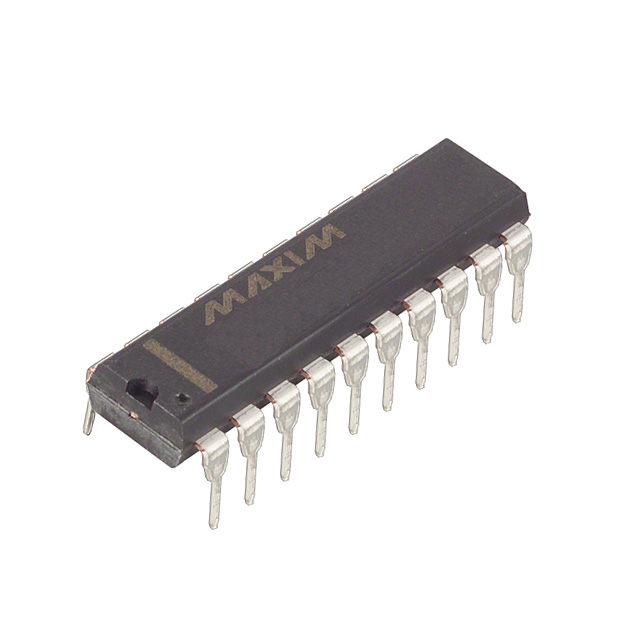
The MAX394CPP is a 4-circuit SPDT analog switch IC manufactured by Analog Devices Inc./Maxim Integrated, housed in a 20-DIP package. This component functions as a 2:1 multiplexer/demultiplexer with 35Ohm on-state resistance, designed for signal routing and switching applications requiring low on-resistance and fast switching times. The MAX394CPP is classified as obsolete, making identification of compatible substitute parts essential for ongoing system support and new design implementations.
Substiute Parts
Key Parameters
| Parameter | Value |
|---|---|
| Switch Circuit Configuration | SPDT (Single Pole Double Throw) |
| Multiplexer/Demultiplexer Circuit | 2:1 |
| Number of Circuits | 4 |
| On-State Resistance (Max) | 35Ohm |
| Channel-to-Channel Matching (ΔRon) | 500mOhm |
| Voltage - Supply, Single (V+) | 2.7V ~ 15V |
| Voltage - Supply, Dual (V±) | ±2.7V ~ 8V |
| Switch Time (Ton, Toff) (Max) | 130ns, 75ns |
| Charge Injection | 5pC |
| Channel Capacitance (CS(off), CD(off)) | 12pF, 12pF |
| Current - Leakage (IS(off)) (Max) | 200pA |
| Crosstalk | -88dB @ 1MHz |
| Operating Temperature | 0°C ~ 70°C (TA) |
| Package / Case | 20-DIP (0.300", 7.62mm) |
| RoHS Status | RoHS non-compliant |
Substitute Part Grouping Explanation
Substitution of the MAX394CPP is determined by strict equivalence in the following core parameters:
Switch topology (SPDT 2:1 multiplexer configuration with 4 circuits) forms the primary functional requirement. The ADG333ABNZ maintains identical circuit topology and pin count, ensuring direct functional compatibility.
Package compatibility requires matching 20-DIP through-hole form factor. Both the MAX394CPP and ADG333ABNZ use 20-PDIP packaging, enabling direct socket replacement without PCB redesign.
Electrical parameter tolerance is established through on-state resistance, supply voltage ranges, and switching characteristics. The ADG333ABNZ operates within broader supply voltage ranges (3V ~ 30V single supply vs. 2.7V ~ 15V) and extended temperature range (-40°C ~ 85°C vs. 0°C ~ 70°C), providing enhanced operational flexibility while maintaining functional compatibility for applications within the MAX394CPP's original specifications.
Parameter Comparison
| Parameter | MAX394CPP | ADG333ABNZ |
|---|---|---|
| Manufacturer | Analog Devices Inc./Maxim Integrated | Analog Devices Inc. |
| Product Status | Obsolete | Active |
| Switch Circuit | SPDT | SPDT |
| Multiplexer/Demultiplexer Circuit | 2:1 | 2:1 |
| Number of Circuits | 4 | 4 |
| On-State Resistance (Max) | 35Ohm | 45Ohm |
| Channel-to-Channel Matching (ΔRon) | 500mOhm | 5Ohm |
| Voltage - Supply, Single (V+) | 2.7V ~ 15V | 3V ~ 30V |
| Voltage - Supply, Dual (V±) | ±2.7V ~ 8V | ±3V ~ 20V |
| Switch Time (Ton, Toff) (Max) | 130ns, 75ns | 90ns, 80ns (Typ) |
| Charge Injection | 5pC | 2pC |
| Channel Capacitance (CS(off), CD(off)) | 12pF, 12pF | 7pF |
| Current - Leakage (IS(off)) (Max) | 200pA | 250pA |
| Crosstalk | -88dB @ 1MHz | -85dB @ 1MHz |
| Operating Temperature | 0°C ~ 70°C (TA) | -40°C ~ 85°C (TA) |
| Package / Case | 20-DIP (0.300", 7.62mm) | 20-DIP (0.300", 7.62mm) |
| RoHS Status | RoHS non-compliant | ROHS3 Compliant |
Engineering Selection Recommendations
The ADG333ABNZ is the manufacturer-recommended substitute for the MAX394CPP. Both components share identical functional topology (4-circuit SPDT 2:1 multiplexer) and package form factor (20-DIP), enabling direct replacement in existing designs.
The ADG333ABNZ offers improved product status (Active vs. Obsolete), ensuring long-term availability and supply chain stability. The part achieves ROHS3 compliance, meeting current environmental and regulatory requirements, whereas the MAX394CPP is RoHS non-compliant.
Performance characteristics of the ADG333ABNZ demonstrate enhancements in several parameters: reduced charge injection (2pC vs. 5pC), lower channel capacitance (7pF vs. 12pF), and faster typical switching times (90ns/80ns vs. 130ns/75ns). Extended supply voltage ranges (3V ~ 30V single supply, ±3V ~ 20V dual supply) and broader operating temperature range (-40°C ~ 85°C) provide operational flexibility beyond the original MAX394CPP specifications.
On-state resistance increases from 35Ohm to 45Ohm maximum, and channel-to-channel matching tolerance widens from 500mOhm to 5Ohm. These parameter shifts remain within acceptable substitution criteria for most signal routing and multiplexing applications operating within the MAX394CPP's original voltage and temperature specifications.
Frequently Asked Questions (FAQ)
Q: Can the ADG333ABNZ directly replace the MAX394CPP without PCB modifications?
A: Yes. Both components use identical 20-DIP (0.300", 7.62mm) through-hole packaging with matching pin configurations, enabling direct socket replacement without PCB redesign.
Q: What are the key electrical differences between these parts?
A: The ADG333ABNZ has higher on-state resistance (45Ohm vs. 35Ohm maximum) and wider channel-to-channel matching tolerance (5Ohm vs. 500mOhm). The ADG333ABNZ provides superior charge injection (2pC vs. 5pC) and lower channel capacitance (7pF vs. 12pF). Supply voltage and temperature ranges are extended in the ADG333ABNZ.
Q: Is the ADG333ABNZ suitable for applications requiring the MAX394CPP's 35Ohm on-state resistance specification?
A: Applications must evaluate whether 45Ohm on-state resistance is acceptable for their signal path impedance and attenuation requirements. The 10Ohm increase may impact signal integrity in high-frequency or low-impedance applications.
Q: What compliance advantages does the ADG333ABNZ offer?
A: The ADG333ABNZ achieves ROHS3 compliance and maintains REACH Unaffected status, meeting current environmental regulations. The MAX394CPP is RoHS non-compliant, limiting use in regulated applications and new designs.
Q: Are there temperature range considerations for substitution?
A: The ADG333ABNZ operates from -40°C ~ 85°C, extending below and above the MAX394CPP's 0°C ~ 70°C range. Applications operating within the original MAX394CPP temperature range experience no compatibility issues.
Q: What is the impact of the ADG333ABNZ's wider channel-to-Channel matching tolerance?
A: The 5Ohm matching tolerance (vs. 500mOhm) may affect applications requiring precise channel-to-channel resistance uniformity. Signal routing applications with relaxed matching requirements experience no functional impact.
Alternative Parts

SJ6012L2TP
Littelfuse Inc.
6 Alternative Parts

JMK107BBJ476MA-RE
Taiyo Yuden
10 Alternative Parts

GMK107BBJ475MA-T
Taiyo Yuden
5 Alternative Parts
SJ6020N2ARP
Littelfuse Inc.
3 Alternative Parts
SJ6025R2ATP
Littelfuse Inc.
4 Alternative Parts

2474-05L
API Delevan Inc.
1 Alternative Parts

4590R-684K
API Delevan Inc.
1 Alternative Parts

CM6560R-334
API Delevan Inc.
1 Alternative Parts

CM6460-104
API Delevan Inc.
1 Alternative Parts

5526-12
API Delevan Inc.
1 Alternative Parts