


Request Quote
(Ships tomorrow)
MAX1242ACSA Equivalent & Substitute Parts
Part Overview
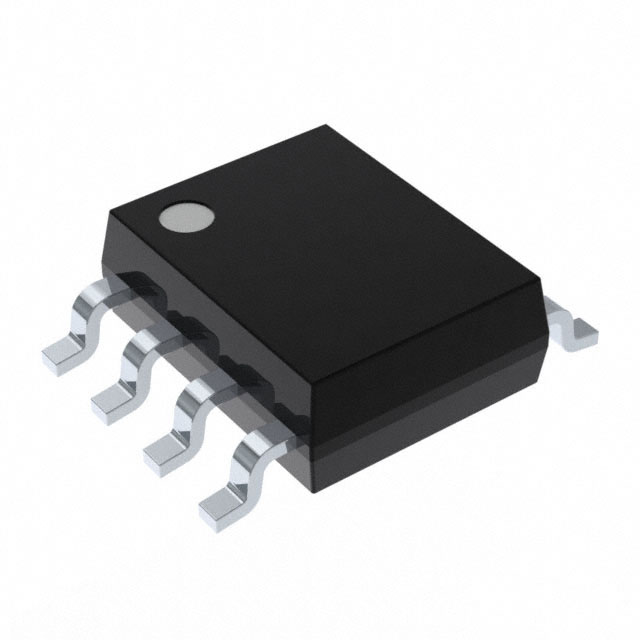
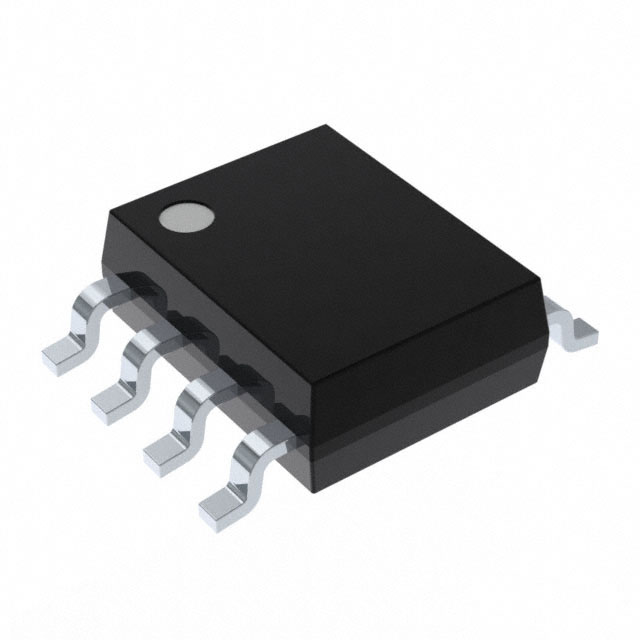
The MAX1242ACSA is a 10-bit Analog to Digital Converter (ADC) manufactured by Analog Devices Inc./Maxim Integrated, designed for single-ended input data acquisition applications. This device features a Successive Approximation Register (SAR) architecture with a 73 kHz sampling rate and operates across a supply voltage range of 2.7V to 5.25V for both analog and digital domains. The MAX1242ACSA is classified as an obsolete product. Due to its obsolete status, identifying equivalent and substitute parts is essential for maintaining design continuity and ensuring component availability for legacy system support and new production runs.
Substiute Parts
Key Parameters
| Parameter | Value |
|---|---|
| Manufacturer | Analog Devices Inc./Maxim Integrated |
| Category | Data Acquisition |
| Number of Bits | 10 |
| Sampling Rate (Per Second) | 73k |
| Number of Inputs | 1 |
| Input Type | Single Ended |
| Data Interface | SPI |
| Architecture | SAR |
| Reference Type | External, Internal |
| Voltage - Supply, Analog | 2.7V ~ 5.25V |
| Voltage - Supply, Digital | 2.7V ~ 5.25V |
| Operating Temperature | 0°C ~ 70°C |
| Package / Case | 8-SOIC (0.154", 3.90mm Width) |
| Mounting Type | Surface Mount |
| Product Status | Obsolete |
Substitute Part Grouping Explanation
Substitute parts for the MAX1242ACSA are determined by strict equivalence across the following critical parameters:
- Resolution: 10-bit conversion capability
- Sampling Rate: 73 kHz per second
- Input Configuration: Single-ended input with 1 channel
- Serial Interface: SPI data interface
- Converter Architecture: SAR topology
- Reference Configuration: External and internal reference support
- Supply Voltage Range: 2.7V to 5.25V for both analog and digital supplies
- Package Type: 8-SOIC surface mount package with 0.154" (3.90mm) width
- Operating Temperature Range: 0°C to 70°C
The substitute parts MAX1242ACSA+ and MAX1242BCSA+ maintain identical electrical and mechanical specifications to the original MAX1242ACSA, ensuring direct functional compatibility in circuit applications.
Parameter Comparison
| Parameter | MAX1242ACSA | MAX1242ACSA+ | MAX1242BCSA+ |
|---|---|---|---|
| Manufacturer | Analog Devices Inc./Maxim Integrated | Analog Devices Inc./Maxim Integrated | Analog Devices Inc./Maxim Integrated |
| Number of Bits | 10 | 10 | 10 |
| Sampling Rate (Per Second) | 73k | 73k | 73k |
| Number of Inputs | 1 | 1 | 1 |
| Input Type | Single Ended | Single Ended | Single Ended |
| Data Interface | SPI | SPI | SPI |
| Architecture | SAR | SAR | SAR |
| Reference Type | External, Internal | External, Internal | External, Internal |
| Voltage - Supply, Analog | 2.7V ~ 5.25V | 2.7V ~ 5.25V | 2.7V ~ 5.25V |
| Voltage - Supply, Digital | 2.7V ~ 5.25V | 2.7V ~ 5.25V | 2.7V ~ 5.25V |
| Operating Temperature | 0°C ~ 70°C | 0°C ~ 70°C | 0°C ~ 70°C |
| Package / Case | 8-SOIC (0.154", 3.90mm Width) | 8-SOIC (0.154", 3.90mm Width) | 8-SOIC (0.154", 3.90mm Width) |
| Mounting Type | Surface Mount | Surface Mount | Surface Mount |
| Product Status | Obsolete | Active | Active |
| RoHS Status | RoHS non-compliant | ROHS3 Compliant | ROHS3 Compliant |
Engineering Selection Recommendations
The MAX1242ACSA is obsolete and no longer in active production. For new designs and ongoing production support, MAX1242ACSA+ and MAX1242BCSA+ are the recommended alternatives. Both substitute parts are classified as active products and maintain full electrical and mechanical compatibility with the original MAX1242ACSA.
A key distinction between the options is regulatory compliance. The MAX1242ACSA is RoHS non-compliant, while both MAX1242ACSA+ and MAX1242BCSA+ are ROHS3 compliant. For applications subject to RoHS directives or environmental regulations, the compliant variants are required. Both substitute parts carry REACH Unaffected status and EAR99 export classification, matching the original part's regulatory profile.
Packaging differs between the original and substitutes. The MAX1242ACSA is supplied without specified packaging, while MAX1242ACSA+ and MAX1242BCSA+ are supplied in tube packaging. This distinction affects handling, storage, and component management in production environments but does not impact electrical performance or circuit functionality.
Frequently Asked Questions (FAQ)
Q: Can MAX1242ACSA+ and MAX1242BCSA+ be used interchangeably with MAX1242ACSA?
A: Yes. All three parts share identical electrical specifications, including 10-bit resolution, 73 kHz sampling rate, single-ended input configuration, SPI interface, and supply voltage requirements. The 8-SOIC package pinout and mechanical dimensions are identical, enabling direct substitution in existing circuit designs.
Q: What is the difference between MAX1242ACSA+ and MAX1242BCSA+?
A: Both parts are electrically and mechanically equivalent. The primary difference is product status and availability. Both are active products with ROHS3 compliance and tube packaging. Selection between them should be based on inventory availability and supplier stock levels.
Q: Why is the original MAX1242ACSA obsolete?
A: The MAX1242ACSA has reached end-of-life status. Analog Devices Inc./Maxim Integrated has transitioned production to the compliant variants MAX1242ACSA+ and MAX1242BCSA+, which offer improved regulatory compliance while maintaining full functional equivalence.
Q: Are there any compatibility concerns when switching from MAX1242ACSA to the substitute parts?
A: No compatibility concerns exist for electrical or mechanical integration. The substitute parts are pin-compatible and functionally identical. The only consideration is RoHS compliance status. If your application or supply chain requires RoHS-compliant components, the substitute parts satisfy this requirement while the original does not.
Q: What packaging options are available?
A: The MAX1242ACSA+ and MAX1242BCSA+ are supplied in tube packaging. This is standard for surface mount 8-SOIC components and is suitable for both manual and automated assembly processes.
Q: Do the substitute parts support the same operating temperature range?
A: Yes. All three parts operate across the identical temperature range of 0°C to 70°C, ensuring thermal compatibility in equivalent applications.
Alternative Parts

SJ6012L2TP
Littelfuse Inc.
6 Alternative Parts

JMK107BBJ476MA-RE
Taiyo Yuden
10 Alternative Parts

GMK107BBJ475MA-T
Taiyo Yuden
5 Alternative Parts
SJ6020N2ARP
Littelfuse Inc.
3 Alternative Parts
SJ6025R2ATP
Littelfuse Inc.
4 Alternative Parts

2474-05L
API Delevan Inc.
1 Alternative Parts

4590R-684K
API Delevan Inc.
1 Alternative Parts

CM6560R-334
API Delevan Inc.
1 Alternative Parts

CM6460-104
API Delevan Inc.
1 Alternative Parts

5526-12
API Delevan Inc.
1 Alternative Parts