




Request Quote
(Ships tomorrow)
LTE-2871 Equivalent & Substitute Parts
Part Overview
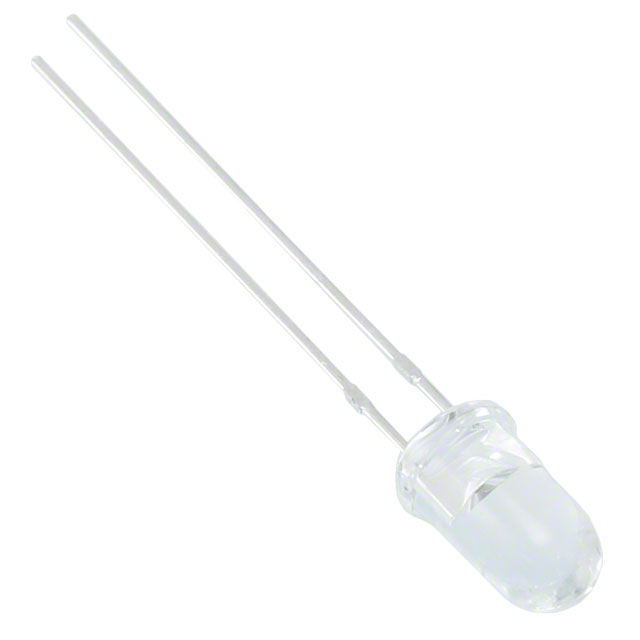
The LTE-2871 is an Infrared (IR) Emitter operating at 940nm wavelength, manufactured by Lite-On Inc. This through-hole radial component is designed for applications requiring near-infrared emission in the 940nm spectrum. The part is Active status and RoHS3 compliant, making it suitable for current production environments. Substitute parts may be required due to inventory constraints, end-of-life considerations, or application-specific parameter requirements.
Substiute Parts
Key Parameters
| Parameter | LTE-2871 Specification |
|---|---|
| Wavelength | 940nm |
| Forward Current (If Max) | 60mA |
| Forward Voltage (Vf Typ) | 1.2V |
| Radiant Intensity (Ie Min) | 3.31mW/sr @ 20mA |
| Viewing Angle | 16° |
| Operating Temperature Range | -40°C ~ 85°C |
| Mounting Type | Through Hole |
| Package / Case | Radial |
| RoHS Status | RoHS3 Compliant |
Substitute Part Grouping Explanation
Substitute parts for the LTE-2871 are grouped based on the following allowed electrical and mechanical parameters:
Primary Substitution Criteria:
- Wavelength: 880nm, 890nm, or 940nm (near-infrared spectrum compatibility)
- Mounting Type: Through Hole (mechanical compatibility)
- Package / Case: Radial configuration (form factor compatibility)
- RoHS Status: RoHS3 Compliant (regulatory compliance)
- Operating Temperature Range: Minimum -40°C ~ 85°C or broader
Secondary Compatibility Parameters:
- Forward Current (If Max): Equal to or greater than 60mA
- Forward Voltage (Vf): Within typical operating range for IR emitters (1.2V ~ 1.7V)
- Radiant Intensity: Application-dependent; higher values indicate greater optical output
The three substitute parts (QED123, QED123A4R0, QED234) meet these criteria with variations in wavelength, current rating, and radiant intensity specifications.
Parameter Comparison
| Parameter | LTE-2871 | QED123 | QED123A4R0 | QED234 |
|---|---|---|---|---|
| Manufacturer | Lite-On Inc. | onsemi | onsemi | onsemi |
| Wavelength | 940nm | 880nm | 890nm | 940nm |
| Forward Current (If Max) | 60mA | 100mA | 100mA | 100mA |
| Forward Voltage (Vf Typ) | 1.2V | 1.7V | 1.7V (Max) | 1.6V (Max) |
| Radiant Intensity (Ie Min) | 3.31mW/sr @ 20mA | 50mW/sr @ 100mA | 50mW/sr @ 100mA | 27mW/sr @ 100mA |
| Viewing Angle | 16° | 18° | 16° | 40° |
| Operating Temperature Range | -40°C ~ 85°C | -40°C ~ 100°C | -40°C ~ 100°C | -40°C ~ 100°C |
| Mounting Type | Through Hole | Through Hole | Through Hole | Through Hole |
| Package / Case | Radial | Radial, 5mm Dia (T 1 3/4) | Radial, 5mm Dia (T 1 3/4) | Radial, 5mm Dia (T 1 3/4) |
| RoHS Status | RoHS3 Compliant | RoHS3 Compliant | RoHS3 Compliant | RoHS3 Compliant |
| Product Status | Active | Active | Active | Active |
Engineering Selection Recommendations
All substitute parts maintain Active product status and RoHS3 compliance, ensuring regulatory alignment with the original LTE-2871 component.
QED234 provides the closest wavelength match at 940nm, identical to the LTE-2871. This part is recommended for applications where wavelength-specific performance is critical. The 40° viewing angle represents a significant difference from the LTE-2871's 16° angle and must be evaluated against application requirements.
QED123A4R0 operates at 890nm wavelength with a 16° viewing angle matching the LTE-2871. This part is supplied in Cut Tape (CT) packaging, differing from the LTE-2871's Bulk packaging. The 890nm wavelength is within the near-infrared spectrum and suitable for applications tolerant of wavelength variation.
QED123 operates at 880nm wavelength with an 18° viewing angle. This part represents the greatest wavelength deviation from the LTE-2871 but maintains compatibility across all other mechanical and regulatory parameters.
All substitute parts support higher maximum forward current (100mA vs. 60mA) and extended operating temperature ranges (-40°C ~ 100°C vs. -40°C ~ 85°C), providing operational margin in thermal environments.
Frequently Asked Questions (FAQ)
Q: Can QED234 directly replace LTE-2871 in my application?
A: QED234 matches the 940nm wavelength specification of LTE-2871 and maintains identical viewing angle (16°). Both are through-hole radial components with RoHS3 compliance. However, QED234 supports 100mA maximum forward current compared to LTE-2871's 60mA, and operates across a wider temperature range (-40°C ~ 100°C vs. -40°C ~ 85°C). Circuit design must accommodate these parameter differences.
Q: What is the significance of wavelength differences between 880nm, 890nm, and 940nm?
A: Wavelength determines the specific near-infrared frequency emitted. Applications such as remote control receivers, proximity sensors, and night vision systems are typically designed for specific wavelength bands. A 940nm application may not function optimally with 880nm or 890nm substitutes. Verify application wavelength requirements before substitution.
Q: How do viewing angle differences affect substitution?
A: Viewing angle defines the angular range over which radiant intensity is maintained. LTE-2871 and QED123A4R0 both specify 16° viewing angles, providing equivalent directional characteristics. QED123 (18°) and QED234 (40°) offer wider emission patterns. Applications requiring narrow-beam emission may not tolerate wider viewing angles.
Q: Are packaging differences between Bulk and Cut Tape significant?
A: Bulk and Cut Tape (CT) packaging differ in presentation format but do not affect component electrical or mechanical performance. Bulk packaging is suitable for high-volume assembly operations, while Cut Tape is optimized for automated pick-and-place equipment. Selection depends on assembly process requirements, not component functionality.
Q: What does the higher radiant intensity of substitute parts indicate?
A: Radiant intensity (measured in mW/sr) quantifies optical power output per unit solid angle. QED123 and QED123A4R0 specify 50mW/sr @ 100mA, significantly higher than LTE-2871's 3.31mW/sr @ 20mA. This indicates greater optical output capability. Applications requiring specific optical power levels must account for these differences in circuit design.
Q: Are all substitute parts suitable for the full -40°C ~ 85°C operating range of LTE-2871?
A: Yes. All substitute parts specify operating temperature ranges of -40°C ~ 100°C, which encompasses the LTE-2871's -40°C ~ 85°C range. Substitute parts provide extended thermal operating margin.
Alternative Parts

SJ6012L2TP
Littelfuse Inc.
6 Alternative Parts

JMK107BBJ476MA-RE
Taiyo Yuden
10 Alternative Parts

GMK107BBJ475MA-T
Taiyo Yuden
5 Alternative Parts
SJ6020N2ARP
Littelfuse Inc.
3 Alternative Parts
SJ6025R2ATP
Littelfuse Inc.
4 Alternative Parts

2474-05L
API Delevan Inc.
1 Alternative Parts

4590R-684K
API Delevan Inc.
1 Alternative Parts

CM6560R-334
API Delevan Inc.
1 Alternative Parts

CM6460-104
API Delevan Inc.
1 Alternative Parts

5526-12
API Delevan Inc.
1 Alternative Parts