



Request Quote
(Ships tomorrow)
LT1209CN#PBF Equivalent & Substitute Parts
Part Overview
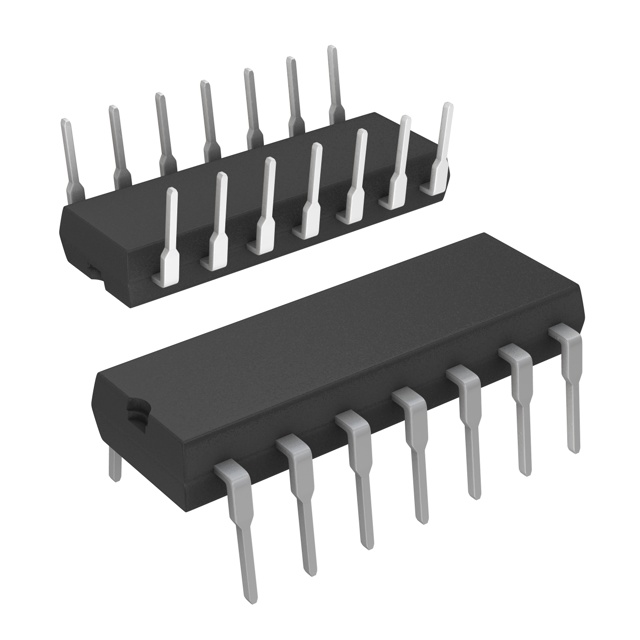
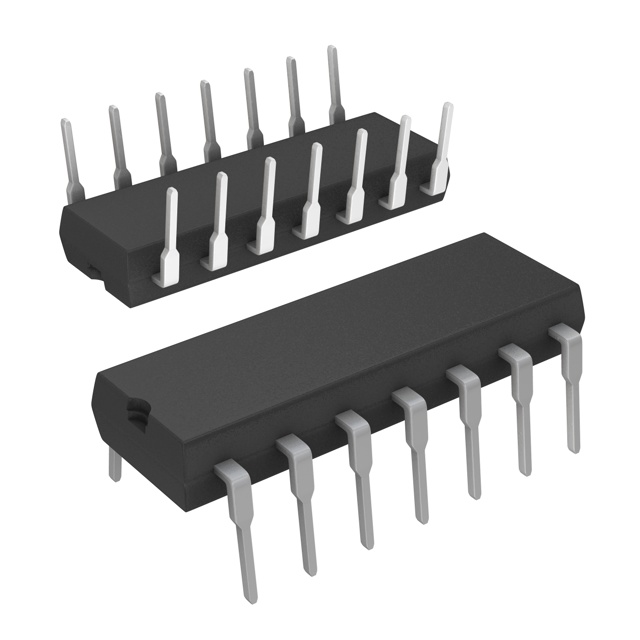
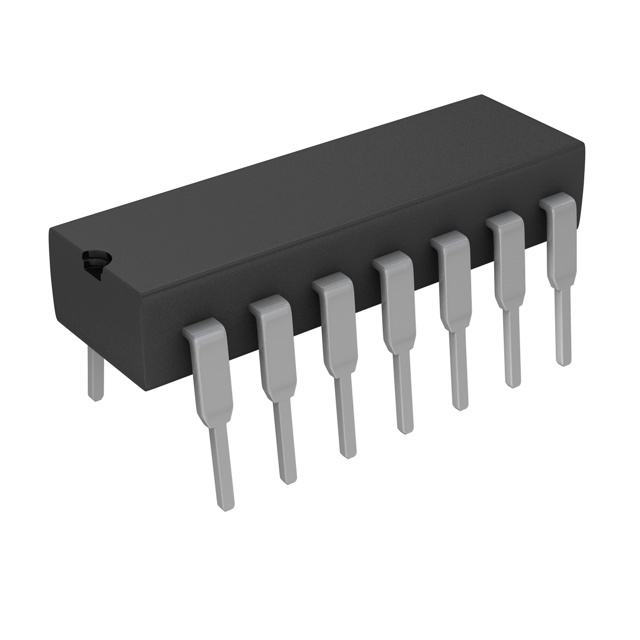
The LT1209CN#PBF is a general purpose operational amplifier integrated circuit manufactured by Analog Devices Inc., configured as a 4-circuit device in a 14-PDIP through-hole package. This component is classified as a Last Time Buy product, indicating discontinued production with limited inventory availability. The LT1209CN#PBF operates across a wide supply voltage range of 5V to 30V and is suitable for applications requiring moderate bandwidth and slew rate performance in general purpose amplification circuits.
Due to its Last Time Buy status, identification of equivalent and substitute parts is necessary for design continuity and long-term component sourcing strategy. Substitute parts must maintain compatibility with the 14-DIP package format and satisfy the electrical performance requirements of the original design.
Substiute Parts
Key Parameters
| Parameter | LT1209CN#PBF |
|---|---|
| Amplifier Type | General Purpose |
| Number of Circuits | 4 |
| Package / Case | 14-DIP (0.300", 7.62mm) |
| Mounting Type | Through Hole |
| Slew Rate | 400V/µs |
| Gain Bandwidth Product | 45 MHz |
| Current - Input Bias | 4 µA |
| Voltage - Input Offset | 1 mV |
| Current - Supply | 7mA (x4 Channels) |
| Current - Output / Channel | 40 mA |
| Voltage - Supply Span (Min) | 5 V |
| Voltage - Supply Span (Max) | 30 V |
| Operating Temperature | 0°C ~ 70°C |
| RoHS Status | ROHS3 Compliant |
| Moisture Sensitivity Level (MSL) | 1 (Unlimited) |
Substitute Part Grouping Explanation
Substitution of the LT1209CN#PBF is determined by the following critical parameters: package format (14-DIP through-hole), number of circuits (4), supply voltage range compatibility (minimum 5V, maximum 30V), and amplifier classification (general purpose or voltage feedback topology). All substitute parts must maintain the same physical package dimensions and pin count to ensure direct board-level compatibility without layout modifications.
The substitute parts are grouped into two categories based on electrical performance alignment:
Category 1 - Manufacturer Recommended Substitute: LT1362CN#PBF represents the direct manufacturer upgrade path, offering enhanced electrical performance while maintaining the same package and pin configuration.
Category 2 - Similar Electrical Classification: OP497GPZ, MC3303N, and MC3403N are functionally equivalent general purpose 4-circuit amplifiers in 14-DIP packages, suitable for applications where the specific performance enhancements of the LT1362CN#PBF are not required.
Substitution compatibility is determined by: (1) identical 14-DIP package format, (2) 4-circuit configuration, (3) supply voltage range overlap with the original design requirements, and (4) through-hole mounting type.
Parameter Comparison
| Parameter | LT1209CN#PBF | LT1362CN#PBF | OP497GPZ | MC3303N | MC3403N |
|---|---|---|---|---|---|
| Manufacturer | Analog Devices Inc. | Analog Devices Inc. | Analog Devices Inc. | STMicroelectronics | Texas Instruments |
| Amplifier Type | General Purpose | Voltage Feedback | General Purpose | General Purpose | General Purpose |
| Number of Circuits | 4 | 4 | 4 | 4 | 4 |
| Package / Case | 14-DIP (0.300", 7.62mm) | 14-DIP (0.300", 7.62mm) | 14-DIP (0.300", 7.62mm) | 14-DIP (0.300", 7.62mm) | 14-DIP (0.300", 7.62mm) |
| Mounting Type | Through Hole | Through Hole | Through Hole | Through Hole | Through Hole |
| Slew Rate | 400V/µs | 800V/µs | 0.15V/µs | 0.5V/µs | 0.6V/µs |
| Gain Bandwidth Product | 45 MHz | 50 MHz | 500 kHz | 1 MHz | 1 MHz |
| Current - Input Bias | 4 µA | 300 nA | 60 pA | 40 nA | 200 nA |
| Voltage - Input Offset | 1 mV | 300 µV | 80 µV | 1 mV | 2 mV |
| Current - Supply | 7mA (x4 Channels) | 4mA (x4 Channels) | 525µA (x4 Channels) | 2.8mA (x4 Channels) | 2.8mA (x4 Channels) |
| Current - Output / Channel | 40 mA | 34 mA | 25 mA | 30 mA | 30 mA |
| Voltage - Supply Span (Min) | 5 V | 5 V | 4 V | 3 V | 5 V |
| Voltage - Supply Span (Max) | 30 V | 30 V | 40 V | 36 V | 30 V |
| Operating Temperature | 0°C ~ 70°C | -40°C ~ 85°C | -40°C ~ 85°C | -40°C ~ 105°C | 0°C ~ 70°C |
| RoHS Status | ROHS3 Compliant | ROHS3 Compliant | ROHS3 Compliant | ROHS3 Compliant | ROHS3 Compliant |
| Moisture Sensitivity Level (MSL) | 1 (Unlimited) | 1 (Unlimited) | 1 (Unlimited) | 1 (Unlimited) | Not Applicable |
| Product Status | Last Time Buy | Active | Active | Obsolete | Active |
Engineering Selection Recommendations
LT1362CN#PBF is the manufacturer-recommended substitute for the LT1209CN#PBF. This part is in Active product status with full long-term availability. The LT1362CN#PBF maintains identical package format and supply voltage range compatibility while providing enhanced electrical performance characteristics including doubled slew rate (800V/µs versus 400V/µs), improved input bias current (300 nA versus 4 µA), and reduced input offset voltage (300 µV versus 1 mV). The extended operating temperature range (-40°C to 85°C) provides broader environmental coverage compared to the original part. Both parts are ROHS3 compliant with MSL 1 rating, ensuring equivalent environmental and regulatory compliance.
OP497GPZ is suitable for applications where lower power consumption is prioritized. This part operates at significantly reduced supply current (525 µA versus 7 mA) and offers the lowest input bias current (60 pA) among all substitutes. However, the OP497GPZ exhibits substantially lower bandwidth performance (500 kHz versus 45 MHz) and reduced slew rate (0.15V/µs), making it appropriate only for low-frequency applications. The extended supply voltage range (4V to 40V) provides additional flexibility for certain power supply configurations.
MC3303N and MC3403N are general purpose alternatives with comparable electrical characteristics to the original LT1209CN#PBF. MC3303N is classified as Obsolete and should be avoided for new designs despite higher inventory availability. MC3403N is in Active status and maintains the same operating temperature range as the original part (0°C to 70°C), making it a direct functional equivalent. Both parts feature lower supply current consumption (2.8 mA) and reduced output current capability (30 mA) compared to the LT1209CN#PBF.
For new designs and long-term sourcing, LT1362CN#PBF is the recommended selection. For cost-optimized applications with low-frequency requirements, MC3403N provides an active alternative. OP497GPZ is appropriate only for ultra-low-power applications where bandwidth limitations are acceptable.
Frequently Asked Questions (FAQ)
Q: Can the LT1362CN#PBF be used as a direct replacement for the LT1209CN#PBF without circuit modifications?
A: Yes. The LT1362CN#PBF maintains identical 14-DIP package format, pin configuration, and supply voltage range (5V to 30V). Direct board-level substitution is possible without layout changes. The enhanced electrical performance of the LT1362CN#PBF (higher slew rate, lower input bias current, reduced input offset voltage) is backward compatible with designs specified for the LT1209CN#PBF.
Q: What are the key differences between the LT1362CN#PBF and the general purpose alternatives (OP497GPZ, MC3303N, MC3403N)?
A: The LT1362CN#PBF is classified as a voltage feedback amplifier with significantly higher bandwidth (50 MHz) and slew rate (800V/µs) compared to the general purpose alternatives. OP497GPZ, MC3303N, and MC3403N are general purpose amplifiers with bandwidth limited to 500 kHz to 1 MHz and slew rates between 0.15V/µs and 0.6V/µs. Selection depends on the frequency response requirements of the application.
Q: Is the OP497GPZ suitable for high-frequency applications?
A: No. The OP497GPZ has a gain bandwidth product of only 500 kHz, making it unsuitable for applications requiring bandwidth above this limit. The OP497GPZ is optimized for ultra-low-power operation (525 µA supply current) and is appropriate only for low-frequency signal conditioning and precision measurement applications.
Q: Why is MC3303N listed as Obsolete?
A: MC3303N is classified as Obsolete by STMicroelectronics, indicating discontinued production and no long-term availability guarantee. Although inventory is currently available, new designs should not incorporate this part. MC3403N (Texas Instruments) is the recommended alternative among the general purpose options.
Q: What is the impact of operating temperature range differences on part selection?
A: The LT1209CN#PBF operates from 0°C to 70°C. The LT1362CN#PBF extends this range to -40°C to 85°C, providing broader environmental coverage. OP497GPZ and MC3303N also support -40°C to 85°C operation. MC3403N matches the original temperature range (0°C to 70°C). Temperature range selection depends on the application's environmental requirements.
Q: Are all substitute parts RoHS3 compliant?
A: Yes. All listed substitute parts (LT1362CN#PBF, OP497GPZ, MC3303N, and MC3403N) are ROHS3 compliant, ensuring equivalent environmental regulatory compliance with the original LT1209CN#PBF.
Q: What is the significance of the MSL (Moisture Sensitivity Level) rating?
A: All parts except MC3403N carry MSL 1 (Unlimited) rating, indicating no moisture sensitivity restrictions during storage and handling. MC3403N is rated as Not Applicable, which does not indicate a limitation but rather a different classification methodology by Texas Instruments. Both ratings are acceptable for standard manufacturing environments.
Q: Can the LT1209CN#PBF be substituted with MC3403N in existing designs?
A: MC3403N is functionally compatible as a general purpose 4-circuit amplifier in 14-DIP package with matching supply voltage range (5V to 30V) and operating temperature range (0°C to 70°C). However, MC3403N exhibits lower bandwidth (1 MHz versus 45 MHz) and reduced slew rate (0.6V/µs versus 400V/µs). Substitution is appropriate only if the application does not require the higher frequency performance of the original part.
Q: What supply current differences should be considered when selecting a substitute?
A: The LT1209CN#PBF draws 7 mA total supply current. The LT1362CN#PBF reduces this to 4 mA, MC3303N and MC3403N to 2.8 mA, and OP497GPZ to 525 µA. Lower supply current reduces power dissipation and thermal load, which may influence PCB thermal design and power supply sizing decisions.
Alternative Parts

SJ6012L2TP
Littelfuse Inc.
6 Alternative Parts

JMK107BBJ476MA-RE
Taiyo Yuden
10 Alternative Parts

GMK107BBJ475MA-T
Taiyo Yuden
5 Alternative Parts
SJ6020N2ARP
Littelfuse Inc.
3 Alternative Parts
SJ6025R2ATP
Littelfuse Inc.
4 Alternative Parts

2474-05L
API Delevan Inc.
1 Alternative Parts

4590R-684K
API Delevan Inc.
1 Alternative Parts

CM6560R-334
API Delevan Inc.
1 Alternative Parts

CM6460-104
API Delevan Inc.
1 Alternative Parts

5526-12
API Delevan Inc.
1 Alternative Parts