



Request Quote
(Ships tomorrow)
LPV324D Equivalent & Substitute Parts
Part Overview
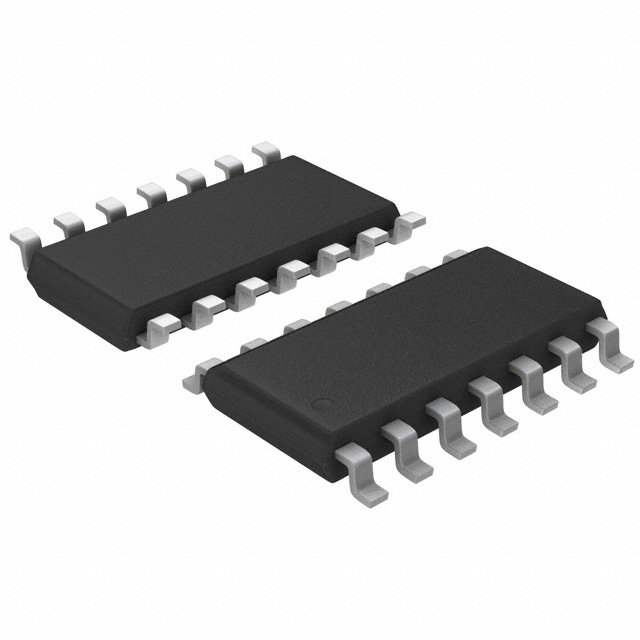
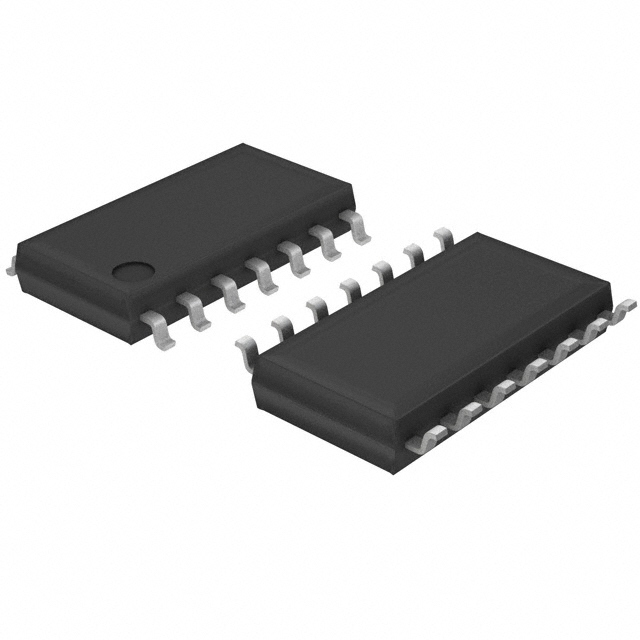
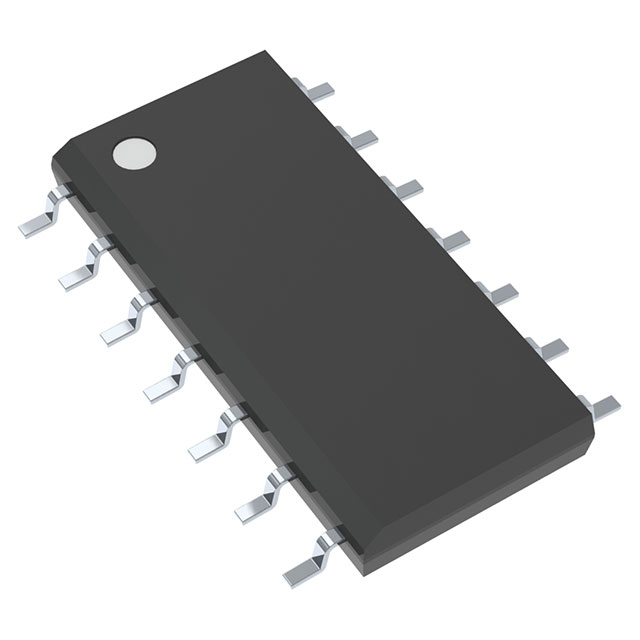
The LPV324D is a general-purpose operational amplifier manufactured by Texas Instruments, configured as a 4-circuit rail-to-rail amplifier in a 14-SOIC surface mount package. This device is classified as obsolete, which necessitates identification of equivalent and substitute components for ongoing design support and procurement.
The LPV324D operates across a 2.7 V to 5 V supply range with a slew rate of 0.1 V/µs and gain bandwidth product of 237 kHz. Its low input bias current of 2 nA and minimal input offset voltage of 1.5 mV make it suitable for precision analog applications. The obsolete status of this component requires engineers to evaluate active alternatives that maintain functional compatibility or provide enhanced performance characteristics.
Substiute Parts
Key Parameters
| Parameter | Value | Unit |
|---|---|---|
| Manufacturer Part Number | LPV324D | — |
| Manufacturer | Texas Instruments | — |
| Category | Linear, Amplifiers | — |
| Amplifier Type | General Purpose | — |
| Number of Circuits | 4 | — |
| Output Type | Rail-to-Rail | — |
| Package / Case | 14-SOIC (0.154", 3.90mm Width) | — |
| Mounting Type | Surface Mount | — |
| Slew Rate | 0.1 | V/µs |
| Gain Bandwidth Product | 237 | kHz |
| Current - Input Bias | 2 | nA |
| Voltage - Input Offset | 1.5 | mV |
| Current - Supply | 28 | µA (x4 Channels) |
| Current - Output / Channel | 72 | mA |
| Voltage - Supply Span (Min) | 2.7 | V |
| Voltage - Supply Span (Max) | 5 | V |
| Operating Temperature | -40 to 85 | °C |
| Product Status | Obsolete | — |
| RoHS Status | ROHS3 Compliant | — |
| Moisture Sensitivity Level (MSL) | 1 (Unlimited) | — |
Substitute Part Grouping Explanation
Substitution of the LPV324D is determined by compatibility across the following critical parameters:
Package and Mounting Compatibility: All substitute parts must use the 14-SOIC surface mount package (0.154", 3.90mm width) to ensure direct PCB footprint compatibility without layout modifications.
Functional Architecture: The LPV324D contains 4 independent operational amplifier circuits with rail-to-rail output capability. Substitute parts must maintain this 4-circuit configuration and rail-to-rail output topology.
Supply Voltage Range: The LPV324D operates from 2.7 V to 5 V. Substitute parts must support this minimum range, though extended ranges are acceptable.
Amplifier Classification: The LPV324D is classified as a general-purpose amplifier. Substitutes may include general-purpose or CMOS amplifier types, provided they meet the functional requirements.
Electrical Performance Envelope: Substitute parts must operate within the temperature range of -40°C to 85°C (or extended ranges). Input bias current, input offset voltage, slew rate, and gain bandwidth product are secondary selection criteria that depend on application-specific requirements.
Regulatory Compliance: All substitute parts must maintain ROHS3 compliance and MSL 1 rating to ensure manufacturing and environmental compatibility.
Substitute parts are grouped into two categories: direct replacements (identical or near-identical electrical characteristics) and enhanced alternatives (improved performance specifications while maintaining functional compatibility).
Parameter Comparison
| Parameter | LPV324D | LPV324M/NOPB | LPV324MX/NOPB | LMV324M/NOPB | LMV324MX/NOPB | MCP6484-E/SL | LMR934F-GE2 | LMV324AM14X | MCP6474-E/SL | MCP6474T-E/SL | BU7487F-E2 |
|---|---|---|---|---|---|---|---|---|---|---|---|
| Manufacturer | Texas Instruments | Texas Instruments | Texas Instruments | Texas Instruments | Texas Instruments | Microchip Technology | Rohm Semiconductor | onsemi | Microchip Technology | Microchip Technology | Rohm Semiconductor |
| Product Status | Obsolete | Active | Active | Active | Active | Active | Active | Obsolete | Active | Active | Active |
| Amplifier Type | General Purpose | General Purpose | General Purpose | General Purpose | General Purpose | General Purpose | General Purpose | General Purpose | CMOS | CMOS | CMOS |
| Number of Circuits | 4 | 4 | 4 | 4 | 4 | 4 | 4 | 4 | 4 | 4 | 4 |
| Output Type | Rail-to-Rail | Rail-to-Rail | Rail-to-Rail | Rail-to-Rail | Rail-to-Rail | Rail-to-Rail | Rail-to-Rail | Rail-to-Rail | Rail-to-Rail | Rail-to-Rail | Rail-to-Rail |
| Package / Case | 14-SOIC (0.154", 3.90mm) | 14-SOIC (0.154", 3.90mm) | 14-SOIC (0.154", 3.90mm) | 14-SOIC (0.154", 3.90mm) | 14-SOIC (0.154", 3.90mm) | 14-SOIC (0.154", 3.90mm) | 14-SOIC (0.173", 4.40mm) | 14-SOIC (0.154", 3.90mm) | 14-SOIC (0.154", 3.90mm) | 14-SOIC (0.154", 3.90mm) | 14-SOIC (0.173", 4.40mm) |
| Mounting Type | Surface Mount | Surface Mount | Surface Mount | Surface Mount | Surface Mount | Surface Mount | Surface Mount | Surface Mount | Surface Mount | Surface Mount | Surface Mount |
| Slew Rate (V/µs) | 0.1 | 0.1 | 0.1 | 1 | 1 | 2.7 | 0.35 | 1.5 | 1.1 | 1.1 | 10 |
| Gain Bandwidth Product (kHz) | 237 | 152 | 152 | 1000 | 1000 | 4000 | 1400 | 1400 | 2000 | 2000 | 10000 |
| Current - Input Bias (nA) | 2 | 2 | 2 | 15 | 15 | 1 (pA) | 5 | 1 | 1 (pA) | 1 (pA) | 1 (pA) |
| Voltage - Input Offset (mV) | 1.5 | 1.5 | 1.5 | 1.7 | 1.7 | 1.5 | 1 | 1 | 1.5 | 1.5 | 1 |
| Current - Supply (µA) | 28 (x4) | 28 (x4) | 28 (x4) | 410 (x4) | 410 (x4) | 240 (x4) | 250 | 100 | 100 (x4) | 100 (x4) | 6000 |
| Current - Output / Channel (mA) | 72 | 16 | 16 | 160 | 160 | 12 | 90 | 34 | 32 | 32 | 12 |
| Voltage - Supply Span (Min) | 2.7 V | 2.7 V | 2.7 V | 2.7 V | 2.7 V | 2.2 V | 1.8 V | 2.7 V | 2 V | 2 V | 3 V |
| Voltage - Supply Span (Max) | 5 V | 5 V | 5 V | 5.5 V | 5.5 V | 5.5 V | 5 V | 5.5 V | 5.5 V | 5.5 V | 5.5 V |
| Operating Temperature (°C) | -40 to 85 | -40 to 85 | -40 to 85 | -40 to 125 | -40 to 125 | -40 to 125 | -40 to 85 | -40 to 125 | -40 to 125 | -40 to 125 | -40 to 105 |
| RoHS Status | ROHS3 Compliant | ROHS3 Compliant | ROHS3 Compliant | ROHS3 Compliant | ROHS3 Compliant | ROHS3 Compliant | ROHS3 Compliant | ROHS3 Compliant | ROHS3 Compliant | ROHS3 Compliant | ROHS3 Compliant |
| MSL Rating | 1 (Unlimited) | 1 (Unlimited) | 1 (Unlimited) | 1 (Unlimited) | 1 (Unlimited) | 1 (Unlimited) | 1 (Unlimited) | 1 (Unlimited) | 1 (Unlimited) | 1 (Unlimited) | 1 (Unlimited) |
Engineering Selection Recommendations
Direct Replacement (Identical Electrical Characteristics):
The LPV324M/NOPB and LPV324MX/NOPB are direct functional replacements for the LPV324D. These parts maintain identical electrical specifications including slew rate (0.1 V/µs), gain bandwidth product (152 kHz), input bias current (2 nA), and supply voltage range (2.7 V to 5 V). Both are active products from Texas Instruments with ROHS3 compliance and MSL 1 rating. The LPV324MX/NOPB offers superior availability (10,400 units in stock) compared to LPV324M/NOPB (1,387 units). The primary difference is packaging: LPV324M/NOPB is supplied in Tube format, while LPV324MX/NOPB is supplied in Cut Tape (CT) & Digi-Reel® format.
Enhanced Performance Alternatives (Same Package, Improved Specifications):
The LMV324M/NOPB and LMV324MX/NOPB provide enhanced performance while maintaining the 14-SOIC (0.154", 3.90mm) package footprint. These parts offer 10× higher slew rate (1 V/µs), 4× higher gain bandwidth product (1 MHz), and extended operating temperature range (-40°C to 125°C). Supply current increases to 410 µA per 4 channels, and output current capability increases to 160 mA per channel. Both are active Texas Instruments products with ROHS3 compliance. The LMV324MX/NOPB provides exceptional availability (177,800 units in stock).
Alternative Package Substitutes (Different Package Dimensions):
The LMR934F-GE2 (Rohm Semiconductor) and BU7487F-E2 (Rohm Semiconductor) use a 14-SOIC package with 0.173" (4.40mm) width, which differs from the LPV324D's 0.154" (3.90mm) width. These parts require PCB layout verification to confirm footprint compatibility. The LMR934F-GE2 offers general-purpose amplifier functionality with 0.35 V/µs slew rate and 1.4 MHz gain bandwidth product. The BU7487F-E2 is a CMOS amplifier with significantly higher performance (10 V/µs slew rate, 10 MHz gain bandwidth product) but requires 3 V minimum supply voltage.
Microchip Technology Alternatives:
The MCP6484-E/SL, MCP6474-E/SL, and MCP6474T-E/SL maintain the 14-SOIC (0.154", 3.90mm) package. The MCP6484-E/SL is a general-purpose amplifier with 2.7 V/µs slew rate and 4 MHz gain bandwidth product. The MCP6474 series (CMOS amplifier) offers 1.1 V/µs slew rate and 2 MHz gain bandwidth product. All Microchip alternatives support extended operating temperature range (-40°C to 125°C) and ROHS3 compliance.
onsemi Alternative:
The LMV324AM14X (onsemi) is an obsolete product but maintains the 14-SOIC (0.154", 3.90mm) package with enhanced specifications: 1.5 V/µs slew rate, 1.4 MHz gain bandwidth product, and extended temperature range (-40°C to 125°C). This part is not recommended for new designs due to obsolete status.
Selection Criteria Summary:
For direct replacement without design modification, select LPV324MX/NOPB (active status, highest availability). For enhanced performance with extended temperature range, select LMV324MX/NOPB. For alternative manufacturers, verify package dimensions (0.154" vs. 0.173" width) against PCB layout constraints. All recommended substitutes maintain ROHS3 compliance and MSL 1 rating.
Frequently Asked Questions (FAQ)
Q: Can the LPV324MX/NOPB directly replace the LPV324D without PCB modifications?
A: Yes. The LPV324MX/NOPB maintains identical package dimensions (14-SOIC, 0.154", 3.90mm width), pin configuration, and electrical specifications. No PCB layout changes are required. Both parts are surface mount devices with the same footprint.
Q: What is the primary difference between LPV324M/NOPB and LPV324MX/NOPB?
A: Both parts have identical electrical specifications and package dimensions. The difference is packaging format: LPV324M/NOPB is supplied in Tube format, while LPV324MX/NOPB is supplied in Cut Tape (CT) & Digi-Reel® format. LPV324MX/NOPB offers significantly higher availability (177,800 units vs. 1,387 units).
Q: Why would I choose LMV324MX/NOPB over LPV324MX/NOPB?
A: The LMV324MX/NOPB provides enhanced performance specifications: 10× higher slew rate (1 V/µs vs. 0.1 V/µs), 4× higher gain bandwidth product (1 MHz vs. 152 kHz), and extended operating temperature range (-40°C to 125°C vs. -40°C to 85°C). Select this part if your application requires higher bandwidth or operates at elevated temperatures. Both maintain the same 14-SOIC package footprint.
Q: Are the Rohm Semiconductor alternatives (LMR934F-GE2, BU7487F-E2) pin-compatible with the LPV324D?
A: Both Rohm parts use a 14-SOIC package but with different width dimensions (0.173" vs. 0.154"). While pin count and function are compatible, the physical package dimensions differ. Verify PCB footprint compatibility before substitution. The LMR934F-GE2 maintains the same supply voltage range (2.7 V to 5 V), while BU7487F-E2 requires minimum 3 V supply.
Q: What is the significance of the "0.154" vs. 0.173" width" specification?
A: These dimensions refer to the physical width of the 14-SOIC package body. The LPV324D uses 0.154" width (3.90mm). Substitutes with 0.173" width (4.40mm) have a wider body. While pin spacing remains standard, the wider package may not fit into PCB footprints designed for the narrower variant. Always verify PCB layout compatibility before selecting alternative package widths.
Q: Can I use MCP6484-E/SL as a substitute if my application requires lower supply voltage?
A: The MCP6484-E/SL supports a minimum supply voltage of 2.2 V, which is lower than the LPV324D's 2.7 V minimum. This part is suitable for applications requiring operation below 2.7 V. However, verify that your PCB design and other components support the 2.2 V minimum before substitution.
Q: What does "ROHS3 Compliant" and "MSL 1" mean for component substitution?
A: ROHS3 Compliant indicates the part meets Restriction of Hazardous Substances Directive requirements, ensuring environmental and regulatory compatibility. MSL 1 (Moisture Sensitivity Level 1) means the component has unlimited shelf life and requires no special moisture control during storage or handling. All recommended substitutes maintain these certifications, ensuring manufacturing compatibility with existing processes.
Q: Why is the LPV324D classified as obsolete?
A: The LPV324D is obsolete, meaning Texas Instruments has discontinued production and support. Active alternatives (LPV324M/NOPB, LPV324MX/NOPB, LMV324M/NOPB, LMV324MX/NOPB) are available from the same manufacturer with identical or enhanced specifications. For new designs, select an active product to ensure long-term availability and support.
Q: How do I determine if a substitute part's higher slew rate or gain bandwidth product will affect my circuit?
A: Slew rate and gain bandwidth product are application-dependent parameters. Higher values enable faster signal processing and wider frequency response. If your circuit operates at low frequencies or requires slow signal transitions, the LPV324D's 0.1 V/µs slew rate is sufficient. For high-frequency or fast-transient applications, select alternatives with higher specifications (e.g., LMV324MX/NOPB at 1 V/µs or MCP6484-E/SL at 2.7 V/µs). Consult your circuit design requirements to determine the appropriate specification.
Q: Are there any supply current differences I should consider when substituting?
A: Yes. The LPV324D draws 28 µA total (7 µA per channel). The LMV324MX/NOPB draws 410 µA total (102.5 µA per channel), approximately 14× higher. The MCP6484-E/SL draws 240 µA total (60 µA per channel). Higher supply current increases power dissipation and may require larger power supply capacity. Verify your power supply design can accommodate the substitute part's current requirements.
Q: Can I use a CMOS amplifier (MCP6474-E/SL, BU7487F-E2) as a substitute for the general-purpose LPV324D?
A: CMOS amplifiers (MCP6474-E/SL, BU7487F-E2) are functionally compatible as 4-circuit rail-to-rail amplifiers in the same package. CMOS amplifiers offer extremely low input bias current (1 pA vs. 2 nA) and lower input offset voltage (1 mV vs. 1.5 mV). However, they typically have higher slew rates and gain bandwidth products, which may introduce different frequency response characteristics. Verify your circuit design can accommodate these performance differences before substitution.
Alternative Parts

SJ6012L2TP
Littelfuse Inc.
6 Alternative Parts

JMK107BBJ476MA-RE
Taiyo Yuden
10 Alternative Parts

GMK107BBJ475MA-T
Taiyo Yuden
5 Alternative Parts
SJ6020N2ARP
Littelfuse Inc.
3 Alternative Parts
SJ6025R2ATP
Littelfuse Inc.
4 Alternative Parts

2474-05L
API Delevan Inc.
1 Alternative Parts

4590R-684K
API Delevan Inc.
1 Alternative Parts

CM6560R-334
API Delevan Inc.
1 Alternative Parts

CM6460-104
API Delevan Inc.
1 Alternative Parts

5526-12
API Delevan Inc.
1 Alternative Parts