




Request Quote
(Ships tomorrow)
LP324PWR Equivalent & Substitute Parts
Part Overview
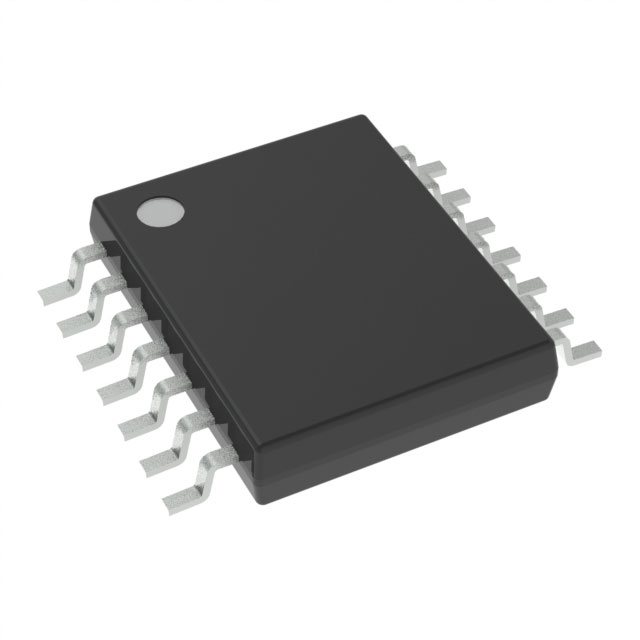
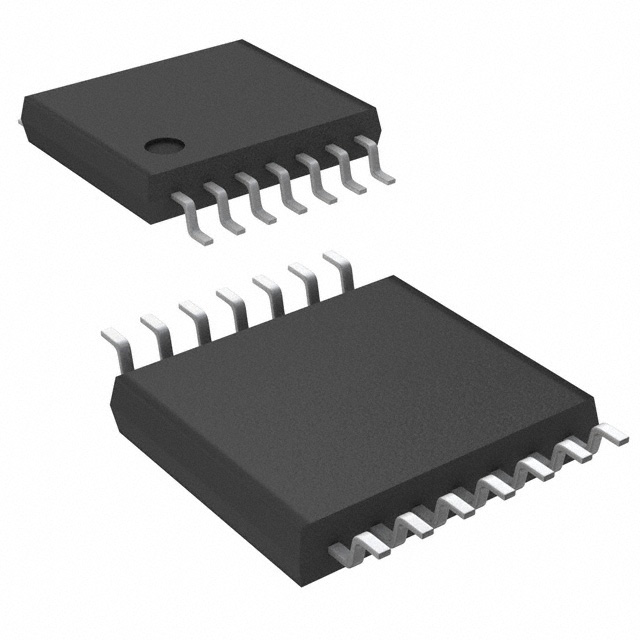
The LP324PWR is a general-purpose operational amplifier manufactured by Texas Instruments, configured as a 4-circuit integrated circuit in 14-TSSOP surface mount packaging. This device is classified as Active product status and is RoHS3 compliant. The LP324PWR operates across a supply voltage range of 3V to 32V with an operating temperature range of 0°C to 70°C, making it suitable for industrial and commercial applications requiring low-power amplification.
Substitute parts are identified when equivalent electrical performance and mechanical compatibility can be maintained within the specified parameter tolerances. Substitution becomes necessary due to inventory availability, manufacturing discontinuation, or design optimization requirements while maintaining functional equivalence in the target application.
Substiute Parts
Key Parameters
| Parameter | LP324PWR Value | Unit | Substitution Relevance |
|---|---|---|---|
| Amplifier Type | General Purpose | - | Critical |
| Number of Circuits | 4 | Channels | Critical |
| Slew Rate | 0.05 | V/µs | Performance |
| Gain Bandwidth Product | 100 | kHz | Performance |
| Current - Input Bias | 2 | nA | Performance |
| Voltage - Input Offset | 2 | mV | Performance |
| Current - Supply (x4 Channels) | 85 | µA | Performance |
| Current - Output / Channel | 10 | mA | Performance |
| Voltage - Supply Span (Min) | 3 | V | Critical |
| Voltage - Supply Span (Max) | 32 | V | Critical |
| Operating Temperature | 0 to 70 | °C | Application |
| Mounting Type | Surface Mount | - | Critical |
| Package / Case | 14-TSSOP (0.173", 4.40mm Width) | - | Critical |
| RoHS Status | ROHS3 Compliant | - | Compliance |
| Moisture Sensitivity Level | 1 (Unlimited) | - | Handling |
Substitute Part Grouping Explanation
Substitution logic for the LP324PWR is based on the following criteria:
Critical Parameters (Must Match or Exceed):
- Number of Circuits: 4 channels required
- Mounting Type: Surface Mount
- Package Type: 14-TSSOP form factor with 0.173" width and 4.40mm width specification
- Supply Voltage Range: Minimum 3V, Maximum 32V (substitute must support this range or broader)
- RoHS3 Compliance: Required for regulatory compatibility
Performance Parameters (Application-Dependent):
- Slew Rate: 0.05V/µs baseline; higher values acceptable for faster transient response
- Gain Bandwidth Product: 100 kHz baseline; higher values acceptable for increased frequency response
- Input Bias Current: 2 nA baseline; lower values preferred for high-impedance applications
- Input Offset Voltage: 2 mV baseline; lower values acceptable
- Supply Current: 85µA baseline; lower values preferred for power-constrained designs
- Output Current per Channel: 10 mA baseline; higher values acceptable for increased load capability
Application-Dependent Parameters:
- Operating Temperature Range: 0°C to 70°C specified; extended ranges acceptable if application permits
Substitutes are grouped into two categories: Direct Equivalents (identical electrical and mechanical specifications) and Enhanced Alternatives (superior performance parameters within compatible packaging).
Parameter Comparison
| Part Number | Manufacturer | Package | Slew Rate (V/µs) | GBW (kHz) | Input Bias (nA) | Supply Current (µA) | Output Current (mA) | Temp Range (°C) | Supply Voltage (V) |
|---|---|---|---|---|---|---|---|---|---|
| LP324PWR | Texas Instruments | 14-TSSOP | 0.05 | 100 | 2 | 85 | 10 | 0 to 70 | 3 to 32 |
| LP324MT/NOPB | Texas Instruments | 14-TSSOP | 0.05 | 100 | 2 | 85 | 10 | 0 to 70 | 3 to 32 |
| LP324MTX/NOPB | Texas Instruments | 14-TSSOP | 0.05 | 100 | 2 | 85 | 10 | 0 to 70 | 3 to 32 |
| LM324MT/NOPB | Texas Instruments | 14-TSSOP | - | 1000 | 45 | 1500 | 40 | 0 to 70 | 3 to 32 |
| LM324MTX/NOPB | Texas Instruments | 14-TSSOP | - | 1000 | 45 | 1500 | 40 | 0 to 70 | 3 to 32 |
| AS324GTR-G1 | Diodes Incorporated | 14-TSSOP | - | - | 20 | 1000 | 40 | -40 to 85 | 3 to 36 |
| AS324GTR-E1 | Diodes Incorporated | 14-TSSOP | - | - | 20 | 1000 | 40 | -40 to 85 | 3 to 36 |
| BA10324AFV-E2 | Rohm Semiconductor | 14-LSSOP | 0.2 | 500 | 20 | 600 | 35 | -40 to 85 | 3 to 32 |
| BA2902FV-E2 | Rohm Semiconductor | 14-LSSOP | 0.2 | 500 | 20 | 700 | 30 | -40 to 125 | 3 to 32 |
| BA3474FVJ-E2 | Rohm Semiconductor | 14-TSSOP | 10 | 4000 | 100 | 8000 | 30 | -40 to 85 | 3 to 36 |
| LM224DTBR2G | onsemi | 14-TSSOP | - | 1000 | 90 | - | 40 | -25 to 85 | 3 to 32 |
Engineering Selection Recommendations
Direct Equivalent Substitutes (Identical Specifications):
LP324MT/NOPB and LP324MTX/NOPB are direct electrical and mechanical equivalents to LP324PWR. Both devices maintain identical slew rate (0.05V/µs), gain bandwidth product (100 kHz), input bias current (2 nA), supply current (85µA), and output current (10 mA) specifications. The primary difference is packaging format: LP324MT/NOPB is supplied in Tube packaging, while LP324MTX/NOPB is supplied in Tape & Reel format. Both are Texas Instruments products with Active product status and RoHS3 compliance. Selection between these variants depends on assembly line requirements and tape-and-reel versus tube handling capabilities.
Enhanced Performance Substitutes (Superior Parameters, Compatible Package):
LM324MT/NOPB and LM324MTX/NOPB offer enhanced gain bandwidth product (1 MHz versus 100 kHz) and increased output current capability (40 mA versus 10 mA per channel). These devices maintain the same 14-TSSOP package, supply voltage range (3V to 32V), and operating temperature range (0°C to 70°C). However, input bias current increases to 45 nA and supply current increases to 1.5mA per device. These substitutes are suitable for applications requiring higher frequency response or greater output drive capability, provided the increased power consumption is acceptable.
Extended Temperature Range Substitutes:
AS324GTR-G1 and AS324GTR-E1 (Diodes Incorporated) extend the operating temperature range to -40°C to 85°C and supply voltage to 36V maximum. These devices maintain 14-TSSOP packaging and 4-circuit configuration. Input bias current is 20 nA and output current is 40 mA per channel. Supply current is 1mA per channel. These substitutes are appropriate for industrial and automotive temperature environments where the LP324PWR's 0°C to 70°C range is insufficient.
High-Performance Substitutes (Significantly Enhanced Specifications):
BA3474FVJ-E2 (Rohm Semiconductor) provides substantially enhanced performance with 10V/µs slew rate and 4 MHz gain bandwidth product, compared to LP324PWR's 0.05V/µs and 100 kHz. This device maintains 14-TSSOP packaging and 4-circuit configuration with extended temperature range (-40°C to 85°C) and supply voltage to 36V. However, input bias current increases to 100 nA and supply current increases to 8mA. This substitute is appropriate only for applications requiring high-speed amplification where the increased power consumption and input bias current are acceptable trade-offs.
Compatibility Constraints:
BA10324AFV-E2 and BA2902FV-E2 use 14-LSSOP packaging (not 14-TSSOP), which may require PCB layout modifications. These devices are not recommended as direct substitutes unless PCB redesign is feasible.
LM224DTBR2G operates at reduced temperature range (-25°C to 85°C) and is suitable only for applications where the LP324PWR's 0°C minimum operating temperature is not required.
All substitute parts maintain RoHS3 compliance and REACH unaffected status, ensuring regulatory compatibility with the original LP324PWR specification.
Frequently Asked Questions (FAQ)
Q: Can LM324MT/NOPB be used as a direct replacement for LP324PWR in all applications?
A: LM324MT/NOPB is electrically compatible in terms of package, pin configuration, and supply voltage range. However, it differs in performance specifications: gain bandwidth product is 10 times higher (1 MHz versus 100 kHz), input bias current is 22.5 times higher (45 nA versus 2 nA), and supply current is 17.6 times higher (1.5mA versus 85µA). Substitution is valid only if the application can tolerate these performance differences. For low-frequency, low-power applications where the LP324PWR's specifications are critical, LM324MT/NOPB may introduce undesired behavior.
Q: What is the difference between LP324MT/NOPB and LP324MTX/NOPB?
A: Both devices are electrically identical with matching specifications. The difference is packaging format: LP324MT/NOPB is supplied in Tube packaging for manual or semi-automated assembly, while LP324MTX/NOPB is supplied in Cut Tape and Digi-Reel format for automated pick-and-place assembly. Selection depends on manufacturing process requirements.
Q: Can AS324GTR-G1 replace LP324PWR in a design operating at 0°C?
A: AS324GTR-G1 has a minimum operating temperature of -40°C, which exceeds the LP324PWR requirement of 0°C. Therefore, AS324GTR-G1 is compatible for this application. However, verify that the increased input bias current (20 nA versus 2 nA) and higher supply current (1mA versus 85µA) do not affect circuit performance.
Q: Why does BA3474FVJ-E2 have higher supply current than LP324PWR?
A: BA3474FVJ-E2 is designed for high-speed amplification with 10V/µs slew rate and 4 MHz gain bandwidth product. These enhanced performance characteristics require higher quiescent current (8mA total) compared to LP324PWR's 85µA. The increased current consumption is a direct result of the higher-performance design. This substitute is appropriate only for applications requiring high-speed operation where power consumption is not a constraint.
Q: Are BA10324AFV-E2 and BA2902FV-E2 compatible with LP324PWR PCB layouts?
A: Both devices use 14-LSSOP packaging instead of 14-TSSOP. While pin count and function are equivalent, the physical package dimensions differ. PCB footprints designed for 14-TSSOP will not accommodate 14-LSSOP without layout modification. These substitutes require PCB redesign and are not recommended for direct board-level replacement.
Q: What is the significance of the MSL (Moisture Sensitivity Level) rating?
A: LP324PWR has MSL 1 (Unlimited), indicating no moisture sensitivity restrictions. Substitute parts with MSL 1 (LP324MT/NOPB, LP324MTX/NOPB, BA10324AFV-E2, BA2902FV-E2, BA3474FVJ-E2) have identical handling requirements. AS324GTR-G1 and AS324GTR-E1 have MSL 3 (168 Hours), requiring controlled storage and bake-out procedures before reflow soldering. This difference affects inventory management and assembly procedures.
Q: Can LM224DTBR2G be used in applications requiring 0°C minimum operating temperature?
A: LM224DTBR2G has a minimum operating temperature of -25°C, which does not meet the LP324PWR specification of 0°C minimum. This substitute is not appropriate for applications requiring operation at temperatures below -25°C. However, if the application's actual minimum operating temperature is above -25°C, LM224DTBR2G is compatible.
Q: What supply voltage range considerations apply to AS324GTR-G1?
A: AS324GTR-G1 supports supply voltage from 3V to 36V, compared to LP324PWR's 3V to 32V. This extended upper limit (36V versus 32V) provides additional design margin for applications with variable supply voltages. However, if the circuit is designed for maximum 32V operation, the extended range provides no additional benefit.
Alternative Parts

SJ6012L2TP
Littelfuse Inc.
6 Alternative Parts

JMK107BBJ476MA-RE
Taiyo Yuden
10 Alternative Parts

GMK107BBJ475MA-T
Taiyo Yuden
5 Alternative Parts
SJ6020N2ARP
Littelfuse Inc.
3 Alternative Parts
SJ6025R2ATP
Littelfuse Inc.
4 Alternative Parts

2474-05L
API Delevan Inc.
1 Alternative Parts

4590R-684K
API Delevan Inc.
1 Alternative Parts

CM6560R-334
API Delevan Inc.
1 Alternative Parts

CM6460-104
API Delevan Inc.
1 Alternative Parts

5526-12
API Delevan Inc.
1 Alternative Parts