


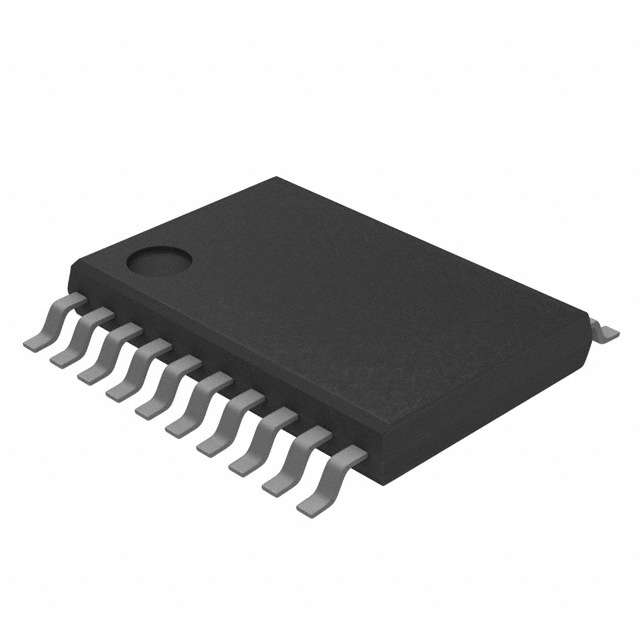
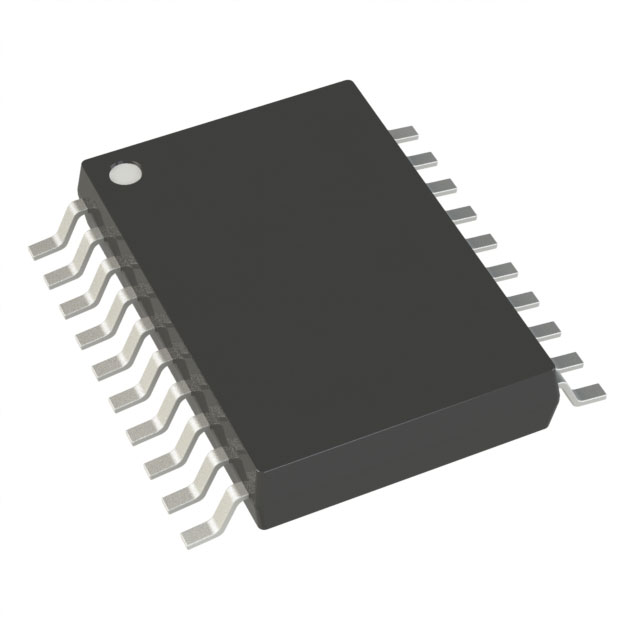
Request Quote
(Ships tomorrow)
LMX2330UTM Equivalent & Substitute Parts
Part Overview
The LMX2330UTM is a PLL Frequency Synthesizer IC manufactured by Texas Instruments, designed for clock and timing applications with a maximum frequency of 2.5GHz and 600MHz operation. This device features a 20-TSSOP surface mount package and operates across a supply voltage range of 2.7V to 5.5V with an operating temperature range of -40°C to 85°C. The product is currently classified as obsolete, necessitating identification of functionally equivalent alternatives for ongoing design requirements and component procurement.
Substiute Parts
Key Parameters
| Parameter | Value |
|---|---|
| Manufacturer | Texas Instruments |
| Part Number | LMX2330UTM |
| Category | Clock/Timing |
| Type | PLL Frequency Synthesizer |
| Package / Case | 20-TSSOP (0.173", 4.40mm Width) |
| Mounting Type | Surface Mount |
| Frequency - Max | 2.5GHz, 600MHz |
| Voltage - Supply | 2.7V ~ 5.5V |
| Operating Temperature | -40°C ~ 85°C |
| Input | CMOS, TTL |
| Output | CMOS |
| Number of Circuits | 1 |
| Ratio - Input:Output | 3:1 |
| PLL | Yes with Bypass |
| Product Status | Obsolete |
| RoHS Status | RoHS non-compliant |
| Moisture Sensitivity Level (MSL) | 1 (Unlimited) |
Substitute Part Grouping Explanation
Substitution of the LMX2330UTM is determined by the following critical parameters that must be maintained or exceeded:
- Package Compatibility: 20-TSSOP (0.173", 4.40mm Width) surface mount package
- Functional Type: PLL Frequency Synthesizer with bypass capability
- Input/Output Compatibility: CMOS and TTL input support with CMOS output
- Frequency Range: Maximum frequency capability of 2.5GHz or higher
- Supply Voltage: Operating voltage range that accommodates 2.7V to 5.5V or overlaps this range
- Operating Temperature: -40°C to 85°C temperature range
- Circuit Count: Single circuit configuration
- Input:Output Ratio: 3:1 ratio capability
The ADF4218LBRUZ-REEL meets these substitution criteria through identical package geometry, equivalent functional architecture, compatible input/output signal types, and overlapping operating specifications.
Parameter Comparison
| Parameter | LMX2330UTM | ADF4218LBRUZ-REEL |
|---|---|---|
| Manufacturer | Texas Instruments | Analog Devices Inc. |
| Category | Clock/Timing | Clock/Timing |
| Type | PLL Frequency Synthesizer | Clock/Frequency Synthesizer (RF/IF) |
| Package / Case | 20-TSSOP (0.173", 4.40mm Width) | 20-TSSOP (0.173", 4.40mm Width) |
| Mounting Type | Surface Mount | Surface Mount |
| Frequency - Max | 2.5GHz, 600MHz | 3GHz |
| Voltage - Supply | 2.7V ~ 5.5V | 2.6V ~ 3.3V |
| Operating Temperature | -40°C ~ 85°C | -40°C ~ 85°C |
| Input | CMOS, TTL | CMOS, TTL |
| Output | CMOS | Clock |
| Number of Circuits | 1 | 1 |
| Ratio - Input:Output | 3:1 | 3:1 |
| PLL | Yes with Bypass | Yes |
| Product Status | Obsolete | Active |
| RoHS Status | RoHS non-compliant | ROHS3 Compliant |
| Moisture Sensitivity Level (MSL) | 1 (Unlimited) | 1 (Unlimited) |
Engineering Selection Recommendations
The ADF4218LBRUZ-REEL is a direct substitute for the LMX2330UTM based on the following engineering criteria:
Package and Mechanical Compatibility: Both devices utilize the identical 20-TSSOP (0.173", 4.40mm Width) surface mount package, ensuring PCB layout compatibility without redesign.
Functional Equivalence: Both devices are PLL Frequency Synthesizers with single circuit configurations, 3:1 input:output ratios, and PLL with bypass capability. The ADF4218LBRUZ-REEL supports CMOS and TTL inputs with clock output, maintaining signal compatibility.
Frequency Performance: The ADF4218LBRUZ-REEL provides a maximum frequency of 3GHz, exceeding the LMX2330UTM's 2.5GHz specification and ensuring capability for existing frequency requirements.
Operating Temperature Range: Both devices operate across -40°C to 85°C, maintaining thermal performance equivalence.
Supply Voltage Consideration: The ADF4218LBRUZ-REEL operates at 2.6V to 3.3V, which is a subset of the LMX2330UTM's 2.7V to 5.5V range. Design verification is required to confirm that the target application operates within the 2.6V to 3.3V window.
Product Status and Compliance: The ADF4218LBRUZ-REEL is active production status with ROHS3 compliance, providing long-term availability and regulatory alignment compared to the obsolete LMX2330UTM.
Frequently Asked Questions (FAQ)
Q: Can the ADF4218LBRUZ-REEL directly replace the LMX2330UTM without PCB modifications?
A: Yes, the identical 20-TSSOP package geometry permits direct pin-for-pin substitution without PCB layout changes. However, application-specific signal integrity and timing verification is required.
Q: What is the critical difference in supply voltage specifications between these devices?
A: The LMX2330UTM operates at 2.7V to 5.5V, while the ADF4218LBRUZ-REEL operates at 2.6V to 3.3V. The substitute part requires confirmation that the application's power supply operates within the 2.6V to 3.3V range. If the original design requires operation above 3.3V, the ADF4218LBRUZ-REEL is not suitable.
Q: Are the input and output signal types compatible?
A: Both devices support CMOS and TTL inputs. The LMX2330UTM provides CMOS output, while the ADF4218LBRUZ-REEL provides clock output. Verification of downstream circuit compatibility with clock output specifications is necessary.
Q: Does the higher maximum frequency of the ADF4218LBRUZ-REEL (3GHz vs 2.5GHz) affect substitution suitability?
A: No. The higher frequency capability of the substitute part does not create incompatibility. The device will operate at the required frequency within the application's specifications.
Q: What is the significance of the product status difference?
A: The LMX2330UTM is obsolete, indicating discontinued production and limited future availability. The ADF4218LBRUZ-REEL is active production status, ensuring ongoing component availability and supply chain reliability.
Q: Is RoHS compliance a functional requirement for substitution?
A: RoHS compliance is a regulatory and procurement consideration, not a functional parameter. The LMX2330UTM is RoHS non-compliant, while the ADF4218LBRUZ-REEL is ROHS3 compliant. Regulatory requirements for the end application determine whether compliance is mandatory.
Alternative Parts

SJ6012L2TP
Littelfuse Inc.
6 Alternative Parts

JMK107BBJ476MA-RE
Taiyo Yuden
10 Alternative Parts

GMK107BBJ475MA-T
Taiyo Yuden
5 Alternative Parts
SJ6020N2ARP
Littelfuse Inc.
3 Alternative Parts
SJ6025R2ATP
Littelfuse Inc.
4 Alternative Parts

2474-05L
API Delevan Inc.
1 Alternative Parts

4590R-684K
API Delevan Inc.
1 Alternative Parts

CM6560R-334
API Delevan Inc.
1 Alternative Parts

CM6460-104
API Delevan Inc.
1 Alternative Parts

5526-12
API Delevan Inc.
1 Alternative Parts