




Request Quote
(Ships tomorrow)
LMV761MAX Equivalent & Substitute Parts
Part Overview
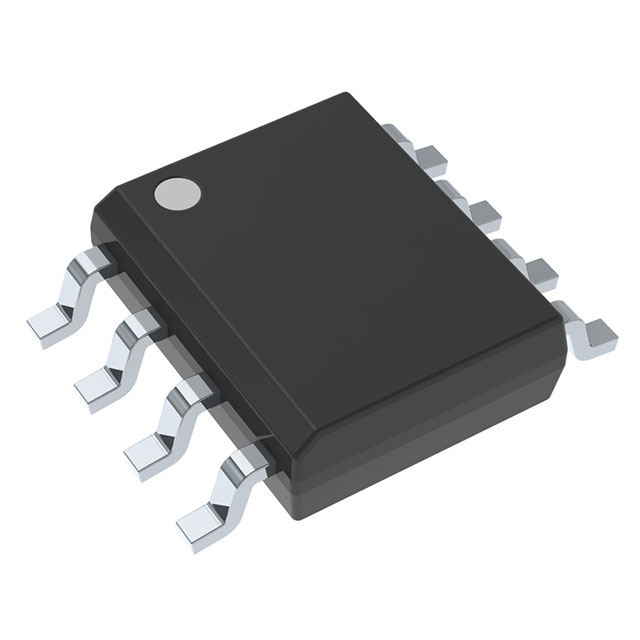
The LMV761MAX is a single-channel general-purpose comparator manufactured by Texas Instruments, housed in an 8-SOIC surface-mount package. This device is classified as obsolete, necessitating identification of equivalent and substitute components for ongoing design support and procurement. The LMV761MAX delivers push-pull output configuration with high-speed operation suitable for precision signal comparison applications across industrial and consumer electronics.
Substiute Parts
Key Parameters
| Parameter | Value |
|---|---|
| Supply Voltage Range | 2.7V ~ 5V |
| Input Offset Voltage (Max) | 0.2mV @ 5V |
| Input Bias Current (Max) | 50pA @ 5V |
| Quiescent Current (Max) | 700µA |
| CMRR / PSRR (Typ) | 100dB CMRR, 110dB PSRR |
| Propagation Delay (Max) | 225ns |
| Operating Temperature | -40°C ~ 125°C |
| Package | 8-SOIC (0.154", 3.90mm Width) |
| Output Type | Push-Pull |
Substitute Part Grouping Explanation
Substitution eligibility for the LMV761MAX is determined by the following critical parameters:
- Output Configuration: Push-pull output type required
- Supply Voltage Compatibility: Operating range must encompass or overlap with 2.7V ~ 5V
- Package Type: Surface-mount configuration with compatible pinout
- Functional Classification: General-purpose comparator with single element
- Electrical Performance: Input offset voltage, bias current, propagation delay, and CMRR/PSRR specifications
Two substitute parts meet these criteria with varying degrees of parameter alignment and product status considerations.
Parameter Comparison
| Parameter | LMV761MAX (Main) | LMV761MAX/NOPB (Equivalent) | BU7231SG-TR (Substitute) |
|---|---|---|---|
| Manufacturer | Texas Instruments | National Semiconductor | ROHM Semiconductor |
| Product Status | Obsolete | Active | Active |
| Supply Voltage Range | 2.7V ~ 5V | 2.7V ~ 5V | 1.8V ~ 5.5V, ±0.9V ~ 2.75V |
| Input Offset Voltage (Max) | 0.2mV @ 5V | 0.2mV @ 5V | 11mV @ 3V |
| Input Bias Current (Max) | 50pA @ 5V | 50pA @ 5V | 1pA @ 3V |
| Quiescent Current (Max) | 700µA | 700µA | 15µA |
| CMRR / PSRR (Typ) | 100dB CMRR, 110dB PSRR | 100dB CMRR, 110dB PSRR | 80dB CMRR, 80dB PSRR |
| Propagation Delay (Max) | 225ns | 225ns | 1.7µs |
| Operating Temperature | -40°C ~ 125°C | -40°C ~ 125°C | -40°C ~ 105°C |
| Package / Case | 8-SOIC (0.154", 3.90mm Width) | 8-SOIC (0.154", 3.90mm Width) | 5-SSOP (SC-74A, SOT-753) |
| Output Type | Push-Pull | Push-Pull | Push-Pull |
| RoHS Status | Non-compliant | Not specified | ROHS3 Compliant |
Engineering Selection Recommendations
LMV761MAX/NOPB is the primary parametric equivalent, maintaining identical electrical specifications and package configuration while offering active product status from National Semiconductor. This part provides direct functional replacement with no design modifications required.
BU7231SG-TR functions as a functional substitute with notable trade-offs. The ROHM device operates across an extended supply voltage range (1.8V ~ 5.5V) and demonstrates superior quiescent current performance (15µA vs. 700µA). However, the BU7231SG-TR exhibits degraded input offset voltage (11mV vs. 0.2mV), reduced CMRR/PSRR performance (80dB vs. 100dB/110dB), and significantly increased propagation delay (1.7µs vs. 225ns). The package transition from 8-SOIC to 5-SSOP requires PCB layout modification. The BU7231SG-TR is ROHS3 compliant, addressing environmental compliance requirements where applicable.
Selection between these substitutes depends on application-specific requirements: precision-critical applications favor LMV761MAX/NOPB, while power-constrained or extended-temperature-range designs may benefit from BU7231SG-TR with appropriate performance trade-off acceptance.
Frequently Asked Questions (FAQ)
Q: Can LMV761MAX/NOPB replace LMV761MAX directly without design changes?
A: Yes. LMV761MAX/NOPB maintains identical electrical parameters, supply voltage range, propagation delay, and 8-SOIC package configuration. No circuit modifications are required.
Q: What are the primary limitations of BU7231SG-TR as a substitute?
A: The BU7231SG-TR exhibits three significant deviations: input offset voltage increases from 0.2mV to 11mV, propagation delay extends from 225ns to 1.7µs, and CMRR/PSRR performance decreases from 100dB/110dB to 80dB. Additionally, the package changes from 8-SOIC to 5-SSOP, requiring PCB redesign.
Q: Is the BU7231SG-TR suitable for high-precision applications?
A: No. The 11mV input offset voltage and reduced CMRR/PSRR specifications disqualify this device for precision signal comparison. Applications requiring the 0.2mV offset specification of the LMV761MAX should use LMV761MAX/NOPB.
Q: Does BU7231SG-TR offer advantages over LMV761MAX/NOPB?
A: Yes, in specific scenarios. The BU7231SG-TR provides 47× lower quiescent current (15µA vs. 700µA), extended supply voltage range (1.8V ~ 5.5V vs. 2.7V ~ 5V), and ROHS3 compliance. These advantages apply to power-sensitive or environmentally-regulated designs where performance trade-offs are acceptable.
Q: What package considerations apply to BU7231SG-TR substitution?
A: The BU7231SG-TR uses 5-SSOP (SC-74A, SOT-753) packaging versus the 8-SOIC of the LMV761MAX. This requires PCB layout modification, including new footprint design, trace routing, and potential board space reallocation. Pin-to-pin compatibility does not exist.
Q: Are there temperature range limitations with BU7231SG-TR?
A: Yes. The BU7231SG-TR maximum operating temperature is 105°C, compared to 125°C for LMV761MAX. Applications requiring operation above 105°C must use LMV761MAX/NOPB.
Alternative Parts

SJ6012L2TP
Littelfuse Inc.
6 Alternative Parts

JMK107BBJ476MA-RE
Taiyo Yuden
10 Alternative Parts

GMK107BBJ475MA-T
Taiyo Yuden
5 Alternative Parts
SJ6020N2ARP
Littelfuse Inc.
3 Alternative Parts
SJ6025R2ATP
Littelfuse Inc.
4 Alternative Parts

2474-05L
API Delevan Inc.
1 Alternative Parts

4590R-684K
API Delevan Inc.
1 Alternative Parts

CM6560R-334
API Delevan Inc.
1 Alternative Parts

CM6460-104
API Delevan Inc.
1 Alternative Parts

5526-12
API Delevan Inc.
1 Alternative Parts