





Request Quote
(Ships tomorrow)
LMV722ID Equivalent & Substitute Parts
Part Overview
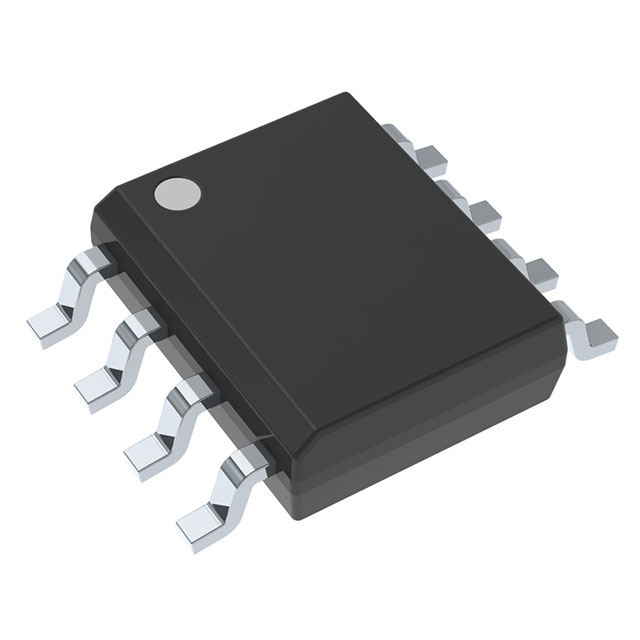
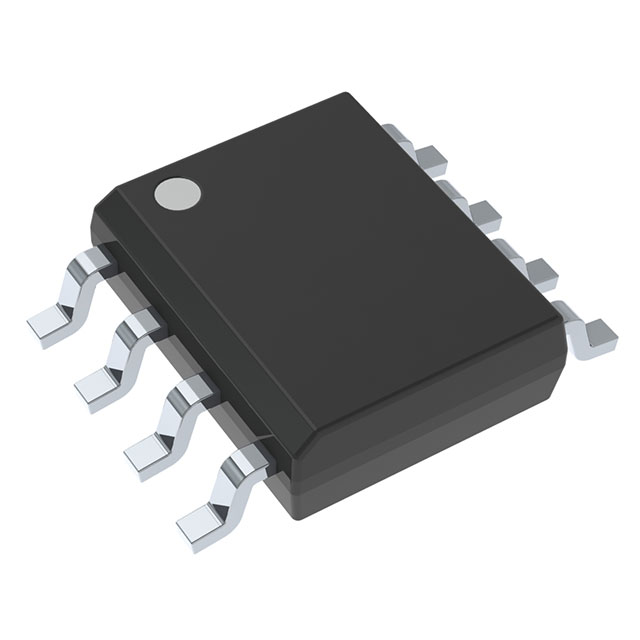
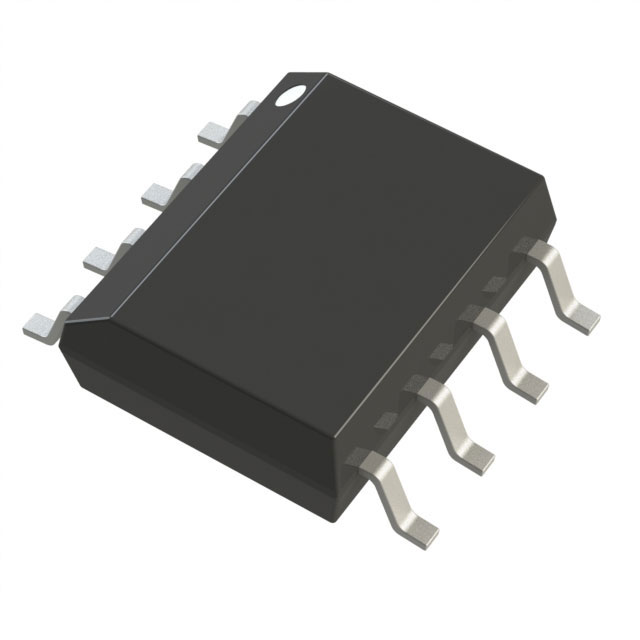
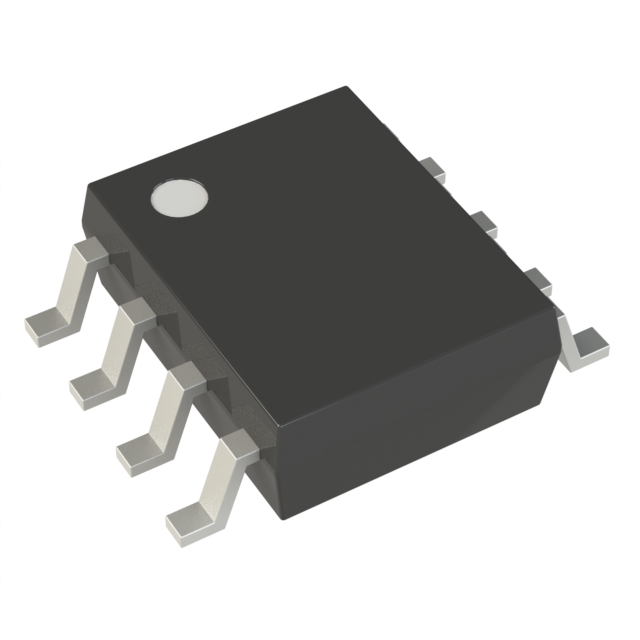
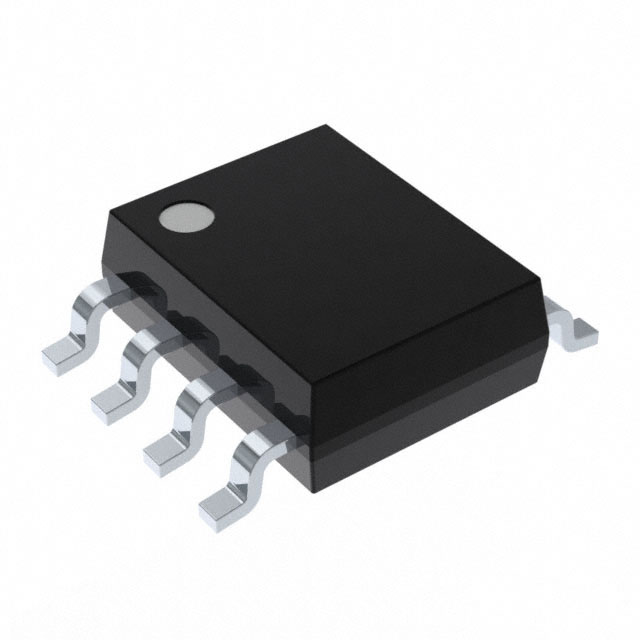
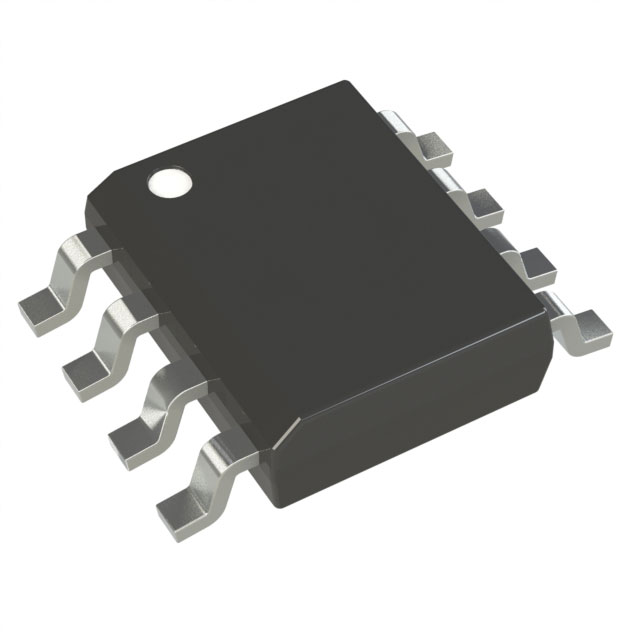
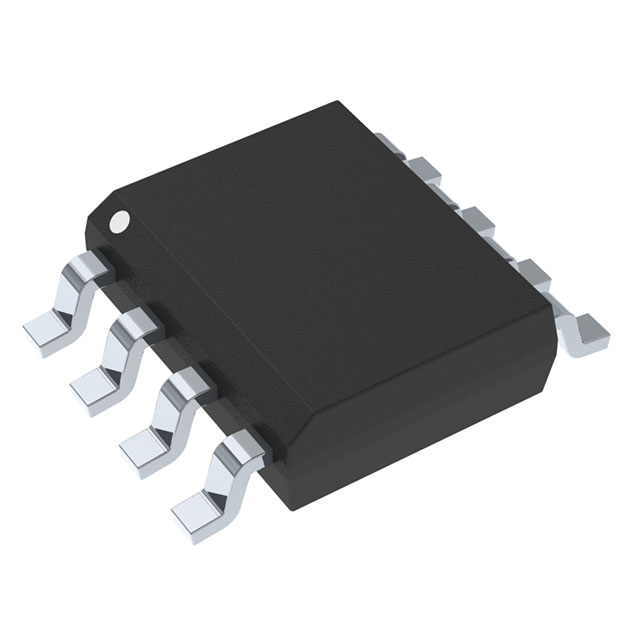
The LMV722ID is a general-purpose operational amplifier manufactured by Texas Instruments, featuring dual circuits in an 8-SOIC surface-mount package. This rail-to-rail amplifier operates across a 2.2V to 5.5V supply range with a 10 MHz gain-bandwidth product and 5.25V/µs slew rate, designed for low-power analog signal processing applications. The device is Active product status with full RoHS3 compliance and unlimited moisture sensitivity rating. Equivalent and substitute parts are identified based on matching electrical performance parameters, package compatibility, and operational specifications to ensure direct functional replacement in circuit designs.
Substiute Parts
Key Parameters
| Parameter | Value | Unit |
|---|---|---|
| Manufacturer Part Number | LMV722ID | — |
| Manufacturer | Texas Instruments | — |
| Amplifier Type | General Purpose | — |
| Number of Circuits | 2 | — |
| Output Type | Rail-to-Rail | — |
| Package / Case | 8-SOIC (0.154", 3.90mm Width) | — |
| Gain Bandwidth Product | 10 | MHz |
| Slew Rate | 5.25 | V/µs |
| Voltage - Supply Span (Min) | 2.2 | V |
| Voltage - Supply Span (Max) | 5.5 | V |
| Operating Temperature | -40°C ~ 105°C | — |
| Mounting Type | Surface Mount | — |
| RoHS Status | ROHS3 Compliant | — |
Substitute Part Grouping Explanation
Substitute parts for the LMV722ID are classified into two functional categories based on electrical and mechanical compatibility:
Category 1: Direct Equivalents (Identical Specifications) Parts matching all critical parameters: dual-circuit general-purpose amplifier, rail-to-rail output, 10 MHz gain-bandwidth product, 5.25V/µs slew rate, 2.2V–5.5V supply range, and 8-SOIC package. These parts provide pin-for-pin and functional equivalence.
Category 2: Functional Alternatives (Compatible Specifications) Parts with different amplifier types (zero-drift, CMOS) or modified electrical characteristics but maintaining: dual circuits, 8-SOIC package, rail-to-rail output, 2.2V–5.5V supply compatibility, and surface-mount configuration. These parts are suitable for applications where the specific performance trade-offs are acceptable.
Key Substitution Parameters:
- Number of Circuits: 2 (mandatory)
- Package: 8-SOIC (mandatory)
- Output Type: Rail-to-Rail (mandatory)
- Supply Voltage Range: Minimum 2.2V, Maximum ≥5.5V (mandatory)
- Mounting Type: Surface Mount (mandatory)
- Gain Bandwidth Product: 5 MHz or higher (functional requirement)
- Operating Temperature: -40°C minimum (functional requirement)
Parameter Comparison
| Part Number | Manufacturer | Amplifier Type | GBW (MHz) | Slew Rate (V/µs) | Supply Min (V) | Supply Max (V) | Temp Range (°C) | Package |
|---|---|---|---|---|---|---|---|---|
| LMV722ID | Texas Instruments | General Purpose | 10 | 5.25 | 2.2 | 5.5 | -40 ~ 105 | 8-SOIC |
| LMP2022MA/NOPB | Texas Instruments | Zero-Drift | 5 | 2.6 | 2.2 | 5.5 | -40 ~ 125 | 8-SOIC |
| LMP2022MAX/NOPB | Texas Instruments | Zero-Drift | 5 | 2.6 | 2.2 | 5.5 | -40 ~ 125 | 8-SOIC |
| LMV722M/NOPB | National Semiconductor | General Purpose | 10 | 5.25 | 2.2 | 5.5 | -40 ~ 85 | 8-SOIC |
| LMV722MX/NOPB | National Semiconductor | General Purpose | 10 | 5.25 | 2.2 | 5.5 | -40 ~ 85 | 8-SOIC |
| LMV822M/NOPB | Texas Instruments | General Purpose | 5.6 | 2 | 2.5 | 5.5 | -40 ~ 85 | 8-SOIC |
| LMV822MX/NOPB | Texas Instruments | General Purpose | 5.6 | 2 | 2.5 | 5.5 | -40 ~ 85 | 8-SOIC |
| AD8692ARZ | Analog Devices Inc. | General Purpose | 10 | 5 | 2.7 | 6 | -40 ~ 125 | 8-SOIC |
| BU7266F-E2 | Rohm Semiconductor | CMOS | 0.004 | 0.0024 | 1.8 | 5.5 | -40 ~ 85 | 8-SOP |
| BU7266SF-E2 | Rohm Semiconductor | CMOS | 0.004 | 0.0024 | 1.8 | 5.5 | -40 ~ 105 | 8-SOP |
| BU7486F-E2 | Rohm Semiconductor | CMOS | 10 | 10 | 3 | 5.5 | -40 ~ 105 | 8-SOP |
Engineering Selection Recommendations
Direct Replacement (Identical Performance): LMV722M/NOPB and LMV722MX/NOPB are direct functional equivalents with identical electrical specifications (10 MHz GBW, 5.25V/µs slew rate, 2.2V–5.5V supply). Both are Active status, RoHS3 compliant, and available in 8-SOIC packaging. Selection between these variants depends on packaging preference (Bulk vs. Cut Tape/Digi-Reel) and inventory availability. Operating temperature range is -40°C to 85°C, which is narrower than the LMV722ID (-40°C to 105°C); verify application requirements before substitution.
High-Performance Alternative: AD8692ARZ (Analog Devices Inc.) provides equivalent 10 MHz gain-bandwidth product and 5V/µs slew rate with superior input bias current (1 pA vs. 260 nA) and extended operating temperature (-40°C to 125°C). Supply range extends to 6V maximum. Active status with RoHS3 compliance. Suitable for precision applications requiring lower input offset voltage and wider temperature operation.
Low-Power Alternative: LMV822M/NOPB and LMV822MX/NOPB reduce supply current to 500µA per channel (vs. 1.81mA for LMV722ID), making them suitable for battery-powered applications. Trade-offs include reduced gain-bandwidth product (5.6 MHz vs. 10 MHz) and slew rate (2V/µs vs. 5.25V/µs). Minimum supply voltage increases to 2.5V. Active status, RoHS3 compliant, 8-SOIC package.
Zero-Drift Precision Alternative: LMP2022MA/NOPB and LMP2022MAX/NOPB offer ultra-low input offset voltage (0.4 µV vs. 80 µV) and input bias current (25 pA vs. 260 nA) for precision measurement circuits. Reduced slew rate (2.6V/µs) and gain-bandwidth product (5 MHz) require application verification. Extended operating temperature to 125°C. Active status, RoHS3 compliant, 8-SOIC package.
Ultra-Low-Power CMOS Alternative: BU7266SF-E2 (Rohm Semiconductor) provides ultra-low supply current (700 nA) for ultra-low-power applications. Significant performance reduction: 4 kHz gain-bandwidth product, 0.0024V/µs slew rate. Minimum supply voltage 1.8V. Operating temperature -40°C to 105°C. Package is 8-SOP (0.173" width vs. 0.154" for standard 8-SOIC); verify PCB layout compatibility.
High-Speed CMOS Alternative: BU7486F-E2 (Rohm Semiconductor) matches 10 MHz gain-bandwidth product with higher slew rate (10V/µs). Supply current 6 mA, minimum voltage 3V. Operating temperature -40°C to 105°C. Package is 8-SOP; verify PCB layout compatibility. Suitable for high-speed signal processing where CMOS characteristics are acceptable.
All recommended substitutes maintain Active product status and RoHS3 compliance. Verify specific application requirements for supply voltage, operating temperature, and performance parameters before final selection.
Frequently Asked Questions (FAQ)
Q1: Can LMV722M/NOPB or LMV722MX/NOPB be used as direct replacements for LMV722ID?
A: Yes. Both parts are functionally identical with matching 10 MHz gain-bandwidth product, 5.25V/µs slew rate, dual circuits, rail-to-rail output, and 8-SOIC package. The primary difference is operating temperature range: LMV722ID operates to 105°C while LMV722M/NOPB and LMV722MX/NOPB operate to 85°C. Verify your application's maximum operating temperature requirement before substitution. Packaging format differs (Bulk vs. Cut Tape/Digi-Reel); select based on procurement and assembly requirements.
Q2: What is the difference between LMP2022MA/NOPB and LMP2022MAX/NOPB?
A: Both are zero-drift amplifiers with identical electrical specifications (5 MHz GBW, 2.6V/µs slew rate, 0.4 µV input offset voltage). The difference is packaging format: LMP2022MA/NOPB is supplied in Tube packaging, while LMP2022MAX/NOPB is supplied in Cut Tape (CT) & Digi-Reel format. Inventory availability differs significantly (1221 pcs vs. 17300 pcs). Select based on assembly process requirements and lead time.
Q3: Why would I choose LMV822M/NOPB over LMV722ID?
A: LMV822M/NOPB reduces supply current to 500µA per channel (vs. 1.81mA for LMV722ID), making it suitable for battery-powered or energy-constrained applications. Trade-offs include lower gain-bandwidth product (5.6 MHz vs. 10 MHz), reduced slew rate (2V/µs vs. 5.25V/µs), and higher minimum supply voltage (2.5V vs. 2.2V). Select LMV822M/NOPB only if your application can tolerate reduced bandwidth and slew rate in exchange for lower power consumption.
Q4: Is AD8692ARZ compatible with LMV722ID in all applications?
A: AD8692ARZ is electrically compatible with matching 10 MHz gain-bandwidth product and similar slew rate (5V/µs vs. 5.25V/µs). Key advantages include superior input bias current (1 pA vs. 260 nA) and extended operating temperature to 125°C. Supply voltage range extends to 6V maximum. However, input offset voltage is higher (400 µV vs. 80 µV). Verify precision requirements before substitution. Package is identical 8-SOIC.
Q5: Can BU7266SF-E2 replace LMV722ID?
A: BU7266SF-E2 is not suitable as a direct replacement. While both are dual-circuit, rail-to-rail, 8-pin surface-mount amplifiers, BU7266SF-E2 is a CMOS amplifier with drastically reduced performance: 4 kHz gain-bandwidth product (vs. 10 MHz), 0.0024V/µs slew rate (vs. 5.25V/µs), and 700 nA supply current. Package is 8-SOP with different pin spacing (0.173" vs. 0.154" width). Use only in ultra-low-power applications where bandwidth and slew rate requirements are minimal.
Q6: What does "rail-to-rail output" mean for substitution purposes?
A: Rail-to-rail output means the amplifier can swing its output voltage to within a small margin of both positive and negative supply rails. For LMV722ID and all listed substitutes with rail-to-rail output, the output can reach nearly the full supply voltage range (2.2V to 5.5V). This is a mandatory compatibility criterion for direct substitution. Non-rail-to-rail amplifiers would not be suitable replacements.
Q7: Are all substitute parts RoHS3 compliant?
A: Yes. All substitute parts listed are RoHS3 compliant and REACH unaffected, matching the LMV722ID compliance status. All parts carry ECCN EAR99 classification and HTSUS code 8542.33.0001. Moisture sensitivity level is 1 (Unlimited) for all parts, indicating no special moisture handling requirements during storage or assembly.
Q8: What is the significance of the 8-SOIC vs. 8-SOP package difference?
A: Both 8-SOIC and 8-SOP are 8-pin surface-mount packages, but they differ in physical dimensions. Standard 8-SOIC has 0.154" (3.90mm) width, while 8-SOP variants (BU7266 and BU7486 series) have 0.173" (4.40mm) width. This difference affects PCB footprint and layout. Verify your PCB design accommodates the specific package before substitution. Pin pitch and lead configuration may also differ; consult datasheets for detailed mechanical specifications.
Q9: Which substitute offers the lowest power consumption?
A: BU7266SF-E2 offers the lowest supply current at 700 nA per channel, followed by LMV822M/NOPB at 500µA per channel. However, BU7266SF-E2 is a CMOS amplifier with severely limited bandwidth (4 kHz) and slew rate (0.0024V/µs), making it unsuitable for general-purpose applications. LMV822M/NOPB provides a practical low-power alternative with acceptable 5.6 MHz bandwidth for many applications.
Q10: Can I use LMP2022 series in place of LMV722ID for general-purpose amplification?
A: LMP2022 series (zero-drift amplifiers) can replace LMV722ID functionally but with performance trade-offs. Advantages include ultra-low input offset voltage (0.4 µV vs. 80 µV) and input bias current (25 pA vs. 260 nA), plus extended temperature range to 125°C. Disadvantages include reduced gain-bandwidth product (5 MHz vs. 10 MHz) and slew rate (2.6V/µs vs. 5.25V/µs). Use LMP2022 series only in precision measurement or low-frequency applications where offset voltage stability is critical.
Alternative Parts

SJ6012L2TP
Littelfuse Inc.
6 Alternative Parts

JMK107BBJ476MA-RE
Taiyo Yuden
10 Alternative Parts

GMK107BBJ475MA-T
Taiyo Yuden
5 Alternative Parts
SJ6020N2ARP
Littelfuse Inc.
3 Alternative Parts
SJ6025R2ATP
Littelfuse Inc.
4 Alternative Parts

2474-05L
API Delevan Inc.
1 Alternative Parts

4590R-684K
API Delevan Inc.
1 Alternative Parts

CM6560R-334
API Delevan Inc.
1 Alternative Parts

CM6460-104
API Delevan Inc.
1 Alternative Parts

5526-12
API Delevan Inc.
1 Alternative Parts