


Request Quote
(Ships tomorrow)
LMP8671MA/NOPB Equivalent & Substitute Parts
Part Overview
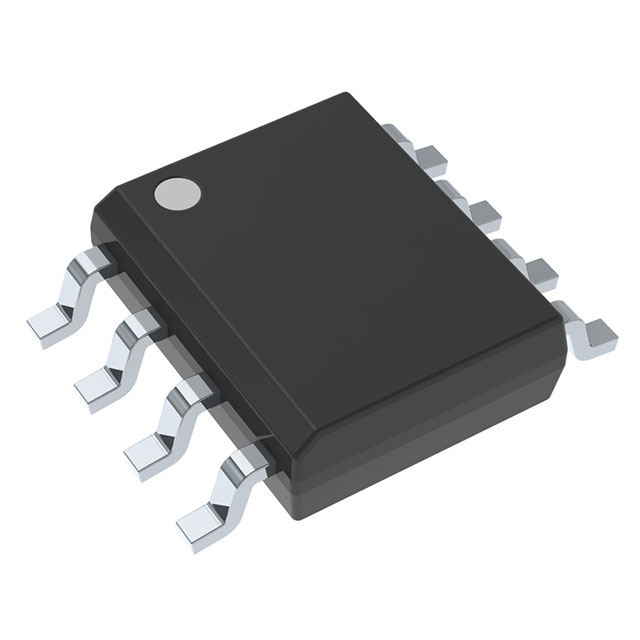
The LMP8671MA/NOPB is a general-purpose operational amplifier manufactured by Texas Instruments, housed in an 8-SOIC surface mount package. This device is classified as obsolete, indicating it has been discontinued and is no longer in active production. The LMP8671MA/NOPB remains available through existing inventory channels with 763 pieces currently in stock.
Due to its obsolete status, identifying functionally compatible substitute components is essential for ongoing design support, production continuity, and long-term system reliability. Substitute parts must maintain electrical and mechanical compatibility within the specified parameter ranges to ensure direct replacement capability.
Substiute Parts
Key Parameters
| Parameter | Value | Unit |
|---|---|---|
| Amplifier Type | General Purpose | — |
| Number of Circuits | 1 | — |
| Slew Rate | 20 | V/µs |
| Gain Bandwidth Product | 55 | MHz |
| Current - Input Bias | 10 | nA |
| Voltage - Input Offset | 100 | µV |
| Current - Supply | 5 | mA |
| Current - Output / Channel | 26 | mA |
| Voltage - Supply Span (Min) | 5 | V |
| Voltage - Supply Span (Max) | 44 | V |
| Operating Temperature Range | -40 to 125 | °C |
| Mounting Type | Surface Mount | — |
| Package / Case | 8-SOIC (0.154", 3.90mm Width) | — |
| RoHS Status | ROHS3 Compliant | — |
| Moisture Sensitivity Level | 1 (Unlimited) | — |
Substitute Part Grouping Explanation
Substitution eligibility for the LMP8671MA/NOPB is determined by strict adherence to the following electrical and mechanical criteria:
Package Compatibility: The substitute part must utilize the 8-SOIC (0.154", 3.90mm Width) surface mount package to ensure mechanical and electrical compatibility with existing PCB layouts and assembly processes.
Supply Voltage Range: The substitute part must operate within a supply voltage span that encompasses or exceeds the original specification (5V to 44V minimum). Parts with reduced maximum supply voltage ratings may not be suitable for applications requiring the full voltage range.
Output Current Capability: The substitute part must deliver sufficient output current per channel to meet or exceed the 26 mA specification of the original device.
Input Bias Current: The substitute part's input bias current specification must not significantly exceed the original 10 nA value, as higher bias currents may introduce unacceptable offset errors in precision applications.
Voltage Input Offset: The substitute part must maintain the 100 µV input offset voltage specification to preserve circuit accuracy.
Compliance and Certification: The substitute part must maintain ROHS3 compliance and REACH unaffected status to satisfy regulatory and environmental requirements.
Slew Rate and Gain Bandwidth Product: While the substitute part may exceed these performance metrics, it must not fall below the original specifications to ensure signal fidelity and frequency response requirements are met.
Parameter Comparison
| Parameter | LMP8671MA/NOPB | OPA1611AID | Unit |
|---|---|---|---|
| Manufacturer | Texas Instruments | Texas Instruments | — |
| Category | Linear, Amplifiers | Linear, Amplifiers | — |
| Amplifier Type | General Purpose | Audio | — |
| Number of Circuits | 1 | 1 | — |
| Slew Rate | 20 | 27 | V/µs |
| Gain Bandwidth Product | 55 | 80 | MHz |
| Current - Input Bias | 10 | 60 | nA |
| Voltage - Input Offset | 100 | 100 | µV |
| Current - Supply | 5 | 3.6 | mA |
| Current - Output / Channel | 26 | 62 | mA |
| Voltage - Supply Span (Min) | 5 | 4.5 | V |
| Voltage - Supply Span (Max) | 44 | 36 | V |
| Operating Temperature Range | -40 to 125 | -40 to 85 | °C |
| Mounting Type | Surface Mount | Surface Mount | — |
| Package / Case | 8-SOIC (0.154", 3.90mm Width) | 8-SOIC (0.154", 3.90mm Width) | — |
| Product Status | Obsolete | Active | — |
| RoHS Status | ROHS3 Compliant | ROHS3 Compliant | — |
| Moisture Sensitivity Level | 1 (Unlimited) | 2 (1 Year) | — |
Engineering Selection Recommendations
OPA1611AID as Primary Substitute
The OPA1611AID is designated as the manufacturer-recommended substitute for the LMP8671MA/NOPB. Both devices are manufactured by Texas Instruments and share identical 8-SOIC packaging, enabling direct mechanical compatibility.
Compliance Status: The OPA1611AID maintains ROHS3 compliance and REACH unaffected status, satisfying regulatory requirements equivalent to the original part.
Product Status Advantage: The OPA1611AID holds active product status, ensuring long-term availability, ongoing manufacturing support, and continued compliance with evolving industry standards. This contrasts with the obsolete status of the LMP8671MA/NOPB.
Electrical Performance: The OPA1611AID exceeds the original specifications in slew rate (27 V/µs versus 20 V/µs) and gain bandwidth product (80 MHz versus 55 MHz), providing enhanced signal processing capability. Output current per channel is increased to 62 mA, compared to the original 26 mA specification.
Supply Voltage Consideration: The OPA1611AID operates within a maximum supply voltage of 36 V, compared to the original 44 V maximum. Applications requiring operation above 36 V supply voltage cannot use this substitute without circuit redesign.
Input Bias Current: The OPA1611AID exhibits an input bias current of 60 nA, which is six times higher than the original 10 nA specification. This parameter difference may introduce measurable offset errors in precision instrumentation applications with high source impedances.
Operating Temperature Range: The OPA1611AID supports a maximum operating temperature of 85°C, compared to the original 125°C. Applications requiring operation above 85°C require alternative solutions.
Moisture Sensitivity: The OPA1611AID carries MSL 2 (1 Year) rating, compared to MSL 1 (Unlimited) for the original part, requiring stricter moisture control during storage and handling.
Frequently Asked Questions (FAQ)
Q: Can the OPA1611AID directly replace the LMP8671MA/NOPB in all applications?
A: Direct replacement is possible only when the application operates within the OPA1611AID's specified limits: maximum supply voltage of 36 V, maximum operating temperature of 85°C, and can tolerate the increased input bias current of 60 nA. Applications exceeding these parameters require alternative solutions or circuit redesign.
Q: What is the significance of the different amplifier type classifications (General Purpose versus Audio)?
A: The LMP8671MA/NOPB is classified as a general-purpose amplifier, while the OPA1611AID is classified as an audio amplifier. Both devices function as operational amplifiers with single-circuit configurations. The audio classification of the OPA1611AID indicates optimization for audio frequency applications, though the device remains suitable for general-purpose signal conditioning applications within its specified parameter ranges.
Q: How does the input bias current difference affect circuit design?
A: The OPA1611AID's input bias current of 60 nA is six times higher than the original 10 nA specification. In applications with high source impedances (above 100 kΩ), this difference may produce measurable input offset voltage errors. Circuit designs incorporating bias current compensation networks may require adjustment to accommodate the higher bias current.
Q: Are there packaging or PCB layout modifications required for substitution?
A: No PCB layout modifications are required. Both the LMP8671MA/NOPB and OPA1611AID utilize identical 8-SOIC (0.154", 3.90mm Width) surface mount packages. Pin-to-pin compatibility is maintained, allowing direct substitution without PCB redesign.
Q: What precautions are necessary regarding the moisture sensitivity level difference?
A: The OPA1611AID carries MSL 2 (1 Year) rating, requiring that the component be used within one year of the moisture barrier bag opening date. The original LMP8671MA/NOPB carries MSL 1 (Unlimited) rating, imposing no time-based moisture control requirements. Storage and handling procedures must comply with MSL 2 requirements to prevent moisture-induced failures.
Q: Is the OPA1611AID suitable for applications requiring the full 44 V supply voltage range of the original part?
A: No. The OPA1611AID maximum supply voltage is 36 V. Applications requiring operation above 36 V cannot use this substitute without circuit redesign or identification of alternative components.
Q: How do the slew rate and gain bandwidth product improvements affect circuit performance?
A: The OPA1611AID provides higher slew rate (27 V/µs versus 20 V/µs) and gain bandwidth product (80 MHz versus 55 MHz). These improvements enable faster signal transitions and extended frequency response capability. For applications designed to the original specifications, these enhancements provide performance margin without requiring circuit modification.
Alternative Parts

SJ6012L2TP
Littelfuse Inc.
6 Alternative Parts

JMK107BBJ476MA-RE
Taiyo Yuden
10 Alternative Parts

GMK107BBJ475MA-T
Taiyo Yuden
5 Alternative Parts
SJ6020N2ARP
Littelfuse Inc.
3 Alternative Parts
SJ6025R2ATP
Littelfuse Inc.
4 Alternative Parts

2474-05L
API Delevan Inc.
1 Alternative Parts

4590R-684K
API Delevan Inc.
1 Alternative Parts

CM6560R-334
API Delevan Inc.
1 Alternative Parts

CM6460-104
API Delevan Inc.
1 Alternative Parts

5526-12
API Delevan Inc.
1 Alternative Parts