


Request Quote
(Ships tomorrow)
LMC7111AIN Equivalent & Substitute Parts
Part Overview
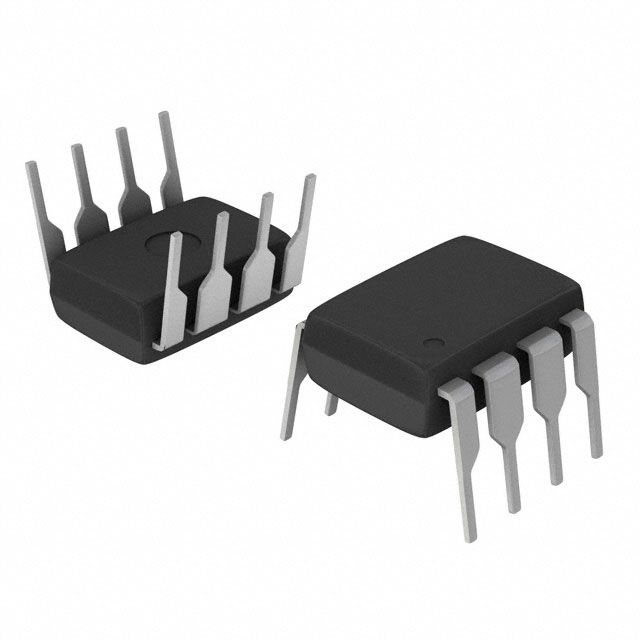
The LMC7111AIN is a general-purpose operational amplifier manufactured by Texas Instruments, featuring rail-to-rail output capability in an 8-PDIP through-hole package. This device is classified as obsolete, which necessitates identification of functionally compatible substitute components for ongoing design support and production continuity. The LMC7111AIN operates across a 2.5V to 11V supply range with a slew rate of 0.03V/µs and gain bandwidth product of 50 kHz, making it suitable for low-speed, low-power analog signal processing applications.
Substiute Parts
Key Parameters
| Parameter | Value | Unit |
|---|---|---|
| Manufacturer Part Number | LMC7111AIN | — |
| Manufacturer | Texas Instruments | — |
| Category | Linear, Amplifiers | — |
| Amplifier Type | General Purpose | — |
| Number of Circuits | 1 | — |
| Output Type | Rail-to-Rail | — |
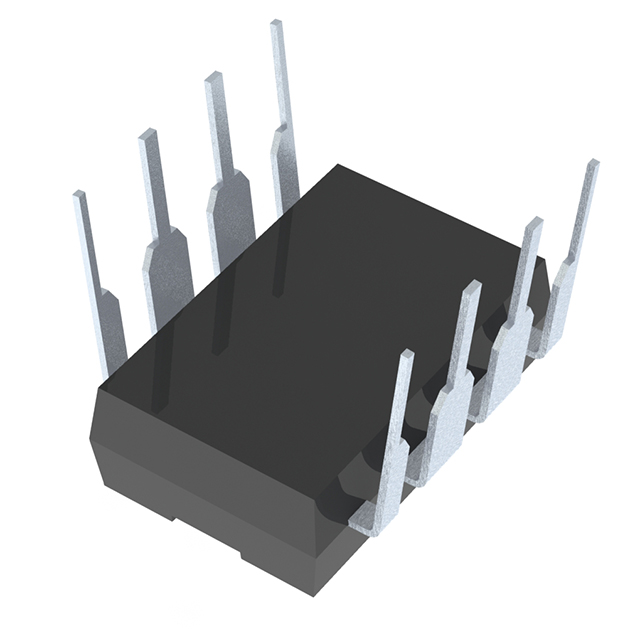
| Package / Case | 8-DIP (0.300", 7.62mm) | — |
| Mounting Type | Through Hole | — |
| Operating Temperature Range | -40°C to 85°C | — |
| Product Status | Obsolete | — |
| Voltage - Supply Span (Min) | 2.5 | V |
| Voltage - Supply Span (Max) | 11 | V |
| Slew Rate | 0.03 | V/µs |
| Gain Bandwidth Product | 50 | kHz |
| Current - Input Bias | 0.1 | pA |
| Voltage - Input Offset | 900 | µV |
| Current - Supply | 25 | µA |
| Current - Output / Channel | 30 | mA |
| RoHS Status | RoHS non-compliant | — |
| Moisture Sensitivity Level (MSL) | 1 (Unlimited) | — |
Substitute Part Grouping Explanation
Substitution of the LMC7111AIN is determined by compatibility across the following critical parameters:
Package and Mounting Compatibility: The substitute must utilize the 8-DIP (0.300", 7.62mm) through-hole package to ensure direct PCB footprint compatibility without layout modifications.
Functional Classification: The substitute must be a single-circuit operational amplifier with rail-to-rail output capability to maintain signal swing characteristics within the same application envelope.
Supply Voltage Range: The substitute must operate within or encompass the 2.5V to 11V supply span of the original device. Substitutes with extended supply ranges remain compatible provided the minimum and maximum ratings do not fall below the original specifications.
Operating Temperature Range: The substitute must support the -40°C to 85°C operating temperature range to ensure thermal compatibility in the target application environment.
Electrical Performance Envelope: While the substitute may exceed the original device's slew rate, gain bandwidth product, and other performance metrics, it must not introduce incompatibilities due to significantly different input bias current, input offset voltage, or output current characteristics that would alter circuit behavior.
The AD820ANZ meets these substitution criteria through identical package geometry, single-circuit configuration, rail-to-rail output, compatible temperature range, and extended supply voltage capability (5V to 36V).
Parameter Comparison
| Parameter | LMC7111AIN | AD820ANZ | Unit |
|---|---|---|---|
| Manufacturer | Texas Instruments | Analog Devices Inc. | — |
| Amplifier Type | General Purpose | J-FET | — |
| Number of Circuits | 1 | 1 | — |
| Output Type | Rail-to-Rail | Rail-to-Rail | — |
| Package / Case | 8-DIP (0.300", 7.62mm) | 8-DIP (0.300", 7.62mm) | — |
| Mounting Type | Through Hole | Through Hole | — |
| Operating Temperature Range | -40°C to 85°C | -40°C to 85°C | — |
| Product Status | Obsolete | Active | — |
| Voltage - Supply Span (Min) | 2.5 | 5 | V |
| Voltage - Supply Span (Max) | 11 | 36 | V |
| Slew Rate | 0.03 | 3 | V/µs |
| Gain Bandwidth Product | 50 | 1800 | kHz |
| Current - Input Bias | 0.1 | 2 | pA |
| Voltage - Input Offset | 900 | 400 | µV |
| Current - Supply | 25 | 700 | µA |
| Current - Output / Channel | 30 | 20 | mA |
| RoHS Status | RoHS non-compliant | ROHS3 Compliant | — |
| Moisture Sensitivity Level (MSL) | 1 (Unlimited) | 1 (Unlimited) | — |
Engineering Selection Recommendations
Product Status Consideration: The LMC7111AIN is classified as obsolete, whereas the AD820ANZ maintains active product status with ongoing manufacturer support and availability. Selection of the AD820ANZ ensures access to current production inventory and technical documentation.
Compliance and Certification: The AD820ANZ is ROHS3 compliant, whereas the LMC7111AIN is RoHS non-compliant. Organizations operating under RoHS regulatory requirements must transition to the AD820ANZ to maintain compliance with applicable environmental and material restrictions directives.
Supply Voltage Envelope: The AD820ANZ operates across a 5V to 36V supply range, which encompasses the original 2.5V to 11V specification. Applications requiring operation below 5V supply voltage cannot utilize the AD820ANZ as a direct substitute and require alternative component selection.
Electrical Performance: The AD820ANZ exhibits superior electrical performance characteristics, including higher slew rate (3V/µs versus 0.03V/µs), significantly higher gain bandwidth product (1.8 MHz versus 50 kHz), and lower input offset voltage (400 µV versus 900 µV). These enhancements do not introduce incompatibility in applications designed for the LMC7111AIN and provide performance margin for signal processing tasks.
Supply Current: The AD820ANZ requires higher supply current (700 µA versus 25 µA). Power budget analysis is necessary for battery-powered or low-power applications to confirm acceptability of increased quiescent current consumption.
Frequently Asked Questions (FAQ)
Q: Can the AD820ANZ directly replace the LMC7111AIN in existing PCB designs?
A: Yes, the AD820ANZ is a direct pin-compatible replacement in terms of package geometry (8-DIP through-hole) and pinout. No PCB layout modifications are required. However, applications operating at supply voltages below 5V cannot use the AD820ANZ, as its minimum supply voltage is 5V compared to the LMC7111AIN's 2.5V minimum.
Q: What are the key differences between these two operational amplifiers?
A: The primary differences are amplifier topology (general-purpose versus J-FET input stage), product status (obsolete versus active), supply voltage range (2.5V–11V versus 5V–36V), and performance metrics. The AD820ANZ provides higher slew rate, greater gain bandwidth product, lower input offset voltage, and improved input bias current characteristics. The LMC7111AIN consumes significantly less supply current (25 µA versus 700 µA).
Q: Is the AD820ANZ suitable for low-power applications?
A: The AD820ANZ is not optimal for ultra-low-power designs due to its 700 µA supply current requirement compared to the LMC7111AIN's 25 µA. Applications with strict power consumption constraints should evaluate alternative components or confirm that the increased current draw is acceptable within the system power budget.
Q: What compliance advantages does the AD820ANZ offer?
A: The AD820ANZ is ROHS3 compliant, whereas the LMC7111AIN is RoHS non-compliant. Organizations subject to RoHS directives must transition to compliant components. Both devices share identical moisture sensitivity levels (MSL 1, Unlimited) and REACH unaffected status.
Q: Are there supply voltage limitations when substituting the AD820ANZ?
A: Yes. The AD820ANZ minimum supply voltage is 5V, whereas the LMC7111AIN operates from 2.5V. Applications requiring operation below 5V supply voltage cannot use the AD820ANZ and require alternative component selection. The maximum supply voltage of the AD820ANZ (36V) exceeds the LMC7111AIN (11V), providing extended operating range for higher-voltage applications.
Q: How do the performance characteristics compare?
A: The AD820ANZ significantly outperforms the LMC7111AIN in slew rate (3V/µs versus 0.03V/µs, a 100× improvement) and gain bandwidth product (1.8 MHz versus 50 kHz, a 36× improvement). Input offset voltage is lower in the AD820ANZ (400 µV versus 900 µV). These performance enhancements are beneficial for signal fidelity and do not introduce incompatibility in applications designed for the slower LMC7111AIN.
Q: What is the packaging and mounting compatibility status?
A: Both devices utilize identical 8-DIP (0.300", 7.62mm) through-hole packages with matching pinouts. No PCB modifications, rework, or design changes are necessary from a mechanical or electrical connectivity standpoint. Both devices are supplied in through-hole mounting format suitable for conventional PCB assembly processes.
Alternative Parts

SJ6012L2TP
Littelfuse Inc.
6 Alternative Parts

JMK107BBJ476MA-RE
Taiyo Yuden
10 Alternative Parts

GMK107BBJ475MA-T
Taiyo Yuden
5 Alternative Parts
SJ6020N2ARP
Littelfuse Inc.
3 Alternative Parts
SJ6025R2ATP
Littelfuse Inc.
4 Alternative Parts

2474-05L
API Delevan Inc.
1 Alternative Parts

4590R-684K
API Delevan Inc.
1 Alternative Parts

CM6560R-334
API Delevan Inc.
1 Alternative Parts

CM6460-104
API Delevan Inc.
1 Alternative Parts

5526-12
API Delevan Inc.
1 Alternative Parts