



Request Quote
(Ships tomorrow)
LMC6464BIM CMOS Amplifier Equivalent & Substitute Parts
Part Overview
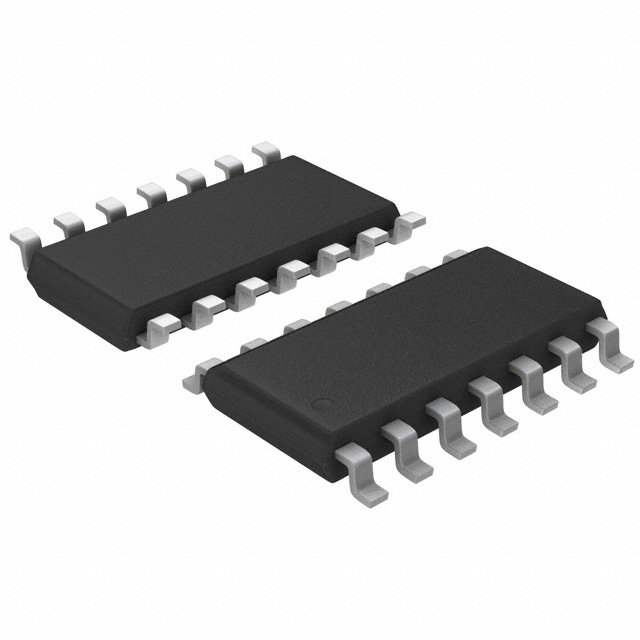
The LMC6464BIM is a CMOS amplifier integrated circuit containing four independent operational amplifier circuits in a 14-SOIC surface mount package. Manufactured by Texas Instruments, this device features rail-to-rail output capability and operates across a 3V to 15.5V supply voltage range with an operating temperature range of -40°C to 85°C.
The LMC6464BIM is classified as an obsolete product. Due to its discontinued status, component sourcing requires identification of functionally equivalent alternatives that maintain electrical and mechanical compatibility with existing designs. Substitute parts must satisfy the same package footprint, pin configuration, and core electrical specifications to ensure direct replacement capability.
Substiute Parts
Key Parameters
| Parameter | Value |
|---|---|
| Manufacturer Part Number | LMC6464BIM |
| Manufacturer | Texas Instruments |
| Category | Linear, Amplifiers |
| Description | IC CMOS 4 CIRCUIT 14SOIC |
| Amplifier Type | CMOS |
| Number of Circuits | 4 |
| Output Type | Rail-to-Rail |
| Package / Case | 14-SOIC (0.154", 3.90mm Width) |
| Mounting Type | Surface Mount |
| Voltage - Supply Span (Min) | 3 V |
| Voltage - Supply Span (Max) | 15.5 V |
| Operating Temperature | -40°C ~ 85°C (TJ) |
| Product Status | Obsolete |
Substitute Part Grouping Explanation
Substitution of the LMC6464BIM is determined by the following critical parameters:
Mechanical Compatibility:
- Package type: 14-SOIC surface mount configuration
- Pin count: 14 pins
- Package dimensions: 0.154" width (3.90mm)
Electrical Compatibility:
- Circuit count: 4 independent amplifier circuits
- Output configuration: Rail-to-rail capability
- Supply voltage range: Minimum 3V, maximum 15.5V or higher
- Amplifier type: CMOS technology
Functional Compatibility:
- Pinout arrangement must match 14-SOIC standard
- All four circuits must be independently functional
- Input and output electrical characteristics must support the application requirements
Substitute parts are grouped into two categories: direct packaging equivalents and functionally compatible alternatives. Direct equivalents maintain identical or superior electrical performance within the same package footprint. Functionally compatible alternatives provide equivalent circuit functionality with enhanced performance characteristics while maintaining mechanical compatibility.
Parameter Comparison
| Parameter | LMC6464BIM | LMC6464BIM/NOPB | TS914AIDT | TS914AIYDT | TS914IDT |
|---|---|---|---|---|---|
| Manufacturer | Texas Instruments | Texas Instruments | STMicroelectronics | STMicroelectronics | STMicroelectronics |
| Number of Circuits | 4 | 4 | 4 | 4 | 4 |
| Amplifier Type | CMOS | CMOS | CMOS | CMOS | CMOS |
| Output Type | Rail-to-Rail | Rail-to-Rail | Rail-to-Rail | Rail-to-Rail | Rail-to-Rail |
| Package / Case | 14-SOIC | 14-SOIC | 14-SOIC | 14-SOIC | 14-SOIC |
| Mounting Type | Surface Mount | Surface Mount | Surface Mount | Surface Mount | Surface Mount |
| Voltage - Supply Span (Min) | 3 V | 3 V | 2.7 V | 2.7 V | 2.7 V |
| Voltage - Supply Span (Max) | 15.5 V | 15.5 V | 16 V | 16 V | 16 V |
| Slew Rate | 0.028 V/µs | 0.028 V/µs | 1 V/µs | 1 V/µs | 1 V/µs |
| Gain Bandwidth Product | 50 kHz | 50 kHz | 1.4 MHz | 1.4 MHz | 1.4 MHz |
| Current - Input Bias | 0.15 pA | 0.15 pA | 1 pA | 1 pA | 1 pA |
| Voltage - Input Offset | 250 µV | 250 µV | 5 mV | 5 mV | 10 mV |
| Current - Supply | 90 µA | 90 µA | 230 µA | 230 µA | 230 µA |
| Current - Output / Channel | 75 mA | 75 mA | 60 mA | 60 mA | 60 mA |
| Operating Temperature | -40°C ~ 85°C | -40°C ~ 85°C | -40°C ~ 125°C | -40°C ~ 125°C | -40°C ~ 125°C |
| Product Status | Obsolete | Obsolete | Active | Active | Active |
| RoHS Status | Non-compliant | ROHS3 Compliant | ROHS3 Compliant | ROHS3 Compliant | ROHS3 Compliant |
Engineering Selection Recommendations
Direct Packaging Equivalent:
LMC6464BIM/NOPB represents the direct equivalent to LMC6464BIM with identical electrical specifications and 14-SOIC package configuration. This part maintains the same supply voltage range (3V to 15.5V), slew rate (0.028V/µs), and gain bandwidth product (50 kHz). The primary distinction is packaging format (Tube versus standard packaging) and improved RoHS3 compliance status. This substitute is appropriate for applications requiring exact electrical performance matching.
Active Product Alternatives:
The TS914AIDT, TS914AIYDT, and TS914IDT manufactured by STMicroelectronics are active products offering enhanced electrical performance within the same 14-SOIC package footprint. These devices provide:
- Extended supply voltage range (2.7V to 16V) supporting broader application requirements
- Improved slew rate (1V/µs versus 0.028V/µs) enabling faster signal processing
- Higher gain bandwidth product (1.4 MHz versus 50 kHz) for increased frequency response
- Extended operating temperature range (-40°C to 125°C versus -40°C to 85°C)
- AEC-Q100 automotive qualification and ROHS3 compliance
These STMicroelectronics alternatives are suitable for new designs or redesigns where enhanced performance and long-term product availability are required. The TS914 series maintains mechanical and pinout compatibility while delivering superior electrical characteristics.
Compliance Considerations:
The LMC6464BIM exhibits RoHS non-compliance and REACH affected status. All substitute parts listed (LMC6464BIM/NOPB, TS914AIDT, TS914AIYDT, TS914IDT) achieve ROHS3 compliance and REACH unaffected status, supporting regulatory requirements for new production and long-term supply chain sustainability.
Frequently Asked Questions (FAQ)
Q: Can TS914AIDT directly replace LMC6464BIM in existing designs?
A: Yes. Both devices utilize identical 14-SOIC package configuration with matching pin assignments. The TS914AIDT provides superior electrical performance (higher slew rate, increased bandwidth, extended temperature range) while maintaining mechanical compatibility. No PCB layout modifications are required.
Q: What are the key electrical differences between LMC6464BIM and TS914 series substitutes?
A: The primary differences are slew rate (0.028V/µs versus 1V/µs), gain bandwidth product (50 kHz versus 1.4 MHz), and operating temperature range (-40°C to 85°C versus -40°C to 125°C). The TS914 series exhibits higher input bias current (1 pA versus 0.15 pA) and input offset voltage (5-10 mV versus 250 µV). These differences indicate the TS914 series is optimized for higher-speed applications, while the LMC6464BIM is suited for low-speed, low-power applications.
Q: Is LMC6464BIM/NOPB identical to LMC6464BIM?
A: LMC6464BIM/NOPB maintains identical electrical specifications and package type (14-SOIC). The primary difference is packaging format (Tube packaging) and improved RoHS3 compliance. This part is appropriate for applications requiring exact electrical performance matching with improved regulatory compliance.
Q: What does the packaging designation "Cut Tape (CT) & Digi-Reel®" mean for TS914AIDT?
A: This designation indicates the TS914AIDT is available in cut tape format for individual component handling and Digi-Reel® format for automated assembly processes. Both formats contain identical components in the same 14-SOIC package.
Q: Are there temperature range limitations when substituting LMC6464BIM with TS914 series?
A: The LMC6464BIM operates to 85°C maximum junction temperature. The TS914 series extends to 125°C. For applications operating near the LMC6464BIM temperature limit, the TS914 series provides additional thermal margin. Conversely, applications with strict temperature requirements below 85°C can utilize either device.
Q: What is the significance of AEC-Q100 qualification on TS914 series parts?
A: AEC-Q100 qualification indicates the TS914 series meets automotive industry reliability and quality standards. This certification is relevant for automotive applications or designs requiring automotive-grade component reliability. The LMC6464BIM does not carry this qualification.
Q: Can TS914IDT substitute for TS914AIDT?
A: Yes. Both devices share identical package, pinout, and core electrical specifications. The primary difference is input offset voltage specification (10 mV for TS914IDT versus 5 mV for TS914AIYDT). Selection depends on application offset voltage tolerance requirements.
Alternative Parts

SJ6012L2TP
Littelfuse Inc.
6 Alternative Parts

JMK107BBJ476MA-RE
Taiyo Yuden
10 Alternative Parts

GMK107BBJ475MA-T
Taiyo Yuden
5 Alternative Parts
SJ6020N2ARP
Littelfuse Inc.
3 Alternative Parts
SJ6025R2ATP
Littelfuse Inc.
4 Alternative Parts

2474-05L
API Delevan Inc.
1 Alternative Parts

4590R-684K
API Delevan Inc.
1 Alternative Parts

CM6560R-334
API Delevan Inc.
1 Alternative Parts

CM6460-104
API Delevan Inc.
1 Alternative Parts

5526-12
API Delevan Inc.
1 Alternative Parts