


Request Quote
(Ships tomorrow)
LM5110-3SD Low-Side Gate Driver IC Equivalent & Substitute Parts
Part Overview
The LM5110-3SD is a low-side gate driver IC manufactured by Texas Instruments, designed for driving N-Channel MOSFETs in power management applications. This device features independent dual-channel configuration with inverting and non-inverting input types, operating across a 4.6V to 14V supply voltage range. The LM5110-3SD is currently in Last Time Buy status, making identification of functionally equivalent alternatives essential for design continuity and long-term component sourcing strategy.
Substiute Parts
Key Parameters
| Parameter | LM5110-3SD Value |
|---|---|
| Manufacturer | Texas Instruments |
| Category | Power Management (PMIC) |
| Driven Configuration | Low-Side |
| Number of Drivers | 2 |
| Gate Type | N-Channel MOSFET |
| Voltage - Supply | 4.6V ~ 14V |
| Current - Peak Output (Source, Sink) | 3A, 5A |
| Input Type | Inverting, Non-Inverting |
| Operating Temperature | -40°C ~ 125°C (TJ) |
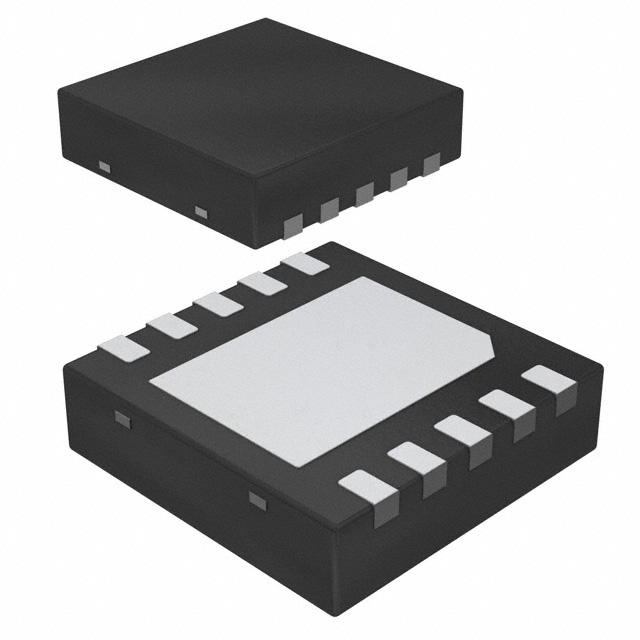
| Package / Case | 10-WDFN Exposed Pad |
| RoHS Status | ROHS3 Compliant |
| Moisture Sensitivity Level (MSL) | 1 (Unlimited) |
Substitute Part Grouping Explanation
Substitution eligibility for the LM5110-3SD is determined by the following critical parameters:
- Driven Configuration: Must be Low-Side
- Number of Drivers: Must be 2 independent channels
- Input Type: Must support both Inverting and Non-Inverting configurations
- Gate Type Compatibility: Must support N-Channel MOSFET driving
- Supply Voltage Range: Must encompass or overlap the 4.6V ~ 14V operating window
- Peak Output Current: Source and sink current ratings must meet or exceed application requirements
- Operating Temperature Range: Must support -40°C ~ 125°C minimum
- Compliance: RoHS3 and REACH status must match or exceed the original specification
The UCC27425DR meets these substitution criteria as a functionally equivalent low-side gate driver with dual independent channels, compatible input configurations, and overlapping electrical specifications.
Parameter Comparison
| Parameter | LM5110-3SD | UCC27425DR | Compatibility Notes |
|---|---|---|---|
| Manufacturer | Texas Instruments | Texas Instruments | Same manufacturer |
| Driven Configuration | Low-Side | Low-Side | Identical |
| Number of Drivers | 2 | 2 | Identical |
| Gate Type | N-Channel MOSFET | N-Channel, P-Channel MOSFET | UCC27425DR supports extended gate type compatibility |
| Voltage - Supply | 4.6V ~ 14V | 4V ~ 15V | UCC27425DR range overlaps; minimum supply raised to 4V |
| Logic Voltage - VIL, VIH | 0.8V, 2.2V | 1V, 2V | Slight variation in logic thresholds |
| Current - Peak Output (Source, Sink) | 3A, 5A | 4A, 4A | UCC27425DR source current higher; sink current lower |
| Input Type | Inverting, Non-Inverting | Inverting, Non-Inverting | Identical |
| Rise / Fall Time (Typ) | 14ns, 12ns | 20ns, 15ns | LM5110-3SD has faster switching characteristics |
| Operating Temperature | -40°C ~ 125°C (TJ) | -40°C ~ 125°C (TA) | Identical range; different measurement reference |
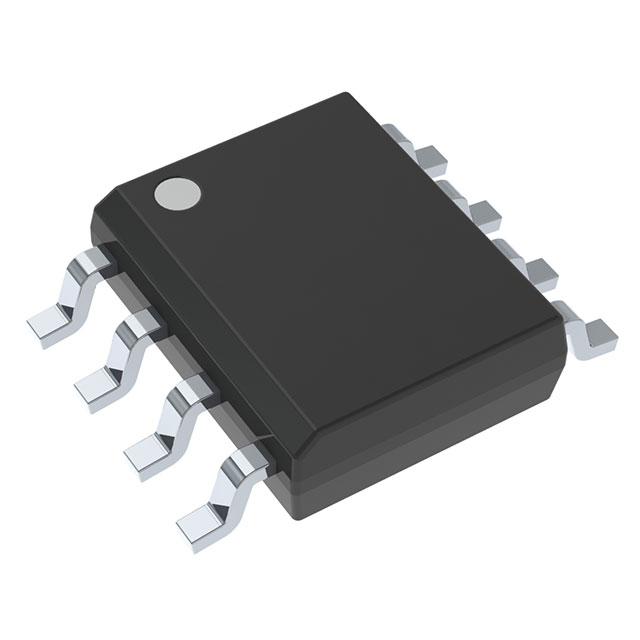
| Package / Case | 10-WDFN Exposed Pad | 8-SOIC (0.154", 3.90mm Width) | Different package; PCB layout modification required |
| RoHS Status | ROHS3 Compliant | ROHS3 Compliant | Identical |
| Moisture Sensitivity Level (MSL) | 1 (Unlimited) | 1 (Unlimited) | Identical |
Engineering Selection Recommendations
The UCC27425DR is a functionally equivalent substitute for the LM5110-3SD based on the following engineering criteria:
Both devices are manufactured by Texas Instruments and maintain identical RoHS3 and REACH compliance status. Both support dual independent low-side gate driver channels with inverting and non-inverting input configurations, operating across overlapping supply voltage ranges and temperature specifications.
Key design considerations for substitution:
- Package Change: The UCC27425DR uses 8-SOIC packaging versus the 10-WDFN of the LM5110-3SD, requiring PCB layout modification and footprint redesign.
- Supply Voltage Minimum: The UCC27425DR minimum supply voltage is 4V compared to 4.6V for the LM5110-3SD. Applications operating below 4V require the original LM5110-3SD.
- Output Current Asymmetry: The UCC27425DR provides 4A source and 4A sink current, compared to 3A source and 5A sink for the LM5110-3SD. Applications requiring 5A sink current must use the LM5110-3SD.
- Switching Speed: The LM5110-3SD exhibits faster rise and fall times (14ns/12ns) compared to the UCC27425DR (20ns/15ns). High-frequency switching applications may require the original device.
- Product Status: The LM5110-3SD is Last Time Buy, while the UCC27425DR is Active, supporting long-term availability for new designs.
Frequently Asked Questions (FAQ)
Q: Can the UCC27425DR directly replace the LM5110-3SD without PCB modification?
A: No. The UCC27425DR uses 8-SOIC packaging while the LM5110-3SD uses 10-WDFN Exposed Pad packaging. PCB footprint redesign and layout modification are required. Pin-to-pin compatibility does not exist between these packages.
Q: What is the minimum supply voltage difference between these devices?
A: The LM5110-3SD operates from 4.6V minimum supply voltage, while the UCC27425DR requires 4V minimum. Applications operating in the 4.6V to 4V range must use the LM5110-3SD.
Q: Are the output current ratings equivalent?
A: No. The LM5110-3SD provides 3A source and 5A sink current. The UCC27425DR provides 4A source and 4A sink current. Applications requiring 5A sink current capability must use the LM5110-3SD. The UCC27425DR offers higher source current capability at 4A versus 3A.
Q: Do both devices support the same input configurations?
A: Yes. Both the LM5110-3SD and UCC27425DR support independent dual channels with inverting and non-inverting input types, maintaining identical functional input flexibility.
Q: What is the significance of the Last Time Buy status for the LM5110-3SD?
A: Last Time Buy status indicates that Texas Instruments will discontinue production of the LM5110-3SD. New designs should transition to the UCC27425DR or alternative active devices to ensure long-term component availability and supply chain continuity.
Q: Are there differences in switching speed between these devices?
A: Yes. The LM5110-3SD has typical rise and fall times of 14ns and 12ns respectively. The UCC27425DR has typical rise and fall times of 20ns and 15ns respectively. Applications requiring faster switching transitions should use the LM5110-3SD.
Q: Do both devices meet the same compliance standards?
A: Yes. Both the LM5110-3SD and UCC27425DR are ROHS3 compliant, REACH unaffected, and carry MSL 1 (Unlimited) moisture sensitivity ratings, maintaining identical regulatory and environmental compliance.
Alternative Parts

SJ6012L2TP
Littelfuse Inc.
6 Alternative Parts

JMK107BBJ476MA-RE
Taiyo Yuden
10 Alternative Parts

GMK107BBJ475MA-T
Taiyo Yuden
5 Alternative Parts
SJ6020N2ARP
Littelfuse Inc.
3 Alternative Parts
SJ6025R2ATP
Littelfuse Inc.
4 Alternative Parts

2474-05L
API Delevan Inc.
1 Alternative Parts

4590R-684K
API Delevan Inc.
1 Alternative Parts

CM6560R-334
API Delevan Inc.
1 Alternative Parts

CM6460-104
API Delevan Inc.
1 Alternative Parts

5526-12
API Delevan Inc.
1 Alternative Parts