


Request Quote
(Ships tomorrow)
LM2902AS14-13 Equivalent & Substitute Parts
Part Overview
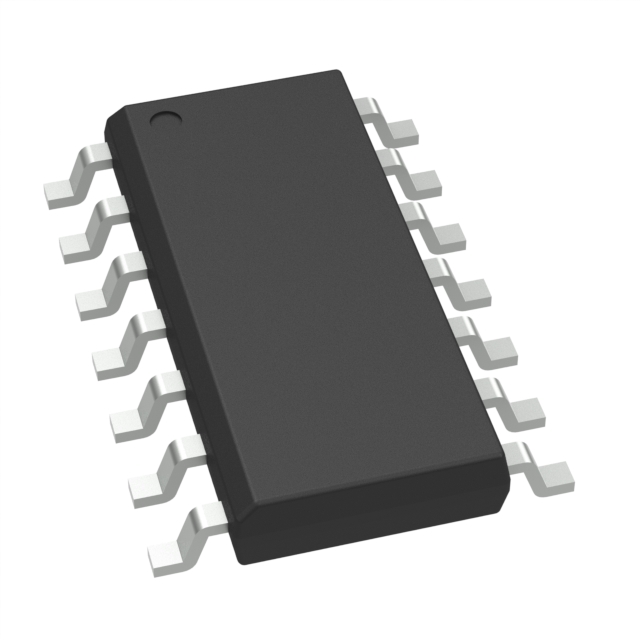
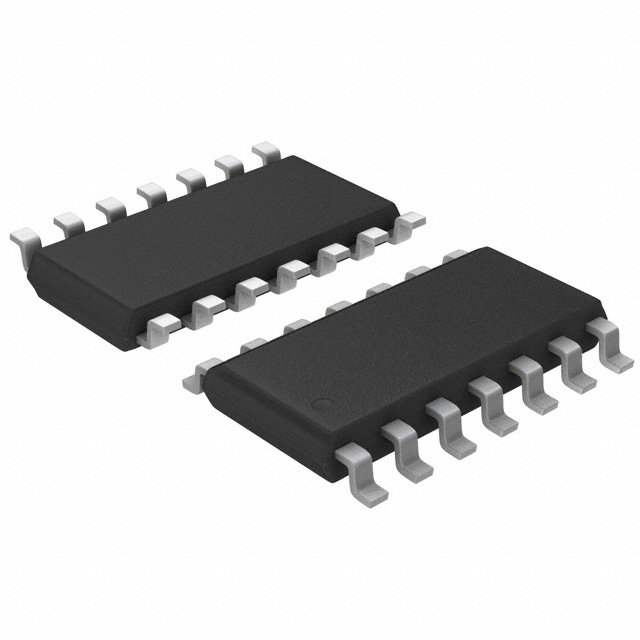
The LM2902AS14-13 is a general-purpose operational amplifier manufactured by Diodes Incorporated, featuring four independent amplifier circuits in a 14-SOIC surface mount package. This device is classified as Active product status and is RoHS3 compliant. The LM2902AS14-13 operates across a wide supply voltage range of 3V to 36V and maintains functionality across industrial temperature ranges from -40°C to 125°C. Substitute parts are identified when equivalent functional performance is required, packaging compatibility is maintained, and electrical parameters fall within acceptable operating ranges for the application.
Substiute Parts
Key Parameters
| Parameter | Value | Unit |
|---|---|---|
| Amplifier Type | General Purpose | — |
| Number of Circuits | 4 | — |
| Package / Case | 14-SOIC (0.154", 3.90mm Width) | — |
| Mounting Type | Surface Mount | — |
| Slew Rate | 0.3 | V/µs |
| Gain Bandwidth Product | 700 | kHz |
| Current - Input Bias | 20 | nA |
| Voltage - Input Offset | 1 | mV |
| Current - Supply | 700 | µA (x4 Channels) |
| Current - Output / Channel | 40 | mA |
| Voltage - Supply Span (Min) | 3 | V |
| Voltage - Supply Span (Max) | 36 | V |
| Operating Temperature | -40°C ~ 125°C | — |
| RoHS Status | ROHS3 Compliant | — |
| REACH Status | REACH Unaffected | — |
Substitute Part Grouping Explanation
Substitute parts for the LM2902AS14-13 are qualified based on the following criteria:
Functional Equivalence: All substitute parts contain four independent amplifier circuits in a 14-SOIC surface mount package, maintaining identical pinout and mechanical compatibility.
Electrical Parameter Compatibility: Substitute parts operate within the same supply voltage range (minimum 3V) and support the same output current per channel (40 mA). All parts maintain surface mount configuration with identical package dimensions (14-SOIC, 0.154", 3.90mm Width).
Compliance & Certification: All substitute parts maintain RoHS3 compliance and REACH Unaffected status, ensuring regulatory alignment with the original part.
Amplifier Type Variations: Substitute parts are classified into two categories:
- General Purpose amplifiers (LM324M/NOPB) with performance characteristics similar to the LM2902AS14-13
- J-FET amplifiers (TL034AIDR, TL034CDR) offering superior input bias current performance and higher slew rates
The key differentiating parameters for substitution selection are: supply voltage range, operating temperature range, input bias current, slew rate, and gain bandwidth product.
Parameter Comparison
| Parameter | LM2902AS14-13 | LM324M/NOPB | TL034AIDR | TL034CDR | Unit |
|---|---|---|---|---|---|
| Manufacturer | Diodes Incorporated | Texas Instruments | Texas Instruments | Texas Instruments | — |
| Amplifier Type | General Purpose | General Purpose | J-FET | J-FET | — |
| Number of Circuits | 4 | 4 | 4 | 4 | — |
| Package / Case | 14-SOIC (0.154", 3.90mm Width) | 14-SOIC (0.154", 3.90mm Width) | 14-SOIC (0.154", 3.90mm Width) | 14-SOIC (0.154", 3.90mm Width) | — |
| Mounting Type | Surface Mount | Surface Mount | Surface Mount | Surface Mount | — |
| Slew Rate | 0.3 | — | 5.1 | 5.1 | V/µs |
| Gain Bandwidth Product | 700 | 1000 | 1100 | 1100 | kHz |
| Current - Input Bias | 20 | 45 | 2 | 2 | nA / pA |
| Voltage - Input Offset | 1 | 2 | 0.58 | 0.79 | mV / µV |
| Current - Supply | 700 | 1500 | 870 | 870 | µA (x4 Channels) |
| Current - Output / Channel | 40 | 40 | 40 | 40 | mA |
| Voltage - Supply Span (Min) | 3 | 3 | 10 | 10 | V |
| Voltage - Supply Span (Max) | 36 | 32 | 30 | 30 | V |
| Operating Temperature | -40°C ~ 125°C | 0°C ~ 70°C | -40°C ~ 85°C | 0°C ~ 70°C | — |
| RoHS Status | ROHS3 Compliant | ROHS3 Compliant | ROHS3 Compliant | ROHS3 Compliant | — |
| REACH Status | REACH Unaffected | REACH Unaffected | REACH Unaffected | REACH Unaffected | — |
Engineering Selection Recommendations
LM324M/NOPB (Texas Instruments) is suitable for applications requiring general-purpose amplification with performance characteristics comparable to the LM2902AS14-13. This substitute maintains identical supply voltage minimum (3V) and output current specifications (40 mA per channel). The LM324M/NOPB operates across a narrower temperature range (0°C to 70°C) and maximum supply voltage (32V versus 36V), which must be verified against application requirements. This part is RoHS3 compliant and REACH Unaffected, maintaining regulatory alignment.
TL034AIDR (Texas Instruments) is qualified as a substitute for applications requiring superior input bias current performance (2 pA versus 20 nA) and higher slew rate (5.1 V/µs versus 0.3 V/µs). The TL034AIDR operates across a reduced temperature range (-40°C to 85°C) and requires a minimum supply voltage of 10V, which restricts use in low-voltage applications. This part is packaged in Tape & Reel format, RoHS3 compliant, and REACH Unaffected.
TL034CDR (Texas Instruments) provides equivalent J-FET amplifier performance to the TL034AIDR with identical electrical specifications. The TL034CDR operates across a narrower temperature range (0°C to 70°C) and is packaged in Cut Tape & Digi-Reel format. This part is RoHS3 compliant and REACH Unaffected. Selection between TL034AIDR and TL034CDR depends on packaging requirements and operating temperature specifications.
All substitute parts maintain identical pinout and mechanical compatibility with the LM2902AS14-13 in the 14-SOIC package. Selection must account for supply voltage range limitations, operating temperature requirements, and specific performance characteristics required by the application.
Frequently Asked Questions (FAQ)
Q: Can the LM324M/NOPB directly replace the LM2902AS14-13 in all applications?
A: The LM324M/NOPB maintains identical pinout and package configuration (14-SOIC), enabling direct physical replacement. However, the maximum supply voltage is limited to 32V compared to 36V for the LM2902AS14-13, and the operating temperature range is restricted to 0°C to 70°C. Applications requiring operation above 32V or below 0°C require verification of compatibility.
Q: What are the primary differences between general-purpose and J-FET amplifier substitutes?
A: General-purpose amplifiers (LM324M/NOPB) feature higher input bias current (45 nA) but lower slew rate (not specified). J-FET amplifiers (TL034AIDR, TL034CDR) provide significantly lower input bias current (2 pA) and higher slew rate (5.1 V/µs), making them suitable for high-impedance input applications and faster signal processing. J-FET substitutes require minimum supply voltage of 10V, restricting use in low-voltage circuits.
Q: Are all substitute parts RoHS3 compliant?
A: Yes, all identified substitute parts (LM324M/NOPB, TL034AIDR, TL034CDR) are RoHS3 compliant and REACH Unaffected, maintaining regulatory alignment with the LM2902AS14-13.
Q: What packaging formats are available for substitute parts?
A: The LM324M/NOPB is supplied in Tube packaging. The TL034AIDR is supplied in Tape & Reel (TR) format. The TL034CDR is supplied in Cut Tape (CT) & Digi-Reel format. All parts maintain identical 14-SOIC surface mount package configuration.
Q: Which substitute part is recommended for low-voltage applications below 10V?
A: The LM324M/NOPB supports operation at minimum supply voltage of 3V, identical to the LM2902AS14-13. The J-FET substitutes (TL034AIDR, TL034CDR) require minimum supply voltage of 10V and are not suitable for applications operating below this threshold.
Q: How do operating temperature ranges affect substitute part selection?
A: The LM2902AS14-13 operates from -40°C to 125°C. The LM324M/NOPB and TL034CDR operate from 0°C to 70°C, restricting use in extended temperature applications. The TL034AIDR operates from -40°C to 85°C, providing wider low-temperature coverage but not reaching the upper temperature limit of the original part. Application temperature requirements must be verified against each substitute's specifications.
Q: Can J-FET substitutes be used interchangeably with general-purpose substitutes?
A: J-FET and general-purpose amplifiers are not interchangeable due to different input bias current characteristics, slew rates, and minimum supply voltage requirements. Selection depends on specific application requirements for input impedance, signal speed, and supply voltage constraints.
Alternative Parts

SJ6012L2TP
Littelfuse Inc.
6 Alternative Parts

JMK107BBJ476MA-RE
Taiyo Yuden
10 Alternative Parts

GMK107BBJ475MA-T
Taiyo Yuden
5 Alternative Parts
SJ6020N2ARP
Littelfuse Inc.
3 Alternative Parts
SJ6025R2ATP
Littelfuse Inc.
4 Alternative Parts

2474-05L
API Delevan Inc.
1 Alternative Parts

4590R-684K
API Delevan Inc.
1 Alternative Parts

CM6560R-334
API Delevan Inc.
1 Alternative Parts

CM6460-104
API Delevan Inc.
1 Alternative Parts

5526-12
API Delevan Inc.
1 Alternative Parts