




Request Quote
(Ships tomorrow)
LM193J/883 Equivalent & Substitute Parts Reference
Part Overview
The LM193J/883 is a low-power, low-offset voltage dual comparator manufactured by Texas Instruments, designed for general-purpose applications requiring open-collector, rail-to-rail output configuration. This device operates across a wide supply voltage range of 2V to 36V (single supply) or ±1V to ±18V (dual supply), with maximum input offset voltage of 2mV at 5V and quiescent current not exceeding 2.5mA. The LM193J/883 is packaged in an 8-CDIP through-hole format and maintains Active product status with ROHS3 compliance.
Equivalent and substitute parts are identified based on matching functional specifications: dual-element general-purpose comparator topology, open-collector rail-to-rail output, compatible supply voltage ranges, and equivalent quiescent current characteristics. Substitutes may differ in packaging format (surface mount versus through-hole), input offset voltage tolerance, output current capability, and operating temperature range, provided these variations remain within acceptable design parameters for the application.
Substiute Parts
Key Parameters
| Parameter | LM193J/883 (Main Part) | Specification |
|---|---|---|
| Manufacturer | Texas Instruments | Primary reference |
| Number of Elements | 2 | Dual comparator configuration |
| Output Type | Open-Collector, Rail-to-Rail | Substitution-critical parameter |
| Voltage Supply (Single/Dual) | 2V ~ 36V / ±1V ~ 18V | Substitution-critical parameter |
| Input Offset Voltage (Max) | 2mV @ 5V | Precision specification |
| Input Bias Current (Max) | 1000pA @ 5V | Precision specification |
| Output Current (Typ) | 6mA | Drive capability |
| Quiescent Current (Max) | 2.5mA | Power consumption specification |
| Operating Temperature | -55°C ~ 125°C | Temperature range specification |
| Package / Case | 8-CDIP (0.300", 7.62mm) | Through-hole format |
| Mounting Type | Through Hole | Board assembly method |
| RoHS Status | ROHS3 Compliant | Environmental compliance |
Substitute Part Grouping Explanation
Substitute parts for the LM193J/883 are grouped according to the following substitution criteria, all strictly based on provided electrical and mechanical parameters:
Primary Substitution Criteria (Must Match):
- Dual-element general-purpose comparator topology
- Open-Collector, Rail-to-Rail output configuration
- Supply voltage range: 2V ~ 36V (single) or ±1V ~ ±18V (dual)
- Quiescent current maximum: 2.5mA
- ROHS3 compliance and EAR99 export classification
Secondary Compatibility Parameters (Allowable Variation):
- Input offset voltage: LM193J/883 specifies 2mV maximum; substitutes range from 5mV to 7mV maximum, representing acceptable tolerance variation for general-purpose applications
- Input bias current: LM193J/883 specifies 1000pA maximum; substitutes specify 0.25µA maximum, representing improved performance
- Output current: LM193J/883 specifies 6mA typical; substitutes range from 16mA to 20mA typical, representing increased drive capability
- Operating temperature: LM193J/883 specifies -55°C ~ 125°C; substitutes range from -40°C ~ 105°C to -40°C ~ 150°C, representing application-dependent variation
Packaging Variation Groups:
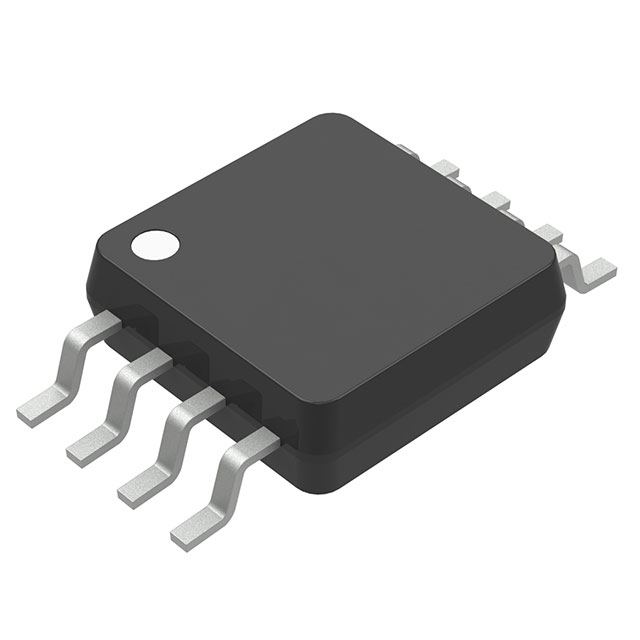
- Group 1 (Surface Mount MSOP/TSSOP): LM2903DGKR, LM2903DMR2G, LM2903YST – 8-MSOP or 8-TSSOP packages
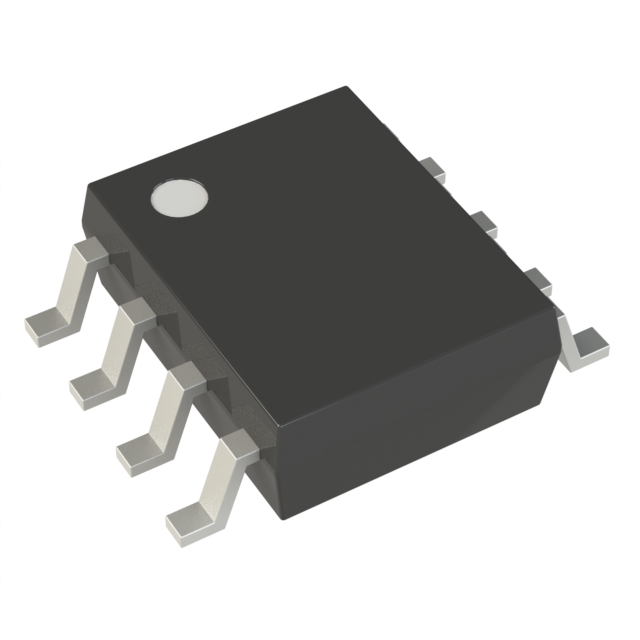
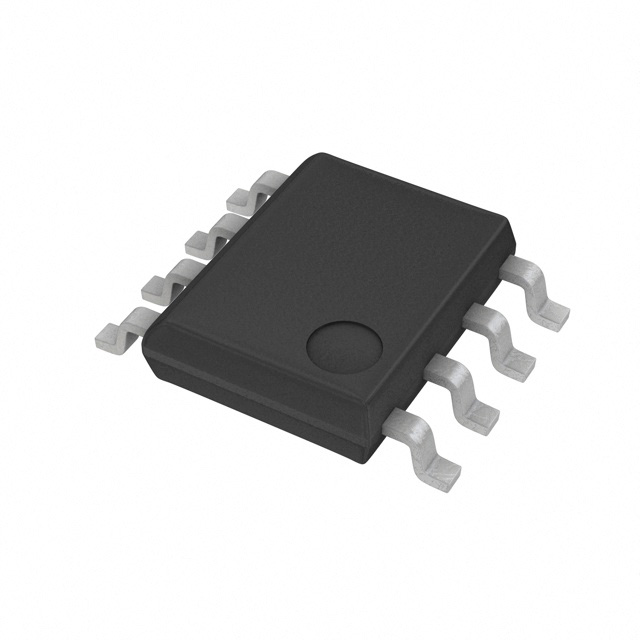
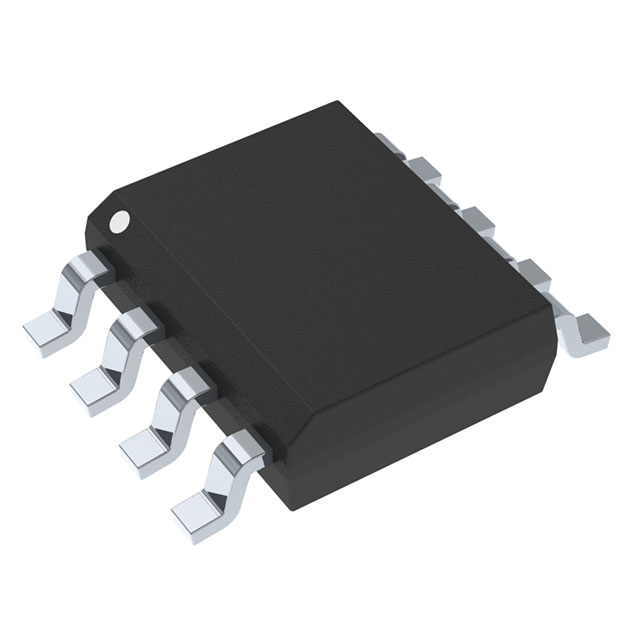
- Group 2 (Surface Mount SOIC): LM2903DR2G, LM2903HYDT, LM2903WDT, LM2903YDT, LM293DT, NCV2903DR2G – 8-SOIC packages
- Group 3 (Surface Mount UFSON): LM393QT – 8-UFSON (2x2) package
All substitute parts maintain the core functional equivalence required for direct circuit substitution within the specified parameter tolerances.
Parameter Comparison
| Part Number | Manufacturer | Package Type | Mounting | Supply Voltage | Input Offset (Max) | Input Bias (Max) | Output Current (Typ) | Quiescent (Max) | Temp Range | RoHS |
|---|---|---|---|---|---|---|---|---|---|---|
| LM193J/883 | Texas Instruments | 8-CDIP | Through Hole | 2V~36V / ±1V~18V | 2mV @ 5V | 1000pA @ 5V | 6mA | 2.5mA | -55°C ~ 125°C | ROHS3 |
| LM2903DGKR | Rohm Semiconductor | 8-MSOP | Surface Mount | 2V~36V / ±1V~18V | 7mV @ 5V | 0.25µA @ 5V | 16mA @ 5V | 2.5mA | -40°C ~ 125°C | ROHS3 |
| LM2903DMR2G | onsemi | 8-MSOP | Surface Mount | 2V~36V / ±1V~18V | 7mV @ 30V | 0.25µA @ 5V | 16mA @ 5V | 2.5mA | -40°C ~ 105°C | ROHS3 |
| LM2903DR2G | onsemi | 8-SOIC | Surface Mount | 2V~36V / ±1V~18V | 7mV @ 30V | 0.25µA @ 5V | 16mA @ 5V | 2.5mA | -40°C ~ 105°C | ROHS3 |
| LM2903HYDT | STMicroelectronics | 8-SOIC | Surface Mount | 2V~36V / ±1V~18V | 7mV @ 30V | 0.25µA @ 5V | 16mA @ 5V | 2.5mA | -40°C ~ 150°C | ROHS3 |
| LM2903WDT | STMicroelectronics | 8-SOIC | Surface Mount | 2V~36V / ±1V~18V | 7mV @ 30V | 0.25µA @ 5V | 20mA | 2.5mA | -40°C ~ 125°C | ROHS3 |
| LM2903YDT | STMicroelectronics | 8-SOIC | Surface Mount | 2V~36V / ±1V~18V | 7mV @ 5V | 0.25µA @ 5V | 16mA @ 5V | 2.5mA | -40°C ~ 125°C | ROHS3 |
| LM2903YST | STMicroelectronics | 8-MiniSO | Surface Mount | 2V~36V / ±1V~18V | 7mV @ 5V | 0.25µA @ 5V | 16mA @ 5V | 2.5mA | -40°C ~ 125°C | ROHS3 |
| LM293DT | STMicroelectronics | 8-SOIC | Surface Mount | 2V~36V / ±1V~18V | 5mV @ 30V | 0.25µA @ 5V | 18mA @ 5V | 2.5mA | -40°C ~ 105°C | ROHS3 |
| LM393QT | STMicroelectronics | 8-UFSON (2x2) | Surface Mount | 2V~36V / ±1V~18V | Not specified | Not specified | Not specified | 2.5mA | Not specified | ROHS3 |
| NCV2903DR2G | onsemi | 8-SOIC | Surface Mount | 2V~36V / ±1V~18V | 7mV @ 30V | 0.25µA @ 5V | 16mA @ 5V | 2.5mA | -40°C ~ 125°C | ROHS3 |
Engineering Selection Recommendations
For Through-Hole PCB Assembly: The LM193J/883 is the only substitute part in this reference set that maintains through-hole mounting compatibility. No direct through-hole equivalent is provided in the substitute list. If through-hole mounting is a design requirement, the LM193J/883 remains the specified component. Alternative through-hole comparators outside this reference set must be evaluated separately.
For Surface Mount PCB Assembly (SOIC Package): LM2903DR2G, LM2903HYDT, LM2903WDT, LM2903YDT, LM293DT, and NCV2903DR2G all provide 8-SOIC surface mount packages with electrical specifications compatible with the LM193J/883. These parts maintain the required supply voltage range, quiescent current specification, and ROHS3 compliance. Selection among these options depends on application-specific requirements:
- LM2903HYDT and NCV2903DR2G include AEC-Q100 automotive qualification, suitable for automotive-grade applications requiring extended temperature operation to 150°C and 125°C respectively.
- LM2903WDT provides maximum output current of 20mA, offering enhanced drive capability compared to the LM193J/883 baseline of 6mA.
- LM293DT specifies input offset voltage of 5mV at 30V, representing intermediate precision between the LM193J/883 and other LM2903 variants.
For Surface Mount PCB Assembly (MSOP/TSSOP Package): LM2903DGKR, LM2903DMR2G, and LM2903YST provide compact 8-MSOP or 8-TSSOP surface mount packages. These parts are suitable for space-constrained applications where SOIC footprint reduction is beneficial. LM2903YST includes AEC-Q100 automotive qualification.
For Surface Mount PCB Assembly (UFSON Package): LM393QT provides the most compact 8-UFSON (2x2) package format. Incomplete specification data for this part requires verification of input offset voltage, input bias current, and operating temperature range against application requirements before selection.
Compliance and Certification: All substitute parts maintain ROHS3 compliance and EAR99 export classification consistent with the LM193J/883. Parts designated with AEC-Q100 qualification (LM2903HYDT, LM2903YDT, LM2903YST, NCV2903DR2G) are suitable for automotive applications requiring formal qualification documentation.
Frequently Asked Questions (FAQ)
Q1: Can I substitute the LM193J/883 (through-hole CDIP package) with a surface mount equivalent?
A: Direct substitution requires PCB redesign to accommodate surface mount footprints. The substitute parts listed (SOIC, MSOP, TSSOP, UFSON packages) are electrically equivalent but require different PCB layout and assembly processes. Through-hole and surface mount packages are not interchangeable without board modification.
Q2: What is the significance of the input offset voltage difference between the LM193J/883 (2mV) and substitute parts (5mV to 7mV)?
A: Input offset voltage represents the differential voltage required at the comparator inputs to produce a defined output state. The LM193J/883 specifies 2mV maximum, while substitutes specify 5mV to 7mV maximum. This difference is acceptable for general-purpose comparator applications where precision requirements do not demand sub-2mV offset performance. Applications requiring offset voltage below 5mV should retain the LM193J/883 or verify substitute performance against specific circuit requirements.
Q3: Why do substitute parts specify lower input bias current (0.25µA) compared to the LM193J/883 (1000pA)?
A: Lower input bias current represents improved performance in substitute parts. The LM193J/883 specifies 1000pA (1nA) maximum, while substitutes specify 0.25µA (250nA) maximum. This represents a 250-fold difference. For applications sensitive to input bias current effects, the LM193J/883 provides superior performance. For general-purpose applications, the higher bias current of substitutes is typically acceptable.
Q4: What is the impact of operating temperature range differences on part selection?
A: The LM193J/883 operates from -55°C to 125°C. Substitute parts operate from -40°C to 105°C (standard industrial range) or -40°C to 150°C (extended automotive range). Selection depends on application environment: industrial applications typically require -40°C to 85°C or -40°C to 125°C; automotive applications require -40°C to 125°C or -40°C to 150°C. If the application requires operation below -40°C, the LM193J/883 is required. If operation above 125°C is required, only LM2903HYDT (-40°C to 150°C) qualifies.
Q5: Are all substitute parts ROHS3 compliant?
A: Yes. All substitute parts listed in this reference maintain ROHS3 compliance, consistent with the LM193J/883. ROHS3 compliance indicates restriction of hazardous substances in accordance with EU Directive 2011/65/EU and amendments.
Q6: Which substitute parts include automotive qualification?
A: LM2903HYDT, LM2903YDT, LM2903YST, and NCV2903DR2G include AEC-Q100 automotive qualification. These parts are suitable for automotive applications requiring formal qualification documentation and extended temperature operation. Non-qualified parts (LM2903DGKR, LM2903DMR2G, LM2903DR2G, LM293DT, LM393QT) are suitable for industrial and consumer applications.
Q7: What output current capability should I consider when selecting a substitute?
A: The LM193J/883 specifies 6mA typical output current. Substitute parts range from 16mA to 20mA typical. Higher output current capability allows direct driving of additional logic loads without intermediate buffering. If the application requires output current below 6mA, verify that substitute parts meet this requirement. If the application requires output current above 6mA, substitute parts with 16mA to 20mA capability provide enhanced performance.
Q8: Can I use LM393QT as a direct substitute if detailed specifications are not provided?
A: LM393QT is listed as a substitute part but lacks complete specification data for input offset voltage, input bias current, output current, and operating temperature range. Before selecting this part, obtain complete datasheet specifications from STMicroelectronics and verify that all parameters meet application requirements. Incomplete specification data represents a selection risk for critical applications.
Q9: What is the difference between LM2903 and LM293 base product numbers?
A: Both LM2903 and LM293 are dual general-purpose comparators with compatible electrical specifications. The LM293 (represented by LM293DT) specifies input offset voltage of 5mV at 30V, while LM2903 variants specify 7mV at 30V or 5V. The LM293 represents an intermediate precision option between the LM193J/883 and standard LM2903 variants. Selection depends on precision requirements and availability.
Q10: Are there any restrictions on mixing substitute parts from different manufacturers in the same design?
A: All substitute parts maintain compatible electrical specifications and ROHS3 compliance. Mixing parts from different manufacturers (Texas Instruments, Rohm Semiconductor, onsemi, STMicroelectronics) is permissible from an electrical standpoint. However, design documentation should clearly identify all part sources and manufacturers. For high-volume production, single-source qualification is recommended to ensure consistent supply chain performance and quality assurance.
Alternative Parts

SJ6012L2TP
Littelfuse Inc.
6 Alternative Parts

JMK107BBJ476MA-RE
Taiyo Yuden
10 Alternative Parts

GMK107BBJ475MA-T
Taiyo Yuden
5 Alternative Parts
SJ6020N2ARP
Littelfuse Inc.
3 Alternative Parts
SJ6025R2ATP
Littelfuse Inc.
4 Alternative Parts

2474-05L
API Delevan Inc.
1 Alternative Parts

4590R-684K
API Delevan Inc.
1 Alternative Parts

CM6560R-334
API Delevan Inc.
1 Alternative Parts

CM6460-104
API Delevan Inc.
1 Alternative Parts

5526-12
API Delevan Inc.
1 Alternative Parts