


Request Quote
(Ships tomorrow)
LM158N Equivalent & Substitute Parts
Part Overview
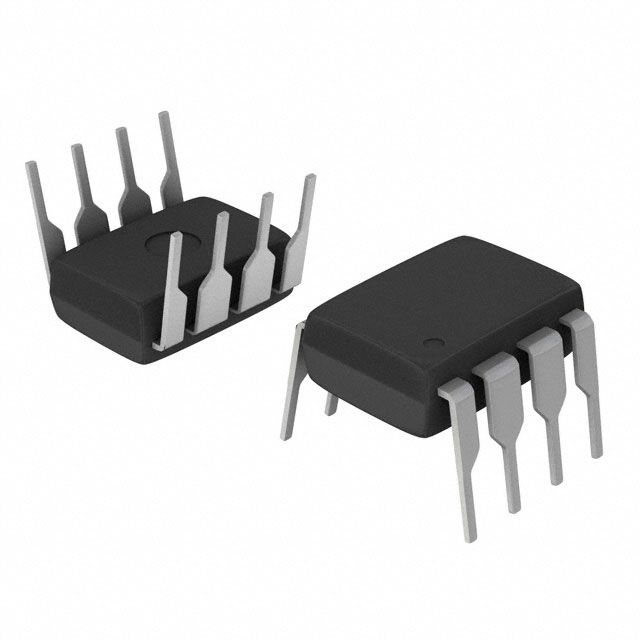
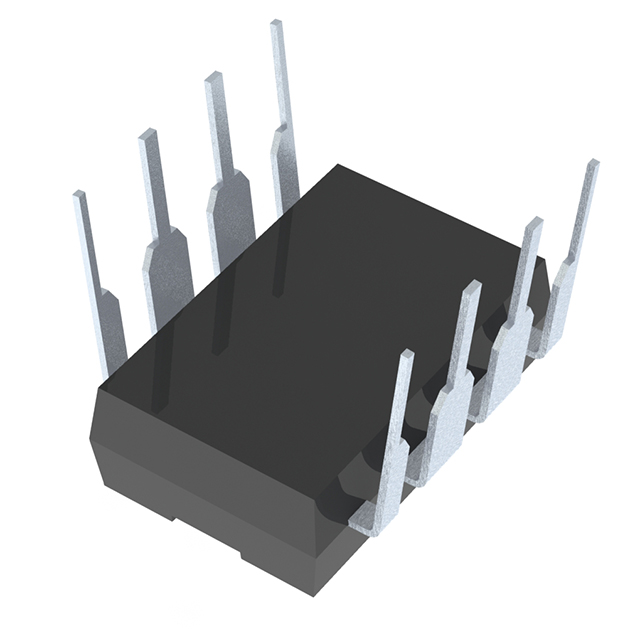
The LM158N is a general-purpose operational amplifier manufactured by STMicroelectronics, featuring two independent circuits in an 8-Mini DIP package. This device is classified as obsolete, though 19,686 units remain in stock. The LM158N is qualified to AEC-Q100 automotive standards and operates across an extended temperature range of -55°C to 125°C, making it suitable for demanding automotive and industrial applications.
Due to its obsolete status, identifying equivalent and substitute parts is essential for design continuity, long-term supply chain planning, and new product development. Substitute parts must maintain functional compatibility while meeting the same packaging, electrical performance, and compliance requirements.
Substiute Parts
Key Parameters
| Parameter | Value | Unit |
|---|---|---|
| Amplifier Type | General Purpose | — |
| Number of Circuits | 2 | — |
| Output Type | Differential | — |
| Slew Rate | 0.6 | V/µs |
| Gain Bandwidth Product | 1.1 | MHz |
| Current - Input Bias | 20 | nA |
| Voltage - Input Offset | 5 | mV |
| Current - Supply (x2 Channels) | 700 | µA |
| Current - Output / Channel | 40 | mA |
| Voltage - Supply Span (Min) | 3 | V |
| Voltage - Supply Span (Max) | 30 | V |
| Operating Temperature | -55 to 125 | °C |
| Package / Case | 8-DIP (0.300", 7.62mm) | — |
| Mounting Type | Through Hole | — |
| Grade | Automotive | — |
| Qualification | AEC-Q100 | — |
| RoHS Status | ROHS3 Compliant | — |
Substitute Part Grouping Explanation
Substitution of the LM158N is determined by the following critical parameters:
Mandatory Compatibility Criteria:
- Package type: 8-DIP (0.300", 7.62mm) through-hole mounting
- Number of circuits: 2 independent amplifier circuits
- Amplifier type: General Purpose
- Current output per channel: 40 mA minimum
- Supply voltage range: Minimum 3 V, Maximum 26 V or higher
- Input bias current: 20 nA or lower
- RoHS3 compliance
Performance Parameters Affecting Substitution:
- Slew rate: 0.3 V/µs or higher
- Gain bandwidth product: 700 kHz or higher
- Input offset voltage: 5 mV or lower
- Supply current: 700 µA or lower per channel pair
- Operating temperature range: Must support -40°C minimum and 85°C or higher maximum
The three substitute parts listed (LM2904P, OP213FPZ, OP290GPZ) share the same 8-DIP package and dual-circuit configuration. Each substitute meets the mandatory electrical and mechanical compatibility criteria, though with varying performance characteristics and product status classifications.
Parameter Comparison
| Parameter | LM158N (Main) | LM2904P | OP213FPZ | OP290GPZ |
|---|---|---|---|---|
| Manufacturer | STMicroelectronics | Texas Instruments | Analog Devices Inc. | Analog Devices Inc. |
| Product Status | Obsolete | Active | Active | Active |
| Number of Circuits | 2 | 2 | 2 | 2 |
| Amplifier Type | General Purpose | General Purpose | General Purpose | General Purpose |
| Slew Rate (V/µs) | 0.6 | 0.3 | 1.2 | 0.012 |
| Gain Bandwidth Product (MHz) | 1.1 | 0.7 | 3.4 | 0.02 |
| Current - Input Bias (nA) | 20 | 20 | 600 | 4 |
| Voltage - Input Offset (mV) | 5 | 3 | 0.25 | 0.125 |
| Current - Supply (µA, x2 Channels) | 700 | 500 | — | 25 |
| Current - Output / Channel (mA) | 40 | 40 | 40 | 40 |
| Voltage - Supply Span Min (V) | 3 | 3 | 4 | 1.6 |
| Voltage - Supply Span Max (V) | 30 | 26 | 36 | 36 |
| Operating Temperature (°C) | -55 to 125 | -40 to 125 | -40 to 85 | -40 to 85 |
| Package / Case | 8-DIP (0.300", 7.62mm) | 8-DIP (0.300", 7.62mm) | 8-DIP (0.300", 7.62mm) | 8-DIP (0.300", 7.62mm) |
| Mounting Type | Through Hole | Through Hole | Through Hole | Through Hole |
| RoHS Status | ROHS3 Compliant | ROHS3 Compliant | ROHS3 Compliant | ROHS3 Compliant |
Engineering Selection Recommendations
LM2904P (Texas Instruments)
The LM2904P is an active-status substitute offering direct functional compatibility with the LM158N. Both devices share identical input bias current (20 nA), matching supply voltage minimum (3 V), and output current capability (40 mA per channel). The LM2904P operates across -40°C to 125°C, covering the LM158N's upper temperature range. Supply current is reduced to 500 µA, providing improved power efficiency. The primary trade-off is lower slew rate (0.3 V/µs versus 0.6 V/µs) and reduced gain bandwidth product (700 kHz versus 1.1 MHz), which may impact high-frequency applications. The LM2904P is suitable for general-purpose amplification where extended temperature operation and reduced power consumption are beneficial.
OP213FPZ (Analog Devices Inc.)
The OP213FPZ is an active-status substitute featuring enhanced performance characteristics. It provides superior slew rate (1.2 V/µs) and gain bandwidth product (3.4 MHz), making it suitable for higher-frequency applications. The OP213FPZ incorporates rail-to-rail output capability and significantly lower input offset voltage (250 µV versus 5 mV). However, input bias current is elevated to 600 nA, and the maximum supply voltage is 36 V with minimum 4 V. Operating temperature range is -40°C to 85°C, which does not extend to the LM158N's upper limit of 125°C. The OP213FPZ is appropriate for applications requiring improved precision and bandwidth performance within the -40°C to 85°C operating window.
OP290GPZ (Analog Devices Inc.)
The OP290GPZ is an active-status substitute optimized for ultra-low power consumption and precision applications. It delivers the lowest supply current (25 µA total) and input bias current (4 nA), with exceptional input offset voltage (125 µV). The OP290GPZ operates across the widest supply voltage range (1.6 V to 36 V) and maintains -40°C to 85°C temperature operation. The significant trade-off is substantially reduced slew rate (0.012 V/µs) and gain bandwidth product (20 kHz), restricting use to low-frequency, precision signal conditioning applications. The OP290GPZ is suitable for battery-powered systems and precision measurement circuits where bandwidth requirements are minimal.
Compliance and Certification:
All three substitute parts maintain ROHS3 compliance and REACH unaffected status, matching the LM158N's regulatory requirements. The LM158N's AEC-Q100 automotive qualification is not replicated in the substitute parts; applications requiring automotive-grade qualification must retain the LM158N or source AEC-Q100 qualified alternatives.
Frequently Asked Questions (FAQ)
Q: Can the LM2904P directly replace the LM158N in all applications?
A: The LM2904P provides functional substitution for general-purpose amplification within the -40°C to 125°C range. However, applications requiring slew rates above 0.3 V/µs or gain bandwidth products above 700 kHz may experience performance degradation. Verify circuit requirements before substitution.
Q: What is the primary advantage of the OP213FPZ over the LM158N?
A: The OP213FPZ offers superior high-frequency performance with 1.2 V/µs slew rate and 3.4 MHz gain bandwidth product, compared to the LM158N's 0.6 V/µs and 1.1 MHz. It also provides rail-to-rail output capability and lower input offset voltage. The trade-off is reduced maximum operating temperature (85°C versus 125°C).
Q: Is the OP290GPZ suitable for audio amplification applications?
A: No. The OP290GPZ's 20 kHz gain bandwidth product and 0.012 V/µs slew rate are insufficient for audio-frequency amplification. This device is designed for precision DC and very low-frequency signal conditioning only.
Q: Why does the LM158N require substitution if inventory is available?
A: Although 19,686 units are currently in stock, the LM158N's obsolete status indicates discontinued manufacturing. Substitution planning ensures long-term design continuity and supply chain resilience for future production runs and maintenance applications.
Q: Are all substitute parts compatible with the same PCB footprint?
A: Yes. All substitute parts use the 8-DIP (0.300", 7.62mm) through-hole package, providing identical PCB footprint compatibility with the LM158N. No layout modifications are required for package substitution.
Q: Which substitute part is recommended for automotive applications?
A: None of the listed substitute parts carry AEC-Q100 automotive qualification. Applications requiring automotive-grade components must retain the LM158N or identify alternative AEC-Q100 qualified operational amplifiers.
Q: What is the impact of the LM2904P's lower supply current on circuit design?
A: The LM2904P's 500 µA supply current (versus 700 µA for the LM158N) reduces power dissipation by approximately 29%. This improvement benefits battery-powered and thermally constrained applications without requiring circuit redesign.
Q: Can the OP290GPZ operate from single-supply voltage sources?
A: Yes. The OP290GPZ's minimum supply voltage of 1.6 V enables single-supply operation in low-voltage applications. The LM158N requires minimum 3 V, limiting single-supply flexibility.
Q: How do input offset voltage differences affect circuit performance?
A: The LM158N's 5 mV input offset voltage is suitable for general-purpose amplification. The OP213FPZ (250 µV) and OP290GPZ (125 µV) provide superior precision for instrumentation and precision measurement circuits where offset drift compensation is critical.
Alternative Parts

SJ6012L2TP
Littelfuse Inc.
6 Alternative Parts

JMK107BBJ476MA-RE
Taiyo Yuden
10 Alternative Parts

GMK107BBJ475MA-T
Taiyo Yuden
5 Alternative Parts
SJ6020N2ARP
Littelfuse Inc.
3 Alternative Parts
SJ6025R2ATP
Littelfuse Inc.
4 Alternative Parts

2474-05L
API Delevan Inc.
1 Alternative Parts

4590R-684K
API Delevan Inc.
1 Alternative Parts

CM6560R-334
API Delevan Inc.
1 Alternative Parts

CM6460-104
API Delevan Inc.
1 Alternative Parts

5526-12
API Delevan Inc.
1 Alternative Parts