


Request Quote
(Ships tomorrow)
LF412CDRE4 Equivalent & Substitute Parts
Part Overview
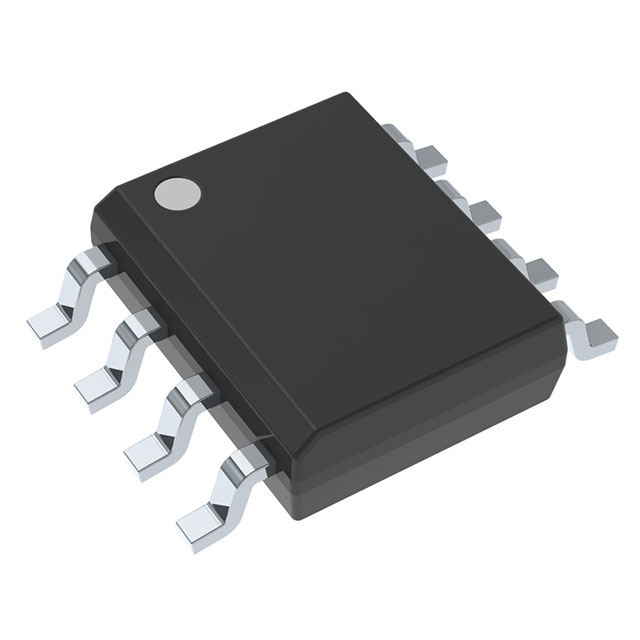
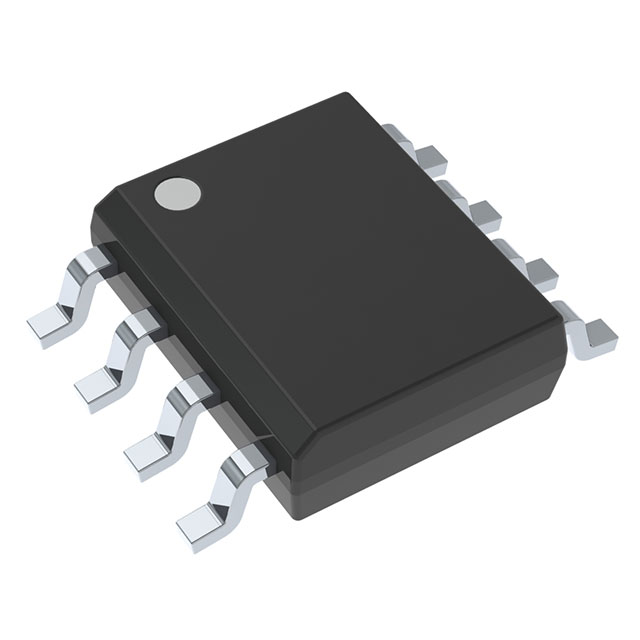
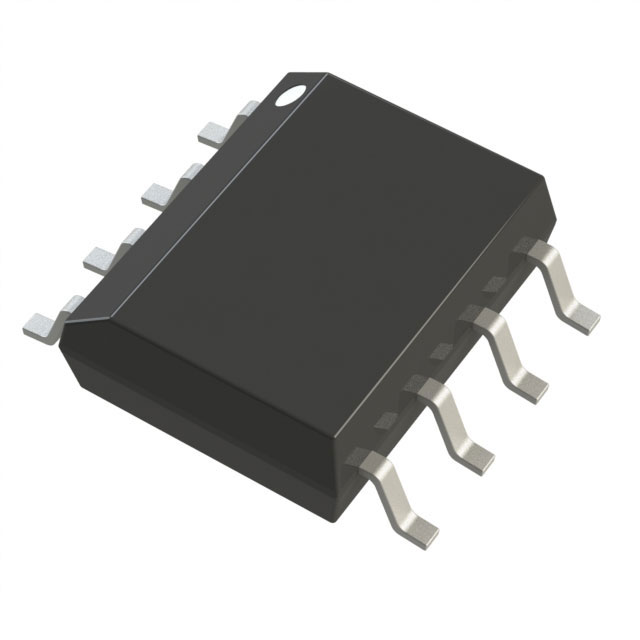
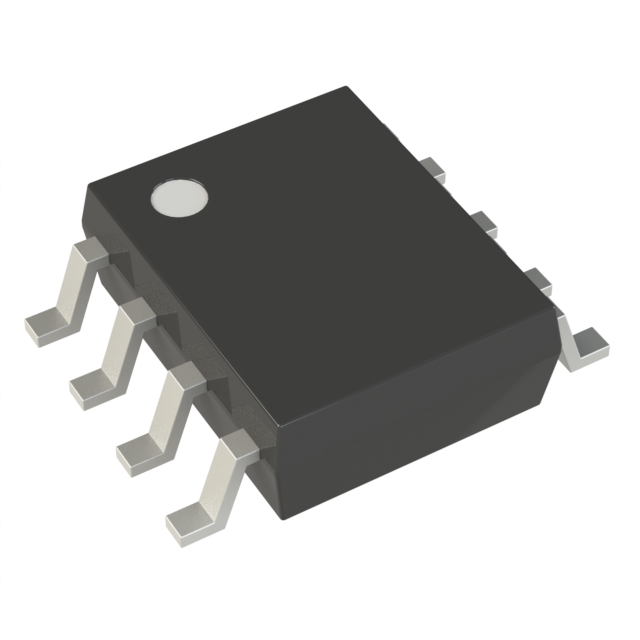
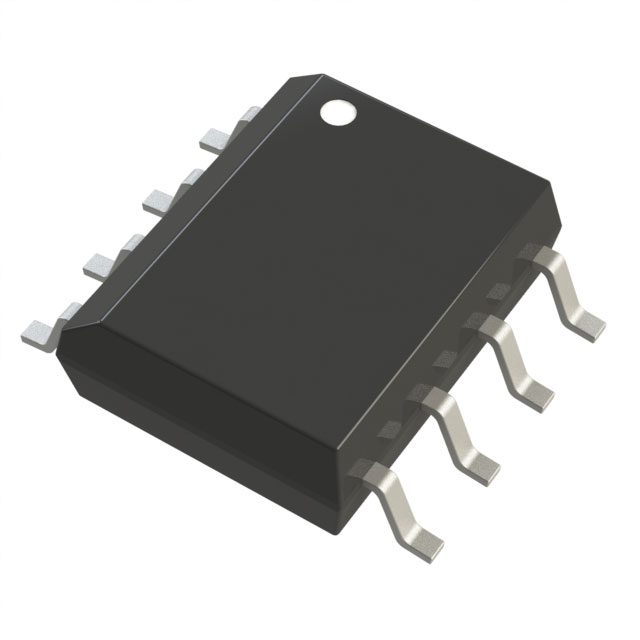
The LF412CDRE4 is a J-FET input operational amplifier manufactured by Texas Instruments, configured as a dual-channel (2 circuit) device in an 8-SOIC surface mount package. This component is classified as obsolete, which necessitates identification of equivalent and substitute parts for ongoing design support and procurement continuity. The LF412CDRE4 delivers low input bias current (50 pA) and moderate slew rate (13 V/µs) characteristics suitable for precision signal conditioning applications requiring high input impedance.
Substiute Parts
Key Parameters
| Parameter | Value |
|---|---|
| Manufacturer Part Number | LF412CDRE4 |
| Manufacturer | Texas Instruments |
| Category | Linear, Amplifiers |
| Amplifier Type | J-FET |
| Number of Circuits | 2 |
| Package / Case | 8-SOIC (0.154", 3.90mm Width) |
| Mounting Type | Surface Mount |
| Slew Rate | 13 V/µs |
| Gain Bandwidth Product | 3 MHz |
| Current - Input Bias | 50 pA |
| Voltage - Input Offset | 500 µV |
| Current - Supply | 4.5 mA (x2 Channels) |
| Voltage - Supply Span (Min) | 7 V |
| Voltage - Supply Span (Max) | 36 V |
| Operating Temperature | 0°C ~ 70°C |
| Product Status | Obsolete |
| RoHS Status | ROHS3 Compliant |
| Moisture Sensitivity Level (MSL) | 1 (Unlimited) |
Substitute Part Grouping Explanation
Substitution of the LF412CDRE4 is determined by strict alignment of the following electrical and mechanical parameters:
Primary Substitution Criteria:
- Amplifier Type: J-FET input configuration
- Number of Circuits: Dual-channel (2 circuits)
- Package / Case: 8-SOIC form factor
- Mounting Type: Surface Mount
- Supply Voltage Range: Minimum 7 V to maximum 36 V
- Operating Temperature Range: 0°C ~ 70°C or broader
- Slew Rate: 13 V/µs or greater
- Gain Bandwidth Product: 3 MHz or greater
- Input Bias Current: 50 pA or lower
- Input Offset Voltage: 500 µV or lower
Substitution Logic: Parts are grouped into two categories based on product status and parameter alignment:
-
Direct Equivalents (Active Status): Parts with identical or superior electrical specifications and active product status, enabling long-term procurement and design continuity.
-
Functional Alternatives (Obsolete or Different Amplifier Type): Parts meeting core electrical and mechanical requirements but with different amplifier topology (Audio, Voltage Feedback) or obsolete status, suitable for legacy system support or specific application requirements.
Parameter Comparison
| Part Number | Manufacturer | Amplifier Type | Slew Rate (V/µs) | Gain Bandwidth Product (MHz) | Input Bias Current (pA) | Input Offset Voltage (µV) | Supply Current (mA) | Supply Voltage Min (V) | Supply Voltage Max (V) | Operating Temp (°C) | Product Status |
|---|---|---|---|---|---|---|---|---|---|---|---|
| LF412CDRE4 | Texas Instruments | J-FET | 13 | 3 | 50 | 500 | 4.5 | 7 | 36 | 0 ~ 70 | Obsolete |
| LF412CDR | Texas Instruments | J-FET | 13 | 3 | 50 | 500 | 4.5 | 7 | 36 | 0 ~ 70 | Active |
| TL082BCD | Texas Instruments | J-FET | 13 | 3 | 30 | 2000 | 1.4 | 10 | 30 | 0 ~ 70 | Obsolete |
| AD712JRZ | Analog Devices Inc. | J-FET | 20 | 4 | 25 | 300 | 5 | 9 | 36 | 0 ~ 70 | Active |
| AD712JRZ-REEL | Analog Devices Inc. | J-FET | 20 | 4 | 25 | 300 | 5 | 9 | 36 | 0 ~ 70 | Active |
| AD712JRZ-REEL7 | Analog Devices Inc. | J-FET | 20 | 4 | 25 | 300 | 5 | 9 | 36 | 0 ~ 70 | Active |
| ADA4000-2ARZ | Analog Devices Inc. | J-FET | 20 | 5 | 5 | 200 | 1.35 | 8 | 36 | -40 ~ 125 | Active |
| LM833DT | STMicroelectronics | Audio | 7 | 15 | 300000 | 300 | 4 | 5 | 30 | -40 ~ 105 | Active |
| LT1352IS8#TR | Analog Devices Inc. | Voltage Feedback | 200 | 3 | 20000 | 200 | 0.25 | 5 | 30 | -40 ~ 85 | Active |
| SSM2135SZ-REEL | Analog Devices Inc. | Audio | 0.9 | 3.5 | 300000 | 200 | 3.7 | 4 | 36 | -40 ~ 85 | Active |
| TL082ID | Texas Instruments | J-FET | 13 | 4 | 30 | 3000 | 1.4 | 10 | 30 | -40 ~ 85 | Obsolete |
Engineering Selection Recommendations
Primary Recommendation: LF412CDR
The LF412CDR is the direct equivalent of the LF412CDRE4, manufactured by Texas Instruments with identical electrical specifications and 8-SOIC packaging. The LF412CDR maintains active product status, ensuring long-term availability and supply chain continuity. This part is ROHS3 compliant and carries MSL 1 rating. Selection of LF412CDR eliminates all technical substitution considerations and provides the most direct replacement path.
Secondary Recommendation: AD712JRZ / AD712JRZ-REEL / AD712JRZ-REEL7
The AD712 series (Analog Devices Inc.) offers superior electrical performance within the J-FET amplifier category. These parts deliver higher slew rate (20 V/µs versus 13 V/µs), improved gain bandwidth product (4 MHz versus 3 MHz), lower input bias current (25 pA versus 50 pA), and reduced input offset voltage (300 µV versus 500 µV). All variants maintain 8-SOIC packaging, surface mount configuration, and active product status. Supply voltage range (9 V to 36 V) encompasses the LF412CDRE4 operating window. The AD712 series is suitable for applications requiring enhanced dynamic performance while maintaining J-FET input characteristics.
Tertiary Recommendation: ADA4000-2ARZ
The ADA4000-2ARZ (Analog Devices Inc.) represents the highest performance J-FET alternative, featuring exceptional input bias current (5 pA), superior slew rate (20 V/µs), and extended gain bandwidth product (5 MHz). This part operates across an expanded temperature range (-40°C to 125°C) and maintains 8-SOIC packaging. The ADA4000-2ARZ is suitable for precision instrumentation and wide-temperature-range applications where the LF412CDRE4 temperature limitation (0°C to 70°C) is restrictive.
Alternative Consideration: LM833DT
The LM833DT (STMicroelectronics) is an audio amplifier topology with dual-channel configuration in 8-SOIC packaging. This part exhibits lower slew rate (7 V/µs) and significantly higher input bias current (300 nA) compared to the LF412CDRE4 J-FET input. The LM833DT is suitable only for audio-frequency applications where J-FET input characteristics are not required and where higher input bias current is acceptable.
Alternative Consideration: LT1352IS8#TR
The LT1352IS8#TR (Analog Devices Inc.) is a voltage feedback amplifier with exceptional slew rate (200 V/µs) and ultra-low supply current (250 µA per channel). This part is suitable for high-speed applications but operates within a reduced supply voltage range (5 V to 30 V) and exhibits higher input bias current (20 nA) than the LF412CDRE4. Selection requires verification that application requirements align with voltage feedback topology and reduced supply span.
Alternative Consideration: SSM2135SZ-REEL
The SSM2135SZ-REEL (Analog Devices Inc.) is an audio amplifier with extended supply voltage range (4 V to 36 V) and active product status. This part exhibits significantly lower slew rate (0.9 V/µs) and higher input bias current (300 nA) than the LF412CDRE4. Selection is limited to audio applications where J-FET input performance is not required.
Obsolete Parts: TL082BCD and TL082ID
The TL082 series (Texas Instruments) represents obsolete J-FET amplifier alternatives with reduced supply voltage range (10 V to 30 V minimum) and higher input offset voltage (2 mV to 3 mV) compared to the LF412CDRE4. These parts are not recommended for new designs but may be considered for legacy system maintenance where existing inventory exists.
Frequently Asked Questions (FAQ)
Q1: Can the LF412CDR directly replace the LF412CDRE4 without circuit modification?
A: Yes. The LF412CDR is the direct equivalent with identical electrical specifications, package configuration, and pin assignment. No circuit modification is required. The primary difference is product status: LF412CDR is active, while LF412CDRE4 is obsolete.
Q2: What are the key differences between J-FET and Audio amplifier topologies in this comparison?
A: J-FET input amplifiers (LF412, TL082, AD712, ADA4000) feature extremely low input bias current (5 pA to 50 pA) and high input impedance, suitable for precision signal conditioning. Audio amplifiers (LM833, SSM2135) feature higher input bias current (300 nA) and are optimized for audio-frequency bandwidth and output drive capability. Selection depends on application requirements for input impedance and bias current performance.
Q3: Is the AD712JRZ-REEL packaging different from AD712JRZ?
A: Both parts are electrically identical. The "-REEL" suffix indicates packaging format: Cut Tape (CT) & Digi-Reel® configuration for automated assembly. AD712JRZ is supplied in Tube packaging. Selection between these variants depends on procurement and assembly process requirements, not electrical performance.
Q4: What is the significance of the supply voltage range difference between LF412CDRE4 (7 V to 36 V) and AD712JRZ (9 V to 36 V)?
A: The LF412CDRE4 operates at lower minimum supply voltage (7 V versus 9 V). If the application requires operation below 9 V supply voltage, the AD712JRZ is not suitable. Verify actual circuit supply voltage requirements before selecting AD712 as a substitute.
Q5: Why does the ADA4000-2ARZ have an extended operating temperature range (-40°C to 125°C) compared to the LF412CDRE4 (0°C to 70°C)?
A: The ADA4000-2ARZ is specified for industrial and extended-temperature applications. The LF412CDRE4 is specified for commercial temperature range. If the application requires operation outside 0°C to 70°C, the ADA4000-2ARZ provides extended temperature coverage. Verify actual application temperature requirements before selecting this substitute.
Q6: Can the LT1352IS8#TR replace the LF412CDRE4 in a precision instrumentation circuit?
A: The LT1352IS8#TR is a voltage feedback amplifier with different topology and significantly higher slew rate (200 V/µs). While it maintains 8-SOIC packaging and dual-channel configuration, the voltage feedback topology and reduced supply voltage range (5 V to 30 V) may introduce circuit compatibility issues. Substitution requires detailed circuit analysis and performance verification.
Q7: What is the practical impact of input bias current differences (50 pA for LF412CDRE4 versus 25 pA for AD712JRZ)?
A: Input bias current determines the voltage offset developed across high-impedance source resistances. Lower input bias current (25 pA) reduces offset voltage errors in high-impedance circuits. For applications with source impedance below 1 MΩ, the difference is negligible. For high-impedance transducers or sensor interfaces, the AD712JRZ provides superior performance.
Q8: Is the LM833DT suitable for precision DC signal conditioning applications?
A: No. The LM833DT is an audio amplifier with input bias current of 300 nA, approximately 6,000 times higher than the LF412CDRE4 (50 pA). This makes it unsuitable for precision DC applications. The LM833DT is optimized for audio-frequency applications where input bias current is not a limiting factor.
Q9: What packaging considerations apply when substituting between different suppliers?
A: All substitute parts listed maintain 8-SOIC (0.154", 3.90mm Width) surface mount package configuration, ensuring mechanical and electrical pin compatibility. Packaging variants (Tube, Cut Tape & Digi-Reel®, Tape & Reel) affect procurement and assembly processes but not circuit performance. Verify that assembly equipment supports the selected packaging format.
Q10: Should obsolete parts (TL082BCD, TL082ID, LF412CDRE4) be used in new designs?
A: No. Obsolete parts present supply chain risk and should not be selected for new designs. Use active-status alternatives such as LF412CDR, AD712JRZ series, or ADA4000-2ARZ. Obsolete parts may be considered only for legacy system maintenance where existing inventory is available and long-term supply is not required.
Alternative Parts

SJ6012L2TP
Littelfuse Inc.
6 Alternative Parts

JMK107BBJ476MA-RE
Taiyo Yuden
10 Alternative Parts

GMK107BBJ475MA-T
Taiyo Yuden
5 Alternative Parts
SJ6020N2ARP
Littelfuse Inc.
3 Alternative Parts
SJ6025R2ATP
Littelfuse Inc.
4 Alternative Parts

2474-05L
API Delevan Inc.
1 Alternative Parts

4590R-684K
API Delevan Inc.
1 Alternative Parts

CM6560R-334
API Delevan Inc.
1 Alternative Parts

CM6460-104
API Delevan Inc.
1 Alternative Parts

5526-12
API Delevan Inc.
1 Alternative Parts