





Request Quote
(Ships tomorrow)
LC5202S LED Driver IC Equivalent & Substitute Parts
Part Overview
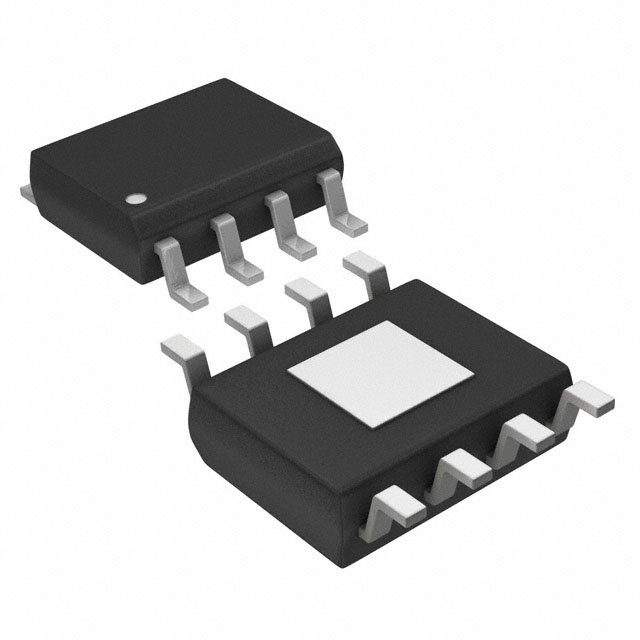
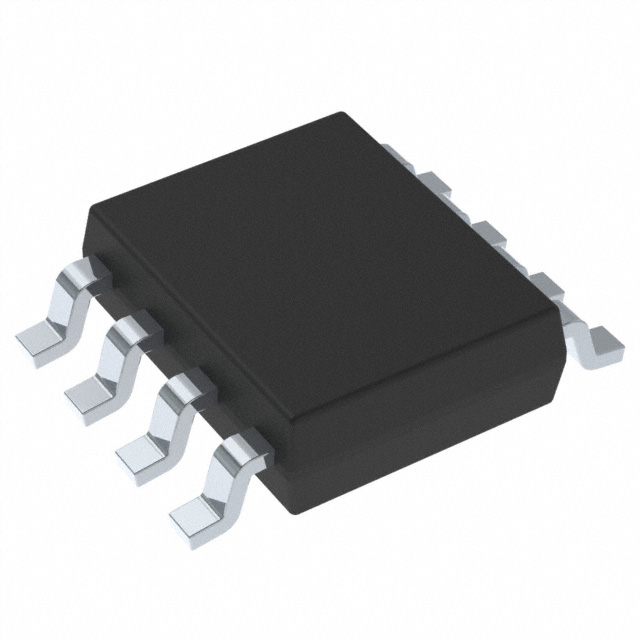
The LC5202S is an AC DC offline switcher LED driver IC manufactured by Sanken Electric USA Inc., designed for offline power management applications with PWM dimming capability. This device features a step-down (buck) topology with an internal switch, rated for 400mA output current and operating across a 25V to 200V supply range. The LC5202S is classified as obsolete, making equivalent and substitute parts necessary for new designs and ongoing production requirements. Substitute parts must maintain compatibility with the core offline switcher architecture while accommodating variations in topology, dimming method, and electrical specifications.
Substiute Parts
Key Parameters
| Parameter | LC5202S Value |
|---|---|
| Manufacturer | Sanken Electric USA Inc. |
| Category | Power Management (PMIC) |
| Type | AC DC Offline Switcher |
| Topology | Step-Down (Buck) |
| Internal Switch(s) | Yes |
| Number of Outputs | 1 |
| Voltage - Supply (Min) | 25V |
| Voltage - Supply (Max) | 200V |
| Current - Output / Channel | 400mA |
| Frequency | 200kHz |
| Dimming | PWM |
| Operating Temperature | -40°C ~ 105°C (TA) |
| Package / Case | 8-SOIC (0.173", 4.40mm Width) |
| Product Status | Obsolete |
| RoHS Status | RoHS Compliant |
Substitute Part Grouping Explanation
Substitution for the LC5202S is determined by the following critical parameters: AC DC offline switcher topology, single output configuration, PWM dimming capability, and surface mount packaging. Substitute parts are grouped into two primary categories based on topology and dimming method compatibility:
Category 1: Step-Down (Buck) Topology with PWM Dimming — Parts maintaining the buck topology with PWM dimming control, suitable for direct functional replacement in applications requiring consistent switching architecture.
Category 2: Alternative Topologies with Offline Switcher Capability — Parts employing flyback or multi-topology designs with alternative dimming methods (triac, analog), applicable where supply voltage ranges and dimming requirements differ from the original specification.
Key parameters determining substitution eligibility include: AC DC offline switcher classification, single output, internal or external switch configuration, supply voltage range overlap, dimming method compatibility, and surface mount or through-hole mounting capability.
Parameter Comparison
| Parameter | LC5202S | HV9925SG-G | LM3444MM/NOPB | LNK407LG | MP4001DS-LF-Z | RT8458AGJ6 | TPS92074DDCR | TPS92411DDAR |
|---|---|---|---|---|---|---|---|---|
| Manufacturer | Sanken Electric USA Inc. | Microchip Technology | Texas Instruments | Power Integrations | Monolithic Power Systems Inc. | Richtek USA Inc. | Texas Instruments | Texas Instruments |
| Type | AC DC Offline Switcher | AC DC Offline Switcher | AC DC Offline Switcher | AC DC Offline Switcher | AC DC Offline Switcher | AC DC Offline Switcher | AC DC Offline Switcher | AC DC Offline Switcher |
| Topology | Step-Down (Buck) | Step-Down (Buck) | Step-Down (Buck) | Flyback | Step-Down (Buck) | Step-Down (Buck) | Step-Down (Buck), Step-Up (Boost) | Flyback, Step-Down (Buck), Step-Up (Boost) |
| Internal Switch(s) | Yes | Yes | No | Yes | No | No | No | Yes |
| Number of Outputs | 1 | 1 | 1 | 1 | 1 | 1 | 1 | 1 |
| Voltage - Supply (Min) | 25V | 20V | 8V | 36V | 12V | 17V | 11V | 7.5V |
| Voltage - Supply (Max) | 200V | 400V | 13V | 725V | 450V | 31V | 18V | 100V |
| Current - Output / Channel | 400mA | 50mA | — | 1.77A | — | — | — | — |
| Frequency | 200kHz | — | — | 66kHz | 110kHz | 47kHz | — | — |
| Dimming | PWM | PWM | Analog | Triac | PWM | Analog | — | — |
| Operating Temperature | -40°C ~ 105°C (TA) | -40°C ~ 85°C (TA) | -40°C ~ 125°C (TJ) | -40°C ~ 150°C (TJ) | -40°C ~ 125°C (TJ) | -40°C ~ 125°C (TJ) | -40°C ~ 125°C (TJ) | -40°C ~ 150°C (TJ) |
| Package / Case | 8-SOIC (0.173", 4.40mm Width) | 8-SOIC (0.154", 3.90mm Width) Exposed Pad | 10-TFSOP, 10-MSOP (0.118", 3.00mm Width) | 7-SSIP, 6 Leads, Exposed Pad, Formed Leads | 8-SOIC (0.154", 3.90mm Width) | SOT-23-6 Thin, TSOT-23-6 | SOT-23-6 Thin, TSOT-23-6 | 8-PowerSOIC (0.154", 3.90mm Width) |
| Mounting Type | Surface Mount | Surface Mount | Surface Mount | Through Hole | Surface Mount | Surface Mount | Surface Mount | Surface Mount |
| Product Status | Obsolete | Active | Active | Active | Active | Active | Active | Active |
| RoHS Status | RoHS Compliant | ROHS3 Compliant | ROHS3 Compliant | RoHS Compliant | ROHS3 Compliant | ROHS3 Compliant | ROHS3 Compliant | ROHS3 Compliant |
Engineering Selection Recommendations
Selection of substitute parts for the LC5202S must account for the obsolete product status and the requirement for active, currently manufactured alternatives. All listed substitute parts maintain active product status with current manufacturing support.
HV9925SG-G (Microchip Technology) provides the closest functional alignment as a step-down buck topology with PWM dimming and internal switch. Supply voltage range (20V–400V) encompasses the LC5202S minimum specification, though maximum voltage extends significantly higher. This part is ROHS3 compliant and actively manufactured.
MP4001DS-LF-Z (Monolithic Power Systems Inc.) offers step-down buck topology with PWM dimming, supporting supply voltages from 12V to 450V. This part includes automotive-grade qualification and ROHS3 compliance, with significantly higher inventory availability (63,900 units).
TPS92411DDAR (Texas Instruments) provides multi-topology capability (flyback, buck, boost) with internal switch and extended temperature rating (-40°C to 150°C). This part supports a 7.5V to 100V supply range and is ROHS3 compliant with active status.
LNK407LG (Power Integrations) employs flyback topology with triac dimming and through-hole mounting, suitable for applications requiring alternative dimming methods. Supply voltage range extends to 725V maximum, supporting high-voltage offline applications.
RT8458AGJ6 (Richtek USA Inc.) and TPS92074DDCR (Texas Instruments) provide alternative topologies with reduced supply voltage ranges (17V–31V and 11V–18V respectively), applicable to lower-voltage offline switcher applications.
LM3444MM/NOPB (Texas Instruments) operates at significantly lower supply voltages (8V–13V) with analog dimming and no internal switch, suitable for applications with different power supply architectures.
All substitute parts maintain RoHS compliance and single-output configuration. Selection should prioritize supply voltage range compatibility, dimming method requirements, and thermal operating range specifications for the target application.
Frequently Asked Questions (FAQ)
Q: Can HV9925SG-G directly replace LC5202S in existing designs?
A: HV9925SG-G maintains the same AC DC offline switcher architecture with step-down buck topology, PWM dimming, and internal switch. However, package dimensions differ (8-SOIC 3.90mm vs. 8-SOIC 4.40mm width), requiring PCB layout verification. Supply voltage range (20V–400V) is compatible with LC5202S minimum specification (25V), though maximum voltage extends higher. Output current specification differs (50mA vs. 400mA), requiring application-specific validation.
Q: What is the primary difference between PWM and triac dimming in substitute parts?
A: PWM dimming (HV9925SG-G, MP4001DS-LF-Z) uses pulse-width modulation for brightness control, suitable for DC-driven LED applications. Triac dimming (LNK407LG) enables compatibility with AC line-voltage dimmer switches, applicable to mains-powered lighting systems. Analog dimming (LM3444MM/NOPB, RT8458AGJ6) uses voltage-level control for brightness adjustment. Selection depends on the dimming interface required by the target application.
Q: Why do some substitute parts have unspecified current output ratings?
A: Current output specifications are provided only when explicitly defined in manufacturer datasheets. Parts without specified current ratings (LM3444MM/NOPB, RT8458AGJ6, TPS92074DDCR, TPS92411DDAR) require detailed datasheet review to determine output current capability, as this parameter may be application-dependent or determined by external component selection.
Q: Is package compatibility critical for substitution?
A: Package compatibility is critical for PCB layout and assembly. LC5202S uses 8-SOIC with 4.40mm width, while most substitutes employ 8-SOIC with 3.90mm width or alternative packages (SOT-23-6, 10-VSSOP, eSIP-7F). Physical dimensions, lead spacing, and mounting type (surface mount vs. through-hole) must be verified against PCB design before implementation.
Q: What does "internal switch" mean in the context of LED driver selection?
A: Internal switch indicates the IC contains an integrated power transistor for switching control. Parts with internal switches (LC5202S, HV9925SG-G, LNK407LG, TPS92411DDAR) require fewer external components. Parts without internal switches (LM3444MM/NOPB, RT8458AGJ6, MP4001DS-LF-Z, TPS92074DDCR) require external switching transistors, affecting circuit complexity and PCB area requirements.
Q: How does supply voltage range affect substitution suitability?
A: Supply voltage range determines compatibility with the power source. LC5202S operates from 25V to 200V. Substitutes with overlapping ranges (HV9925SG-G: 20V–400V, MP4001DS-LF-Z: 12V–450V, TPS92411DDAR: 7.5V–100V) are compatible with the original supply specification. Parts with non-overlapping ranges (LM3444MM/NOPB: 8V–13V, RT8458AGJ6: 17V–31V) require different power supply architectures and are not direct substitutes for the same application.
Q: What is the significance of product status (Active vs. Obsolete)?
A: Product status indicates manufacturing availability and long-term support. LC5202S is obsolete, meaning production has ended and inventory is limited. All listed substitutes maintain active status, ensuring continued manufacturing, technical support, and availability for new designs and production runs. Active status is essential for new product development and long-term supply chain reliability.
Alternative Parts

SJ6012L2TP
Littelfuse Inc.
6 Alternative Parts

JMK107BBJ476MA-RE
Taiyo Yuden
10 Alternative Parts

GMK107BBJ475MA-T
Taiyo Yuden
5 Alternative Parts
SJ6020N2ARP
Littelfuse Inc.
3 Alternative Parts
SJ6025R2ATP
Littelfuse Inc.
4 Alternative Parts

2474-05L
API Delevan Inc.
1 Alternative Parts

4590R-684K
API Delevan Inc.
1 Alternative Parts

CM6560R-334
API Delevan Inc.
1 Alternative Parts

CM6460-104
API Delevan Inc.
1 Alternative Parts

5526-12
API Delevan Inc.
1 Alternative Parts