



Request Quote
(Ships tomorrow)
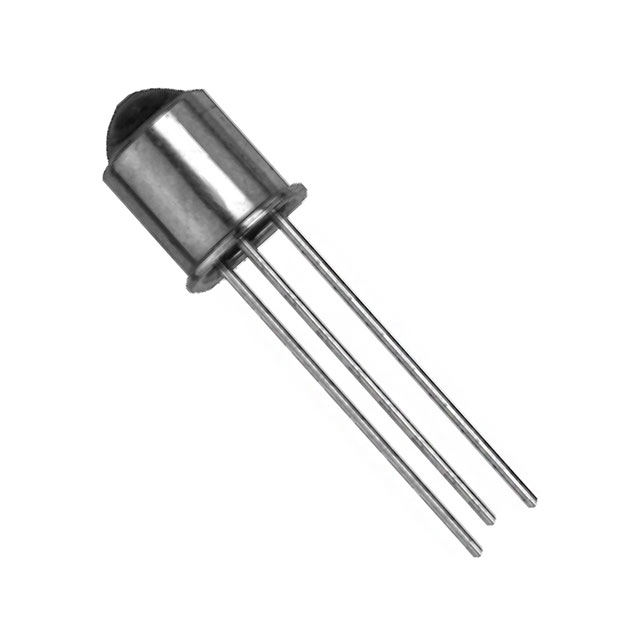
L14P2 Phototransistor 880nm TO-206AA Equivalent & Substitute Parts
Part Overview
The L14P2 is an 880nm phototransistor manufactured by onsemi in TO-206AA (TO-18-3 Metal Can) packaging. This component is classified as obsolete, making equivalent substitute parts necessary for ongoing design support and procurement. The L14P2 operates across a wide temperature range (-65°C to 125°C) and is suitable for infrared sensing applications requiring top-view optical orientation. Substitute parts must maintain electrical compatibility, mechanical fit, and optical performance within the specified parameters.
Substiute Parts
Key Parameters
| Parameter | L14P2 Specification |
|---|---|
| Manufacturer | onsemi |
| Category | Optical Sensors (Phototransistor) |
| Package / Case | TO-206AA, TO-18-3 Metal Can |
| Mounting Type | Through Hole |
| Orientation | Top View |
| Wavelength | 880nm |
| Viewing Angle | 16° |
| Voltage - Collector Emitter Breakdown (Max) | 30 V |
| Current - Dark (Id) (Max) | 100 nA |
| Power - Max | 300 mW |
| Operating Temperature | -65°C ~ 125°C |
| Moisture Sensitivity Level (MSL) | 1 (Unlimited) |
| Product Status | Obsolete |
Substitute Part Grouping Explanation
Substitute parts for the L14P2 are selected based on the following critical parameters that determine functional equivalence:
Mandatory Compatibility Parameters:
- Package / Case: TO-206AA, TO-18-3 Metal Can (mechanical fit and pin configuration)
- Mounting Type: Through Hole (PCB assembly compatibility)
- Orientation: Top View (optical axis alignment)
- Voltage - Collector Emitter Breakdown (Max): 30 V (electrical rating match)
- Current - Dark (Id) (Max): 100 nA (dark current specification)
- Operating Temperature: -65°C ~ 125°C (thermal operating range)
Optical Performance Parameters:
- Wavelength: 880nm to 890nm (near-infrared sensitivity range)
- Viewing Angle: 16° to 24° (acceptable optical field of view variation)
Regulatory & Compliance Parameters:
- Moisture Sensitivity Level (MSL): 1 (Unlimited)
- REACH Status: REACH Unaffected
- ECCN: EAR99
- HTSUS: 8541.49.7080
All substitute parts listed are manufactured by TT Electronics / Optek Technology and maintain active product status, providing long-term availability and supply chain stability compared to the obsolete L14P2.
Parameter Comparison
| Part Number | Manufacturer | Wavelength | Viewing Angle | Voltage - Collector Emitter Breakdown (Max) | Current - Dark (Id) (Max) | Power - Max | Operating Temperature | Package / Case | Product Status | RoHS Status |
|---|---|---|---|---|---|---|---|---|---|---|
| L14P2 | onsemi | 880nm | 16° | 30 V | 100 nA | 300 mW | -65°C ~ 125°C | TO-206AA, TO-18-3 Metal Can | Obsolete | Not specified |
| OP800A | TT Electronics / Optek Technology | 890nm | Not specified | 30 V | 100 nA | 250 mW | -65°C ~ 125°C | TO-206AA, TO-18-3 Metal Can | Active | ROHS3 Compliant |
| OP800B | TT Electronics / Optek Technology | 890nm | Not specified | 30 V | 100 nA | 250 mW | -65°C ~ 125°C | TO-206AA, TO-18-3 Metal Can | Active | ROHS3 Compliant |
| OP800C | TT Electronics / Optek Technology | 890nm | Not specified | 30 V | 100 nA | 250 mW | -65°C ~ 125°C | TO-206AA, TO-18-3 Metal Can | Active | ROHS3 Compliant |
| OP804SL | TT Electronics / Optek Technology | 890nm | Not specified | 30 V | 100 nA | 250 mW | -65°C ~ 125°C | TO-206AA, TO-18-3 Metal Can | Active | ROHS3 Compliant |
| OP804TX | TT Electronics / Optek Technology | 890nm | 24° | 30 V | 100 nA | 250 mW | -65°C ~ 125°C | TO-206AA, TO-18-3 Metal Can | Active | ROHS3 Compliant |
| OP804TXV | TT Electronics / Optek Technology | 890nm | 24° | 30 V | 100 nA | 250 mW | -65°C ~ 125°C | TO-206AA, TO-18-3 Metal Can | Active | ROHS3 Compliant |
| OP805SL | TT Electronics / Optek Technology | 890nm | Not specified | 30 V | 100 nA | 250 mW | -65°C ~ 125°C | TO-206AA, TO-18-3 Metal Can | Active | ROHS3 Compliant |
| OP805TX | TT Electronics / Optek Technology | 890nm | 24° | 30 V | 100 nA | 250 mW | -65°C ~ 125°C | TO-206AA, TO-18-3 Metal Can | Active | ROHS3 Compliant |
| OP805TXV | TT Electronics / Optek Technology | 890nm | 24° | 30 V | 100 nA | 250 mW | -65°C ~ 125°C | TO-206AA, TO-18-3 Metal Can | Active | ROHS3 Compliant |
Engineering Selection Recommendations
All listed substitute parts maintain electrical and mechanical compatibility with the L14P2. Selection should be based on the following factors:
Product Status & Supply Chain: All substitute parts carry active product status from TT Electronics / Optek Technology, ensuring long-term availability and manufacturing continuity. The L14P2 obsolete status necessitates transition to one of these active alternatives.
Regulatory Compliance: All substitute parts are ROHS3 compliant, providing environmental and regulatory alignment for modern manufacturing and end-market requirements. All parts maintain REACH Unaffected status and EAR99 export classification consistent with the original L14P2.
Optical Performance: Substitute parts operate at 890nm wavelength, a 10nm shift from the L14P2's 880nm specification. This wavelength difference falls within the near-infrared sensing spectrum and is acceptable for most phototransistor applications. Parts designated with TX or TXV suffixes offer 24° viewing angle compared to the L14P2's 16°, providing wider optical field of view for applications requiring broader light collection.
Power Dissipation: Substitute parts are rated at 250 mW maximum power, compared to the L14P2's 300 mW rating. This represents a 50 mW reduction and should be evaluated against circuit design requirements to ensure adequate thermal margin.
Inventory Availability: Multiple substitute options are available with varying stock levels, ranging from 764 to 2713 pieces, providing flexibility in procurement strategy and lead time management.
Frequently Asked Questions (FAQ)
Q: Can OP800A, OP800B, and OP800C be used interchangeably with the L14P2?
A: Yes. These parts share identical electrical specifications (30 V breakdown voltage, 100 nA dark current), operate across the same temperature range (-65°C to 125°C), and use the same TO-206AA package with through-hole mounting and top-view orientation. The 890nm wavelength is compatible with 880nm applications in the near-infrared spectrum.
Q: What is the difference between OP804SL and OP804TX/OP804TXV?
A: OP804SL has an unspecified viewing angle, while OP804TX and OP804TXV both feature 24° viewing angle. All three share identical electrical ratings and package specifications. The TX and TXV variants provide wider optical field of view for applications requiring broader light collection capability.
Q: Why do some substitute parts have lower maximum power ratings (250 mW vs. 300 mW)?
A: All substitute parts are rated at 250 mW maximum power dissipation, which is 50 mW lower than the L14P2's 300 mW rating. Circuit designs must be evaluated to ensure adequate thermal margin within this lower power specification.
Q: Are all substitute parts RoHS compliant?
A: Yes. All listed substitute parts are ROHS3 compliant, meeting current environmental and regulatory requirements for electronic components.
Q: What is the significance of the TX and TXV designations?
A: TX and TXV designations indicate variants with 24° viewing angle. The V suffix typically denotes a specific manufacturing or performance variant within the TX series. Both maintain identical electrical specifications and package compatibility with the L14P2.
Q: Can I use OP805 series parts as direct replacements for OP804 series?
A: Yes. OP805SL, OP805TX, and OP805TXV maintain identical electrical specifications, package type, and operating temperature range as their OP804 counterparts. Selection between OP804 and OP805 series should be based on viewing angle requirements and specific application needs.
Q: Is the 10nm wavelength difference (880nm to 890nm) significant for my application?
A: The shift from 880nm to 890nm represents operation within the near-infrared spectrum. Both wavelengths are suitable for standard phototransistor applications. Application-specific requirements should be evaluated based on light source spectral characteristics and optical filter specifications if present in the design.
Alternative Parts

SJ6012L2TP
Littelfuse Inc.
6 Alternative Parts

JMK107BBJ476MA-RE
Taiyo Yuden
10 Alternative Parts

GMK107BBJ475MA-T
Taiyo Yuden
5 Alternative Parts
SJ6020N2ARP
Littelfuse Inc.
3 Alternative Parts
SJ6025R2ATP
Littelfuse Inc.
4 Alternative Parts

2474-05L
API Delevan Inc.
1 Alternative Parts

4590R-684K
API Delevan Inc.
1 Alternative Parts

CM6560R-334
API Delevan Inc.
1 Alternative Parts

CM6460-104
API Delevan Inc.
1 Alternative Parts

5526-12
API Delevan Inc.
1 Alternative Parts