




Request Quote
(Ships tomorrow)
L14G3 Phototransistor 880nm Equivalent & Substitute Parts
Part Overview
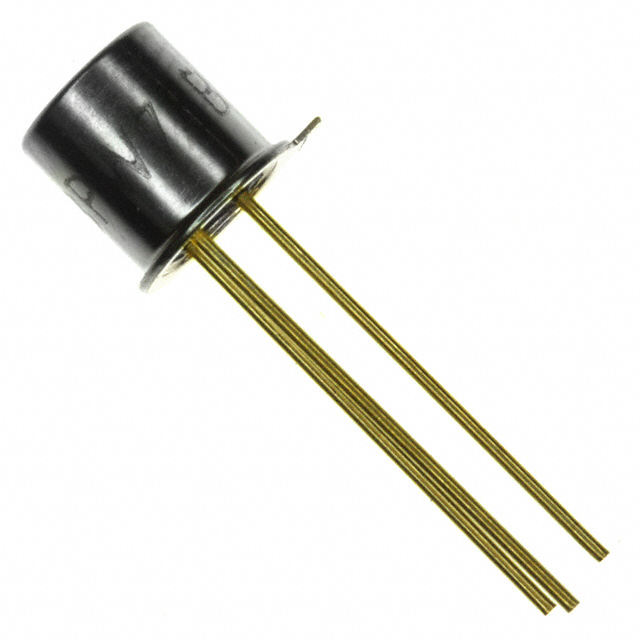
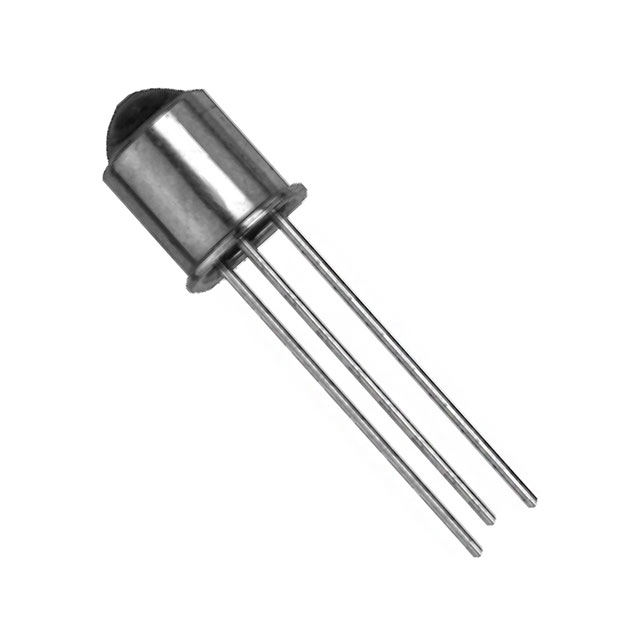
The L14G3 is a phototransistor optical sensor manufactured by onsemi, designed for 880nm infrared detection in a TO-206AA metal can package. This component is classified as obsolete, making equivalent and substitute parts necessary for ongoing system support and new designs. The L14G3 operates across an extended temperature range of -65°C to 125°C and is suitable for through-hole mounting applications requiring top-view orientation.
Substiute Parts
Key Parameters
| Parameter | Value |
|---|---|
| Manufacturer Part Number | L14G3 |
| Manufacturer | onsemi |
| Category | Optical Sensors |
| Description | Phototransistor 880nm Top View TO-206AA, TO-18-3 Metal Can |
| Wavelength | 880nm |
| Viewing Angle | 20° |
| Voltage - Collector Emitter Breakdown (Max) | 45 V |
| Current - Dark (Id) (Max) | 100 nA |
| Power - Max | 300 mW |
| Operating Temperature | -65°C ~ 125°C |
| Package / Case | TO-206AA, TO-18-3 Metal Can |
| Mounting Type | Through Hole |
| Orientation | Top View |
| Product Status | Obsolete |
| Moisture Sensitivity Level (MSL) | 1 (Unlimited) |
Substitute Part Grouping Explanation
Substitution for the L14G3 phototransistor is determined by the following critical parameters:
Primary Compatibility Criteria:
- Package / Case: TO-206AA, TO-18-3 Metal Can (identical mechanical form factor)
- Mounting Type: Through Hole (identical mounting method)
- Orientation: Top View (identical optical orientation)
- Wavelength Range: 850nm to 890nm (near-infrared detection band compatibility)
- Current - Dark (Id) (Max): 100 nA (identical dark current specification)
- Operating Temperature: -65°C ~ 125°C or compatible range
Secondary Compatibility Criteria:
- Voltage - Collector Emitter Breakdown (Max): 30 V or higher
- Power - Max: 250 mW or higher
- Viewing Angle: 20° or compatible
All substitute parts listed maintain identical package geometry, mounting configuration, and optical orientation. Wavelength variations between 850nm and 890nm remain within the near-infrared detection spectrum and are functionally compatible for most applications. All substitute parts feature active product status with RoHS3 compliance, providing long-term availability and environmental compliance advantages over the obsolete L14G3.
Parameter Comparison
| Part Number | Manufacturer | Wavelength | Viewing Angle | Voltage - Collector Emitter Breakdown (Max) | Current - Dark (Id) (Max) | Power - Max | Operating Temperature | Product Status | RoHS Status |
|---|---|---|---|---|---|---|---|---|---|
| L14G3 | onsemi | 880nm | 20° | 45 V | 100 nA | 300 mW | -65°C ~ 125°C | Obsolete | Not Specified |
| BPW77NB | Vishay Semiconductor Opto Division | 850nm | 20° | 70 V | 100 nA | 250 mW | -40°C ~ 125°C | Active | RoHS3 Compliant |
| OP800A | TT Electronics / Optek Technology | 890nm | Not Specified | 30 V | 100 nA | 250 mW | -65°C ~ 125°C | Active | RoHS3 Compliant |
| OP800B | TT Electronics / Optek Technology | 890nm | Not Specified | 30 V | 100 nA | 250 mW | -65°C ~ 125°C | Active | RoHS3 Compliant |
| OP800C | TT Electronics / Optek Technology | 890nm | Not Specified | 30 V | 100 nA | 250 mW | -65°C ~ 125°C | Active | RoHS3 Compliant |
| OP804SL | TT Electronics / Optek Technology | 890nm | Not Specified | 30 V | 100 nA | 250 mW | -65°C ~ 125°C | Active | RoHS3 Compliant |
| OP804TX | TT Electronics / Optek Technology | 890nm | 24° | 30 V | 100 nA | 250 mW | -65°C ~ 125°C | Active | RoHS3 Compliant |
| OP804TXV | TT Electronics / Optek Technology | 890nm | 24° | 30 V | 100 nA | 250 mW | -65°C ~ 125°C | Active | RoHS3 Compliant |
| OP805SL | TT Electronics / Optek Technology | 890nm | Not Specified | 30 V | 100 nA | 250 mW | -65°C ~ 125°C | Active | RoHS3 Compliant |
| OP805TX | TT Electronics / Optek Technology | 890nm | 24° | 30 V | 100 nA | 250 mW | -65°C ~ 125°C | Active | RoHS3 Compliant |
| OP805TXV | TT Electronics / Optek Technology | 890nm | 24° | 30 V | 100 nA | 250 mW | -65°C ~ 125°C | Active | RoHS3 Compliant |
Engineering Selection Recommendations
Active Product Status Advantage: All substitute parts listed carry active product status, ensuring continued availability and manufacturing support. The L14G3 obsolete status creates supply chain risk for new production and long-term system support.
RoHS3 Compliance: All substitute parts are RoHS3 compliant, meeting current environmental and regulatory requirements. This compliance status is critical for applications subject to EU directives and equivalent international standards.
Temperature Range Compatibility: The OP800 and OP804/OP805 series from TT Electronics / Optek Technology maintain the full -65°C to 125°C operating temperature range of the L14G3, ensuring thermal performance equivalence. The BPW77NB from Vishay operates across -40°C to 125°C, which is suitable for applications not requiring the full lower temperature extreme.
Voltage and Power Ratings: The L14G3 specifies 45 V collector-emitter breakdown voltage and 300 mW maximum power. All substitute parts meet or exceed the minimum voltage requirement (30 V minimum across substitutes). Power dissipation in substitute parts is rated at 250 mW, which is acceptable for applications designed within the L14G3's 300 mW specification.
Wavelength and Optical Characteristics: The L14G3 operates at 880nm with a 20° viewing angle. Substitute parts operate at 850nm (BPW77NB) or 890nm (OP800/OP804/OP805 series), maintaining compatibility within the near-infrared detection band. Viewing angle specifications are consistent or compatible across the substitute range.
Frequently Asked Questions (FAQ)
Q: Can the BPW77NB substitute for the L14G3 in all applications?
A: The BPW77NB is mechanically and functionally compatible as a substitute. It operates at 850nm wavelength compared to the L14G3's 880nm, which remains within the near-infrared detection spectrum. The BPW77NB operates across -40°C to 125°C, which is suitable for applications not requiring operation below -40°C. All other critical parameters—package type, mounting method, dark current, and optical orientation—are equivalent.
Q: What is the difference between OP804 and OP805 series parts?
A: Both OP804 and OP805 series parts share identical electrical and thermal specifications. The primary distinction is the base product number designation. Within each series, variants are differentiated by suffix codes: SL indicates standard lead configuration, TX indicates extended viewing angle (24°), and TXV indicates extended viewing angle with additional specification variants. All variants maintain the same core 890nm wavelength and -65°C to 125°C operating range.
Q: Are the OP800A, OP800B, and OP800C interchangeable?
A: Yes, OP800A, OP800B, and OP800C are electrically and mechanically interchangeable. All three share identical specifications for wavelength (890nm), voltage rating (30 V), dark current (100 nA), power dissipation (250 mW), and operating temperature range (-65°C to 125°C). Suffix designations indicate manufacturing or packaging variations without affecting functional performance.
Q: Does the 890nm wavelength of OP800/OP804/OP805 series affect compatibility with L14G3 applications?
A: The 10nm wavelength difference between the L14G3 (880nm) and the OP800/OP804/OP805 series (890nm) remains within the near-infrared detection band and is functionally compatible for most optical sensing applications. Both wavelengths fall within the standard 880nm ±10nm tolerance band for infrared phototransistors. Application-specific spectral filtering or source matching should be evaluated for wavelength-critical designs.
Q: What is the significance of the 24° viewing angle in OP804TX, OP804TXV, OP805TX, and OP805TXV?
A: The 24° viewing angle in these variants is wider than the L14G3's 20° specification, providing a broader field of view for optical detection. This wider angle is compatible with L14G3 applications and offers improved light collection efficiency in designs where the L14G3's 20° angle was marginal. Applications requiring the exact 20° specification should select OP804SL, OP805SL, or BPW77NB.
Q: Is the reduced power rating (250 mW) of substitute parts a concern compared to the L14G3 (300 mW)?
A: The 250 mW power rating of substitute parts is acceptable for applications designed within the L14G3's 300 mW specification. Phototransistor power dissipation is typically low in practical optical sensing circuits. Applications operating near the 300 mW limit should be evaluated for thermal margin, but most standard designs will operate safely within the 250 mW rating of substitute parts.
Q: Which substitute part offers the best long-term availability?
A: All substitute parts listed carry active product status with RoHS3 compliance, ensuring long-term manufacturing support. The OP800/OP804/OP805 series from TT Electronics / Optek Technology and the BPW77NB from Vishay Semiconductor Opto Division are established optical sensor manufacturers with extensive distribution networks. Selection should be based on application-specific parameter requirements rather than availability alone, as all options provide equivalent supply chain security.
Alternative Parts

SJ6012L2TP
Littelfuse Inc.
6 Alternative Parts

JMK107BBJ476MA-RE
Taiyo Yuden
10 Alternative Parts

GMK107BBJ475MA-T
Taiyo Yuden
5 Alternative Parts
SJ6020N2ARP
Littelfuse Inc.
3 Alternative Parts
SJ6025R2ATP
Littelfuse Inc.
4 Alternative Parts

2474-05L
API Delevan Inc.
1 Alternative Parts

4590R-684K
API Delevan Inc.
1 Alternative Parts

CM6560R-334
API Delevan Inc.
1 Alternative Parts

CM6460-104
API Delevan Inc.
1 Alternative Parts

5526-12
API Delevan Inc.
1 Alternative Parts