


Request Quote
(Ships tomorrow)
JL412BPA Equivalent & Substitute Parts Reference
Part Overview
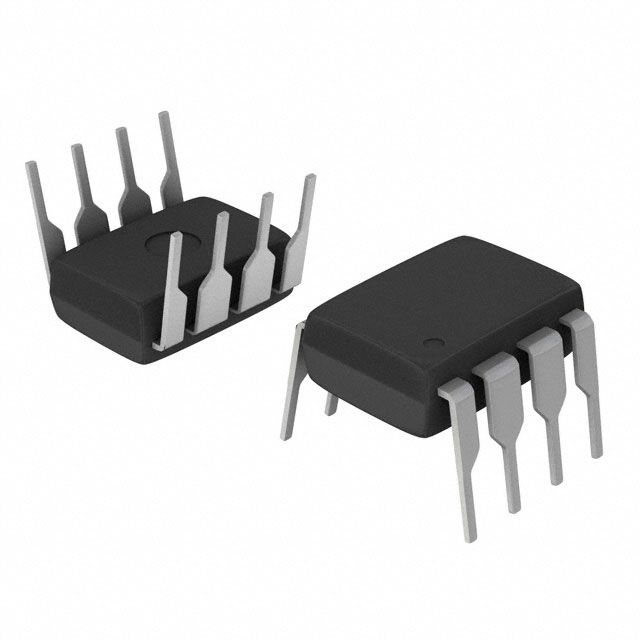
The JL412BPA is a J-FET input operational amplifier manufactured by Texas Instruments, configured as a 2-circuit device in 8-CDIP packaging. This component is classified as obsolete, making identification of functionally equivalent active alternatives essential for ongoing design support and production continuity. The JL412BPA operates across an industrial temperature range of -55°C to 125°C with a supply voltage span of 10V and delivers 80mA output current per channel. Locating substitute parts with compatible electrical characteristics and package footprints is necessary to maintain system reliability and procurement availability.
Substiute Parts
Key Parameters
| Parameter | JL412BPA | Unit |
|---|---|---|
| Amplifier Type | J-FET | — |
| Number of Circuits | 2 | — |
| Slew Rate | 7 | V/µs |
| Gain Bandwidth Product | 3 | MHz |
| Current - Input Bias | 50 | nA |
| Voltage - Input Offset | 7 | mV |
| Current - Output / Channel | 80 | mA |
| Voltage - Supply Span (Min) | 10 | V |
| Voltage - Supply Span (Max) | 10 | V |
| Operating Temperature | -55 to 125 | °C |
| Package / Case | 8-CDIP (0.300", 7.62mm) | — |
| Mounting Type | Through Hole | — |
| Product Status | Obsolete | — |
| RoHS Status | RoHS non-compliant | — |
Substitute Part Grouping Explanation
Substitution of the JL412BPA is determined by strict alignment of the following electrical and mechanical parameters:
Primary Substitution Criteria:
- Amplifier topology: J-FET input configuration
- Circuit count: 2 independent circuits
- Package type: 8-pin DIP footprint (0.300" pitch, 7.62mm)
- Mounting method: Through-hole technology
- Pin compatibility: Identical pinout for direct socket replacement
Secondary Compatibility Parameters:
- Slew rate: Minimum 7V/µs (higher values acceptable)
- Gain bandwidth product: Minimum 3MHz (higher values acceptable)
- Input bias current: Maximum 50nA (lower values acceptable)
- Input offset voltage: Maximum 7mV (lower values acceptable)
- Output current per channel: Minimum 80mA (higher values acceptable)
- Supply voltage range: Must encompass 10V operation
The substitute parts LF412CN/NOPB and LF412CP meet these criteria while offering improved electrical performance and active product status. Both devices maintain J-FET topology, dual-circuit configuration, and 8-DIP package compatibility with the original JL412BPA.
Parameter Comparison
| Parameter | JL412BPA | LF412CN/NOPB | LF412CP | Unit |
|---|---|---|---|---|
| Amplifier Type | J-FET | J-FET | J-FET | — |
| Number of Circuits | 2 | 2 | 2 | — |
| Slew Rate | 7 | 15 | 13 | V/µs |
| Gain Bandwidth Product | 3 | 4 | 3 | MHz |
| Current - Input Bias | 50 | 50 | 50 | pA |
| Voltage - Input Offset | 7 | 1 | 0.5 | mV |
| Voltage - Supply Span (Min) | 10 | 10 | 7 | V |
| Voltage - Supply Span (Max) | 10 | 40 | 36 | V |
| Operating Temperature | -55 to 125 | 0 to 70 | 0 to 70 | °C |
| Package / Case | 8-CDIP | 8-DIP | 8-DIP | — |
| Mounting Type | Through Hole | Through Hole | Through Hole | — |
| Product Status | Obsolete | Active | Active | — |
| RoHS Status | RoHS non-compliant | ROHS3 Compliant | ROHS3 Compliant | — |
Engineering Selection Recommendations
LF412CN/NOPB Selection Criteria: The LF412CN/NOPB is an active product with ROHS3 compliance and REACH unaffected status. This device provides superior slew rate performance (15V/µs versus 7V/µs) and improved input offset voltage (1mV versus 7mV). The supply voltage range extends to 40V maximum, accommodating broader system designs. This part is recommended for new designs and applications requiring modern compliance certifications.
LF412CP Selection Criteria: The LF412CP offers the lowest input offset voltage specification (0.5mV) among available substitutes, delivering enhanced precision for signal conditioning applications. Supply voltage range extends to 36V maximum. ROHS3 compliance and REACH unaffected status confirm regulatory alignment. This device is suitable for precision measurement and low-offset applications.
Temperature Range Consideration: Both substitute parts operate across 0°C to 70°C, which is narrower than the JL412BPA's -55°C to 125°C range. Applications requiring extended temperature operation below 0°C or above 70°C cannot use these substitutes without thermal management verification.
Compliance Status: The JL412BPA is RoHS non-compliant. Both LF412CN/NOPB and LF412CP achieve ROHS3 compliance, making them suitable for applications subject to RoHS directives and modern procurement standards.
Frequently Asked Questions (FAQ)
Q: Can LF412CN/NOPB and LF412CP be used interchangeably with JL412BPA?
A: Both devices share identical J-FET topology, dual-circuit configuration, and 8-DIP through-hole package footprint. Pin-for-pin compatibility exists for direct socket replacement. Electrical performance of both substitutes exceeds JL412BPA specifications in slew rate, input offset voltage, and supply voltage range. Selection between the two depends on precision requirements and supply voltage constraints specific to your application.
Q: What are the package differences between 8-CDIP and 8-DIP?
A: Both packages maintain 0.300" (7.62mm) pitch and 8-pin through-hole configuration. The CDIP designation indicates ceramic dual inline package, while DIP indicates plastic dual inline package. Pin spacing and PCB footprint are identical, enabling direct mechanical and electrical substitution without board redesign.
Q: Are there temperature limitations when substituting these parts?
A: Yes. The JL412BPA operates from -55°C to 125°C, while LF412CN/NOPB and LF412CP operate from 0°C to 70°C. If your application requires operation below 0°C or above 70°C, these substitutes are not suitable without additional thermal management or alternative component selection.
Q: How do input bias current specifications compare?
A: The JL412BPA specifies 50nA input bias current. Both LF412CN/NOPB and LF412CP specify 50pA input bias current, representing a 1000-fold improvement. This enhanced performance reduces input loading effects and improves circuit accuracy in high-impedance applications.
Q: What is the significance of RoHS compliance for this substitution?
A: The JL412BPA is RoHS non-compliant, while both LF412CN/NOPB and LF412CP achieve ROHS3 compliance. Modern procurement, manufacturing, and end-of-life disposal regulations increasingly require RoHS compliance. Substituting with compliant devices ensures alignment with environmental directives and supply chain requirements.
Q: Can I use these substitutes in applications requiring the full -55°C to 125°C temperature range?
A: No. Both substitute parts are rated only to 0°C to 70°C. Applications requiring extended temperature operation must either identify alternative components with appropriate temperature ratings or implement external thermal management to maintain operating conditions within the specified range.
Q: How do supply voltage ranges affect substitution decisions?
A: The JL412BPA requires exactly 10V supply. LF412CN/NOPB operates from 10V to 40V, and LF412CP operates from 7V to 36V. If your design uses supply voltages outside the 10V to 40V range (for LF412CN/NOPB) or 7V to 36V range (for LF412CP), verify compatibility before substitution.
Alternative Parts

SJ6012L2TP
Littelfuse Inc.
6 Alternative Parts

JMK107BBJ476MA-RE
Taiyo Yuden
10 Alternative Parts

GMK107BBJ475MA-T
Taiyo Yuden
5 Alternative Parts
SJ6020N2ARP
Littelfuse Inc.
3 Alternative Parts
SJ6025R2ATP
Littelfuse Inc.
4 Alternative Parts

2474-05L
API Delevan Inc.
1 Alternative Parts

4590R-684K
API Delevan Inc.
1 Alternative Parts

CM6560R-334
API Delevan Inc.
1 Alternative Parts

CM6460-104
API Delevan Inc.
1 Alternative Parts

5526-12
API Delevan Inc.
1 Alternative Parts