



Request Quote
(Ships tomorrow)
IXFN130N30 N-Channel MOSFET 300V 130A Equivalent & Substitute Parts
Part Overview
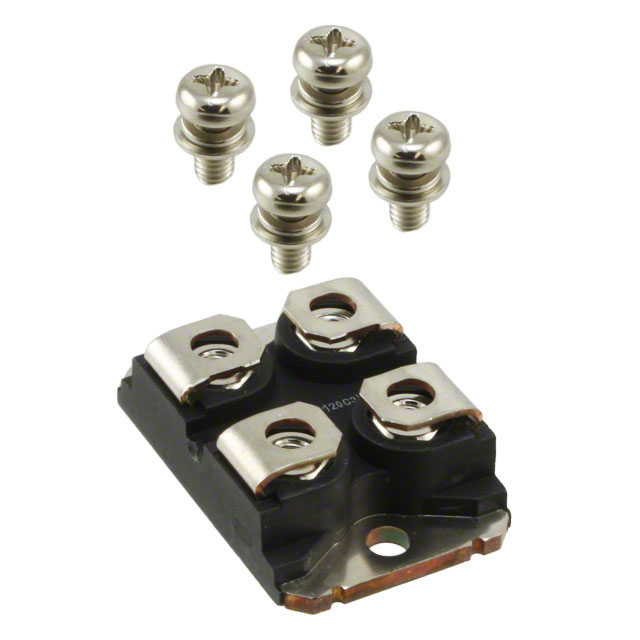
The IXFN130N30 is an N-Channel MOSFET rated for 300V drain-to-source voltage with 130A continuous drain current at 25°C, housed in a SOT-227B chassis mount package. This device is part of the HiPerFET™ series from IXYS and is classified as not for new designs. Due to its discontinued status, identifying equivalent and substitute components is necessary for ongoing production support, maintenance applications, and design continuity where this device is currently deployed.
Substiute Parts
Key Parameters
| Parameter | Value | Unit |
|---|---|---|
| FET Type | N-Channel | — |
| Drain to Source Voltage (Vdss) | 300 | V |
| Continuous Drain Current (Id) @ 25°C | 130 | A (Tc) |
| Power Dissipation (Max) | 700 | W (Tc) |
| Rds On (Max) @ 500mA, 10V | 22 | mOhm |
| Gate Charge (Qg) @ 10V | 380 | nC |
| Operating Temperature Range | -55 to 150 | °C (TJ) |
| Mounting Type | Chassis Mount | — |
| Package | SOT-227B, miniBLOC | — |
| RoHS Status | ROHS3 Compliant | — |
Substitute Part Grouping Explanation
Substitution eligibility for the IXFN130N30 is determined by the following critical parameters:
Mandatory Matching Criteria:
- Drain to Source Voltage (Vdss): 300V
- FET Type: N-Channel
- Technology: MOSFET (Metal Oxide)
- Mounting Type: Chassis Mount
- Operating Temperature Range: -55°C to 150°C (TJ)
- RoHS Compliance: ROHS3 Compliant
Performance Compatibility Criteria:
- Continuous Drain Current (Id) @ 25°C: Equal to or greater than 130A
- Power Dissipation (Max): Equal to or greater than 700W
- Rds On (Max): Equal to or lower than 22mOhm (lower resistance preferred for thermal performance)
Package Compatibility:
- Primary package: SOT-227B, miniBLOC
- Alternative packages acceptable if mechanical and thermal characteristics remain within design envelope
Two substitute parts meet these criteria with varying performance enhancements and package configurations.
Parameter Comparison
| Parameter | IXFN130N30 | IXFN170N30P | APT30M19JVFR |
|---|---|---|---|
| Manufacturer | IXYS | IXYS | Microchip Technology |
| FET Type | N-Channel | N-Channel | N-Channel |
| Vdss | 300V | 300V | 300V |
| Id @ 25°C | 130A (Tc) | 138A (Tc) | 130A (Tc) |
| Power Dissipation (Max) | 700W (Tc) | 890W (Tc) | 700W (Tc) |
| Rds On (Max) @ 10V | 22mOhm @ 500mA | 18mOhm @ 85A | 19mOhm @ 500mA |
| Gate Charge (Qg) @ 10V | 380nC | 258nC | 975nC |
| Input Capacitance (Ciss) @ 25V | 14500pF | 20000pF | 21600pF |
| Vgs (Max) | ±20V | ±20V | ±30V |
| Operating Temperature | -55 to 150°C (TJ) | -55 to 150°C (TJ) | -55 to 150°C (TJ) |
| Mounting Type | Chassis Mount | Chassis Mount | Chassis Mount |
| Package | SOT-227B, miniBLOC | SOT-227B, miniBLOC | ISOTOP®, SOT-227-4, miniBLOC |
| Product Status | Not For New Designs | Active | Active |
| RoHS Status | ROHS3 Compliant | ROHS3 Compliant | ROHS3 Compliant |
Engineering Selection Recommendations
IXFN170N30P (IXYS)
This substitute is the primary equivalent for the IXFN130N30. Both devices are from the same manufacturer and HiPerFET™ series, ensuring design continuity. The IXFN170N30P offers enhanced performance with 138A continuous drain current and 890W power dissipation, exceeding the original specification. The on-resistance is reduced to 18mOhm at 85A, providing improved thermal efficiency. Gate charge is lower at 258nC, reducing switching losses. The device is currently in active production status, ensuring long-term availability. Packaging remains identical (SOT-227B, miniBLOC), and RoHS3 compliance is maintained. This substitute is suitable for direct replacement in existing designs.
APT30M19JVFR (Microchip Technology)
This substitute provides equivalent electrical performance with identical drain current (130A) and power dissipation (700W) specifications. The on-resistance is 19mOhm at 500mA, marginally higher than the original but within acceptable tolerance. The device is manufactured by Microchip Technology under the POWER MOS V® series and maintains active production status. RoHS3 compliance is confirmed. The primary distinction is the ISOTOP® package configuration, which differs from the standard SOT-227B. This package change requires mechanical and thermal validation in the target application. Gate charge is significantly higher at 975nC, which may impact switching performance in high-frequency applications. Maximum gate voltage rating is ±30V, providing additional margin over the original ±20V specification.
Selection Criteria:
For direct replacement with minimal design modification, IXFN170N30P is the preferred substitute due to identical packaging, same manufacturer series, and superior electrical performance.
For applications where Microchip Technology components are standardized or where the ISOTOP® package is already qualified, APT30M19JVFR provides functional equivalence with equivalent current and power ratings, subject to mechanical and thermal re-validation.
Frequently Asked Questions (FAQ)
Q: Can the IXFN170N30P be used as a direct replacement for the IXFN130N30?
A: Yes. Both devices share identical voltage ratings (300V Vdss), operating temperature range (-55°C to 150°C), and package configuration (SOT-227B, miniBLOC). The IXFN170N30P exceeds the original specifications in continuous drain current (138A vs. 130A) and power dissipation (890W vs. 700W), making it a direct upgrade. Active production status ensures availability.
Q: What are the key differences between IXFN170N30P and APT30M19JVFR?
A: Both are functionally equivalent at the electrical specification level (300V, 130A minimum). The IXFN170N30P offers lower on-resistance (18mOhm) and lower gate charge (258nC), resulting in reduced switching losses. The APT30M19JVFR uses an ISOTOP® package instead of standard SOT-227B, requiring mechanical and thermal re-qualification. Gate charge is higher (975nC), which may increase switching losses in high-frequency circuits.
Q: Is the ISOTOP® package of the APT30M19JVFR compatible with SOT-227B footprints?
A: The ISOTOP® package is mechanically and thermally distinct from SOT-227B, despite both being classified as miniBLOC variants. Direct footprint compatibility cannot be assumed. Mechanical drawings and thermal interface specifications must be reviewed before substitution. PCB layout and heatsink mounting may require modification.
Q: Are all three devices RoHS3 compliant?
A: Yes. The IXFN130N30, IXFN170N30P, and APT30M19JVFR are all ROHS3 Compliant. REACH status is unaffected for all three devices.
Q: Why is the IXFN130N30 marked as "Not For New Designs"?
A: This designation indicates the device is in end-of-life status and is no longer recommended for new product development. Existing inventory remains available for production support and maintenance. The IXFN170N30P and APT30M19JVFR, both in active production status, are the recommended alternatives for new designs.
Q: What is the impact of higher gate charge in the APT30M19JVFR?
A: Gate charge (975nC vs. 380nC in the original) directly affects switching speed and driver power requirements. Higher gate charge increases the energy required to switch the device on and off, resulting in higher switching losses and potentially requiring a more robust gate driver circuit. This is a critical consideration in high-frequency switching applications.
Q: Can the IXFN170N30P be used in applications originally designed for the IXFN130N30 without circuit modification?
A: Yes, in most cases. The IXFN170N30P is a performance upgrade with lower on-resistance and gate charge, both beneficial characteristics. However, applications with tight thermal budgets or specific gate driver timing requirements should be reviewed. The lower gate charge may require gate driver adjustment if the original design was optimized for the higher 380nC specification.
Q: What is the significance of the ±30V maximum gate voltage in the APT30M19JVFR compared to ±20V in the original?
A: The higher ±30V rating provides additional margin for gate voltage transients and overshoot during switching events. This is beneficial for robustness but does not require circuit modification if the original design operated within ±20V limits. The higher rating is a design advantage with no negative impact.
Alternative Parts

SJ6012L2TP
Littelfuse Inc.
6 Alternative Parts

JMK107BBJ476MA-RE
Taiyo Yuden
10 Alternative Parts

GMK107BBJ475MA-T
Taiyo Yuden
5 Alternative Parts
SJ6020N2ARP
Littelfuse Inc.
3 Alternative Parts
SJ6025R2ATP
Littelfuse Inc.
4 Alternative Parts

2474-05L
API Delevan Inc.
1 Alternative Parts

4590R-684K
API Delevan Inc.
1 Alternative Parts

CM6560R-334
API Delevan Inc.
1 Alternative Parts

CM6460-104
API Delevan Inc.
1 Alternative Parts

5526-12
API Delevan Inc.
1 Alternative Parts