


Request Quote
(Ships tomorrow)
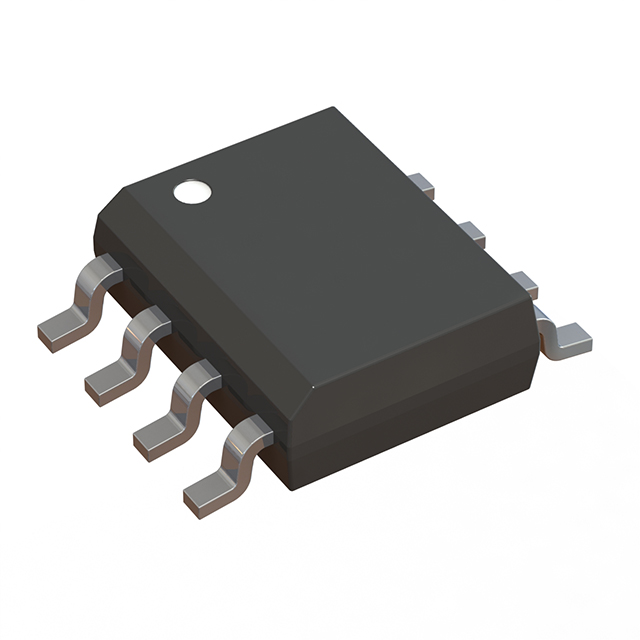
IX4425N Low-Side Gate Driver IC
Part Overview
The IX4425N is a low-side gate driver IC manufactured by IXYS Integrated Circuits Division, designed for driving N-Channel and P-Channel MOSFETs in power management applications. This device features independent dual-channel configuration with inverting and non-inverting input types, operating across a 4.5V to 30V supply voltage range.
The IX4425N is classified as obsolete. Identifying equivalent substitute parts is necessary to maintain design continuity and ensure component availability for new production runs and system maintenance.
Substiute Parts
Key Parameters
| Parameter | Value |
|---|---|
| Manufacturer Part Number | IX4425N |
| Manufacturer | IXYS Integrated Circuits Division |
| Category | Power Management (PMIC) |
| Description | IC GATE DRVR LOW-SIDE 8SOIC |
| Driven Configuration | Low-Side |
| Number of Drivers | 2 |
| Gate Type | N-Channel, P-Channel MOSFET |
| Voltage - Supply | 4.5V ~ 30V |
| Current - Peak Output (Source, Sink) | 3A, 3A |
| Input Type | Inverting, Non-Inverting |
| Rise / Fall Time (Typ) | 18ns, 18ns |
| Operating Temperature | -55°C ~ 150°C (TJ) |
| Package / Case | 8-SOIC (0.154", 3.90mm Width) |
| Product Status | Obsolete |
| RoHS Status | ROHS3 Compliant |
Substitute Part Grouping Explanation
Substitution of the IX4425N is determined by strict equivalence across the following critical parameters:
- Driven Configuration: Low-Side (must match exactly)
- Number of Drivers: 2 independent channels (must match exactly)
- Gate Type: N-Channel and P-Channel MOSFET support (must match exactly)
- Package / Case: 8-SOIC form factor (must match exactly)
- Input Type: Inverting and Non-Inverting capability (must match exactly)
- Voltage - Supply Range: 4.5V ~ 30V compatibility (must encompass or match)
- RoHS Compliance: ROHS3 Compliant (must match)
The IX4428N qualifies as a manufacturer-recommended substitute based on these criteria. Both devices share identical driven configuration, channel count, gate type support, package form factor, input type flexibility, and RoHS compliance status.
Parameter Comparison
| Parameter | IX4425N | IX4428N | Compatibility Notes |
|---|---|---|---|
| Manufacturer Part Number | IX4425N | IX4428N | Both IXYS Integrated Circuits Division |
| Driven Configuration | Low-Side | Low-Side | Identical |
| Number of Drivers | 2 | 2 | Identical |
| Gate Type | N-Channel, P-Channel MOSFET | N-Channel, P-Channel MOSFET | Identical |
| Voltage - Supply | 4.5V ~ 30V | 4.5V ~ 30V | Identical |
| Logic Voltage - VIL, VIH | 0.8V, 3V | 0.8V, 2.4V | VIH differs; IX4428N has lower threshold |
| Current - Peak Output (Source, Sink) | 3A, 3A | 1.5A, 1.5A | IX4428N rated at 50% of IX4425N |
| Input Type | Inverting, Non-Inverting | Inverting, Non-Inverting | Identical |
| Rise / Fall Time (Typ) | 18ns, 18ns | 10ns, 8ns | IX4428N faster switching performance |
| Operating Temperature | -55°C ~ 150°C (TJ) | -40°C ~ 125°C (TA) | IX4425N supports wider temperature range |
| Package / Case | 8-SOIC (0.154", 3.90mm Width) | 8-SOIC (0.154", 3.90mm Width) | Identical |
| Product Status | Obsolete | Active | IX4428N actively manufactured |
| RoHS Status | ROHS3 Compliant | ROHS3 Compliant | Identical |
Engineering Selection Recommendations
The IX4428N is the manufacturer-recommended substitute for the obsolete IX4425N. Both devices maintain identical low-side gate driver configuration, dual independent channels, MOSFET gate type support, 8-SOIC packaging, and ROHS3 compliance.
Selection of the IX4428N requires verification that the following parameter differences are acceptable for the target application:
Peak output current is reduced from 3A to 1.5A in the IX4428N. Applications requiring the full 3A source and sink capability must evaluate whether the lower rating impacts system performance or requires circuit redesign.
Operating temperature range is narrower in the IX4428N (-40°C to 125°C ambient) compared to the IX4425N (-55°C to 150°C junction). Designs operating at temperature extremes must confirm compatibility with the reduced range.
Logic input voltage threshold (VIH) is lower in the IX4428N (2.4V versus 3V). This difference may affect signal integrity in systems with marginal logic voltage levels.
Rise and fall times are faster in the IX4428N (10ns/8ns versus 18ns/18ns), which may improve switching performance but requires verification that EMI and signal integrity remain within acceptable limits.
The IX4428N is actively manufactured and maintains full ROHS3 compliance, supporting long-term design continuity and regulatory compliance.
Frequently Asked Questions (FAQ)
Q: Can the IX4428N directly replace the IX4425N in existing designs?
A: Functional replacement is possible due to identical driven configuration, channel count, gate type support, and 8-SOIC packaging. However, the reduced peak output current (1.5A versus 3A), narrower operating temperature range, and different logic thresholds require circuit-level verification before implementation.
Q: What is the primary reason for substitution?
A: The IX4425N is classified as obsolete. The IX4428N is the manufacturer-recommended active alternative, ensuring continued component availability and manufacturing support.
Q: Are there any package compatibility concerns?
A: Both devices use identical 8-SOIC (0.154", 3.90mm Width) packaging. PCB footprints and mechanical mounting are fully compatible.
Q: How do the output current ratings affect circuit design?
A: The IX4428N provides 1.5A peak source and sink current compared to 3A in the IX4425N. Applications requiring higher gate drive current must evaluate whether the reduced rating is sufficient for the target MOSFET gate charge and switching frequency, or if external drive amplification is necessary.
Q: What compliance certifications apply to both devices?
A: Both the IX4425N and IX4428N are ROHS3 compliant and REACH unaffected, meeting current regulatory requirements for electronic component manufacturing and use.
Q: How do switching speed differences impact system performance?
A: The IX4428N exhibits faster rise and fall times (10ns/8ns versus 18ns/18ns). This faster switching may reduce gate drive losses and improve efficiency but requires EMI assessment to ensure radiated and conducted emissions remain within system specifications.
Alternative Parts

SJ6012L2TP
Littelfuse Inc.
6 Alternative Parts

JMK107BBJ476MA-RE
Taiyo Yuden
10 Alternative Parts

GMK107BBJ475MA-T
Taiyo Yuden
5 Alternative Parts
SJ6020N2ARP
Littelfuse Inc.
3 Alternative Parts
SJ6025R2ATP
Littelfuse Inc.
4 Alternative Parts

2474-05L
API Delevan Inc.
1 Alternative Parts

4590R-684K
API Delevan Inc.
1 Alternative Parts

CM6560R-334
API Delevan Inc.
1 Alternative Parts

CM6460-104
API Delevan Inc.
1 Alternative Parts

5526-12
API Delevan Inc.
1 Alternative Parts