



Request Quote
(Ships tomorrow)
ISO5500DWR Equivalent & Substitute Parts
Part Overview
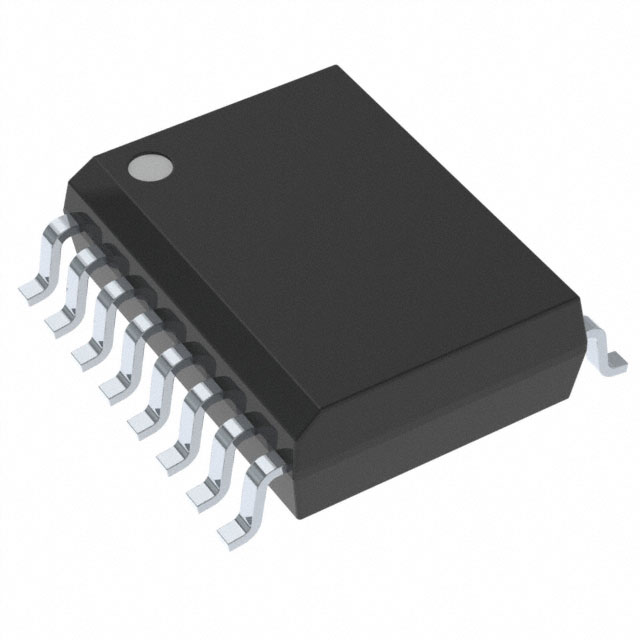
The ISO5500DWR is a 2.5A gate driver with capacitive coupling technology, rated for 4243Vrms isolation voltage and designed for single-channel applications in 16-SOIC surface mount packaging. This part is classified as obsolete, making identification of functionally equivalent alternatives necessary for ongoing design support and procurement continuity. The ISO5500DWR operates across the industrial temperature range of -40°C to 125°C with output supply voltage requirements of 15V to 30V.
Substiute Parts
Key Parameters
| Parameter | ISO5500DWR |
|---|---|
| Manufacturer | Texas Instruments |
| Product Status | Obsolete |
| Technology | Capacitive Coupling |
| Number of Channels | 1 |
| Voltage - Isolation | 4243Vrms |
| Common Mode Transient Immunity (Min) | 25kV/µs |
| Current - Output High / Low | 2.5A / 2.5A |
| Voltage - Output Supply | 15V ~ 30V |
| Operating Temperature | -40°C ~ 125°C |
| Package / Case | 16-SOIC (0.295", 7.50mm Width) |
| Mounting Type | Surface Mount |
| RoHS Status | ROHS3 Compliant |
Substitute Part Grouping Explanation
Substitution of the ISO5500DWR is determined by the following critical parameters: single-channel configuration, capacitive coupling technology, 16-SOIC package format, surface mount mounting type, and operating temperature range of -40°C to 125°C. The substitute parts ISO5852SDWR and UCC21750DWR meet these core mechanical and functional requirements. Both substitutes maintain the same package geometry, mounting technology, and temperature specifications as the original part.
The substitutes provide enhanced isolation voltage ratings (5700Vrms versus 4243Vrms) and improved common mode transient immunity performance, representing technology advancement within the same product family. Output supply voltage compatibility remains within the 15V to 30V range for both substitutes, ensuring circuit-level compatibility with existing designs.
Parameter Comparison
| Parameter | ISO5500DWR | ISO5852SDWR | UCC21750DWR |
|---|---|---|---|
| Manufacturer | Texas Instruments | Texas Instruments | Texas Instruments |
| Product Status | Obsolete | Active | Active |
| Technology | Capacitive Coupling | Capacitive Coupling | Capacitive Coupling |
| Number of Channels | 1 | 1 | 1 |
| Voltage - Isolation | 4243Vrms | 5700Vrms | 5700Vrms |
| Common Mode Transient Immunity (Min) | 25kV/µs | 100kV/µs | 150V/ns |
| Propagation Delay tpLH / tpHL (Max) | 300ns / 300ns | 110ns / 110ns | 130ns / 130ns |
| Rise / Fall Time (Typ) | 55ns / 10ns | 18ns / 20ns | 33ns / 27ns |
| Current - Output High / Low | 2.5A / 2.5A | 1.5A / 3.4A | 10A / 10A |
| Voltage - Output Supply | 15V ~ 30V | 15V ~ 30V | 13V ~ 33V |
| Operating Temperature | -40°C ~ 125°C | -40°C ~ 125°C | -40°C ~ 125°C |
| Package / Case | 16-SOIC (0.295", 7.50mm Width) | 16-SOIC (0.295", 7.50mm Width) | 16-SOIC (0.295", 7.50mm Width) |
| Mounting Type | Surface Mount | Surface Mount | Surface Mount |
| RoHS Status | ROHS3 Compliant | ROHS3 Compliant | ROHS3 Compliant |
| Moisture Sensitivity Level (MSL) | 2 (1 Year) | 2 (1 Year) | 2 (1 Year) |
Engineering Selection Recommendations
Both ISO5852SDWR and UCC21750DWR are active products from Texas Instruments, providing long-term availability and design support compared to the obsolete ISO5500DWR. The ISO5852SDWR maintains output current specifications closer to the original part (2.7A peak) while offering improved isolation voltage and common mode transient immunity. The UCC21750DWR provides significantly higher output current capability (10A) with extended output supply voltage range (13V to 33V), suitable for applications requiring higher gate drive current.
Selection between the two substitutes depends on application-specific current requirements. The ISO5852SDWR is appropriate for designs where the original 2.5A output current specification is adequate. The UCC21750DWR is suitable for applications requiring higher drive current or where the extended supply voltage range provides system-level advantages. Both substitutes maintain full compliance with RoHS3 and REACH requirements, with CSA, UL, and VDE certifications supporting industrial and safety-critical applications.
Frequently Asked Questions (FAQ)
Q: Can ISO5852SDWR or UCC21750DWR be used as direct replacements for ISO5500DWR in existing PCB designs?
A: Both substitutes are pin-compatible within the 16-SOIC package format and require no PCB layout modifications. Electrical compatibility is maintained across the specified operating temperature range and output supply voltage range. Design verification is necessary to confirm that the enhanced performance characteristics of the substitutes do not introduce unintended circuit behavior.
Q: What is the primary difference between ISO5852SDWR and UCC21750DWR?
A: The primary difference is output current capability. ISO5852SDWR provides 2.7A peak output current, while UCC21750DWR provides 10A peak output current. The UCC21750DWR also offers an extended output supply voltage range (13V to 33V) compared to ISO5852SDWR (15V to 30V).
Q: Are there any compliance or certification differences between the substitutes?
A: ISO5852SDWR carries CQC, CSA, UR, and VDE certifications. UCC21750DWR carries UL and VDE certifications. Both are ROHS3 compliant and REACH unaffected. Application-specific certification requirements should be evaluated against the intended use case.
Q: How do propagation delay specifications compare across the three parts?
A: ISO5500DWR specifies 300ns maximum propagation delay. ISO5852SDWR specifies 110ns maximum propagation delay. UCC21750DWR specifies 130ns maximum propagation delay. Both substitutes provide faster signal propagation, which may require timing analysis in applications sensitive to gate drive delay.
Q: What is the moisture sensitivity level for these parts?
A: All three parts are rated MSL 2 (1 Year), indicating identical moisture handling and storage requirements. Standard moisture control procedures during assembly and storage apply uniformly across all three parts.
Alternative Parts

SJ6012L2TP
Littelfuse Inc.
6 Alternative Parts

JMK107BBJ476MA-RE
Taiyo Yuden
10 Alternative Parts

GMK107BBJ475MA-T
Taiyo Yuden
5 Alternative Parts
SJ6020N2ARP
Littelfuse Inc.
3 Alternative Parts
SJ6025R2ATP
Littelfuse Inc.
4 Alternative Parts

2474-05L
API Delevan Inc.
1 Alternative Parts

4590R-684K
API Delevan Inc.
1 Alternative Parts

CM6560R-334
API Delevan Inc.
1 Alternative Parts

CM6460-104
API Delevan Inc.
1 Alternative Parts

5526-12
API Delevan Inc.
1 Alternative Parts