


Request Quote
(Ships tomorrow)
ISO150AU Digital Isolator Equivalent & Substitute Parts
Part Overview
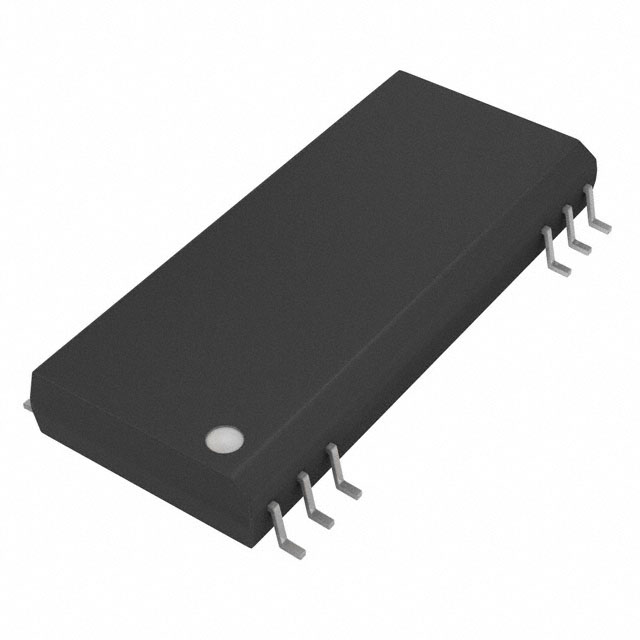
The ISO150AU is a general purpose digital isolator manufactured by Texas Instruments, featuring 1500Vrms isolation voltage, 2 channels, and 80MBd data rate in a 28-SOIC package. This component is classified as obsolete, making identification of suitable substitute parts essential for ongoing system support and new design implementations. The ISO150AU utilizes capacitive coupling technology for signal isolation across a 1.6kV/µs common mode transient immunity specification.
Substiute Parts
Key Parameters
| Parameter | ISO150AU Specification |
|---|---|
| Manufacturer | Texas Instruments |
| Product Status | Obsolete |
| Technology | Capacitive Coupling |
| Number of Channels | 2 |
| Voltage - Isolation | 1500Vrms |
| Common Mode Transient Immunity (Min) | 1.6kV/µs (Typ) |
| Data Rate | 80MBd |
| Voltage - Supply | 3V ~ 5.5V |
| Operating Temperature | -40°C ~ 85°C |
| Package / Case | 28-SOIC (0.295", 7.50mm Width), 8 Leads |
| RoHS Status | ROHS3 Compliant |
Substitute Part Grouping Explanation
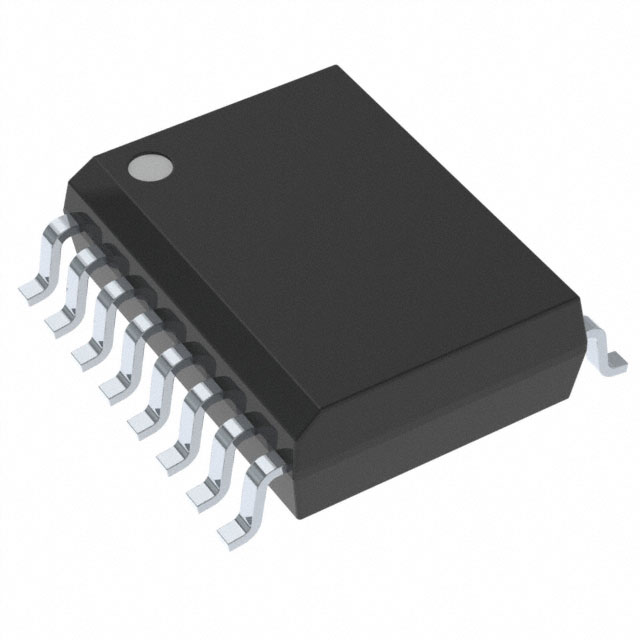
The ISO7342CDW is identified as a manufacturer-recommended substitute for the ISO150AU. Substitution eligibility is determined by the following critical parameters:
- Technology Match: Both components utilize capacitive coupling isolation technology
- Supply Voltage Compatibility: Both operate within the 3V to 5.5V supply range
- Mounting Type: Both are surface mount devices in SOIC packages
- Compliance Standards: Both maintain ROHS3 compliance and EAR99 ECCN classification
- Manufacturer Continuity: Both are Texas Instruments products
The ISO7342CDW provides enhanced specifications in isolation voltage (3000Vrms versus 1500Vrms) and common mode transient immunity (25kV/µs versus 1.6kV/µs), making it suitable for applications requiring higher isolation performance. The substitute operates across an extended temperature range (-40°C to 125°C versus -40°C to 85°C) and maintains active product status.
Parameter Comparison
| Parameter | ISO150AU | ISO7342CDW |
|---|---|---|
| Manufacturer | Texas Instruments | Texas Instruments |
| Product Status | Obsolete | Active |
| Technology | Capacitive Coupling | Capacitive Coupling |
| Number of Channels | 2 | 4 |
| Voltage - Isolation | 1500Vrms | 3000Vrms |
| Common Mode Transient Immunity (Min) | 1.6kV/µs (Typ) | 25kV/µs |
| Data Rate | 80MBd | 25Mbps |
| Propagation Delay tpLH / tpHL (Max) | 40ns, 40ns | 58ns, 58ns |
| Pulse Width Distortion (Max) | 6ns | 4ns |
| Voltage - Supply | 3V ~ 5.5V | 3V ~ 5.5V |
| Operating Temperature | -40°C ~ 85°C | -40°C ~ 125°C |
| Mounting Type | Surface Mount | Surface Mount |
| Package / Case | 28-SOIC (0.295", 7.50mm Width), 8 Leads | 16-SOIC (0.295", 7.50mm Width) |
| RoHS Status | ROHS3 Compliant | ROHS3 Compliant |
| Moisture Sensitivity Level (MSL) | 3 (168 Hours) | 2 (1 Year) |
Engineering Selection Recommendations
The ISO7342CDW is the manufacturer-recommended substitute for the obsolete ISO150AU. Selection of this substitute is supported by:
- Active Product Status: The ISO7342CDW maintains active manufacturing status, ensuring long-term availability and supply chain continuity
- Regulatory Compliance: Both components maintain ROHS3 compliance and identical ECCN/HTSUS classifications, satisfying regulatory requirements
- Enhanced Reliability: The ISO7342CDW features improved moisture sensitivity level (MSL 2 versus MSL 3), indicating superior moisture resistance and extended shelf life
- Extended Operating Range: The substitute supports operation to 125°C, providing thermal margin for demanding applications
Design integration requires evaluation of package footprint differences (28-SOIC versus 16-SOIC) and channel configuration changes (2 channels versus 4 channels). The reduced data rate specification (25Mbps versus 80MBd) and increased propagation delay (58ns versus 40ns) must be assessed against application timing requirements.
Frequently Asked Questions (FAQ)
Q: Can the ISO7342CDW directly replace the ISO150AU without PCB modifications?
A: Package footprint differences require PCB layout evaluation. The ISO150AU uses a 28-SOIC package while the ISO7342CDW uses a 16-SOIC package. Pin-to-pin compatibility must be verified against specific application schematics.
Q: What are the key differences in isolation performance between these components?
A: The ISO7342CDW provides 3000Vrms isolation voltage compared to the ISO150AU's 1500Vrms specification. Common mode transient immunity is significantly higher at 25kV/µs versus 1.6kV/µs. These enhancements support applications requiring greater noise immunity and isolation margin.
Q: How do the data rate specifications compare?
A: The ISO150AU operates at 80MBd while the ISO7342CDW operates at 25Mbps. Applications requiring the higher data rate of the ISO150AU may require alternative substitutes if bandwidth is a critical design parameter.
Q: Are there supply voltage compatibility concerns?
A: Both components operate within the identical 3V to 5.5V supply voltage range. No supply circuit modifications are required for voltage compatibility.
Q: What is the significance of the MSL rating difference?
A: The ISO7342CDW features MSL 2 (1 Year) compared to the ISO150AU's MSL 3 (168 Hours). This indicates superior moisture resistance and extended shelf life, reducing risk of moisture-induced failures during storage and handling.
Q: Does the extended operating temperature range of the ISO7342CDW provide design advantages?
A: The ISO7342CDW supports -40°C to 125°C operation versus the ISO150AU's -40°C to 85°C range. This 40°C upper temperature margin accommodates high-temperature applications and provides thermal design margin for standard operating conditions.
Alternative Parts

SJ6012L2TP
Littelfuse Inc.
6 Alternative Parts

JMK107BBJ476MA-RE
Taiyo Yuden
10 Alternative Parts

GMK107BBJ475MA-T
Taiyo Yuden
5 Alternative Parts
SJ6020N2ARP
Littelfuse Inc.
3 Alternative Parts
SJ6025R2ATP
Littelfuse Inc.
4 Alternative Parts

2474-05L
API Delevan Inc.
1 Alternative Parts

4590R-684K
API Delevan Inc.
1 Alternative Parts

CM6560R-334
API Delevan Inc.
1 Alternative Parts

CM6460-104
API Delevan Inc.
1 Alternative Parts

5526-12
API Delevan Inc.
1 Alternative Parts