


Request Quote
(Ships tomorrow)
ISO1042DWR CAN Bus Transceiver Equivalent & Substitute Parts
Part Overview
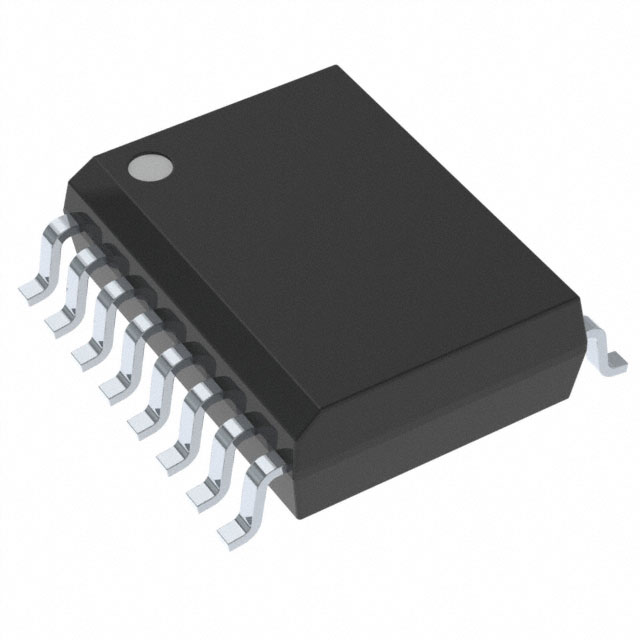
The ISO1042DWR is a full-duplex CAN bus transceiver manufactured by Texas Instruments, designed for automotive and industrial applications requiring reliable high-speed communication over CANbus protocol. This 16-SOIC surface mount device operates across dual voltage ranges (1.71V–1.89V and 2.25V–5.5V) and supports data rates up to 5 Mbps with 120 mV receiver hysteresis. The part is currently in active production status with ROHS3 compliance and AEC-Q100 qualification available in automotive-grade variants. Substitute parts are identified when inventory constraints, lead time requirements, or application-specific certifications necessitate alternative sourcing while maintaining electrical and mechanical compatibility.
Substiute Parts
Key Parameters
| Parameter | Specification |
|---|---|
| Manufacturer | Texas Instruments |
| Category | Interface |
| Type | Transceiver |
| Protocol | CANbus |
| Number of Drivers/Receivers | 1/1 |
| Duplex Mode | Full |
| Data Rate | 5 Mbps |
| Receiver Hysteresis | 120 mV |
| Voltage Supply Range | 1.71V–1.89V, 2.25V–5.5V |
| Operating Temperature | -40°C to 125°C |
| Package Type | 16-SOIC (0.295", 7.50mm Width) |
| Mounting Type | Surface Mount |
| RoHS Status | ROHS3 Compliant |
| MSL Rating | 3 (168 Hours) |
| Product Status | Active |
Substitute Part Grouping Explanation
Substitution eligibility for the ISO1042DWR is determined by strict equivalence across the following critical parameters:
- Protocol Compatibility: CANbus full-duplex transceiver architecture
- Electrical Performance: 1/1 driver/receiver configuration, 5 Mbps data rate, 120 mV receiver hysteresis
- Voltage Specifications: Dual supply voltage ranges (1.71V–1.89V and 2.25V–5.5V)
- Thermal Range: -40°C to 125°C operating temperature
- Package Specification: 16-SOIC form factor with 0.295" (7.50mm) width
- Compliance: ROHS3 compliance and MSL 3 rating
The ISO1042BQDWRQ1 qualifies as a parametric equivalent substitute based on identical electrical specifications and package configuration. The primary distinction is the addition of automotive-grade qualification (AEC-Q100) in the substitute part, which represents an enhancement rather than a deviation from the base specification.
Parameter Comparison
| Parameter | ISO1042DWR | ISO1042BQDWRQ1 |
|---|---|---|
| Manufacturer | Texas Instruments | Texas Instruments |
| Category | Interface | Interface |
| Type | Transceiver | Transceiver |
| Protocol | CANbus | CANbus |
| Drivers/Receivers | 1/1 | 1/1 |
| Duplex | Full | Full |
| Data Rate | 5 Mbps | 5 Mbps |
| Receiver Hysteresis | 120 mV | 120 mV |
| Voltage Supply | 1.71V–1.89V, 2.25V–5.5V | 1.71V–1.89V, 2.25V–5.5V |
| Operating Temperature | -40°C to 125°C | -40°C to 125°C |
| Package | 16-SOIC (0.295", 7.50mm) | 16-SOIC (0.295", 7.50mm) |
| Mounting Type | Surface Mount | Surface Mount |
| RoHS Status | ROHS3 Compliant | ROHS3 Compliant |
| MSL Rating | 3 (168 Hours) | 3 (168 Hours) |
| Product Status | Active | Active |
| Automotive Grade | Standard | AEC-Q100 Qualified |
Engineering Selection Recommendations
Both ISO1042DWR and ISO1042BQDWRQ1 are active production parts from Texas Instruments with identical electrical and mechanical specifications. Selection between these parts should be based on application requirements:
ISO1042DWR is suitable for general industrial and consumer applications where standard-grade components meet design specifications and cost optimization is a priority.
ISO1042BQDWRQ1 is required for automotive applications or systems subject to AEC-Q100 qualification mandates. The automotive-grade variant provides additional process controls and reliability assurance aligned with automotive industry standards.
Both parts maintain ROHS3 compliance, identical thermal operating ranges, and equivalent CANbus transceiver performance. Pin-to-pin compatibility and functional equivalence are guaranteed across both variants.
Frequently Asked Questions (FAQ)
Q: Are ISO1042DWR and ISO1042BQDWRQ1 pin-compatible?
A: Yes. Both parts use the 16-SOIC package with identical pinout and electrical characteristics. Direct substitution is possible without PCB redesign.
Q: What is the primary difference between these two parts?
A: The ISO1042BQDWRQ1 includes AEC-Q100 automotive qualification, while the ISO1042DWR is standard-grade. All electrical and mechanical specifications are identical.
Q: Can I use ISO1042DWR in an automotive application?
A: ISO1042DWR can be used in automotive applications if your design does not require AEC-Q100 certification. For designs requiring automotive-grade qualification, ISO1042BQDWRQ1 is the appropriate selection.
Q: Are there any thermal or voltage differences between these parts?
A: No. Both parts operate across identical voltage ranges (1.71V–1.89V and 2.25V–5.5V) and temperature ranges (-40°C to 125°C) with equivalent receiver hysteresis (120 mV).
Q: What does MSL 3 (168 Hours) mean for storage and handling?
A: MSL 3 indicates Moisture Sensitivity Level 3, requiring storage in controlled humidity environments. The 168-hour specification defines the maximum floor life after moisture exposure before reflow soldering must occur.
Q: Can these parts be used interchangeably in existing designs?
A: Yes, provided the design does not mandate automotive-grade certification. Both parts are functionally equivalent for CANbus transceiver applications with 5 Mbps data rate requirements.
Alternative Parts

SJ6012L2TP
Littelfuse Inc.
6 Alternative Parts

JMK107BBJ476MA-RE
Taiyo Yuden
10 Alternative Parts

GMK107BBJ475MA-T
Taiyo Yuden
5 Alternative Parts
SJ6020N2ARP
Littelfuse Inc.
3 Alternative Parts
SJ6025R2ATP
Littelfuse Inc.
4 Alternative Parts

2474-05L
API Delevan Inc.
1 Alternative Parts

4590R-684K
API Delevan Inc.
1 Alternative Parts

CM6560R-334
API Delevan Inc.
1 Alternative Parts

CM6460-104
API Delevan Inc.
1 Alternative Parts

5526-12
API Delevan Inc.
1 Alternative Parts