


Request Quote
(Ships tomorrow)
ISO1042BDWVR Equivalent & Substitute Parts
Part Overview
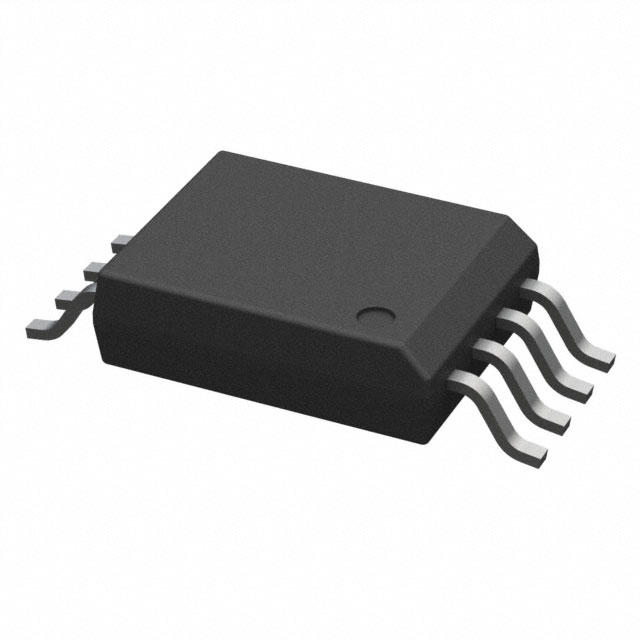
The ISO1042BDWVR is a full-duplex CANbus transceiver manufactured by Texas Instruments, designed for interface applications requiring reliable CAN communication. This 1/1 transceiver is packaged in an 8-SOIC surface-mount configuration and operates across dual voltage supply ranges (1.71V–1.89V and 2.25V–5.5V). The part maintains Active product status with full RoHS3 compliance and REACH unaffected designation. Substitute parts are identified when identical electrical specifications, mechanical packaging, and compliance certifications are maintained across the product line.
Substiute Parts
Key Parameters
| Parameter | Specification |
|---|---|
| Manufacturer | Texas Instruments |
| Protocol | CANbus |
| Type | Transceiver |
| Number of Drivers/Receivers | 1/1 |
| Duplex Mode | Full |
| Data Rate | 5 Mbps |
| Receiver Hysteresis | 120 mV |
| Voltage Supply Range | 1.71V–1.89V, 2.25V–5.5V |
| Operating Temperature | −40°C to +125°C (TA) |
| Package Type | 8-SOIC (0.295", 7.50mm Width) |
| Mounting Type | Surface Mount |
| RoHS Status | ROHS3 Compliant |
| MSL Rating | 3 (168 Hours) |
Substitute Part Grouping Explanation
Substitution of the ISO1042BDWVR is limited to parts maintaining identical electrical and mechanical specifications. The critical parameters determining substitutability are: CANbus protocol compliance, 1/1 driver/receiver configuration, full-duplex operation, 5 Mbps data rate, 120 mV receiver hysteresis, dual voltage supply ranges (1.71V–1.89V and 2.25V–5.5V), −40°C to +125°C operating temperature range, and 8-SOIC surface-mount packaging. The ISO1042DWVR meets all these requirements and is classified as a parametric equivalent within the Texas Instruments ISO1042 base product family.
Parameter Comparison
| Parameter | ISO1042BDWVR | ISO1042DWVR |
|---|---|---|
| Manufacturer | Texas Instruments | Texas Instruments |
| Category | Interface | Interface |
| Type | Transceiver | Transceiver |
| Protocol | CANbus | CANbus |
| Number of Drivers/Receivers | 1/1 | 1/1 |
| Duplex | Full | Full |
| Receiver Hysteresis | 120 mV | 120 mV |
| Data Rate | 5 Mbps | 5 Mbps |
| Voltage Supply | 1.71V–1.89V, 2.25V–5.5V | 1.71V–1.89V, 2.25V–5.5V |
| Operating Temperature | −40°C to +125°C (TA) | −40°C to +125°C (TA) |
| Package / Case | 8-SOIC (0.295", 7.50mm Width) | 8-SOIC (0.295", 7.50mm Width) |
| Mounting Type | Surface Mount | Surface Mount |
| Product Status | Active | Active |
| RoHS Status | ROHS3 Compliant | ROHS3 Compliant |
| MSL Rating | 3 (168 Hours) | 3 (168 Hours) |
| REACH Status | REACH Unaffected | REACH Unaffected |
Engineering Selection Recommendations
Both ISO1042BDWVR and ISO1042DWVR are Active products from Texas Instruments with identical electrical performance and mechanical compatibility. Selection between these parts may be based on inventory availability and supply chain considerations. The ISO1042BDWVR maintains 61,419 units in stock, while the ISO1042DWVR maintains 17,954 units. Both parts carry ROHS3 compliance and REACH unaffected status, meeting current regulatory requirements for industrial and automotive interface applications. No functional or compliance differences exist between these alternatives.
Frequently Asked Questions (FAQ)
Q: Can ISO1042DWVR replace ISO1042BDWVR in existing designs? A: Yes. Both parts are parametric equivalents with identical electrical specifications, data rates, voltage supply ranges, operating temperature ranges, and 8-SOIC packaging. Direct substitution is supported without design modification.
Q: Are there differences in CANbus protocol support? A: No. Both parts implement full-duplex CANbus communication with 1/1 driver/receiver configuration and 5 Mbps data rate capability.
Q: Do package dimensions differ between these parts? A: No. Both parts use 8-SOIC surface-mount packaging with 0.295" width and 7.50mm body width, ensuring identical PCB footprint compatibility.
Q: Are compliance certifications identical? A: Yes. Both parts maintain ROHS3 compliance, REACH unaffected status, and MSL 3 (168 Hours) moisture sensitivity rating.
Q: What is the primary difference between these parts? A: The parts differ only in inventory availability and potential manufacturing date codes. Electrical and mechanical specifications are identical.
Alternative Parts

SJ6012L2TP
Littelfuse Inc.
6 Alternative Parts

JMK107BBJ476MA-RE
Taiyo Yuden
10 Alternative Parts

GMK107BBJ475MA-T
Taiyo Yuden
5 Alternative Parts
SJ6020N2ARP
Littelfuse Inc.
3 Alternative Parts
SJ6025R2ATP
Littelfuse Inc.
4 Alternative Parts

2474-05L
API Delevan Inc.
1 Alternative Parts

4590R-684K
API Delevan Inc.
1 Alternative Parts

CM6560R-334
API Delevan Inc.
1 Alternative Parts

CM6460-104
API Delevan Inc.
1 Alternative Parts

5526-12
API Delevan Inc.
1 Alternative Parts