


Request Quote
(Ships tomorrow)
IF-E96 Fiber Optic Transmitter Equivalent & Substitute Parts
Part Overview
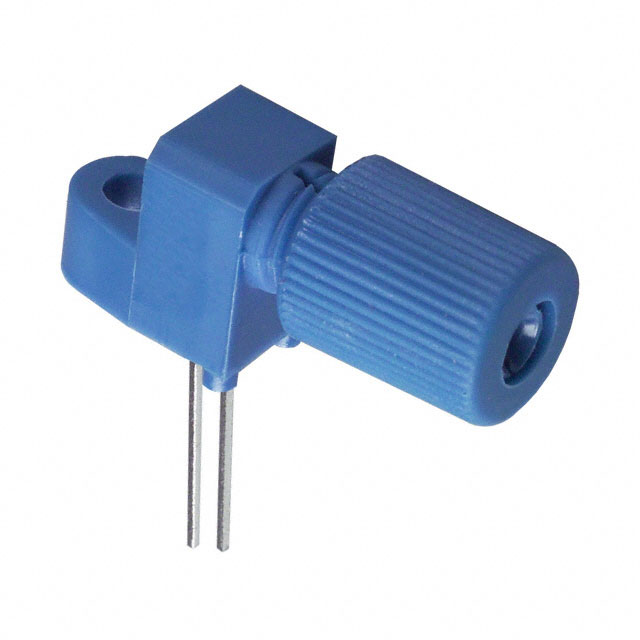
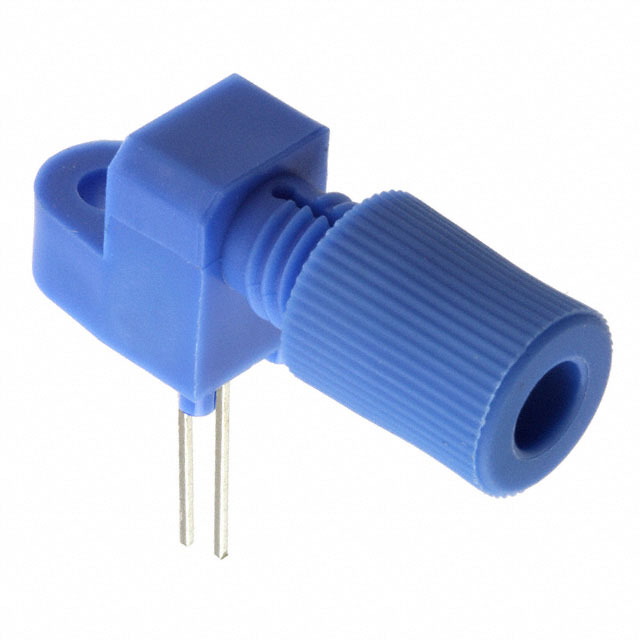
The IF-E96 is a fiber optic transmitter operating at 660nm wavelength with a forward voltage of 1.8V and maximum forward current of 35mA. This connector-less component is classified as obsolete, necessitating identification of active equivalent parts for ongoing system support and new designs. The substitute part IF-E96E provides functional continuity while maintaining core electrical and mechanical compatibility within specified parameter tolerances.
Substiute Parts
Key Parameters
| Parameter | Value | Unit | Significance for Substitution |
|---|---|---|---|
| Wavelength | 660 | nm | Primary optical characteristic; determines application compatibility |
| Spectral Bandwidth | 20 | nm | Optical performance parameter |
| Voltage - Forward (Vf) Typical | 1.8 | V | Circuit design parameter; affects power supply requirements |
| Current - DC Forward (If) Maximum | 35 | mA | Maximum operating current; determines circuit protection and thermal design |
| Voltage - DC Reverse (Vr) Maximum | 5 | V | Reverse polarity protection specification |
| Capacitance | 30 | pF | High-frequency response and switching characteristics |
| Connector Type | Connector-less | — | Physical interface; determines integration method |
Substitute Part Grouping Explanation
The IF-E96E qualifies as a direct substitute based on the following criteria:
Maintained Parameters:
- Spectral Bandwidth: 20nm (identical)
- Voltage - DC Reverse (Vr) Maximum: 5V (identical)
- Connector Type: Connector-less (identical)
- ECCN Classification: EAR99 (identical)
- HTSUS Code: 8541.41.0000 (identical)
Variant Parameters Within Acceptable Range:
- Wavelength: 645nm (IF-E96E) vs. 660nm (IF-E96) — both red spectrum, 15nm difference
- Voltage - Forward (Vf) Typical: 2V (IF-E96E) vs. 1.8V (IF-E96) — 0.2V increase, within typical circuit tolerance
- Current - DC Forward (If) Maximum: 30mA (IF-E96E) vs. 35mA (IF-E96) — 5mA reduction, acceptable for most applications
- Capacitance: 35pF (IF-E96E) vs. 30pF (IF-E96) — 5pF increase, minimal impact on switching performance
Status Advantage:
- IF-E96E is Active with ROHS3 Compliance and REACH Unaffected status, ensuring long-term availability and regulatory compliance
Parameter Comparison
| Parameter | IF-E96 (Main Part) | IF-E96E (Substitute) | Difference |
|---|---|---|---|
| Manufacturer | Industrial Fiber Optics | Industrial Fiber Optics | — |
| Product Status | Obsolete | Active | Substitute is actively produced |
| Wavelength | 660nm | 645nm | −15nm |
| Spectral Bandwidth | 20nm | 20nm | — |
| Voltage - Forward (Vf) Typical | 1.8V | 2V | +0.2V |
| Current - DC Forward (If) Maximum | 35mA | 30mA | −5mA |
| Voltage - DC Reverse (Vr) Maximum | 5V | 5V | — |
| Capacitance | 30pF | 35pF | +5pF |
| Connector Type | Connector-less | Connector-less | — |
| RoHS Status | Not specified | ROHS3 Compliant | Substitute meets current compliance |
| Moisture Sensitivity Level | Not Applicable | 1 (Unlimited) | Substitute has defined MSL rating |
| REACH Status | Not specified | REACH Unaffected | Substitute meets REACH requirements |
Engineering Selection Recommendations
The IF-E96E is the designated substitute for the obsolete IF-E96 based on the following engineering criteria:
Compliance and Availability:
- IF-E96E holds Active product status with 4359 units in stock, ensuring supply chain continuity
- ROHS3 Compliance and REACH Unaffected status satisfy current regulatory requirements for new designs and manufacturing
- Identical ECCN and HTSUS classifications maintain export and tariff compliance
Electrical Compatibility:
- Forward voltage increase of 0.2V is within standard circuit design tolerance and requires minimal adjustment to current-limiting resistor values
- Maximum forward current reduction of 5mA (from 35mA to 30mA) is acceptable for applications not requiring maximum optical output
- Reverse voltage specification remains unchanged at 5V maximum
Optical Performance:
- Wavelength shift from 660nm to 645nm remains within the red spectrum range; both wavelengths are suitable for standard fiber optic communication and sensing applications
- Spectral bandwidth remains constant at 20nm, maintaining signal integrity
Physical Integration:
- Connector-less configuration is identical, requiring no changes to mechanical assembly or integration methods
- Capacitance increase of 5pF has negligible impact on high-frequency switching characteristics for typical fiber optic transmitter applications
Frequently Asked Questions (FAQ)
Q: Can IF-E96E directly replace IF-E96 in existing designs?
A: Yes. The IF-E96E maintains identical connector type, reverse voltage specification, and spectral bandwidth. Circuit designs must accommodate the 0.2V increase in forward voltage and 5mA reduction in maximum forward current. These changes typically require only minor adjustments to current-limiting resistor values and do not affect core functionality.
Q: What is the significance of the 15nm wavelength difference between 660nm and 645nm?
A: Both wavelengths operate in the red spectrum and are suitable for standard fiber optic communication and sensing applications. The 15nm difference may affect optical coupling efficiency in wavelength-specific systems; verify compatibility with receiving components if wavelength-dependent filtering or detection is employed.
Q: Why is IF-E96E preferred over IF-E96?
A: IF-E96 is classified as obsolete with no active production. IF-E96E is actively manufactured with confirmed inventory of 4359 units, ensuring long-term availability. Additionally, IF-E96E meets ROHS3 and REACH compliance standards, making it suitable for new designs and regulated manufacturing environments.
Q: Are there any packaging differences between IF-E96 and IF-E96E?
A: IF-E96E is supplied in Bulk packaging. Packaging format does not affect electrical or mechanical compatibility; it only influences order quantities and handling procedures.
Q: What is the impact of the 5pF capacitance increase?
A: The increase from 30pF to 35pF has minimal impact on switching performance and high-frequency response for typical fiber optic transmitter applications. This parameter becomes relevant only in high-speed modulation circuits operating above 100MHz; standard applications are unaffected.
Q: Is IF-E96E the only substitute available?
A: Based on the provided substitute list, IF-E96E is the designated equivalent part. Both components are manufactured by Industrial Fiber Optics and share identical ECCN and HTSUS classifications.
Alternative Parts

SJ6012L2TP
Littelfuse Inc.
6 Alternative Parts

JMK107BBJ476MA-RE
Taiyo Yuden
10 Alternative Parts

GMK107BBJ475MA-T
Taiyo Yuden
5 Alternative Parts
SJ6020N2ARP
Littelfuse Inc.
3 Alternative Parts
SJ6025R2ATP
Littelfuse Inc.
4 Alternative Parts

2474-05L
API Delevan Inc.
1 Alternative Parts

4590R-684K
API Delevan Inc.
1 Alternative Parts

CM6560R-334
API Delevan Inc.
1 Alternative Parts

CM6460-104
API Delevan Inc.
1 Alternative Parts

5526-12
API Delevan Inc.
1 Alternative Parts